News
Rich project cases across industries, showing real implementation and proven technical strength.Selecting the appropriate pneumatic conveying system for lithium iron carbonate (LiFeCO₃) powder is a critical engineering decision that directly impacts production efficiency, material integrity, and overall operational costs. As the global battery materials market continues to expand rapidly in 2026, manufacturers are facing increasing pressure to handle finer, more abrasive, and electrostatically sensitive powders with precise control. This article provides a comprehensive, data-driven guide to equipment selection for pneumatic conveying systems specifically designed for lithium iron carbonate, drawing on industry standards, real-world case studies, and technical parameters that matter most in high-capacity processing environments.
Lithium iron carbonate, a key precursor in the synthesis of lithium iron phosphate (LFP) cathode materials, presents unique handling challenges. Its particle size distribution typically ranges from 5 to 30 microns, with a bulk density between 0.6 and 1.2 g/cm³. These characteristics make it prone to agglomeration, attrition, and electrostatic buildup during transport. A poorly designed pneumatic system can lead to pipe clogging, product degradation, increased energy consumption, and frequent maintenance downtime. Therefore, selecting the right combination of blowers, feeders, piping, filters, and controls is not just a matter of cost—it is a fundamental requirement for maintaining product quality and process reliability. This article breaks down the selection process into modular sections, providing actionable guidance for engineers and procurement teams.
Before any equipment specification begins, a thorough characterization of the bulk solid is essential. Lithium iron carbonate exhibits moderate to high abrasiveness due to the crystalline structure of iron particles. Its moisture content should be strictly controlled below 0.5% to prevent caking and flow disruptions. Additionally, the material has a tendency to generate static charges when conveyed at high velocities, which can cause blockages in non-conductive piping and spark risks in combustible dust environments. The angle of repose typically falls between 40° and 50°, indicating moderate flowability that requires careful hopper design. These properties directly influence the choice between dilute phase and dense phase conveying. For lithium iron carbonate, dilute phase systems are generally recommended for distances under 80 meters, while dense phase systems become more suitable for longer distances or when gentler handling is required to minimize particle breakage.
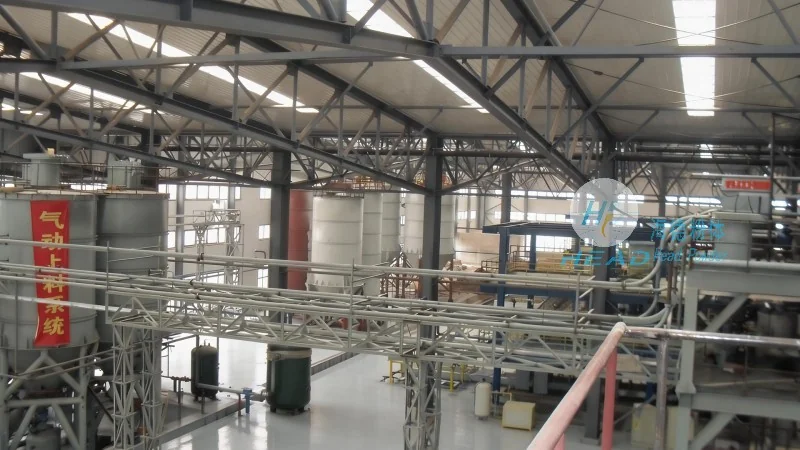
The primary decision in pneumatic conveying system design for lithium iron carbonate is whether to use dilute phase or dense phase technology. Dilute phase systems operate at relatively high air velocities (20–35 m/s) and low material-to-air ratios, using positive displacement blowers or regenerative blowers. These systems are cost-effective for short-distance transfers (up to 50–80 m) and can handle moderate throughput requirements. However, the high velocity increases the risk of attrition and pipe wear. In contrast, dense phase systems use lower velocities (5–15 m/s) with higher material loading, often employing pressure vessels or screw feeders to push the powder in slugs. Dense phase conveying significantly reduces particle degradation and energy consumption but requires higher capital investment and more precise control. Recent 2026 industry data indicates that over 60% of new lithium carbonate handling facilities now specify dense phase systems for critical process lines to preserve particle morphology and reduce fines generation. For batch mixing and blending applications where gentle handling is less critical, dilute phase remains a viable option. The selection must consider the specific downstream process requirements, such as whether the material will be directly dosed into reactors or stored in silos.
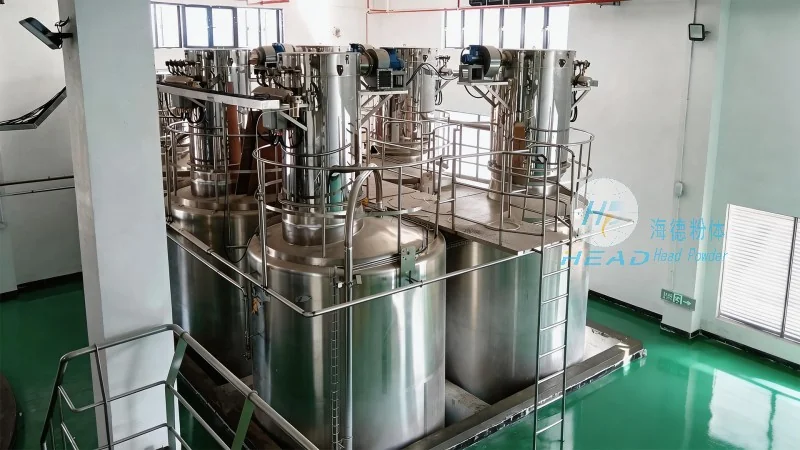
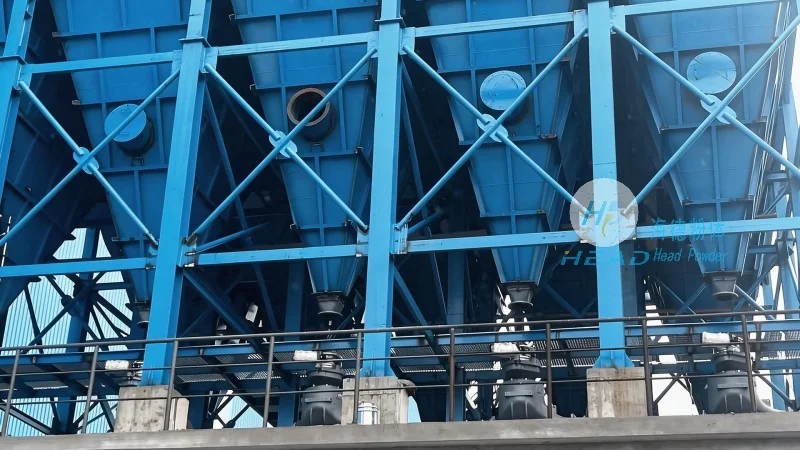
Selecting each component with care ensures system reliability and longevity. The following list outlines the critical elements and their recommended specifications:
Accurate sizing prevents underperformance and overspending. For a typical system conveying 5–15 tons per hour of lithium iron carbonate over a horizontal distance of 60 meters with a 20-meter vertical lift, the following approach is used. First, determine the material mass flow rate and air flow rate using a solid loading ratio (µ) of 10–20 for dilute phase or 30–50 for dense phase. The required air volume is calculated as Q = (W × 60) / (µ × ρair), where W is tonnage per hour and ρair is air density at operating conditions. For example, at 10 t/h and µ=15, Q ≈ 60 m³/min. The pressure drop through pipe bends, elbows, and filters is then estimated using Darcy-Weisbach or empirical models, typically yielding 0.3–0.6 bar for medium-distance dilute systems. Blower power consumption is determined by P = Q × ΔP / (η × 3600), with η around 60–70% for lobe blowers. Industry benchmarks from 2026 suggest that modern systems achieve energy intensity of 5–8 kWh per ton of material conveyed, a figure that can be optimized through proper velocity control. Headpowder's engineering team regularly performs computational fluid dynamics (CFD) simulations to validate these calculations and tailor the design to site-specific conditions.
Lithium iron carbonate powdery dust falls under Combustible Dust Class (St1 to St2) depending on particle size and moisture content. The minimum ignition energy (MIE) can be as low as 30 mJ, necessitating stringent safety measures. A comprehensive risk assessment should include:
Headpowder's systems are designed to comply with the latest IEC 60079 and OSHA 1910.307 standards, and have been certified for use in Zone 22 areas. A recent installation for a Tier-1 battery manufacturer in Europe demonstrated zero dust leakage incidents over 18 months of continuous operation, validating the effectiveness of these measures.
Initial equipment cost often dominates procurement decisions, but total cost of ownership (TCO) over 10 years is a more meaningful metric. For a 10 t/h pneumatic conveying system, the capital expenditure for a well-specified dilute phase system typically ranges between $350,000 and $600,000, while dense phase systems can cost $500,000 to $900,000. However, dense phase systems reduce energy consumption by 25–40% and maintenance frequency by 50% due to lower wear. Factoring in downtime costs (which can exceed $5,000 per hour in high-volume plants), the payback period for upgrading to dense phase is often less than 2 years. Additionally, the ability to maintain particle size integrity directly translates to higher cathode performance, potentially commanding a 3–5% price premium in the battery material market. Headpowder offers a free consultation service where our engineers conduct a TCO analysis based on your specific parameters—contact us to schedule a detailed assessment. (咨询热线:156-6277-7102)
In 2025–2026, a major lithium iron phosphate precursor plant in South Korea faced recurring clogs and product degradation in its existing dilute phase system. The plant required a solution that could handle 8 tons per hour of lithium iron carbonate over a 90-meter distance with 45-meter lift, while maintaining d50 particle size variation below 2%. Headpowder designed a customized dense phase system featuring a 4-cubic-meter blow tank, specially coated rotary feeder, and an intelligent pressure control algorithm. The result: near-zero attrition (d50 change less than 0.8%), energy savings of 32% compared to the previous system, and 99.7% plant uptime over the first year. The client reported a reduction in downstream filter change frequency from monthly to quarterly, yielding annual maintenance cost savings of $45,000. This case exemplifies how careful equipment selection, grounded in material science and process data, transforms operational performance.
Looking ahead to 2026 and beyond, the industry is moving toward digital twin integration for real-time optimization. Predictive maintenance models using vibration analysis and differential pressure trends can anticipate component wear before failure occurs. Additionally, the adoption of modular, containerized conveying skids is gaining traction for rapid deployment in expanding battery material plants. The growing emphasis on carbon footprint reduction also drives preference for energy-efficient dense phase systems with heat recovery options. Companies that invest in advanced pneumatic conveying design now will gain a competitive edge in both production efficiency and environmental compliance. Headpowder continues to invest in R&D for next-generation systems, including hybrid dilute-dense transport for ultra-fine powders and in-line moisture removal technologies.
Selecting the right pneumatic conveying system for lithium iron carbonate is a multidimensional challenge that demands thorough material analysis, careful technology matching, component quality assurance, and lifecycle cost evaluation. By prioritizing particle integrity, energy efficiency, and safety, manufacturers can achieve reliable, high-throughput material handling that supports the growing demand for high-performance battery materials. Headpowder stands ready to support your project with proven engineering expertise, field-proven products, and a commitment to technical excellence. Whether you are designing a greenfield facility or upgrading an existing line, our team can provide the comprehensive analysis and equipment selection guidance you need. For further discussion, please reach out to our technical sales team. (咨询热线:156-6277-7102)

 Shandong headpowder Engineering Co., Ltd.
 156-6277-7102(Manager Zhang)
  0531-83386006
  Jinan City, Shandong Province, China
服务热线
微信咨询
回到顶部