News
Rich project cases across industries, showing real implementation and proven technical strength.In modern industrial operations, particularly within power generation, steel manufacturing, and chemical processing, the efficient handling of desulfurization agents has become a critical factor for both environmental compliance and operational cost control. Pneumatic conveying systems specifically designed for desulfurization agents address the unique challenges posed by these materials, including their abrasive nature, tendency to agglomerate, and sensitivity to moisture. This article provides an in-depth examination of the equipment, design considerations, and operational best practices for desulfurization agent pneumatic conveying systems, drawing on industry standards and real-world application data through 2026. By understanding the core components, system configurations, and maintenance requirements, plant managers and engineers can make informed decisions that enhance reliability, reduce downtime, and optimize material flow.
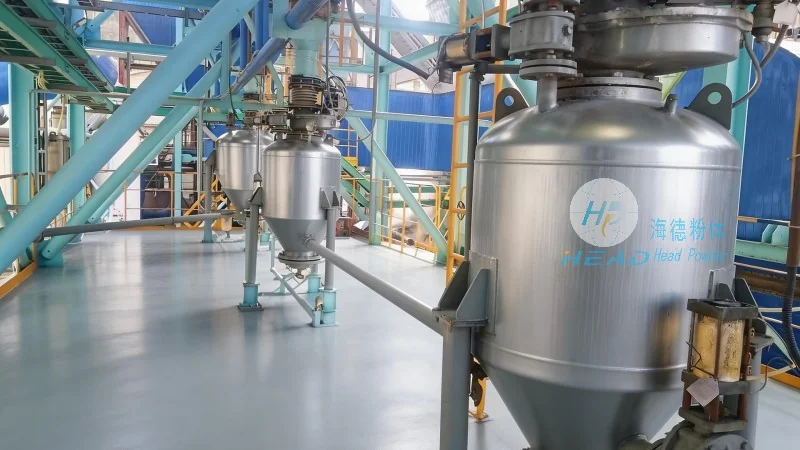
Desulfurization agents, such as limestone powder, hydrated lime, and sodium bicarbonate, are widely used in flue gas desulfurization (FGD) processes. The pneumatic conveying system serves as the backbone of the material handling chain, transporting these powders from storage silos to injection points with precision and minimal degradation. The selection of appropriate equipment—from air movers and rotary valves to piping and control systems—directly impacts the overall efficiency of the desulfurization process. Headpowder, as a specialized provider of pneumatic conveying solutions, has accumulated extensive experience in designing systems that meet the rigorous demands of desulfurization applications. This article will explore the key equipment components, system layout options, and emerging trends that shape the industry in 2026.
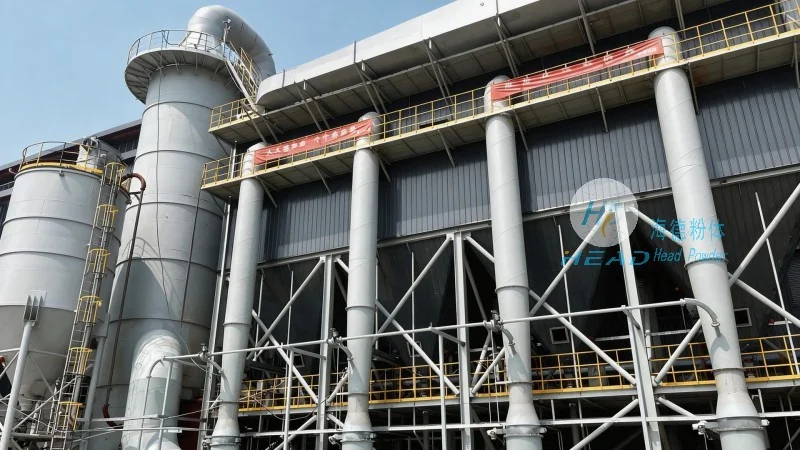
A well-engineered pneumatic conveying system for desulfurization agents comprises several interdependent components, each serving a specific function to ensure consistent, reliable material transport. The following sections break down the primary equipment categories, highlighting their roles and critical selection parameters.
The heart of any pneumatic system is its air source. For desulfurization agents, which often require dense-phase conveying to minimize particle attrition, positive displacement blowers or screw compressors are commonly employed. These units must deliver a consistent volume of clean, dry air at controlled pressure. In 2026, energy efficiency has become a paramount concern, with variable frequency drives (VFDs) becoming standard for adjusting airflow to match real-time conveying demands. Headpowder integrates high-efficiency blowers that reduce power consumption by 15-20% compared to fixed-speed alternatives, without compromising on conveying velocity or material integrity. Proper filtration and drying of compressed air are also essential to prevent moisture-induced caking, which can lead to blockages and system downtime.
Accurate and controlled introduction of the desulfurization agent into the conveying line is achieved through rotary valves, screw feeders, or venturi injectors. Rotary valves remain the most common choice for free-flowing powders, offering reliable sealing and metering. However, for cohesive or hygroscopic materials like hydrated lime, Headpowder recommends specialized rotary valves with hardened housings and abrasion-resistant coatings to extend service life. The sizing of these feeders must consider the desired throughput, particle size distribution, and system pressure differential. In recent projects, the adoption of smart metering units equipped with load cells and real-time feedback loops has improved dosing accuracy to within ±1%, enabling tighter process control and reduced reagent waste.
The pipeline network is the most visible part of the system, yet its design profoundly influences operational longevity and material quality. Desulfurization agents, especially limestone powder with its high silica content, accelerate erosion in pipe walls and bends. To combat this, Headpowder utilizes seamless carbon steel pipes with a minimum wall thickness of 8 mm for straight sections, and employs ceramic-lined or long-radius bends at all directional changes. These measures reduce wear rates by up to 60% and minimize the risk of leaks. Additionally, the internal surface finish of the pipes should be smooth to avoid powder accumulation. For long-distance conveying, intermediate boosters or pressure vessels may be necessary to maintain flow velocity and prevent saltation.
At the destination, the desulfurization agent must be efficiently separated from the conveying air before injection into the process. Cyclone separators, baghouse filters, or combination units are employed based on particle size and dust loading. For fine powders (typical particle size 10-50 microns), high-efficiency bag filters with pulse-jet cleaning are preferred, achieving collection efficiencies above 99.9%. The collected material is then discharged into a surge hopper or directly into the injection system. Headpowder’s designs incorporate explosion venting and static grounding as standard safety features, aligning with ATEX and NFPA guidelines for combustible dust handling. Proper sizing of the separator ensures that backpressure remains within acceptable limits, preserving the pneumatic system’s stable operation.
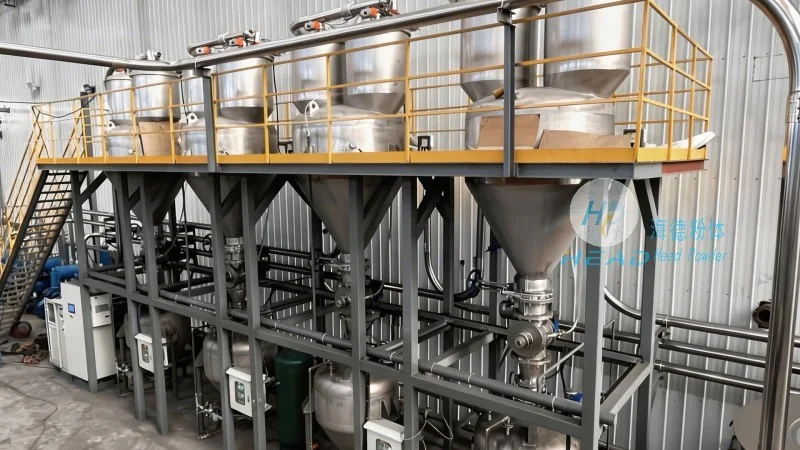
The choice between dilute-phase and dense-phase conveying for desulfurization agents depends on material characteristics, distance, and required throughput. Dilute-phase systems operate at high air velocities (typically 20-30 m/s) and low material-to-air ratios, making them suitable for short distances and free-flowing powders. However, the high velocity accelerates pipe wear and can cause particle degradation. Dense-phase conveying, operating at lower velocities (2-10 m/s) and higher material concentrations, significantly reduces wear and maintains particle integrity, which is critical for desulfurization reactions. Headpowder has observed that for most desulfurization agent handling applications, dense-phase systems offer superior lifecycle costs despite higher initial equipment investment. Industry data from 2025 indicates that plants converting from dilute-phase to dense-phase conveying have achieved a 35% reduction in maintenance costs and a 20% increase in system availability. For projects requiring both flexibility and reliability, a hybrid approach—using dense-phase for primary transport and dilute-phase for short transfer legs—can be optimized.
Modern pneumatic conveying systems are increasingly integrated with advanced control platforms that monitor pressure, flow rate, material level, and equipment status in real time. Programmable logic controllers (PLCs) with human-machine interfaces (HMIs) allow operators to adjust conveying parameters remotely and receive predictive maintenance alerts. For desulfurization agent systems, maintaining a consistent material-air ratio is vital to prevent line blockages. Headpowder’s control solutions include adaptive algorithms that automatically adjust feeder speed and air pressure based on downstream demand, reducing operator intervention. In one installation at a 600 MW coal-fired power plant, the implementation of an automated dense-phase system resulted in a 50% decrease in manual cleaning events and a 12% improvement in reagent utilization. Furthermore, the integration of IIoT sensors enables data logging for performance analysis, helping plant engineers fine-tune operations over time.
Proper installation is the foundation of long-term system performance. Key considerations include: ensuring adequate support for pipelines to prevent sagging, providing access points for inspection and cleaning, and installing pressure relief devices at strategic locations. Headpowder’s field service team follows a standardized commissioning protocol that includes leak testing, air velocity verification, and material flow trials. For ongoing maintenance, a preventive schedule should include daily inspection of rotary valve seals, weekly checks of filter bag condition, and monthly lubrication of blower bearings. The use of wear-resistant linings in bends and tees can extend component life to three to five years under normal operating conditions. In the event of a blockage, automated purge systems with compressed air can be activated to clear the line without manual disassembly, minimizing downtime.
As global environmental regulations tighten, the demand for efficient desulfurization systems continues to grow. The pneumatic conveying equipment market for desulfurization agents is projected to expand at a compound annual growth rate of 6.8% through 2030, driven by the retrofitting of existing plants and new builds in Asia-Pacific and the Middle East. Plant operators are prioritizing systems that offer low total cost of ownership, which includes energy consumption, maintenance, and reagent wastage. Headpowder’s systems are designed with modular components that simplify upgrades and reduce spare parts inventory. A typical 10 t/h dense-phase conveying system for limestone powder can achieve an energy cost of approximately 0.8 kWh per ton conveyed, well below industry averages. Moreover, the reduction in fugitive dust emissions from enclosed conveying aligns with ESG goals and improves workplace safety. By investing in a well-engineered pneumatic system, companies can achieve payback periods of under two years through lower maintenance expenses and higher process efficiency.
When evaluating equipment suppliers, look for demonstrated expertise in handling desulfurization agents, a track record of successful installations, and the ability to provide customized solutions. Headpowder brings over a decade of engineering experience in pneumatic conveying, with a portfolio that includes systems for power plants, cement kilns, and industrial boilers. Our team conducts thorough material testing to determine the optimal conveying parameters—such as minimum conveying velocity, air flow rate, and pressure drop—before finalizing the design. We also offer on-site commissioning and training to ensure your operational staff can manage the system effectively. For a detailed assessment of your specific requirements, please reach out to our technical team.
(咨询热线:156-6277-7102)
Looking ahead, the integration of artificial intelligence and digital twins is poised to revolutionize pneumatic conveying system management. Predictive analytics can forecast wear patterns and suggest optimal cleaning cycles, while digital simulations allow for virtual testing of new system layouts before construction. Additionally, advances in material science are producing more wear-resistant alloys and composite piping that further extend equipment life. Headpowder is actively researching the application of low-pressure dense-phase conveying for finer desulfurization agents, which could reduce energy consumption by an additional 10%. As the industry moves toward zero-emission targets, the role of reliable, efficient pneumatic conveying will only become more important. By staying abreast of these developments and partnering with a knowledgeable supplier, industrial operators can ensure their desulfurization processes remain both compliant and cost-effective for years to come.

 Shandong headpowder Engineering Co., Ltd.
 156-6277-7102(Manager Zhang)
  0531-83386006
  Jinan City, Shandong Province, China
服务热线
微信咨询
回到顶部