News
Rich project cases across industries, showing real implementation and proven technical strength.In modern industrial material handling, the efficient and reliable transport of bulk solids such as coal sand remains a critical challenge. Coal sand, a granular material derived from coal processing, is widely used in power generation, cement manufacturing, chemical production, and metallurgical applications. Traditional mechanical conveying methods, including belt conveyors, screw conveyors, and bucket elevators, often face limitations in handling fine, abrasive, and dusty materials—leading to equipment wear, dust emissions, maintenance downtime, and operational inefficiencies. Over the past decade, pneumatic conveying systems have emerged as the preferred solution for moving coal sand in a closed, automated, and dust-free manner. These systems utilize compressed air or gas to transport materials through pipelines, offering significant advantages in terms of spatial flexibility, environmental compliance, and process integration.
As global industries push toward stricter environmental regulations and higher automation standards in 2026, the demand for advanced coal sand pneumatic conveying equipment continues to grow. According to industry reports, the global pneumatic conveying systems market is projected to reach USD 45.8 billion by 2026, with a compound annual growth rate (CAGR) of 6.2% from 2023 to 2026. This growth is driven by the need for efficient bulk material handling in emerging economies, retrofitting of aging plants, and the adoption of Industry 4.0 technologies. However, not all pneumatic conveying systems are created equal. Selecting the right system—whether dilute phase, dense phase, or a hybrid configuration—requires a thorough understanding of material properties, system design parameters, and operational goals. This article provides a comprehensive introduction to coal sand pneumatic conveying equipment systems, covering fundamental principles, key components, design considerations, application scenarios, and best practices for system selection and optimization. The insights are based on decades of industry experience and are intended to help plant managers, process engineers, and procurement professionals make informed decisions that enhance productivity, reduce operating costs, and ensure long-term reliability. Headpowder, as a trusted provider of bulk material handling solutions, brings extensive expertise in designing and manufacturing pneumatic conveying systems tailored to the specific needs of coal sand and other challenging materials.
Pneumatic conveying relies on the flow of air or gas to suspend and transport solid particles through a pipeline. The principle is straightforward: a pressure differential created by a blower, compressor, or vacuum pump moves the air stream, which in turn carries the material from a feed point to a destination. For coal sand, which typically has a bulk density ranging from 0.8 to 1.5 t/m³ and particle sizes from 0.1 mm to 6 mm, the selection of conveying mode is crucial. Two primary modes are used:
The choice between dilute and dense phase depends on factors such as material abrasiveness, particle size distribution, moisture content, and required throughput. For coal sand with a high silica content, dense phase conveying is almost always recommended to extend equipment life and reduce maintenance costs. The system pressure requirements typically range from 0.2 to 0.6 MPa for dense phase, while dilute phase systems operate at 0.05–0.15 MPa.
Other vital parameters include the air-to-material ratio, which influences pipe diameter selection, and the pressure drop across the system, which determines the power requirements of the air mover. Modern computational fluid dynamics (CFD) modeling and pilot testing are now standard practices to accurately predict flow behavior before full-scale system fabrication. Headpowder’s engineering team routinely employs these advanced simulation tools to optimize system design for each unique coal sand application, ensuring reliable performance from day one.
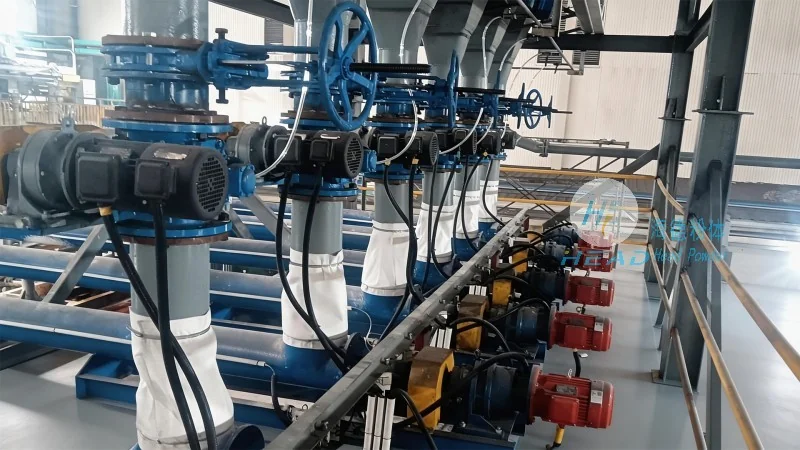
A complete pneumatic conveying system comprises several integrated components, each designed to handle specific functions. Understanding these components helps in troubleshooting, maintenance, and system upgrade planning. The typical configuration includes:
Each component must be correctly sized and material-selected to match the properties of coal sand. For example, inside pipe roughness and hardness can significantly influence wear rates. Industry standards such as ISO 2503:2022 and relevant ASME codes provide guidelines for pressure vessel design and pipeline integrity. Headpowder adheres to these standards and offers customization options, such as ceramic-tiled pipelines and abrasion-resistant rotary valves, to maximize system longevity in harsh coal sand environments. A well-documented case involves a coal-fired power plant in Southeast Asia that switched from mechanical conveyors to a headpowder dense phase system; the result was a 60% reduction in maintenance costs and a 30% improvement in energy efficiency.
When designing a coal sand pneumatic conveying system, several interdependent factors must be carefully evaluated. Neglecting any one of them can lead to underperformance, excessive wear, or operational safety issues. Key considerations include:
Industry best practices recommend performing a detailed feasibility study, including pilot trials with representative material samples, before committing to full-scale equipment. Headpowder offers a dedicated test facility where customers can simulate their coal sand conveying conditions and validate performance parameters. This approach eliminates guesswork and reduces commissioning risks. In many projects, headpowder’s engineering team has identified that using a hybrid system—combining dense phase for long-distance horizontal runs with dilute phase for short vertical lifts—can yield the best balance between wear and energy consumption.
Coal sand pneumatic conveying systems are deployed across a wide range of industries. In coal-fired power plants, they transport pulverized coal sand from mills to burners or to storage silos. In cement plants, coal sand is used as a fuel for kilns, and pneumatic conveying enables precise dosing and blending. In chemical production, coal sand serves as a raw material or additive in processes such as activated carbon manufacturing or coal-to-chemical conversion. In metallurgy, it is used in coke oven charging or as a reductant. Each application has unique requirements:
A notable implementation involved a large cement manufacturer in India that required a 50 t/h coal sand conveying system over a 300-meter distance with multiple vertical sections. After evaluating several suppliers, the customer chose headpowder’s dense phase system. The installation resulted in a dust-free environment, a 40% reduction in energy consumption compared to their previous pneumatic system, and a three-year payback period through reduced maintenance and increased uptime. Such outcomes underscore the value of a properly engineered pneumatic conveying solution.
Maintaining peak performance of a coal sand pneumatic conveying system requires a proactive approach. Key maintenance activities include:
Looking ahead to 2026 and beyond, the pneumatic conveying industry is witnessing several technology trends that directly impact coal sand handling. First, the adoption of variable frequency drives (VFDs) on air movers allows dynamic speed control, reducing energy consumption by 15–25% under partial loads. Second, digital twin technology enables virtual testing of system modifications before implementation, minimizing downtime. Third, the integration of AI-driven predictive maintenance can forecast bearing failures or filter clogs with high accuracy. Headpowder is at the forefront of these innovations, offering smart conveying systems that connect to cloud-based analytics platforms. For companies seeking to upgrade their coal sand handling infrastructure, it is advisable to consult with experienced system integrators who can provide end-to-end support, from conceptual design through commissioning and after-sales service.
Coal sand pneumatic conveying equipment systems represent a mature yet continuously evolving technology that addresses the core challenges of bulk material transport—efficiency, safety, environmental compliance, and cost control. By understanding the fundamental principles, component functions, and design trade-offs, industrial decision-makers can align their system choices with operational objectives. The transition from traditional mechanical conveying to modern pneumatic systems offers measurable benefits: reduced dust emissions (often below 5 mg/m³), lower energy consumption per ton of material moved (typically 2–4 kWh/t), and significantly less maintenance labor. However, success depends on careful material analysis, correct system sizing, and a partner with proven field experience. Headpowder has demonstrated its capability in numerous coal sand projects across Asia, the Middle East, and Africa, delivering systems that consistently meet or exceed performance guarantees. Whether you are planning a new plant or retrofitting an existing one, investing time in a detailed system evaluation will pay dividends in operational reliability and total cost of ownership. For more information on how headpowder can assist with your coal sand pneumatic conveying requirements, please reach out to our engineering team. (咨询热线:156-6277-7102)

 Shandong headpowder Engineering Co., Ltd.
 156-6277-7102(Manager Zhang)
  0531-83386006
  Jinan City, Shandong Province, China
服务热线
微信咨询
回到顶部