News
Rich project cases across industries, showing real implementation and proven technical strength.Diatomaceous earth, a naturally occurring sedimentary rock composed of fossilized diatoms, is widely used across industries such as filtration, agriculture, cosmetics, and construction. Its light weight, high porosity, and abrasive nature present unique challenges for material handling. Pneumatic conveying systems have emerged as the preferred solution for transporting diatomaceous earth safely and efficiently, minimizing dust emissions and product degradation. This article provides a comprehensive overview of diatomaceous earth pneumatic conveying equipment systems, covering key components, design considerations, operational parameters, and industry best practices. With the global diatomaceous earth market expected to surpass $1.5 billion by 2026, driven by rising demand in water treatment and food processing, understanding the optimal conveying technology is critical for manufacturers and processors aiming to maintain productivity and regulatory compliance.
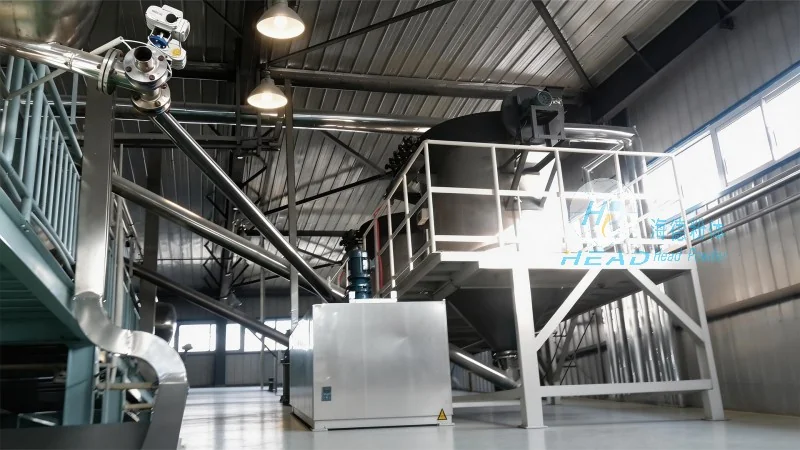
Pneumatic conveying systems use air or inert gas to move bulk materials through enclosed pipelines. For diatomaceous earth, which is fine, dusty, and often hydroscopic, choosing the right system type and configuration directly impacts energy consumption, maintenance costs, and product quality. Dilute-phase conveying, dense-phase conveying, and vacuum systems each offer distinct advantages depending on particle size, moisture content, and distance requirements. Headpowder, a reliable provider of integrated conveying solutions, has engineered multiple installations tailored to the unique properties of diatomaceous earth. In the sections that follow, we examine every aspect of these systems—from feeding mechanisms to filtration—so that engineers and facility managers can make informed decisions grounded in real-world data and current technology trends.
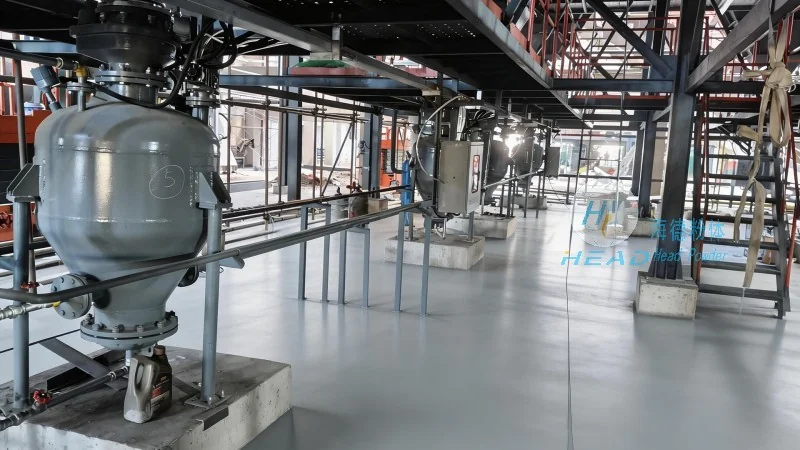
Diatomaceous earth particles range from 10 to 200 microns, with a bulk density typically between 0.3 and 0.6 g/cm³. This low density and high surface area make the material prone to fluidization and electrostatic charging. In pneumatic conveying, the key challenge is balancing air velocity to avoid pipeline abrasion while ensuring complete suspension of particles. Abrasion is a major concern because diatomaceous earth is composed of silica, which can wear down elbows, bends, and receivers over time. Using hardened materials or ceramic-lined pipes, combined with gentle conveying velocities, extends equipment lifespan.
There are two primary modes of pneumatic conveying used for diatomaceous earth: dilute-phase and dense-phase. Dilute-phase systems operate at high air velocities (15–35 m/s), keeping particles suspended in a low concentration mixture. These systems are simpler and lower in initial cost but consume more energy and cause greater product attrition. Dense-phase systems, conversely, move material at lower velocities (3–8 m/s) in a plug flow pattern, using higher pressure air. They cause less wear and degradation, making them ideal for friable or abrasive powders like diatomaceous earth. Headpowder’s dense-phase technology, for instance, has demonstrated a 40% reduction in pipeline wear compared to traditional dilute-phase setups in a recent filtration-grade diatomaceous earth project.
Moisture content is another critical parameter. Diatomaceous earth naturally contains 3–8% moisture, but after calcination, it can drop to below 1%. Moisture affects flowability and can cause clogging in conveying lines. Pre-conditioning with dehumidified air or heating elements in the feed hopper is often recommended. Additionally, many facilities now incorporate online moisture sensors to adjust conveying parameters in real time, which is a growing trend in Industry 4.0–driven material handling systems.
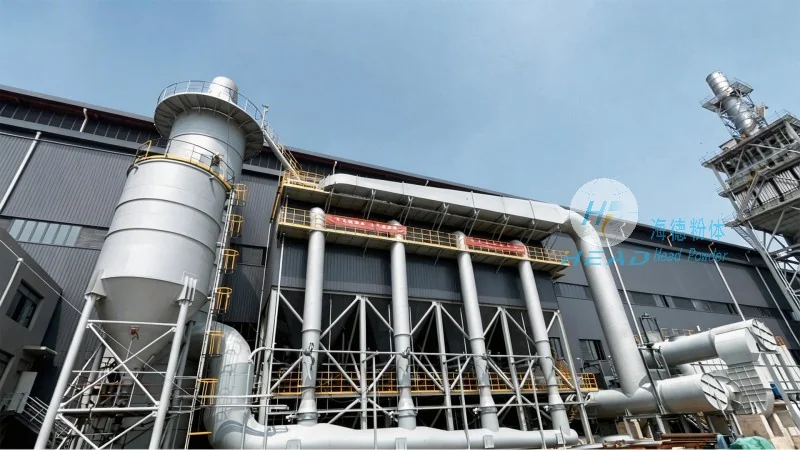
Every pneumatic conveying system for diatomaceous earth comprises several standard components, each engineered to address material-specific challenges. Below is an overview of the essential modules, with performance data and selection guidelines based on typical plant capacities from 1 to 50 metric tons per hour.
1. Feed Hoppers and Rotary Airlock Valves
The feeding point must regulate material entry without air leakage. Rotary airlock valves with hardened rotor tips and wear-resistant housing are standard. For diatomaceous earth, a rotor pocket volume of 10–30 liters and a rotational speed of 15–25 RPM ensure consistent dosing. Headpowder’s design includes a purge port to prevent material bridging and a pressure equalization channel that reduces air consumption by up to 15%.
2. Conveying Pipeline and Bends
Carbon steel pipes with thickness of 4–6 mm are common, but for abrasive powders, ceramic-lined bends or long-radius sweeping elbows (R/D ratio ≥ 8) reduce wear dramatically. In one case study involving a diatomaceous earth plant in Southeast Asia, adopting ceramic-lined 90° bends extended maintenance intervals from 3 months to over 18 months. Pipe diameters typically range from DN50 to DN200 depending on throughput.
3. Air Supply and Compressor System
Both positive displacement (PD) blowers and screw compressors are used. For dilute-phase, PD blowers delivering 30–60 kPa pressure and flow rates of 100–500 m³/h are typical. Dense-phase requires higher pressure (100–400 kPa) and lower flow. The choice impacts system energy efficiency—modern variable frequency drive (VFD) compressors can reduce power consumption by 25–30% compared to fixed-speed units.
4. Cyclone Separators and Bag Filters
Diatomaceous earth dust is hazardous if inhaled, so dust collection is mandatory. A primary cyclone can achieve 95–98% particle recovery, followed by a pulse-jet bag filter with PTFE membrane bags that capture sub-micron particles. Filter area sizing of 1.0–1.5 m² per m³/min of air volume is recommended. Reverse pulse cleaning at 4–6 bar ensures continuous operation without blinding.
5. Control and Automation Systems
Advanced PLC-based controllers integrate pressure sensors, flow meters, and level indicators to maintain steady conveying. Modern systems offer remote monitoring via SCADA, with automatic adjustments to air velocity based on real-time material density. This enables energy savings of 10–20% according to field data from multiple installations.
Selecting the appropriate pneumatic conveying system for diatomaceous earth requires careful evaluation of several variables. The table below summarizes typical design parameters for different conveying modes, based on industry standards and practical experience with headpowder’s project portfolio.
| Parameter | Dilute-Phase (Low Pressure) | Dense-Phase (High Pressure) |
|---|---|---|
| Conveying velocity (m/s) | 18–30 | 4–10 |
| Pressure range (kPa) | 20–80 | 100–400 |
| Material-to-air ratio (kg/kg) | 1–5 | 15–40 |
| Typical throughput (t/h) | 1–20 | 3–50 |
| Pipe abrasion level | High | Low |
| Product degradation | Moderate | Minimal |
| Energy consumption (kWh/t) | 0.8–1.5 | 0.4–0.9 |
| Recommended for diatomaceous earth | Short distance (<50 m) | Mid to long distance (50–300 m) |
Beyond these parameters, the moisture content of diatomaceous earth plays a decisive role. For dried or calcined grades (moisture < 1%), dense-phase conveying is strongly preferred. For natural grades with 5–8% moisture, a combination of low-velocity dilute-phase with a fluidizing floor in the hopper often yields better reliability. Headpowder’s engineering team routinely conducts on-site material testing to determine the optimal transfer line length, pipe diameter, and air volume before final design.
Proper installation of a diatomaceous earth pneumatic conveying system drastically reduces operational failures. Key recommendations include:
Routine maintenance should include weekly inspection of rotary valve seals, monthly replacement of filter bags in high-wear zones, and quarterly measurement of pipe wall thickness at bends. A proactive approach can increase overall equipment effectiveness (OEE) by 15–20% and cut unscheduled downtime by half. For facilities operating 24/7, headpowder recommends redundant compressor units and a spare pipeline segment for quick swaps.
Headpowder has delivered multiple diatomaceous earth conveying systems across different industries. One notable project involved a filtration-grade diatomaceous earth producer in the United States requiring a 15 t/h dense-phase system to transfer material from calcination kilns to packaging silos 180 meters away. By using ceramic-lined bends and a VFD-controlled screw compressor, the system achieved energy consumption of only 0.6 kWh/t while maintaining product particle size integrity within ±3%. The client reported a 40% reduction in maintenance costs compared with their previous dilute-phase setup.
Another case involved a diatomaceous earth blending plant in Europe that needed a vacuum conveying system for multiple ingredients. Headpowder designed a modular vacuum unit with a 22 kW blower, a 5 m³ cyclone, and a reverse jet filter, handling a mixture of diatomaceous earth and binder additives at 8 t/h. The system included an automated moisture control loop that adjusted conveying air temperature, reducing caking issues by 70%. These examples illustrate how proper system engineering can address the unique characteristics of diatomaceous earth while supporting high productivity and operational safety.
The pneumatic conveying industry is evolving rapidly, and diatomaceous earth processors can benefit from several emerging innovations. First, the integration of IoT sensors into conveying pipelines enables predictive maintenance and real-time optimization. By 2026, it is estimated that over 40% of new conveying systems will include smart sensor arrays for vibration, temperature, and pressure monitoring. Second, energy recovery systems using expanders to capture compressed air energy are gaining traction, potentially reducing operating costs by 20–25%. Headpowder is already piloting a hybrid system that combines dense-phase conveying with energy recovery in a diatomaceous earth plant.
Another significant trend is the use of modular, skid-mounted conveying units that reduce installation time and allow easy relocation. With the diatomaceous earth market expanding in regions like Southeast Asia and South America, quick deployment becomes a competitive advantage. Additionally, stricter environmental regulations on dust emissions are pushing manufacturers toward closed-loop systems with near-zero particulate release. Headpowder’s latest bag filter designs achieve fugitive dust concentrations below 1 mg/m³, exceeding both EPA and European standards.
Looking ahead, digital twin technology will allow operators to simulate conveying behavior under different conditions before commissioning. This reduces commissioning time by 30–40% and eliminates trial-and-error adjustments. For headpowder, offering digital twin consulting as part of the design phase has become a differentiator in the market.
Diatomaceous earth pneumatic conveying equipment systems are a critical part of modern processing operations, enabling safe, efficient, and reliable transfer of this versatile material. From feeding and pipeline design to filtration and automation, every component must be tailored to the powder’s abrasive, low-density nature. Dilute-phase remains viable for short distances and lower capacities, but dense-phase is increasingly favored for its energy efficiency, reduced wear, and product preservation. By adopting advanced control systems, ceramic-lined components, and modular designs, facilities can achieve higher uptime and lower total cost of ownership.
As the industry moves toward smarter, greener material handling solutions, partnering with an experienced provider becomes essential. Headpowder combines deep technical knowledge, proven project references, and a commitment to innovation to deliver systems that meet the highest standards of performance and safety. For facilities considering an upgrade or new installation, a thorough analysis of throughput, distance, and material characteristics is the first step. To discuss your specific diatomaceous earth conveying requirements or request a feasibility study, contact the headpowder engineering team (咨询热线:156-6277-7102). Let us help you build a pneumatic conveying system that works as hard as your business demands.

 Shandong headpowder Engineering Co., Ltd.
 156-6277-7102(Manager Zhang)
  0531-83386006
  Jinan City, Shandong Province, China
服务热线
微信咨询
回到顶部