News
Rich project cases across industries, showing real implementation and proven technical strength.When handling aluminum hydroxide in industrial environments, the choice of conveying technology directly impacts product quality, operational efficiency, and maintenance costs. Aluminum hydroxide, with its fine particle size, low bulk density, and abrasive nature, presents unique challenges for pneumatic conveying systems. A poorly designed system can lead to pipeline wear, particle degradation, moisture absorption, and blockages that halt production. This article provides a comprehensive specification for an aluminum hydroxide pneumatic conveying system solution, drawing on industry best practices, equipment selection criteria, and real-world installation experience. Whether you are upgrading an existing line or building a new plant, understanding these specifications will help you achieve consistent throughput, minimal product damage, and long-term reliability.
Pneumatic conveying for aluminum hydroxide typically falls into two categories: dilute phase and dense phase. Dilute phase systems use high air velocity to suspend particles in a gas stream, which is suitable for short distances and low-capacity applications. However, due to the abrasiveness of aluminum hydroxide, dilute phase can cause significant pipe erosion and particle attrition. Dense phase conveying, on the other hand, operates at lower velocities, moving material in a slug or plug form through the pipeline. This method reduces wear, preserves particle integrity, and minimizes energy consumption. For aluminum hydroxide with a median particle size (D50) between 45 and 100 microns and moisture content below 1%, dense phase is the recommended approach. The conveying pressure typically ranges from 1.5 to 4 bar, depending on pipeline length and elevation changes. headpowder has engineered dozens of dense phase systems for aluminum hydroxide handling in industries such as flame retardants, water treatment chemicals, and specialty ceramics, achieving conveying rates of up to 30 tons per hour over distances exceeding 200 meters. (咨询热线:156-6277-7102)
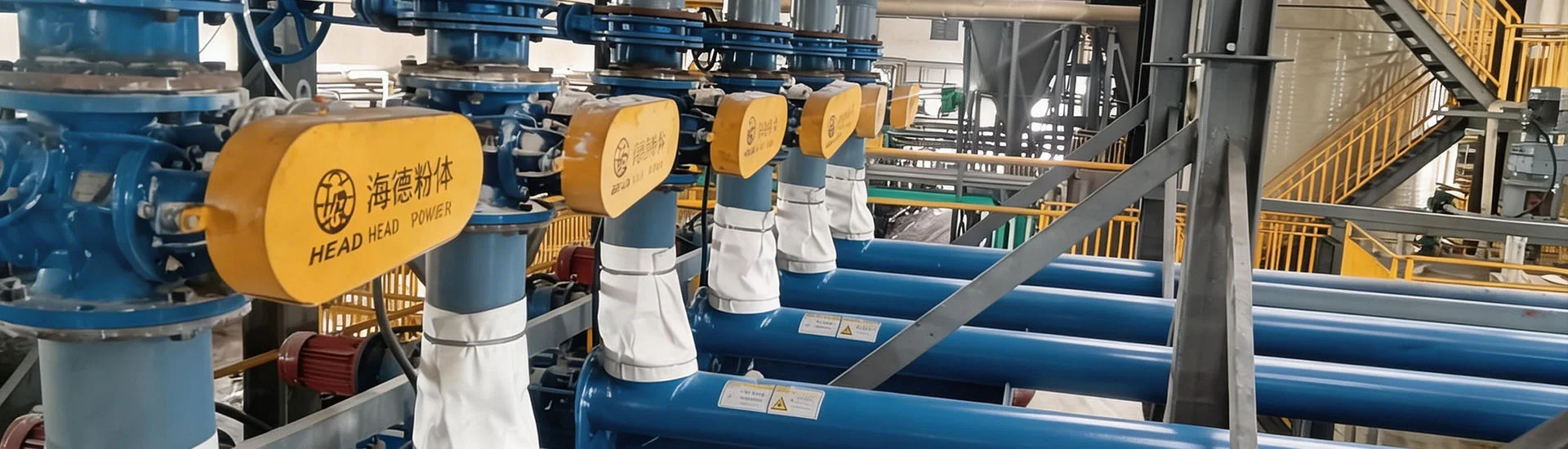
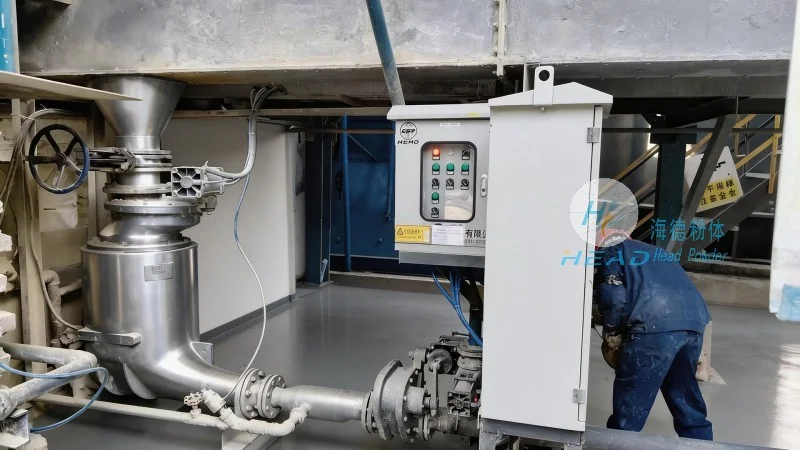
The core of any aluminum hydroxide pneumatic conveying solution lies in its component selection. A typical system includes a bulk bag unloader or silo discharge feeder, a rotary valve or pressure vessel for material entry, a compressor or blower for air supply, a conveying pipeline with appropriate bends, a receiver filter or cyclone for product separation, and a control panel for automation. For aluminum hydroxide, special attention must be paid to material contact surfaces. All components in contact with the product should be constructed from stainless steel 304 or 316L to avoid contamination and corrosion. The inner surface roughness should not exceed Ra 0.8 μm to minimize product adhesion. Furthermore, the rotary valve must be designed with a hardened rotor tip and a close-clearance housing to prevent material leakage. In dense phase systems, the conveying vessel (blow tank) should include a fluidizing membrane made of porous PTFE or sintered metal to ensure even aeration and avoid bridging. Dehumidified air is strongly recommended, as ambient moisture can cause aluminum hydroxide to cake and agglomerate. A refrigerated or desiccant dryer with a dew point of -40°C or lower is standard for critical applications.
Pipeline routing and material selection are critical for long system life. Aluminum hydroxide has a Mohs hardness of approximately 2.5–3.5, which classifies it as moderately abrasive. Standard carbon steel pipes will wear through quickly, especially at bends. The recommended pipe material for straight sections is schedule 40 or schedule 80 seamless carbon steel with a minimum wall thickness of 6 mm. For bends, ceramic-lined pipe bends with alumina ceramic tiles (92% Al₂O₃ or higher) significantly extend service life to over 10,000 hours under normal operating conditions. The bend radius should be at least 10 times the pipe diameter to reduce impact and erosion. Additionally, using long-radius "blow-through" elbows or blind-tee configurations can further reduce wear. In dense phase conveying, the conveying velocity should be maintained between 4 and 8 m/s at the start of the pipe and allowed to increase to no more than 12 m/s at the end. Higher velocities accelerate wear and breakage of the aluminum hydroxide particles, which can alter the product's specific surface area and loss on ignition values—critical quality parameters for flame retardant applications.
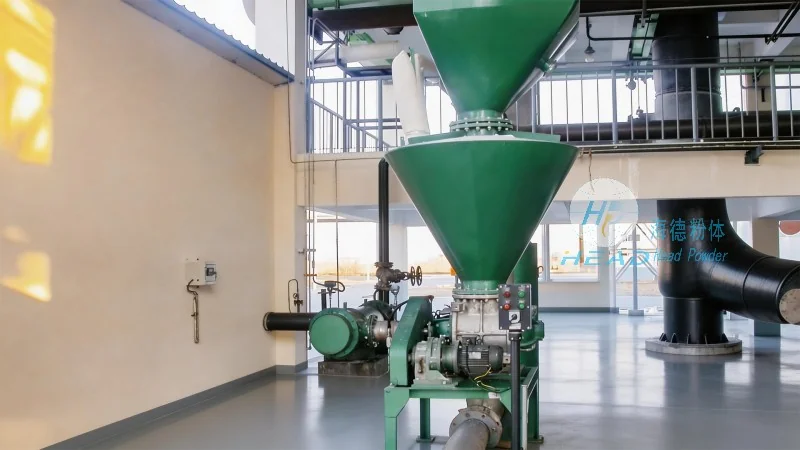
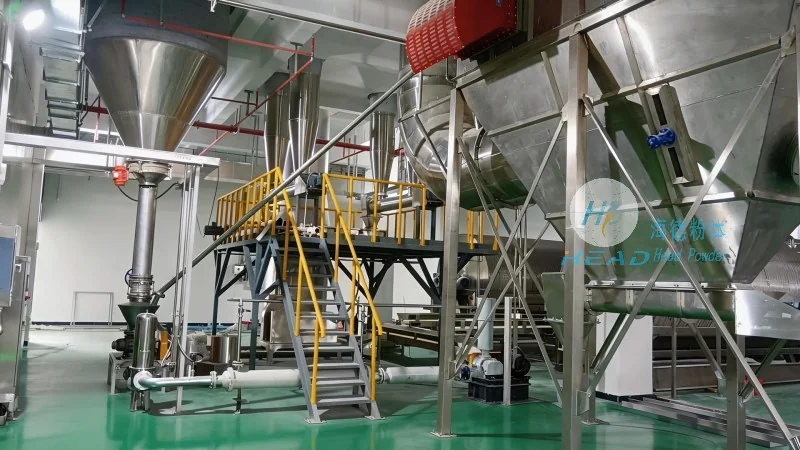
The air compressor or blower must provide a consistent, oil-free air supply. Oil contamination can lead to discoloration and compromised performance of aluminum hydroxide in end products. Therefore, an oil-free rotary screw compressor or a Roots blower with downstream filtration is essential. The required air volume is calculated based on the desired conveying rate, pipeline volume, and pressure drop. A typical dense phase system for aluminum hydroxide may require 15–25 Nm³ of air per ton of material conveyed. The filtration system at the receiving end must be sized for a filtration area of at least 1.2 m² per 100 m³/h of conveying air. Reverse-pulse jet filters with PTFE-coated polyester felt cartridges provide efficient dust collection while preventing product buildup. The filter housing should be equipped with a rotary discharge valve to return captured fines back into the product stream. To comply with emission standards and ensure operator safety, the outlet air should contain less than 10 mg/Nm³ of particulates.
Modern aluminum hydroxide conveying systems rely on programmable logic controllers (PLCs) with human-machine interface (HMI) for seamless operation. The control system should include feedback loops for pressure, air flow, and material level sensors. In dense phase systems, the filling time of the blow tank, pressurization sequence, and discharge timing must be precisely tuned. A typical sequence begins with venting the tank to atmosphere, then filling via a rotary valve until a level probe or load cell indicates full capacity. The inlet valve closes, compressed air enters through the fluidizing membrane and the top of the tank, pushing the material into the pipeline. Once pressure drops below a set threshold (indicating the batch has been conveyed), the system repeats the cycle. In multi-line systems, the PLC can automatically switch between destinations using divert valves. For large-scale operations, the PLC can also interface with a distributed control system (DCS) for centralized monitoring. headpowder's proprietary control software includes adaptive algorithms that adjust conveying parameters based on real-time material characteristics, reducing batch-to-batch variability and troubleshooting time.
Successful installation of an aluminum hydroxide pneumatic conveying system requires coordination between civil, mechanical, and electrical teams. The blow tank should be installed on a platform with adequate height for gravity feeding from upstream process equipment. All pipeline supports must be spaced at intervals of no more than 2.5 meters for straight runs, and additional supports should be provided near bends and valves. During commissioning, the system should undergo a 48-hour continuous run with actual product to verify conveying rate, pressure stability, and product quality. Key performance indicators include: conveying rate deviation ±5% of design value, particle size change (D50 reduction) less than 3%, and pressure fluctuations within ±0.2 bar. Routine maintenance every 500 operating hours includes inspecting rotary valve rotor tips for wear, cleaning filter cartridges, and checking air dryer performance. The ceramic lining in bends should be inspected for cracks or spalling every 2,000 hours. With proper care, a dense phase system for aluminum hydroxide can operate for 15–20 years before major component replacement is needed.
Adopting a well-specified pneumatic conveying solution for aluminum hydroxide yields measurable economic returns. Compared to mechanical conveying (belt conveyors, bucket elevators), pneumatic systems have fewer moving parts, reducing spare parts inventory and labor costs. A typical payback period is 18 to 30 months, factoring in reduced product loss, lower energy consumption, and improved uptime. From an environmental perspective, enclosed pneumatic conveying eliminates dust emissions at transfer points, contributing to cleaner working conditions and compliance with ISO 14001 standards. The ability to use nitrogen as a conveying gas in systems requiring inert atmosphere further enhances safety for aluminum hydroxide, which can generate combustible dust under certain conditions. Industry data from 2025–2026 indicates that the global demand for aluminum hydroxide in flame retardants and water treatment is growing at 4.5% annually, driven by stricter fire safety regulations and environmental policies. This growth underscores the importance of reliable, efficient conveying infrastructure.
To illustrate the practical application of these specifications, consider a project where headpowder designed and installed a 20 tons per hour dense phase conveying system for a major flame retardant producer. The plant required transport of aluminum hydroxide from a central storage silo to five production lines located 180 meters away, with a vertical lift of 15 meters. The conveying pressure was set at 3.2 bar gauge, using an oil-free screw compressor and a 0.6 m³ blow tank with PTFE fluidizing membrane. Pipeline material was schedule 80 carbon steel with ceramic-lined bends at all turning points. After six months of operation, the system achieved a conveying efficiency of 97.8%, with particle size D50 reduction below 2%. The client reported 40% reduction in maintenance hours compared to their previous dilute phase system, and dust levels in the production area dropped by 90%. This case demonstrates how a carefully specified solution can meet both performance and sustainability goals.
When evaluating an aluminum hydroxide pneumatic conveying system solution, start by characterizing your material precisely: particle size distribution, bulk density (typically 0.6–1.0 g/cm³ for aluminum hydroxide), angle of repose, moisture content, and abrasion index. Work with an experienced integrator who can conduct pilot tests using your actual product. Request a detailed specification document that covers all components, pipe routing, air consumption, control logic, and maintenance schedules. Do not compromise on material quality for components in contact with product—the cost of a premature failure far exceeds the initial savings. Look for providers who offer remote monitoring and after-sales support, as conveying systems require periodic optimization. By following the guidelines in this specification, you can secure a conveying system that delivers consistent throughput, low product degradation, and a strong return on investment for years to come.
For organizations seeking a proven partner in aluminum hydroxide pneumatic conveying, headpowder combines engineering expertise with extensive field data from installations across Asia, Europe, and North America. Our engineering team can customize a solution that fits your specific layout, capacity, and budget while meeting the highest standards of safety and reliability. Contact us to discuss your project requirements and arrange a material testing session. (咨询热线:156-6277-7102)

 Shandong headpowder Engineering Co., Ltd.
 156-6277-7102(Manager Zhang)
  0531-83386006
  Jinan City, Shandong Province, China
服务热线
微信咨询
回到顶部