News
Rich project cases across industries, showing real implementation and proven technical strength.Selecting the right pneumatic conveying system for glass powder is a critical decision that directly impacts production efficiency, product quality, and operational safety. Glass powder, with its fine particle size, abrasive nature, and tendency to agglomerate, presents unique challenges that demand a tailored approach. By 2026, the global market for pneumatic conveying systems is expected to exceed USD 45 billion, driven by the expansion of renewable energy, electronics manufacturing, and construction sectors—all of which rely heavily on glass powder as a raw material. This comprehensive guide, developed by industry experts at headpowder, walks through every stage of the equipment selection process, from material characterization to system integration, ensuring that your investment delivers long-term reliability and measurable cost savings.
Before evaluating any equipment, it is essential to conduct a thorough analysis of the glass powder's physical and chemical characteristics. Particle size distribution (PSD) is the first parameter to assess. Typical glass powder used in ceramic frits, abrasives, or coatings ranges from 10 to 150 microns. Fine fractions below 50 microns exhibit high air retention, which can lead to fluidization instability. Bulk density also varies widely—from 0.4 g/cm³ for lightweight borosilicate powders to over 1.2 g/cm³ for dense soda-lime glass. Moisture content, even as low as 0.5%, can cause bridging in hoppers and blockages in conveying lines. Angle of repose, abrasivity (measured by the Bond Work Index), and electrostatic charge accumulation are equally important. At headpowder, our engineering team routinely uses laser diffraction analysis, tapped density testing, and shear cell testing to build a precise material profile. This data determines whether dilute-phase, dense-phase, or combined conveying is most suitable. For example, highly abrasive glass powders (Mohs hardness >6) require wear-resistant piping materials such as alumina ceramic-lined or UHMWPE-lined steel, while cohesive powders often benefit from vibratory or air-assisted feeding mechanisms.
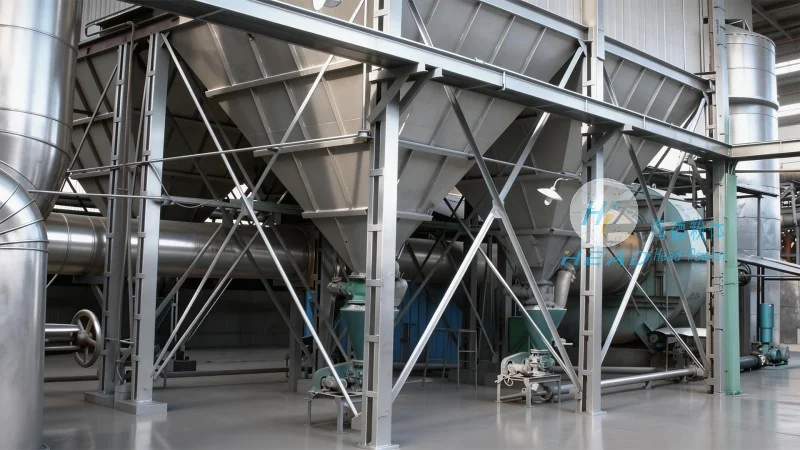
A modern pneumatic conveying selection system for glass powder integrates multiple subsystems, each requiring careful specification. The feeding device is the first critical component. Rotary airlocks are standard for free-flowing powders, but for sticky or semi-cohesive glass dust, screw feeders with variable speed drives offer better metering accuracy. Air source selection—positive displacement blowers, screw compressors, or multi-stage centrifugal fans—depends on the required pressure and flow rate. For dilute-phase conveying of glass powder (typical air velocity 20–30 m/s), blowers with 0.5–2 bar pressure are sufficient. Dense-phase systems (velocity 5–12 m/s) require compressors capable of 3–6 bar. Piping layout must minimize bends (preferably using long-radius elbows or aeration bends) to reduce abrasion and pressure drop. Filtration and dust collection are non-negotiable due to health hazards of respirable glass dust; bag filters with HEPA-level filtration and automatic pulse-jet cleaning are industry standards. Finally, the control system should include PLC-based monitoring of pressure, flow, and temperature, with remote diagnostics capability for predictive maintenance. headpowder's proprietary GlassFlow™ control algorithm automatically adjusts conveying parameters in real time based on feedback from density sensors and pressure transmitters, ensuring stable operation even when batch properties fluctuate.
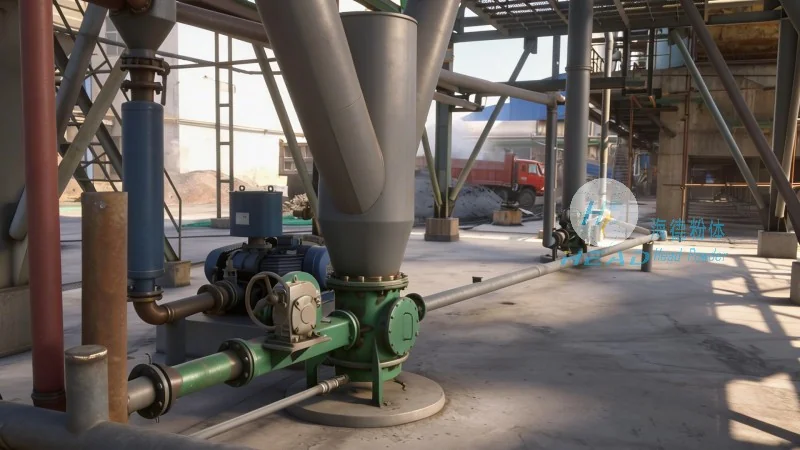
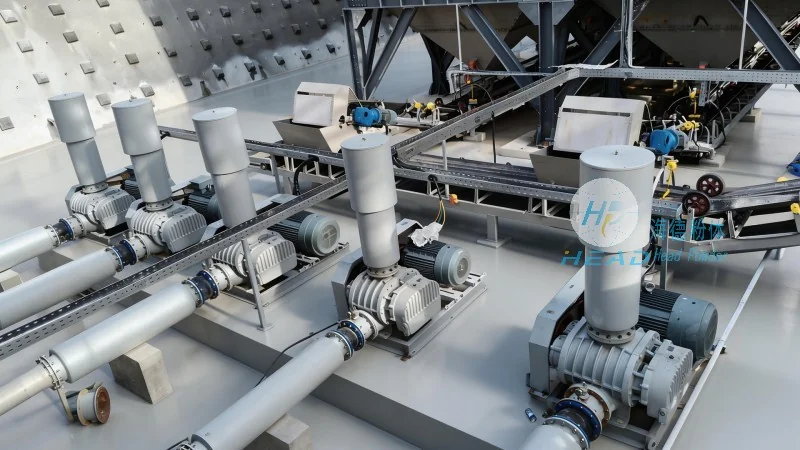
The choice between dilute-phase and dense-phase conveying is one of the most consequential decisions in system design. Dilute-phase systems suspend particles in a high-velocity airstream, offering simple construction and lower capital cost. However, for glass powder, the high velocity accelerates wear on pipe walls and can cause particle degradation—especially problematic if the glass powder is intended for precise particle size specifications (e.g., in ceramic glazes where even 2% fines can alter firing behavior). Dense-phase systems push material in slugs or plugs at lower speeds, drastically reducing wear and product attrition. Recent advances in dense-phase technology now allow reliable conveying of glass powders with particle sizes as fine as 5 microns, thanks to improved air injection nozzles and pipe surface treatments. Nevertheless, dense-phase systems require higher initial investment and more sophisticated controls. A practical rule of thumb: if the glass powder's abrasivity index (determined via standard ASTM G65 test) exceeds 50, or if the product's value justifies preservation of particle shape, dense-phase is strongly recommended. For high-throughput applications exceeding 20 tons per hour, hybrid systems that use dilute-phase for short-distance transfer and dense-phase for long-distance or vertical routing are growing in adoption. Industry data from 2025–2026 shows that over 65% of new glass powder conveying installations in the Asia-Pacific region now employ dense-phase or hybrid solutions for key production lines.
System design begins with determining the required conveying capacity, typically expressed in tons per hour. For glass powder, a safety factor of 15–20% is standard to account for surge loads and seasonal humidity variations. The solids-to-air ratio (kg of powder per kg of air) is a pivotal parameter. For dilute-phase, ratios of 2–10 are common; for dense-phase, ratios can reach 20–60. Pressure drop calculations must consider friction losses in straight pipes, bend losses, vertical lift losses, and acceleration losses. The Darcy-Weisbach equation combined with empirical wear factors for glass powder yields reliable results. For example, conveying 30 tons per hour of soda-lime glass powder over a distance of 150 meters with three 90-degree bends requires approximately 4.5 bar supply pressure in a dense-phase configuration. Pipe diameter selection follows the principle of maintaining minimum conveying velocity above the saltation velocity (typical 10–18 m/s for glass powders) while avoiding excessive velocity. Using computational fluid dynamics (CFD) simulation tools, engineers at headpowder have optimized hundreds of systems, reducing energy consumption by up to 22% compared to conventional designs. One recent project involved a glass powder for photovoltaic panel coating: the system achieved a 40% reduction in pipe wear and maintained particle size distribution within ±1.5% over an eight-month continuous operation.
Integration requires careful coordination with upstream milling or classification equipment and downstream storage or packaging units. The selection system must account for the feeding point's layout: gravity-fed from a silo, or pressure-fed from a mill outlet. For glass powder with high electrostatic charge, grounding straps and anti-static filter media should be incorporated to prevent spark hazards—a concern highlighted in recent NFPA and ATEX guidelines for powder handling. The control architecture should connect seamlessly with the plant's existing SCADA or MES system. Modern glass powder conveying selection systems often include IoT sensors that track real-time wear rate of pipe elbows and filter cartridges, enabling replacement scheduling before failure. headpowder provides a fully configurable selection software that links material test data with 3D layout modeling, generating a complete bill of materials and lifecycle cost analysis within minutes. This tool has been adopted by over 50 glass processing plants across Europe and North America since its introduction in 2024.
Glass powder handling equipment must comply with stringent occupational exposure limits (e.g., OSHA PEL of 5 mg/m³ for respirable crystalline silica). Regular inspections of filter bags, rotary valves, and pipe joints are mandatory. Wear monitoring systems using ultrasonic thickness gauges can detect pipe wall reduction of 1 mm or more. Emergency shutdown procedures should be tested quarterly, and explosion venting is recommended for enclosed conveying lines if the glass powder contains combustible organic residues (common in recycled glass streams). The selection system itself should generate a maintenance log and spare parts list integrated with the operational dashboard. headpowder's after-sales service includes annual system audits with wear mapping and performance benchmarking, ensuring that your equipment maintains peak efficiency throughout its lifespan.
The glass powder pneumatic conveying market is moving toward intelligent, self-optimizing systems. Artificial intelligence (AI) algorithms trained on millions of operating hours can predict pipe clogging 10–15 minutes in advance, allowing automatic adjustments of air pressure or powder feed rate. We also see increasing adoption of modular, containerized conveying stations for mobile glass recycling units. As environmental regulations tighten, systems that recover and reuse conveying air—via closed-loop circuits with moisture removal filters—are gaining traction. By 2027, it is expected that over 80% of new glass powder conveying installations in the EU will incorporate carbon footprint tracking features. headpowder is at the forefront of these innovations, with R&D investments exceeding EUR 3 million annually in material transport simulation and advanced sensor technologies.
A leading glass manufacturer producing ceramic frits for tile production approached headpowder to replace an aging dilute-phase system. The existing setup experienced monthly pipe replacements due to abrasive wear and had a specific energy consumption of 7.2 kWh per ton of conveyed material. After completing material tests and CFD modeling, headpowder designed a dense-phase system with a 6-inch Schedule 40 carbon steel pipe lined with 6 mm alumina ceramic tiles. The solids-to-air ratio was increased from 4.5 to 18, and the conveying velocity was reduced from 28 m/s to 8 m/s. Within the first six months of operation, energy consumption dropped to 3.8 kWh/ton—a 47% reduction—and pipe life extended to over 12 months. The system also improved product quality consistency, reducing the rejection rate of ceramic glaze from 3.2% to below 0.5%. This installation has been featured in industry trade publications as a benchmark for dense-phase glass powder conveying.
For manufacturers seeking a reliable glass powder pneumatic conveying selection system, partnering with an experienced engineering provider is essential. The correct system not only reduces downtime and operational costs but also protects product integrity and ensures compliance with evolving safety regulations. headpowder offers turnkey selection, design, and commissioning services backed by over 15 years of focused experience in powder handling. 咨询热线:156-6277-7102 – our technical consultants are available to discuss your specific material properties, throughput requirements, and plant layout constraints. From initial material testing through to lifecycle support, every step is driven by data, engineering precision, and a commitment to measurable results. (咨询热线:156-6277-7102)

 Shandong headpowder Engineering Co., Ltd.
 156-6277-7102(Manager Zhang)
  0531-83386006
  Jinan City, Shandong Province, China
服务热线
微信咨询
回到顶部