News
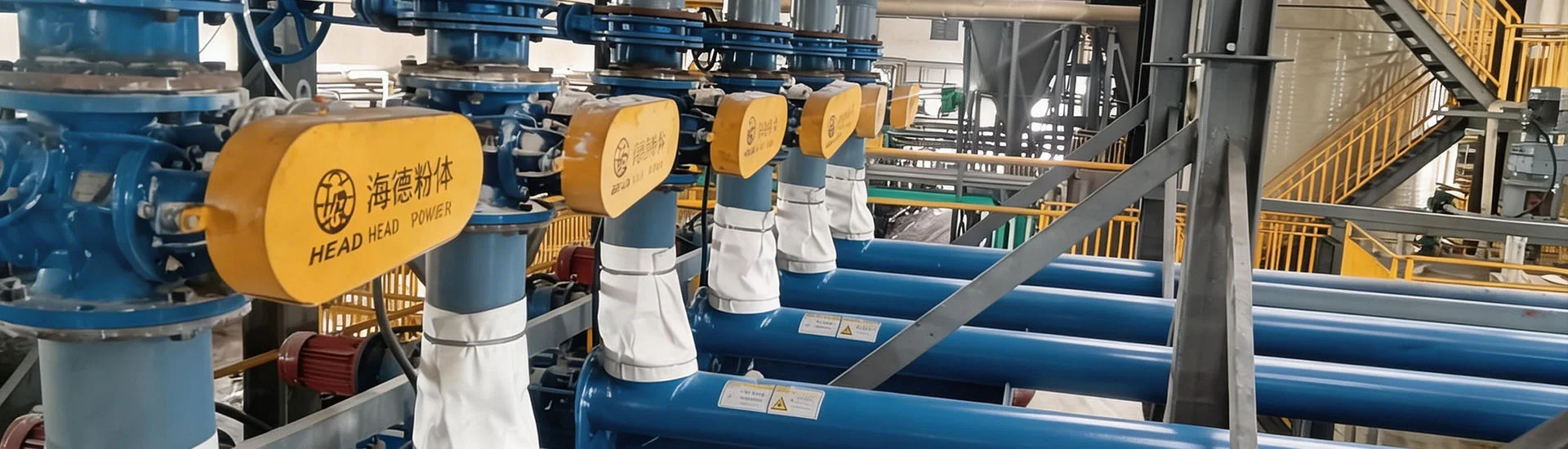
Rich project cases across industries, showing real implementation and proven technical strength.As the global lithium-ion battery market continues its rapid expansion—projected to exceed 1,200 GWh in production capacity by 2026—the demand for high-performance, contamination-free handling of anode materials has become a critical challenge for manufacturers. Anode materials, such as natural graphite, synthetic graphite, silicon-carbon composites, and lithium titanate, are inherently fine, abrasive, and highly sensitive to moisture and particle degradation. Pneumatic conveying systems tailored for these materials must deliver precise metering, gentle transport, and airtight sealing while maintaining throughput efficiency. This article presents a comprehensive technical solution for anode material pneumatic conveying, combining system architecture, component selection, process control, and practical implementation insights—all designed to meet the stringent requirements of modern battery material production lines.
Anode powders exhibit unique physical properties that demand specialized conveying strategies. Particle sizes typically range from 5 to 50 micrometers, with bulk densities between 0.4 and 1.2 g/cm³. These materials are prone to attrition, electrostatic charge buildup, and moisture adsorption. Traditional mechanical conveyors—such as screw elevators or belt systems—introduce cross-contamination risks, require frequent maintenance, and fail to provide the closed-loop environment needed for high-purity production. Pneumatic conveying, when correctly engineered, offers an enclosed pathway, reduced moving parts, and precise flow control. However, improper system design can lead to pipe wear, particle breakage, and inconsistent material feed—issues that directly impact battery electrode quality and cell performance. Therefore, a robust technical solution must address material-specific flowability, abrasion resistance, and dust explosion safety.
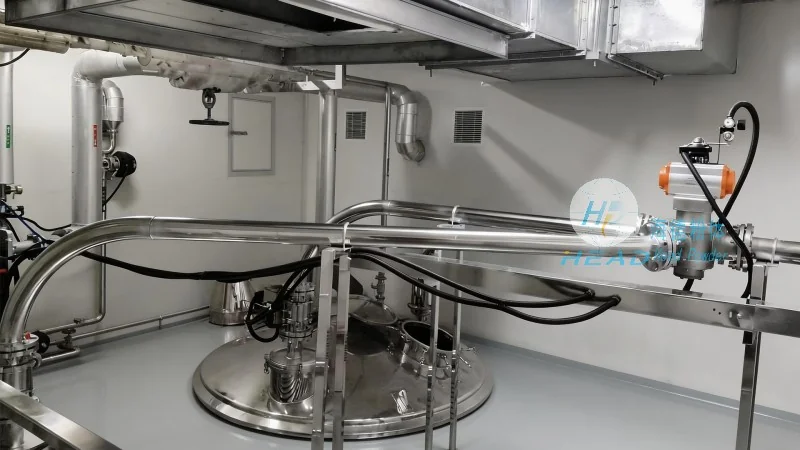
A complete anode material pneumatic conveying system typically comprises a receiving hopper, rotary valve feeder, conveying pipeline, air source unit, filtration and dust collection system, and a control platform. The material enters from upstream mixing or milling equipment into a storage silo or day bin. From there, a rotary valve meters the powder into the pipeline at a controlled rate. The conveying gas—usually nitrogen or dry compressed air—propels the material through the line to discharge points such as blending tanks, coating machines, or electrode slurry preparation units. The air-to-material ratio, conveying velocity, and line length are carefully calculated to avoid saltation or slugging.
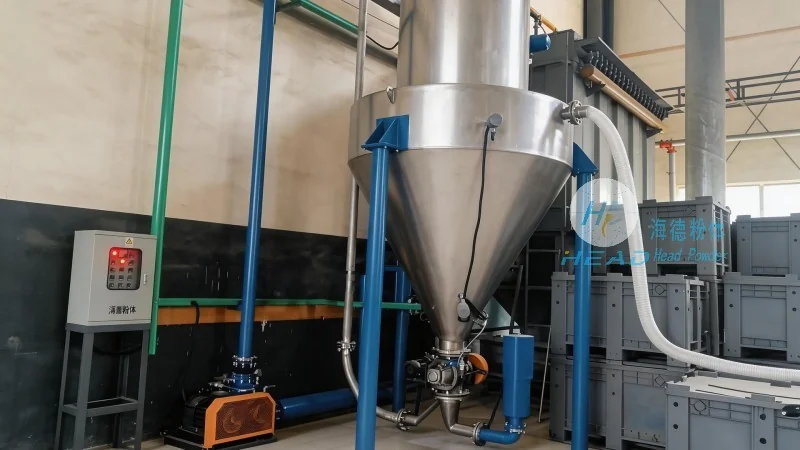
For anode materials, the dilute phase conveying mode is most common, where particles are suspended in a high-velocity air stream. However, for finer or more fragile silicon-based composites, dense phase conveying at low velocity is recommended to minimize particle fracture. Headpowder has developed a dual-mode pneumatic system that switches between dilute and dense phase based on real-time material property feedback, ensuring both gentle handling and reliable throughput.
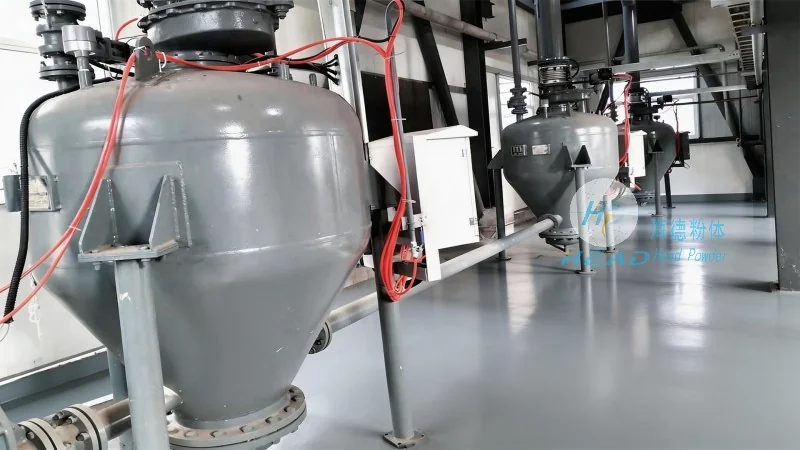
Every component in contact with anode materials must be constructed from wear-resistant, non-contaminating materials. Stainless steel 304L or 316L is standard for piping, with internal surface roughness below Ra 0.8 μm to prevent powder adhesion and facilitate cleaning. Bends require a radius-to-diameter ratio of at least 8:1 to reduce impact erosion and particle attrition. For elbows, ceramic-lined sections or replaceable wear-back inserts extend service life by three to five times compared to standard steel bends.
Rotary valve design is particularly critical. The rotor pockets should be shrouded and equipped with adjustable purge gas ports to prevent material leakage into the bearing area. Headpowder’s proprietary rotary valve features a labyrinth seal and a PTFE-coated rotor profile that reduces torque and minimizes heat generation—a common cause of anode material degradation. The valve clearance is held within 0.05 mm to maintain seal integrity without metal-to-metal contact.
The conveying gas must be oil-free and moisture-free to prevent contamination of hygroscopic anode powders. A dedicated compressed air system with refrigerated dryers and coalescing filters achieves a dew point of -40°C and particulate filtration down to 0.01 microns. For sensitive silicon-graphite blends, nitrogen blanketing is recommended to suppress oxidation and reduce explosion risk. The dust collection unit, typically a pulse-jet cartridge filter, must achieve emission levels below 1 mg/Nm³ while recovering valuable material for reuse. Headpowder’s filtration modules incorporate PTFE membrane cartridges with a filtration area sized to handle 120% of peak conveying airflow, maintaining differential pressure below 1,500 Pa.
Modern pneumatic conveying systems for anode materials rely on distributed control architecture with programmable logic controllers (PLC) and human-machine interface (HMI) panels. Key parameters monitored include line pressure, air velocity, material temperature, and feeder speed. A supervisory control system adjusts the rotary valve speed and air blower output in real time to maintain a stable solids-to-air ratio. For example, if line pressure rises above a set threshold (indicating potential blockage), the controller reduces feed rate and briefly increases purge airflow to clear the line. Advanced systems incorporate predictive algorithms based on historical flow patterns, reducing manual intervention by over 60%.
Headpowder has integrated a proprietary "SmartFlow" module that uses laser backscatter sensors to measure particle concentration at multiple points along the pipeline. This feedback enables closed-loop velocity control, keeping the Froude number between 2.5 and 4.0 for graphite materials—the range where both wear and attrition are minimized. Data from these sensors is logged for quality audits and continuous improvement, aligning with the traceability requirements of IATF 16949 standards adopted by leading battery manufacturers.
Anode carbon powders are classified as combustible dusts with Kst values typically between 120 and 200 bar·m/s. According to the latest NFPA 652 and ATEX directives, pneumatic conveying systems must incorporate explosion venting, suppression, or isolation devices. Headpowder’s standard design includes rupture panels with a vent area calculated per NFPA 68, installed on all downstream hoppers and filter housings. For high-risk zones, chemical suppression bottles are integrated at the rotary valve inlet, capable of injecting potassium bicarbonate within 50 milliseconds of a pressure spike detection. Furthermore, all electrical components are rated for Zone 21 or 22 areas, with grounding straps across every pipe flange to dissipate electrostatic charges. Ground resistance is maintained below 10 ohms and verified daily through an automated monitoring loop.
Successful deployment of anode material pneumatic conveying systems requires careful attention to pipeline routing. Horizontal runs should be limited to 30 meters between bends, and vertical lifts kept under 15 meters to prevent material dropout. Each system receives a pre-commissioning helium leak test to ensure all joints are hermetically sealed at 0.5 bar gauge pressure. During the first 24 hours of operation, flow rate and particle size distribution (PSD) are measured at the discharge point using a laser diffraction analyzer to confirm that D10, D50, and D90 values remain within ±3% of the input material. Headpowder offers a two-week on-site commissioning package where engineers adjust the conveying parameters in partnership with the customer’s process team, guaranteeing a smooth handover.
The global anode material pneumatic conveying market is expected to grow at a compound annual rate of 11.3% through 2026, driven by the commissioning of new gigafactories in North America, Europe, and Southeast Asia. A major shift is underway from natural graphite to silicon-dominant anodes, which require lower conveying velocities (< 12 m/s) to preserve particle morphology. Additionally, the push for dry electrode coating processes—eliminating solvent use—demands pneumatic systems that can precisely meter powder directly onto current collectors in a dust-free environment. Headpowder has already delivered 18 systems for dry electrode pilot lines in 2024–2025, with conveying accuracies of ±0.5% by weight.
Sustainability is another key driver. Closed-loop pneumatic systems with 99.8% material recovery rates reduce waste and lower Scope 1 emissions. Headpowder’s latest product line includes an energy-recovery blower package that recaptures kinetic energy from the conveying air flow, cutting electricity consumption by up to 22% compared to conventional designs. As lithium-battery producers face mounting pressure to decarbonize their supply chains, such efficiency gains are becoming decisive selection criteria.
A leading cathode/anode production facility in Jiangsu Province, China, replaced six outdated vacuum conveyors with a centralized Headpowder pneumatic system handling both graphite and silicon-carbon blends. The new system reduced particle breakage (d90 change from –4.2% to –0.8%), lowered maintenance downtime by 73%, and achieved a consistent flow rate of 8 t/h with a deviation of only ±1.7%. The installation included a nitrogen recirculation loop that lowered annual operating costs by RMB 2.1 million. The customer reported a full return on investment within 11 months. This case underscores the value of engineering a conveying solution that matches the specific rheology of modern anode materials.
As battery technologies evolve toward higher energy densities and faster charging, the anode material supply chain must adapt with conveying systems that are both robust and intelligent. Pneumatic conveying remains the most viable solution for moving fine, abrasive, and moisture-sensitive powders, but only when designed with material-specific parameters in mind—from component metallurgy to control algorithms. The integration of real-time particle monitoring, adaptive flow control, and explosion safety measures forms the backbone of a reliable system that supports zero-defect production. For manufacturers seeking to scale their anode capacity while maintaining product consistency, investing in a well-architected pneumatic conveying system is not optional; it is foundational. Headpowder continues to deliver tailored technical solutions that combine deep domain knowledge with field-proven hardware, helping battery material producers achieve higher yields and lower total cost of ownership. (咨询热线:156-6277-7102)

 Shandong headpowder Engineering Co., Ltd.
 156-6277-7102(Manager Zhang)
  0531-83386006
  Jinan City, Shandong Province, China
服务热线
微信咨询
回到顶部