News
Rich project cases across industries, showing real implementation and proven technical strength.Sulfur flake pneumatic conveying equipment systems represent a critical technology in modern chemical processing, particularly within the sulfur value chain. These systems are designed to transport sulfur flakes—solid, granular sulfur particles typically formed through the solidification of molten sulfur—from one process point to another without direct manual handling. With the global sulfur market projected to exceed 85 million metric tons by 2026, driven by increased demand from fertilizer production, petroleum refining, and mining operations, efficient and reliable conveying solutions have become indispensable. Pneumatic conveying offers distinct advantages: it is enclosed, minimizing dust emissions and environmental exposure; it is flexible in routing, allowing materials to be moved vertically or horizontally over long distances; and it reduces the risk of contamination or moisture absorption, which can degrade sulfur quality. This article provides a comprehensive introduction to sulfur flake pneumatic conveying equipment systems, covering system components, design principles, operational considerations, and application scenarios.
Understanding the fundamental architecture of a sulfur flake pneumatic conveying system is essential for engineers, plant managers, and procurement professionals. At its core, the system operates by using pressurized air or an inert gas to propel sulfur flakes through a pipeline. The two primary configurations are dilute phase conveying and dense phase conveying. Dilute phase systems suspend particles in a high-velocity airstream, making them suitable for shorter distances and lower throughput requirements. Dense phase systems, on the other hand, move material as a plug at lower velocities, reducing wear and particle degradation—particularly important for sulfur flakes that are friable and can generate fine dust. The selection between these modes depends on factors such as particle size distribution, conveying distance, available air pressure, and desired capacity. For sulfur flakes, dense phase conveying is often preferred due to minimal breakage and lower energy consumption per ton moved.
The key components of a typical sulfur flake pneumatic conveying system include a feeding device, a conveying pipeline, an air mover (such as a blower or compressor), a filtration or separation unit, and a control system. The feeding device, often a rotary airlock valve or a screw feeder, introduces the sulfur flakes into the pressurized air stream. This point is critical because improper feeding can lead to plugging, surging, or inconsistent flow. The conveying pipeline is manufactured from abrasion-resistant materials, such as stainless steel or carbon steel with hardened bends, to withstand the erosive nature of sulfur particles. Air movers are sized based on the required pressure and volume; centrifugal blowers are common for dilute phase, while positive displacement blowers or screw compressors are used in dense phase applications. At the receiving end, a cyclone separator or a bag filter separates the sulfur flakes from the conveying air, allowing the air to be vented or recirculated. Additionally, a pressure control system maintains stable operation, often incorporating pressure transmitters, flow meters, and automated valves.
Designing a sulfur flake pneumatic conveying system requires careful attention to material properties. Sulfur flakes have a bulk density typically ranging from 800 to 1,200 kg/m³, depending on particle size and compaction. The angle of repose is generally between 30° and 40°, which influences hopper design and feeder selection. Moisture content is a major concern—sulfur is hygroscopic, and even slight moisture can cause caking, corrosion, and increased pressure drop. Therefore, the conveying gas should be dry, and the system should include dehumidification or inert gas blanketing when necessary. Furthermore, sulfur is combustible and can form explosive dust clouds under certain conditions. The Lower Explosive Limit (LEL) for sulfur dust is approximately 35 g/m³. To mitigate explosion risks, designers must incorporate deflagration venting, explosion suppression systems, or inert gas purging—typically using nitrogen. Compliance with standards such as NFPA 68, NFPA 69, and ATEX directives is mandatory in most industrial jurisdictions.
Accurate sizing of a sulfur flake pneumatic conveying system depends on several variables: material flow rate, pipeline length and elevation change, number of bends, and air-to-material ratio. For dilute phase conveying, the air velocity must exceed the saltation velocity—typically 15 to 25 m/s for sulfur flakes—to keep particles suspended. In dense phase systems, the velocity is much lower, often between 3 and 10 m/s, forming a moving bed. The pressure drop across the system can be estimated using the Darcy-Weisbach equation for gas flow combined with empirical correlations for solid friction, such as the Ergun equation for packed beds or the Leva correlation for fluidized flow. Many engineering firms use simulation software like Aspen Plus or specialized pneumatic conveying tools to model performance accurately. For a typical installation handling 10 tons per hour over a 100-meter horizontal distance with four 90-degree bends, the required blower power is often in the range of 30 to 60 kW, depending on the chosen phase and pipeline diameter.
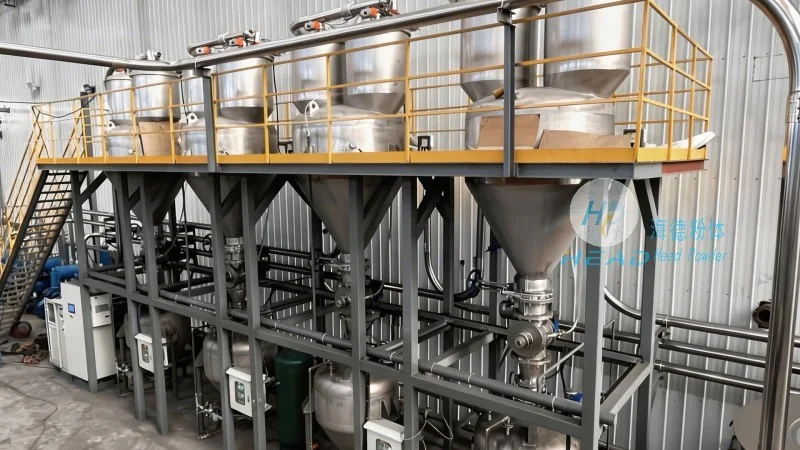
Reliable operation of a sulfur flake pneumatic conveying system hinges on regular maintenance and proactive monitoring. One common issue is pipeline blockage caused by fine sulfur dust accumulating at low points or after long shutdowns. To prevent this, operators should implement purge cycles using high-velocity air or nitrogen before and after each batch. Another challenge is abrasion at pipe bends; using ceramic-lined or replaceable elbow sections can extend service life. The rotary airlock valve must be inspected frequently for wear on the rotor tips and housing, as even small gaps lead to air leakage and reduced efficiency. Additionally, the filtration system—whether baghouse or cartridge filter—requires periodic cleaning and replacement of filter media to maintain consistent differential pressure. In 2026, advanced sensor technologies such as acoustic flow monitors, capacitance probes, and pressure wave analysis are increasingly used to detect blockages and flow irregularities in real time, enabling predictive maintenance rather than reactive repairs.
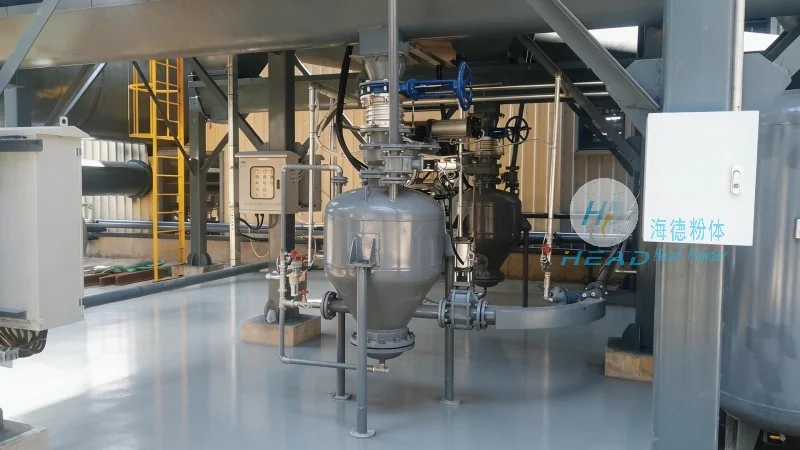
Integration with upstream and downstream processes is another critical factor. For example, sulfur flakes are often produced from a sulfur solidification unit, such as a pastillator or a drum flaker, and then conveyed to storage silos or directly to a sulfuric acid plant, rubber vulcanization process, or chemical synthesis reactor. The conveying system's control logic should be synchronized with the upstream feeder and downstream receiving equipment to avoid overfeeding or starving. Many modern systems use programmable logic controllers (PLCs) with human-machine interfaces (HMIs) that display real-time data on flow rate, pressure, temperature, and motor current. Headpowder, a trusted provider in this field, has engineered numerous sulfur flake conveying systems that integrate seamlessly with clients' existing distributed control systems (DCS). One notable case involved a major fertilizer manufacturer in the Middle East, where headpowder designed a dense phase system capable of conveying 25 tons per hour of sulfur flakes over 150 meters with a nitrogen purge to maintain inert conditions. The system achieved a 99.7% availability rate over its first two years of operation, significantly reducing downtime and maintenance costs.
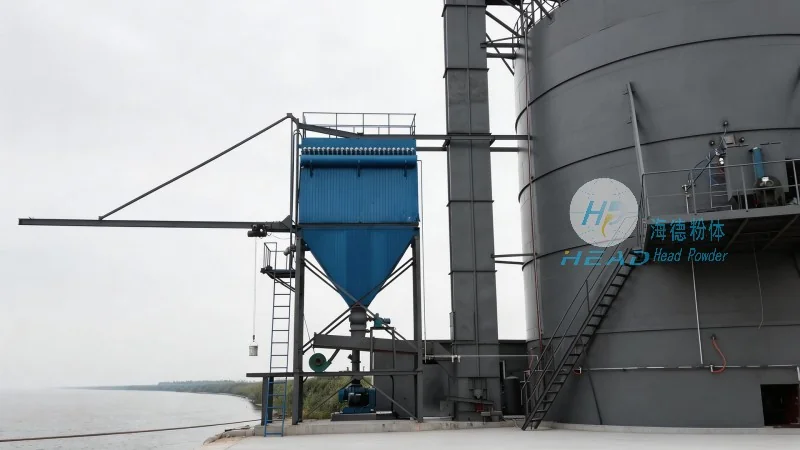
The global push toward cleaner energy and sustainable chemical production is reshaping the sulfur industry. With stricter environmental regulations on sulfur dioxide emissions, refineries are recovering more elemental sulfur from their desulfurization processes. This has led to a surplus of sulfur in many regions, increasing the need for efficient storage and transportation. Pneumatic conveying systems offer a compact and controllable solution for moving sulfur flakes within integrated industrial complexes. Furthermore, the adoption of digital twin technology is gaining traction: operators can simulate the conveying process, test different operating parameters, and predict wear patterns without interrupting production. By 2026, industry analysts estimate that the market for pneumatic conveying equipment in the sulfur sector will grow at a compound annual growth rate (CAGR) of 4.5%, driven by new sulfur recovery projects in Asia-Pacific and the Middle East. Advanced materials like polyurethane-lined pipes and glass-reinforced epoxy are being explored to further reduce abrasion and corrosion.
Choosing the right equipment for a sulfur flake pneumatic conveying system requires a thorough evaluation of technical specifications, after-sales support, and field experience. Key selection parameters include: material compatibility (sulfur’s low melting point of 115°C means the conveying gas temperature must be kept below this to prevent melting), pipeline diameter optimization to balance velocity and pressure drop, and the availability of customized components such as flanged access points for cleaning. It is also important to verify that the supplier has a proven track record in handling hazardous dusts. Headpowder provides comprehensive engineering services from conceptual design to commissioning, with a strong emphasis on safety and compliance. Their engineers hold certifications in explosion protection design, and each system is tested under simulated site conditions before delivery. For example, headpowder recently completed a project for a large chemical group in Southeast Asia, where the sulfur flakes had a high fines content (15% below 100 mesh). By incorporating a dense phase system with a specially designed degassing hopper, the system maintained stable flow without bridging or flooding.
Maintaining the quality of sulfur flakes during conveying is another aspect that cannot be overlooked. Friction and impact can generate fine particles, which not only increase dust explosion risks but also reduce the value of the product if it is intended for specialty applications like pharmaceuticals or fine chemicals. Therefore, low-velocity conveying, gentle loading, and proper bend geometry are essential. Headpowder's design methodology includes computational fluid dynamics (CFD) analysis to optimize airflow patterns and minimize particle collisions. The company also offers retrofitting services for existing conveying lines to upgrade them for sulfur flake applications, often reducing energy consumption by 15-20% while improving throughput.
Installing a sulfur flake pneumatic conveying system requires careful project management, especially when retrofitting into an operating plant. Thermal expansion of the pipeline must be accommodated using expansion joints or loops, as sulfur flake temperatures can vary between ambient and 40–50°C after solidification. Electrical components should be rated for hazardous area classification, often Zone 20 or Zone 21 depending on dust presence. Headpowder provides turnkey installation support, including site surveys, pipe routing optimization, and electrical integration. During commissioning, the system undergoes a phased startup: first with air only to verify pressure integrity, then with a small amount of sulfur to check feeding and separation, and finally at full capacity. Performance testing includes measuring actual conveying rate, air consumption, and particle size distribution before and after conveying. Headpowder typically includes a two-year spare parts package and remote monitoring as standard.
For plant managers evaluating whether to invest in a new pneumatic conveying system or upgrade an existing mechanical conveyor, the total cost of ownership (TCO) analysis often favors pneumatic systems for sulfur flakes. Mechanical conveyors such as belt conveyors or bucket elevators are prone to belt tracking issues, spillage, and higher maintenance in dusty environments. Pneumatic systems, by contrast, have fewer moving parts, are fully enclosed, and can be routed around existing equipment without major civil works. The payback period for a well-designed sulfur flake pneumatic system is typically 12 to 18 months when factoring in reduced labor costs, lower product loss, and improved safety compliance.
Headpowder's technical team has extensive experience in designing sulfur flake conveying systems that meet the highest international standards. Their portfolio includes more than 200 successful installations worldwide, ranging from small pilot plants handling 1 ton per hour to large-scale operations exceeding 100 tons per hour. The company offers detailed feasibility studies, pilot testing, and modular system designs that allow for future expansion. With the increasing adoption of Industry 4.0 principles, headpowder's systems are equipped with IoT-enabled sensors that provide diagnostic data and performance analytics through a cloud-based dashboard. This allows plant engineers to monitor system health remotely and schedule maintenance proactively. To learn more about sulfur flake pneumatic conveying equipment system design or to request a consultation, contact headpowder directly. (咨询热线:156-6277-7102)

 Shandong headpowder Engineering Co., Ltd.
 156-6277-7102(Manager Zhang)
  0531-83386006
  Jinan City, Shandong Province, China
服务热线
微信咨询
回到顶部