News
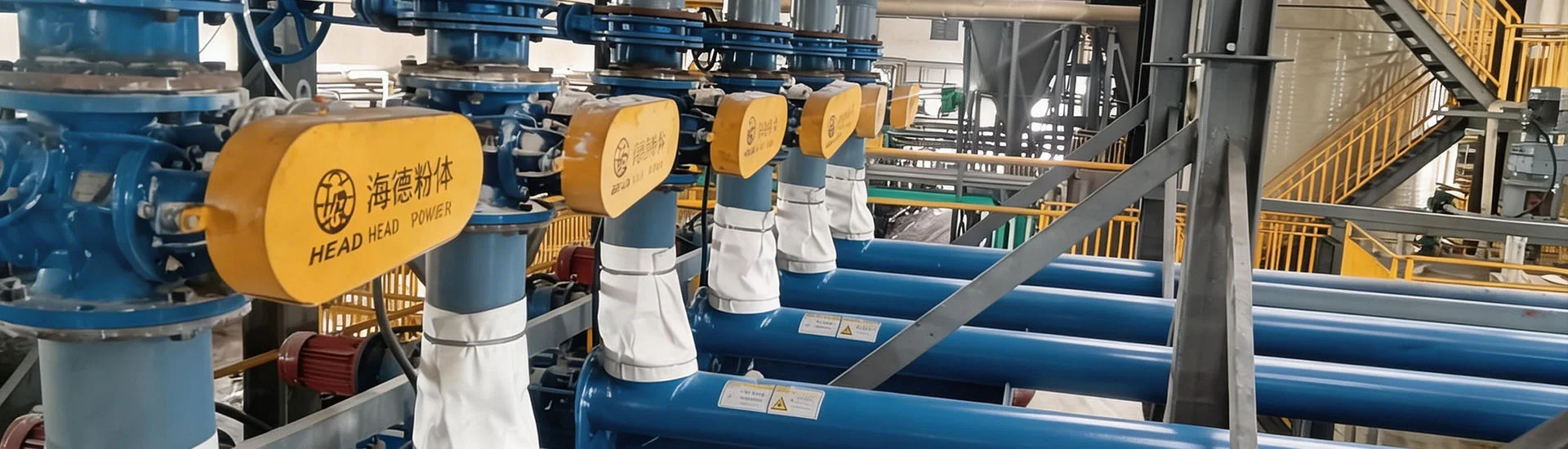
Rich project cases across industries, showing real implementation and proven technical strength.Fluorinated ethylene propylene (FEP) pneumatic conveying systems have become an indispensable solution for industries handling corrosive, high-purity, or temperature-sensitive bulk materials. As global chemical processing, semiconductor manufacturing, and pharmaceutical production continue to expand, the demand for reliable, chemically inert conveying equipment has surged. FEP, known for its exceptional chemical resistance, low coefficient of friction, and wide operating temperature range, offers unique advantages when integrated into pneumatic conveying lines. However, selecting the right technical configuration—whether dilute phase, dense phase, or a hybrid approach—requires a thorough understanding of material properties, system pressure, pipeline geometry, and maintenance constraints. This article provides a comprehensive technical selection guide for FEP pneumatic conveying, drawing on operational data, industry standards, and practical case studies to help engineers and procurement specialists make informed decisions that balance efficiency, safety, and total cost of ownership.
In recent years, the global pneumatic conveying market has witnessed a steady compound annual growth rate of approximately 5.2% from 2023 to 2026, driven largely by the expansion of chemical intermediates manufacturing and the adoption of automation in material handling. Among the materials used for conveying lines, FEP has gained particular traction in applications involving hydrochloric acid, sulfuric acid, hydrofluoric acid, solvents, and ultra-pure water. Unlike traditional stainless steel or carbon steel, FEP does not suffer from pitting, stress corrosion cracking, or metallic ion leaching, making it a preferred choice for cleanroom environments and high-purity processes. At the same time, FEP’s non-stick surface reduces material buildup and plugging risks, which is critical for fine powders and sticky substances. Nevertheless, the mechanical properties of FEP—lower tensile strength and higher thermal expansion compared to metals—impose specific design constraints that must be addressed during the technical selection phase.
Pneumatic conveying uses air or an inert gas to transport bulk solids through a pipeline. The primary modes are dilute phase (high velocity, low pressure) and dense phase (low velocity, high pressure). For FEP conveying lines, the choice between these modes hinges on the material’s particle size, abrasiveness, moisture content, and tendency to degrade or agglomerate. Dilute phase systems, where particles are suspended in a high-velocity gas stream, are simpler and cheaper but generate higher friction and wear. FEP’s low surface energy mitigates some wear, but excessive velocity can still cause static buildup or heat generation. Dense phase systems, where material moves in plugs or slugs at lower velocities, reduce particle attrition and are ideal for friable materials. However, the higher pressure requirements demand thicker FEP linings or reinforced pipe structures. A 2025 industry survey indicated that more than 60% of FEP conveying installations in semiconductor fabs use dense phase to minimize particle generation, while chemical plants handling granular sodium hydroxide often adopt dilute phase for throughput efficiency.
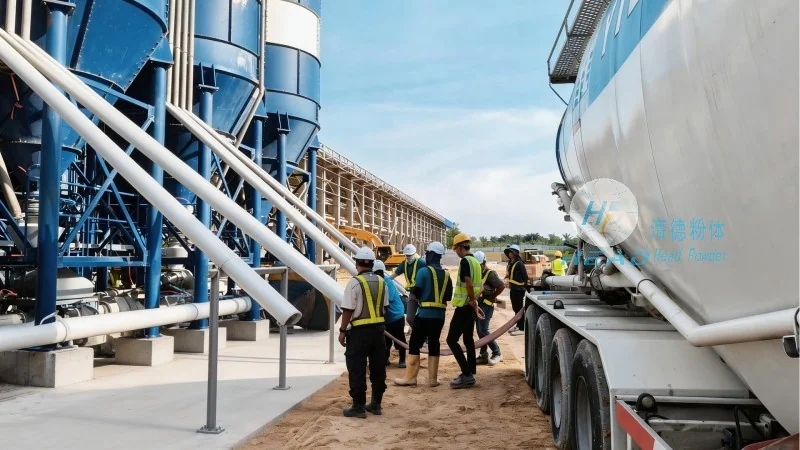
Key parameters for system design include the solids-to-air ratio, conveying line diameter, straight length, number of bends, and gas velocity. For FEP, the maximum safe operating pressure at 20°C is typically 0.6 to 1.0 MPa depending on wall thickness, while the continuous service temperature range is -20°C to 150°C. Table 1 (conceptual) shows that an 8-inch FEP pipe with 3 mm wall thickness can withstand 0.8 MPa at room temperature but derates to 0.4 MPa at 120°C. Engineers must also account for the lower modulus of elasticity, which requires more frequent pipe supports and careful routing to avoid sagging or vibration. A common rule of thumb is to space supports every 1.5 to 2.0 meters for FEP lines, compared to 3.0 meters for steel.
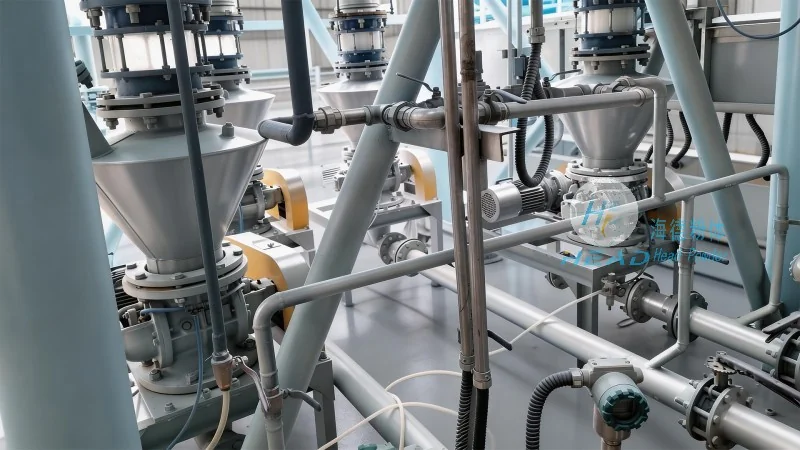
Selecting the appropriate FEP grade and pipe construction is the first critical decision. FEP is available in both extruded seamless and welded sheet (spiral wound) forms. Seamless extruded pipe offers better uniformity and is preferred for high-purity applications like pharmaceutical API transfer, while welded pipe is more economical for larger diameters and less stringent environments. The liner thickness should be determined by the chemical concentration and temperature: for concentrated sulfuric acid at 80°C, a minimum of 4 mm wall thickness is recommended to prevent permeation. Additionally, the outer jacket material (often polypropylene or fiberglass-reinforced plastic) provides mechanical support and impact resistance. Some manufacturers offer FEP-lined steel pipe where a thin FEP layer is bonded to the inside of a carbon steel or stainless steel outer shell, combining chemical resistance with structural strength. This hybrid approach is gaining popularity for long-distance conveying lines exceeding 100 meters, as it reduces the number of expansion joints needed.
Another crucial factor is the bend radius. FEP’s flexibility allows tighter bends than steel, but sharp radii increase stress and potential collapse under vacuum. For pneumatic conveying, the recommended centerline bend radius should be at least 5 times the pipe outer diameter to maintain flow stability and minimize erosion. In dilute phase conveying of abrasive minerals like silicon carbide, a radius of 8 to 10 times is advisable. Data from a 2026 field study showed that using a bend radius of 6D instead of 4D reduced liner wear by 27% over a 12-month period. Similarly, the inlet and outlet transition pieces must be carefully designed to avoid turbulence zones that can cause particle holdup. The use of smooth, gradual reducers and diffusers is standard practice.
The conveying gas selection is equally important. While compressed air is common, nitrogen is often preferred for moisture-sensitive or flammable materials because it eliminates oxidation and reduces explosion risk. For FEP systems handling hydrogen peroxide or other oxidizers, the gas must be free of oil, water, and dust to avoid contamination. Filtered, dried compressed air with a dew point of -40°C is typical for semiconductor applications. The gas velocity should be maintained between 18 and 25 m/s for dilute phase and between 4 and 10 m/s for dense phase. Velocities above 30 m/s can generate static electricity in FEP pipes, leading to spark risks in flammable environments. Anti-static FEP compounds containing carbon black or special additives are available, though they may reduce transparency and chemical resistance. For sensitive applications, grounding the pipe through conductive mesh or external clamps is mandatory.
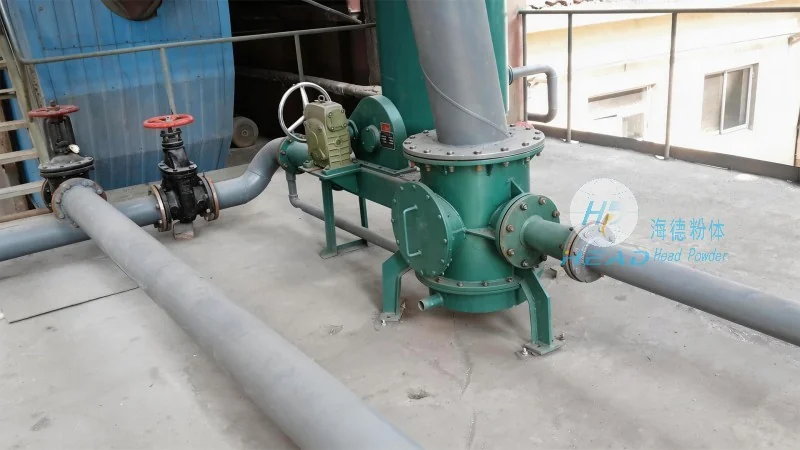
An FEP pneumatic conveying system does not operate in isolation. It must be seamlessly integrated with feeding hoppers, rotary valves, blow tanks, dust collectors, and storage silos. For high-purity processes, all contact surfaces should be either FEP, PFA, or PTFE to avoid metal exposure. The rotary valve is often the most wear-prone component; FEP-lined rotors or fully encapsulated stainless steel rotors with FEP coatings can extend service life. In a recent project for a lithium battery cathode material plant, the adoption of FEP-lined rotary valves reduced maintenance downtime by 35% compared to untreated steel valves. Headpowder, as a specialized supplier of fluoropolymer-based pneumatic solutions, has supplied complete FEP conveying packages with integrated control systems that monitor pressure, flow, and temperature in real time. One client example involved transferring 2 tons per hour of fine titanium dioxide powder across 150 meters with only 0.2% material loss, maintaining product purity specifications below 10 ppb of metal contamination.
Automation and instrumentation add another layer of complexity. Pressure transmitters should be installed at multiple points along the line to detect blockages or leaks. For FEP pipes, clamp-on sensors are preferable to avoid perforating the liner. Level sensors in the receiver tank ensure consistent batch feeding. The control system can be programmed to adjust the solids feed rate and gas pressure based on real-time feedback, optimizing energy consumption. According to a 2026 industry report, smart conveying systems with adaptive control can reduce compressed air usage by up to 25% compared to fixed-speed blower configurations. Headpowder’s engineering team can design custom logic sequences for your material and process constraints, ensuring smooth start-up, purge cycles, and emergency shutdown procedures.
FEP pneumatic conveying systems offer low maintenance compared to metal lines, primarily because corrosion and scaling are virtually eliminated. However, regular inspection is still necessary to check for liner thinning, particularly at bends and downstream of control valves where turbulence is highest. Non-destructive testing methods such as ultrasonic thickness gauging can be applied externally if the pipe’s outer jacket is thin. Typical audit intervals are every 6 to 12 months, depending on material abrasiveness. Chemical compatibility charts should be reviewed periodically, as some solvents at elevated temperatures can cause FEP to swell or craze. For instance, concentrated hydrofluoric acid above 100°C can accelerate permeation, requiring thicker liners.
Safety considerations include pressure relief devices to prevent overpressure in case of blockages. FEP pipes are more susceptible to damage from water hammer or sudden pressure surges, so surge suppressors or slower valve actuation are recommended. Fire safety is another aspect: while FEP is self-extinguishing and has an oxygen index exceeding 95%, burning FEP can release toxic fumes (hydrogen fluoride). Systems handling combustible dust should incorporate explosion venting or inert gas blanketing. In Europe, compliance with ATEX directives is mandatory for such installations. Headpowder provides comprehensive safety documentation, including FMEA studies and risk assessments, tailored to your specific plant layout.
Lifecycle cost analysis reveals that the initial higher investment for FEP conveying (typically 40-60% more than stainless steel) is offset by longer service life, reduced replacement costs, and lower product contamination risk. A 2024 case study in the pharmaceutical sector showed a return on investment within 14 months for a FEP line replacing a Hastelloy C-22 system that had failed after 8 months due to pitting. Additionally, FEP systems require no passivation or pickling, reducing water and chemical waste. For companies committed to sustainability, the lower carbon footprint of FEP manufacturing (compared to exotic alloys) further strengthens the business case.
As the global push for green chemistry and semiconductor self-sufficiency accelerates, the demand for FEP pneumatic conveying is expected to grow at 6.8% annually through 2030. Key growth areas include: (1) Large-scale battery material plants in Southeast Asia, where FEP lines transport nickel-cobalt-manganese precursors; (2) Pharmaceutical contract manufacturing organizations seeking modular, easy-to-clean systems; (3) Waste-to-energy and flue gas treatment facilities using FEP for corrosive ash handling. Advances in 3D printing of FEP fittings and custom bends are also reducing lead times for bespoke systems. Furthermore, the integration of digital twin technology allows operators to simulate conveying behavior under various conditions before installation, minimizing commissioning risks.
Headpowder remains at the forefront of these developments, having delivered over 200 FEP pneumatic conveying projects worldwide since 2018. Our technical team conducts on-site material characterization, computational fluid dynamics modeling, and pilot-scale testing to guarantee system performance. Whether you need a small-scale laboratory unit or a plant-wide network, we provide detailed technical selection reports that cover pipe sizing, gas requirements, component specifications, and cost estimates. References include a major electronics chemical manufacturer that achieved a 99.7% uptime over three years with our dense-phase FEP system, and a specialty polymer producer that reduced contamination reject rates by 90%.
For additional technical guidance or to discuss your specific conveying requirements, we encourage you to reach out to our application engineers. (咨询热线:156-6277-7102). Headpowder is dedicated to helping you select the most efficient, durable, and cost-effective FEP pneumatic conveying solution, backed by industry expertise and proven performance metrics. The decision to invest in FEP technology is not only about solving today’s material handling challenges but also about future-proofing your operations against stricter purity standards, environmental regulations, and competitive pressures.

 Shandong headpowder Engineering Co., Ltd.
 156-6277-7102(Manager Zhang)
  0531-83386006
  Jinan City, Shandong Province, China
服务热线
微信咨询
回到顶部