News
Rich project cases across industries, showing real implementation and proven technical strength.In the rapidly evolving landscape of bulk material handling, activated carbon powder presents unique challenges due to its low bulk density, high porosity, and abrasive nature. Effective pneumatic conveying of such fine, cohesive powders requires specialized equipment design that balances energy efficiency with material integrity. This article provides a comprehensive technical overview of activated carbon powder pneumatic conveying system equipment, examining key components, system configurations, selection parameters, and industry best practices. Drawing on application experience and current market trends as of 2026, the discussion aims to equip plant engineers, procurement specialists, and operations managers with the knowledge needed to specify reliable conveying solutions for demanding environments such as water treatment, air purification, and chemical processing.
Before delving into equipment specifics, it is crucial to recognize the physical and flow characteristics that define activated carbon powder. Typical particle sizes range from 10 to 200 microns, with bulk densities often falling between 0.4 and 0.7 g/cm³. The material is highly porous, with surface areas exceeding 1000 m²/g, which contributes to its tendency to adsorb moisture and generate static electricity during transport. These properties directly influence equipment selection: dilute-phase systems may risk particle attrition and dusting, while dense-phase systems can reduce wear but require higher pressure differentials. In practice, moisture content should be maintained below 5% to prevent bridging and caking in conveying pipelines. Industry standards such as ASTM D2862 for particle size distribution and DIN 51718 for moisture analysis provide reference benchmarks for quality control. Understanding these parameters is the first step toward designing a pneumatic conveying system that preserves product quality while achieving throughput targets.
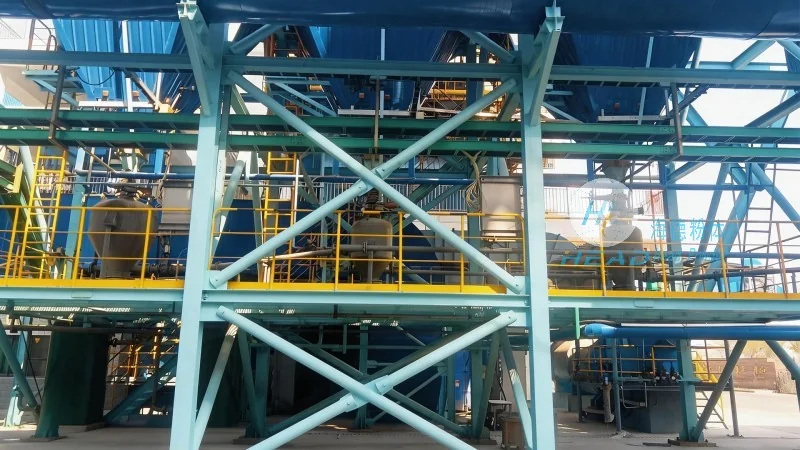
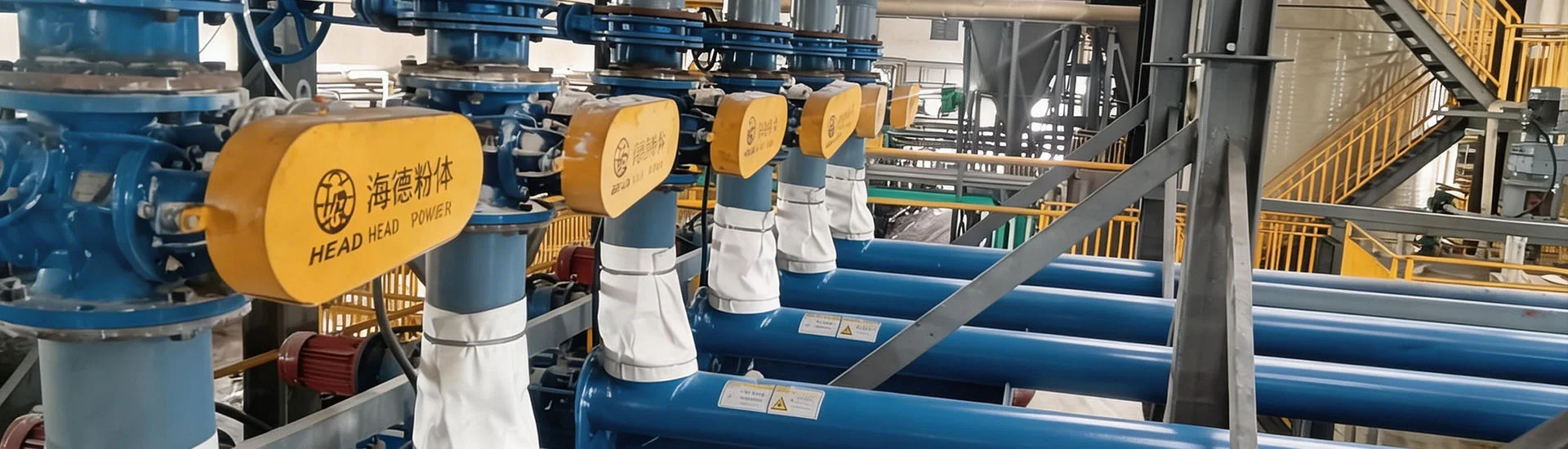
A complete activated carbon powder pneumatic conveying system comprises several critical subsystems, each engineered to handle the material's challenging characteristics. The primary components include the feeding device, conveying pipeline, gas-solid separation unit, and control system. Rotary airlock valves or screw feeders are commonly employed at the inlet to meter powder into the airstream without allowing leakage. For activated carbon, abrasive-resistant rotors with hardened tips help extend service life. The conveying pipeline must be constructed from materials that resist erosion—stainless steel 304 or 316L with an interior surface roughness of less than 0.8 µm is typical to minimize particle buildup and facilitate cleaning. Bend sections require larger radii (minimum 10 times pipe diameter) or use wear-resistant ceramic liners to manage the high velocity impingement of carbon particles. At the destination, a cyclone separator or bag filter with pulse-jet cleaning collects the product, while an air compressor or blower provides the motive force. Each component must be selected with attention to the powder's angle of repose and compressibility; otherwise, blockages and segregation become frequent issues that disrupt production schedules.
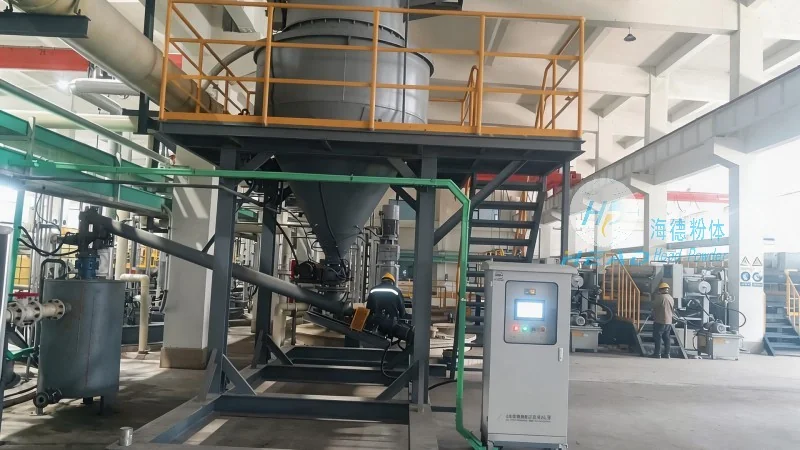
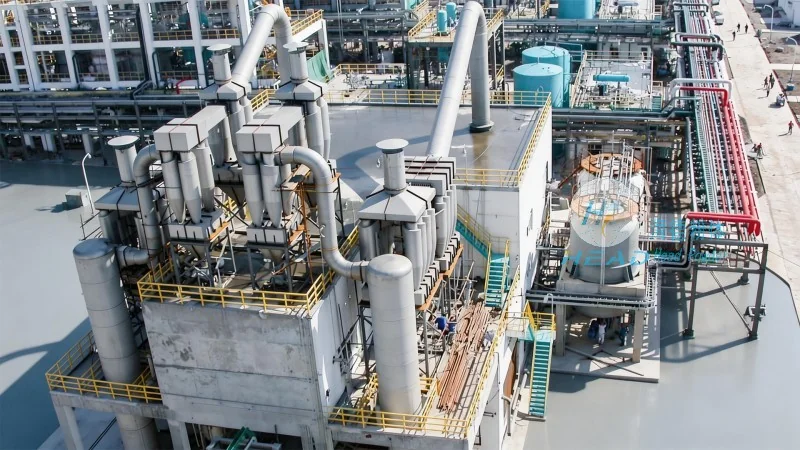
Two primary conveying regimes exist for activated carbon powder: dilute-phase (low pressure, high velocity) and dense-phase (high pressure, low velocity). Dilute-phase systems operate at air velocities of 20–35 m/s and pressures below 1 bar(g), making them suitable for shorter distances (up to 100 m) and lower capacities. The turbulence keeps particles suspended but also causes higher attrition rates, potentially reducing the effective surface area of activated carbon. In contrast, dense-phase conveying maintains material velocities of 3–10 m/s at pressures up to 4 bar(g), gently pushing the powder slug through the pipeline with significantly less degradation. For headpowder's installations at municipal water treatment plants, dense-phase systems have demonstrated a 15–20% improvement in product integrity compared to dilute-phase alternatives. The trade-off is higher initial capital cost for compressors and wear-resistant pipework. When selecting between regimes, engineers must evaluate throughput requirements, line length, number of bends, and the acceptable degree of particle breakage. For highly friable activated carbon grades, dense-phase is generally preferred, while coarser, more robust powders can tolerate dilute-phase handling at lower overall system cost.
Proper equipment sizing ensures reliable operation and minimizes energy consumption. The primary parameters include conveying distance, elevation change, required throughput (typically 500–5000 kg/h for industrial installations), and pipeline diameter. The pressure drop across the system must be calculated using established correlations, such as the Darcy-Weisbach equation for air flow combined with empirical solids loading ratio factors. For activated carbon powder, recommended solids loading ratios in dense-phase systems range from 15 to 30 kg of material per kg of air, while dilute-phase ratios rarely exceed 10. The air compressor or blower should be selected with a safety margin of 10–15% above calculated pressure requirements. Additionally, the filter area for the receiving bin baghouse must accommodate the high dust loading, typically calculated at 1.5–2.0 m² of filter media per kg/h of material conveyed. Data from headpowder's recent retrofit project at a chemical facility in Shandong Province showed that replacing an undersized filter with a properly sized pulse-jet unit reduced maintenance downtime by 40% and improved collection efficiency above 99.9%. These selection guidelines, when followed rigorously, prevent costly operational bottlenecks and extend equipment lifecycle.
Modern pneumatic conveying systems integrate programmable logic controllers (PLCs) with human-machine interfaces (HMIs) to manage start-up sequencing, material flow regulation, and alarm handling. For activated carbon powder, controls must account for variable product density and moisture-induced flow changes. Pressure transmitters placed at strategic locations—after the feeder, midway on the pipeline, and before the filter—provide real-time feedback for adjusting air flow and feeder speed. A typical control loop maintains a setpoint differential pressure across the conveying line; if pressure rises, indicating a potential blockage, the system automatically reduces feed rate and initiates a purge cycle. PLC-based systems can also log operational data for predictive maintenance. Industry 4.0 compliance is increasingly important, with clients requesting OPC-UA integration to feed conveying data into plant-wide manufacturing execution systems. headpowder's proprietary control platform includes a self-optimizing algorithm that learns from historical pressure trends to minimize air consumption—a feature that has reduced energy usage by 12% in continuous operation across multiple customer sites.
Proper installation begins with pipeline alignment to avoid stress on flanges and supports. For activated carbon powder, all joints should use gaskets rated for fine powder sealing—PTFE-filled or silicone-based materials are common choices. During commissioning, gradual loading with air-only flow is performed to verify pressure and velocity measurements before introducing material. Safety aspects are paramount: activated carbon dust is classified as combustible with a Kst value often exceeding 200 bar·m/s, requiring explosion venting or suppression systems per NFPA 68 standards. In headpowder's project for a large Asian carbon regeneration plant, the conveying system was designed with explosion-proof electrical components, grounding straps at every flange, and passive vent panels on the receiving bin. Operators must also wear appropriate personal protective equipment, including dust masks and anti-static clothing, when working near open conveying sections. Commissioning protocols should include a full-day trial at design capacity and a 72-hour endurance test to validate reliability before handover to production teams.
Real-world performance metrics illustrate the effectiveness of properly designed pneumatic conveying systems. In a Taiwanese drinking water treatment facility, headpowder installed a dense-phase system transporting activated carbon powder at 800 kg/h over a distance of 120 m with six 90-degree bends. After 18 months of operation, particle size analysis showed less than 1% reduction in the sub-45 µm fraction, confirming minimal attrition. The system achieved a power consumption of 6.5 kWh per ton of material, which is 18% lower than the plant's previous dilute-phase configuration. Another example involves a South Korean air filter manufacturer that converted from manual bag dumping to a fully enclosed vacuum-conveying system. This change eliminated worker exposure to respirable dust and reduced material losses from spillage by 7%, yielding a payback period of 14 months. These cases underscore the importance of tailoring the conveying approach to the specific activated carbon grade and end-use environment, rather than applying generic solutions.
As of 2026, the global activated carbon market continues to expand at a compound annual growth rate of approximately 8%, driven by stricter air and water emission regulations. This growth places increased demand on conveying systems that can handle larger capacities with higher reliability. Emerging trends include the integration of IoT sensors for continuous condition monitoring and the use of computational fluid dynamics (CFD) to optimize pipeline routing before fabrication. Additionally, advances in wear-resistant alloys and ceramic linings are extending equipment service intervals beyond five years in abrasive applications. The push for sustainability also influences design: regenerative blower systems with variable frequency drives can reduce energy consumption by up to 30% compared to fixed-speed alternatives. headpowder is actively researching hybrid conveying methods that combine gentle dense-phase transport with in-line moisture conditioning, addressing one of the industry's most persistent challenges—cake formation during long-distance transfer. Companies seeking to remain competitive should plan equipment upgrades that incorporate these technological advancements rather than deferring maintenance until failures occur.
When evaluating potential suppliers for activated carbon powder pneumatic conveying equipment, several criteria deserve careful consideration. Look for vendors with documented experience in handling cohesive, abrasive powders and with a portfolio of projects in water treatment, food processing, or chemical industries. Request reference installations where system performance data—such as throughput consistency, wear rates, and energy consumption—can be verified. An equally important factor is post-installation support: ensure the supplier offers spare parts availability, on-site commissioning assistance, and remote monitoring capabilities. headpowder provides full lifecycle services, including system audit, retrofitting of existing lines, and operator training programs tailored to activated carbon handling protocols. (咨询热线:156-6277-7102) With a team of engineers who have collectively completed over 200 powder conveying installations globally, headpowder combines technical depth with practical field insights to deliver systems that meet the most demanding operational targets. Engaging a knowledgeable partner early in the project design phase can prevent costly redesigns and accelerate time to production.
Activated carbon powder pneumatic conveying system equipment represents a specialized engineering domain where material properties drive every design decision. From selecting the appropriate conveying regime and sizing components correctly to implementing advanced controls and safety measures, each step requires a thorough understanding of both the powder's behavior and the operational context. The information presented in this article—covering equipment types, selection parameters, installation best practices, and real-world performance data—serves as a practical reference for professionals involved in procuring or managing these systems. By prioritizing product integrity, energy efficiency, and reliability, companies can achieve measurable improvements in productivity and product quality while reducing environmental and safety risks. As industry standards continue to evolve and market demands grow, staying informed about technological advancements and leveraging experienced partners will be essential for maintaining a competitive edge in activated carbon processing and application.

 Shandong headpowder Engineering Co., Ltd.
 156-6277-7102(Manager Zhang)
  0531-83386006
  Jinan City, Shandong Province, China
服务热线
微信咨询
回到顶部