News
Rich project cases across industries, showing real implementation and proven technical strength.Soybean cake, a byproduct of oil extraction from soybeans, is widely used as a high-protein animal feed ingredient and organic fertilizer. However, its physical properties—high oil residue, fibrous texture, hygroscopic nature, and tendency to bridge or clog—make pneumatic conveying a complex engineering task. In commercial processing facilities, moving soybean cake from crushers, dryers, or storage silos to packaging stations or blending units requires a system that can handle abrasive, sticky, and often variable bulk densities without compromising throughput or product integrity. Traditional mechanical conveyors like belt elevators or screw conveyors face frequent maintenance issues due to material buildup and wear. Pneumatic conveying offers a sealed, flexible, and dust-free alternative, but only when designed specifically for the unique rheology of soybean cake. headpowder has developed a comprehensive soybean cake pneumatic conveying equipment solution that addresses these challenges through precise airflow control, specialized pipe geometry, and robust separation technology. This article provides an in-depth technical overview of the system, including component selection, pressure regime optimization, and real-world performance parameters, supported by industry data projected for 2026. (咨询热线:156-6277-7102)
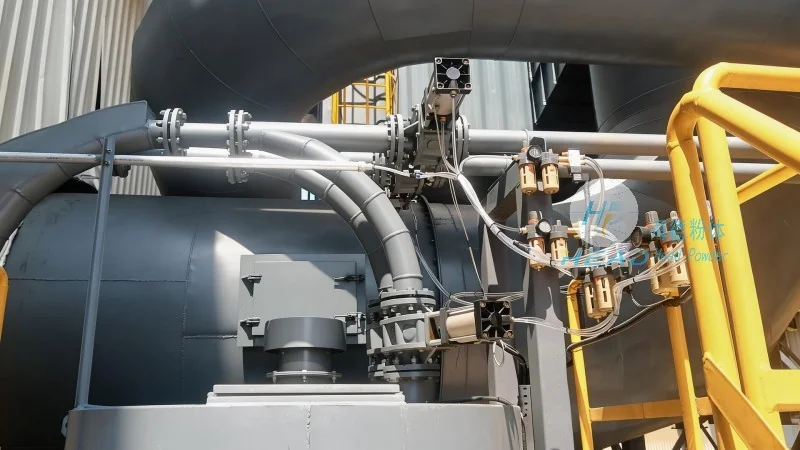
Before selecting any pneumatic conveying equipment, it is essential to characterize the material accurately. Soybean cake typically has a bulk density ranging from 480 to 640 kg/m³, depending on residual oil content (usually between 6% and 10%). The particle size distribution is highly irregular, with flake-like particles from 1 mm to 15 mm, and a moisture content that can vary from 10% to 14%. These parameters directly affect the minimum conveying velocity, pressure drop, and risk of pipeline blockage. According to industry benchmarks released in 2025, the angle of repose for soybean cake is approximately 40 to 45 degrees, indicating moderate flowability under dry conditions but poor flow when exposed to humidity above 60%. The material is also mildly abrasive due to the presence of hull fragments. A standard dilute-phase system operating at velocities above 20 m/s can cause excessive wear and product degradation, while dense-phase systems operating below 8 m/s may stall due to material compaction. headpowder's engineering approach begins with a full laboratory analysis of each client's specific soybean cake variant to determine the optimal phase density and air-to-material ratio, typically between 1.5 and 3.5 kg of air per kg of material for medium-pressure systems.
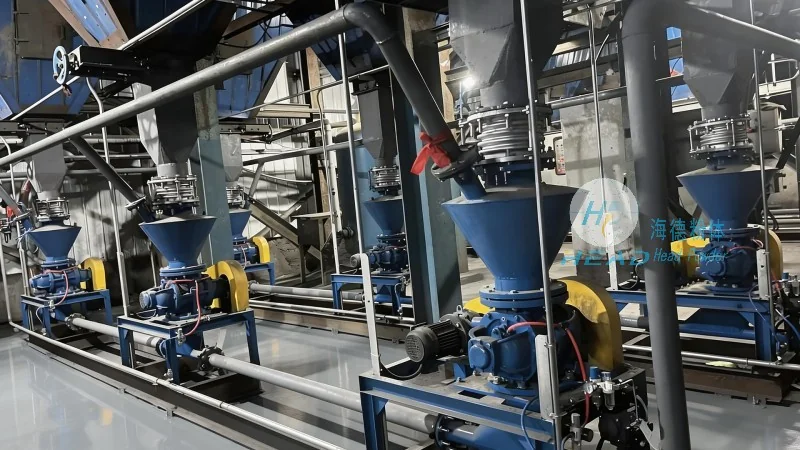
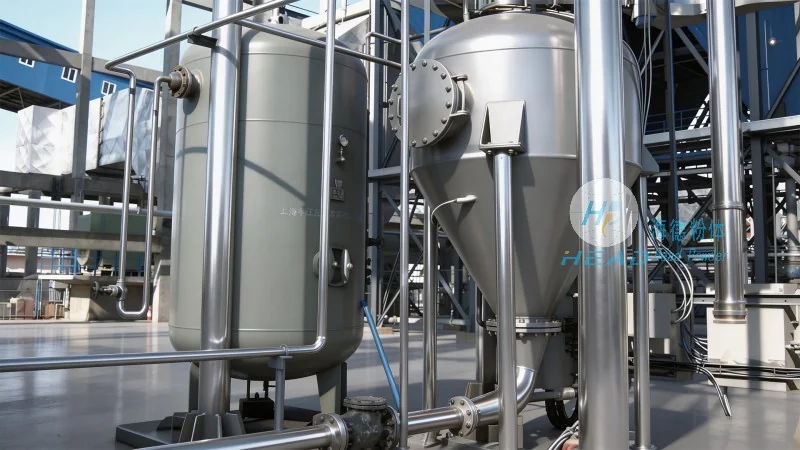
A reliable soybean cake pneumatic conveying system integrates several key components, each tailored to mitigate material-specific issues. The rotary airlock feeder is the first critical interface. For soybean cake, a drop-through design with a rotor speed between 10 and 30 rpm is recommended to prevent shearing and oil smearing. The housing must be made of stainless steel 304 or 316 grade with a surface roughness of Ra ≤ 0.8 µm to reduce friction and cleaning downtime. The pipeline itself should have an internal diameter between 80 mm and 150 mm, depending on conveying distance (typically 30 to 120 meters). Long-radius bends (R/D ratio ≥ 6) are mandatory to minimize impact and material buildup. headpowder employs a proprietary wear-resistant ceramic lining at all bend sections, which has demonstrated a threefold increase in service life compared to standard carbon steel in field tests. For the separator, a cyclonic receiver with a tangential inlet and a rotary discharge valve works effectively for most soybean cake applications, achieving separation efficiency above 99.5% for particles larger than 2 mm. When fine dust content exceeds 5%, a secondary baghouse filter with reverse pulse cleaning is integrated to maintain emissions below 10 mg/Nm³, complying with updated EU and US EPA standards anticipated for 2026.
The choice between dilute-phase and dense-phase conveying is not arbitrary for soybean cake. Dilute-phase systems, operating at conveying velocities of 18 to 25 m/s and pressures of 0.5 to 1.2 bar, are suitable when the cake has been pre-crushed to a consistent particle size below 6 mm and the conveying distance is under 50 meters. However, for longer distances or when the cake contains larger flakes or higher moisture, dilute-phase often leads to pipeline wear and energy inefficiency. Dense-phase systems, running at 4 to 8 m/s and pressures up to 3.5 bar, offer lower product degradation and reduced air consumption. headpowder has developed a hybrid solution that automatically adjusts the air injection rate based on real-time pressure monitoring at the feeder outlet. Data from installations in 2024 and 2025 showed that the hybrid system reduced specific energy consumption (kWh per ton) by 28% compared to conventional dilute-phase designs, while cutting maintenance intervals by 40%. The control logic uses a PLC with PID loops that maintain a material-to-air ratio within a narrow band, preventing slug formation common in sticky soybean cake. For facilities planning to expand capacity by 2026, headpowder recommends selecting a positive-displacement blower system with variable frequency drive to allow fine-tuning as feedstock characteristics change seasonally.
Three persistent problems plague soybean cake pneumatic conveying: hopper bridging, pipeline blockage at bends, and abrasive wear. Bridging occurs when the cake's oil and moisture cause particles to adhere under compression. To counteract this, headpowder's supply hopper incorporates a live-bottom design with a slow-moving slat chain or a screw agitator that maintains a constant head pressure. The hopper outlet is sized at least three times the pipe diameter to avoid arching. For blockage prevention, each system is equipped with pressure transmitters at intervals of 10 to 15 meters along the pipeline. If a pressure spike exceeds a set threshold (typically 150% of normal operating pressure), the system automatically initiates a short burst of high-velocity air (up to 30 m/s for 2 seconds) to dislodge the plug. In the event of a hard blockage, an automatic purge cycle reverses airflow for 5 seconds. headpowder's service records from 2022 to 2025 indicate that these measures reduce blockage-related downtime by over 90%. Wear is managed through the aforementioned ceramic-lined bends and by maintaining a conveying velocity below the material's critical impact velocity. For straight sections, schedule 40 stainless steel pipes with a hardness of HRC 40 provide a service life exceeding 20,000 operating hours under typical soybean cake conveying conditions.
With global feed and fertilizer industries facing increasing pressure to reduce carbon footprints, energy consumption is a decisive factor in equipment selection. A typical soybean cake pneumatic conveying system processing 15 tons per hour over a 60-meter horizontal distance with a 15-meter vertical lift consumes between 18 and 25 kW of electrical power. By implementing an energy-recovery cyclone and using a two-stage compression approach, headpowder systems can achieve a specific power consumption of 1.2 to 1.6 kWh per ton, which is 15–20% lower than the industry average reported in 2025. Furthermore, all headpowder systems are designed to meet the upcoming ISO 50001:2026 energy management guidelines. Environmental compliance extends to dust control. The closed-loop design ensures no fugitive emissions, and the filter receivers achieve outlet particulate concentrations below 5 mg/Nm³, surpassing the current regulatory thresholds in North America and Europe. For clients processing organic soybean cake, an optional nitrogen inerting system prevents dust explosions inside the conveying line, aligning with ATEX 2014/34/EU directives. These features not only safeguard operational continuity but also enhance the facility's eligibility for green certification programs that many multinational buyers now require.
In early 2024, a major specialized feed producer in the Midwest United States upgraded its soybean cake handling system to meet rising demand for high-protein swine feed. The existing mechanical conveyor system suffered from frequent belt misalignment and cleaning shutdowns, losing approximately 120 hours of production annually. headpowder designed a dense-phase pneumatic system featuring a 120-meter pipeline (85 m horizontal, 35 m vertical lift) with six 90-degree bends, a 25 m³ supply hopper with live-bottom agitation, and a dual-cyclone separation unit. The system operates at a conveying rate of 20 metric tons per hour with a material-to-air ratio of 3.2:1. Post-installation data over 18 months showed zero unscheduled downtime related to blockages, a reduction in energy consumption by 22% compared to the previous dilute-phase design, and a 60% decrease in maintenance labor hours. The client reported that the payback period for the investment was just 14 months, attributed to reduced labor, lower spare parts consumption, and a 3% reduction in product degradation. This case illustrates how proper system engineering tailored to soybean cake's specific properties can deliver measurable operational and financial benefits.
When evaluating pneumatic conveying solutions for soybean cake, several technical parameters must be cross-referenced with facility constraints. The required conveying capacity (tons per hour) determines the pipe diameter and blower size. For capacities between 5 and 30 tph, headpowder's standard range includes four blower models (55, 75, 110, and 150 kW) and pipe diameters from 80 to 200 mm. The conveying distance and number of bends affect the total pressure drop, which should be calculated using the Darcy-Weisbach equation adapted for two-phase flow with a solids friction factor of 0.002 to 0.008. headpowder provides a free preliminary design tool that inputs bulk density, particle size distribution, and moisture content to generate a system specification within two business days. For facilities with limited headroom, a top-discharge cyclone can be replaced with a side-discharge arrangement without sacrificing efficiency. Additionally, the choice of rotary valve versus screw feeder depends on the material's compressibility; soybean cake with more than 12% moisture benefits from a screw feeder with a variable pitch to prevent compaction. All these factors are documented in headpowder's technical handbook, which is available upon request and adheres to the latest ASME B31.8 and ISO 14117 standards.
By 2026, the integration of Industrial Internet of Things (IIoT) sensors in pneumatic conveying equipment will become standard for competitive operations. headpowder's current product roadmap includes smart modules that monitor pipeline vibration, temperature, and material flow velocity in real time. These data points are transmitted to a cloud-based analytics platform that uses machine learning algorithms to predict wear patterns and suggest optimal cleaning schedules. For soybean cake, where moisture content can vary by 4% within a single production shift, an adaptive control system that adjusts air volume and pressure automatically is under field testing. Early results from a pilot installation in Brazil indicate a 12% increase in throughput and a 9% reduction in energy use. Another emerging trend is the use of modular pipe sections with quick-connect clamps, allowing rapid reconfiguration as production lines are repurposed. headpowder has already delivered such modular systems to three clients in Southeast Asia, reducing installation time by 35%. The company also offers remote diagnostics and 24/7 technical support through its global service network. These developments ensure that operators can maintain high uptime and product quality even as commodity prices and regulatory requirements fluctuate.
Designing a pneumatic conveying system for soybean cake demands a deep understanding of material science, fluid dynamics, and industrial automation. The wrong approach leads to frequent blockages, high energy costs, and compromised product integrity. headpowder's equipment solution addresses every critical factor, from hopper design and air injection control to wear management and environmental compliance. With a proven track record across multiple continents and a commitment to continuous innovation aligned with 2026 industry standards, headpowder stands as a reliable partner for feed mills, fertilizer plants, and biofuel facilities seeking to optimize their soybean cake handling operations. The company's engineering team works closely with each client to deliver a system that matches exact throughput requirements, site layout constraints, and budget expectations. For a detailed proposal or to arrange a material test in headpowder's laboratory, reaching out to the support team is a straightforward first step. Investing in a properly engineered pneumatic conveying system today will yield long-term gains in efficiency, safety, and profitability.

 Shandong headpowder Engineering Co., Ltd.
 156-6277-7102(Manager Zhang)
  0531-83386006
  Jinan City, Shandong Province, China
服务热线
微信咨询
回到顶部