News
Rich project cases across industries, showing real implementation and proven technical strength.Sodium stearate, a white powdery substance widely used in the plastics, rubber, and cosmetics industries, presents unique handling difficulties due to its low bulk density, high cohesion, and tendency to agglomerate under moisture or static conditions. In many production facilities, this material is transported from storage silos to mixing stations or packaging units, where conventional mechanical conveyors often cause product degradation, dust leakage, and frequent blockages. Pneumatic conveying has emerged as the preferred solution for sodium stearate transfer because it offers closed-loop transport, reduced contamination risk, and flexible routing. However, not all pneumatic systems perform equally when dealing with such fine, waxy powders. The key challenges include maintaining consistent flow without segregation, preventing build-up inside pipes, and ensuring low energy consumption while preserving particle integrity. Headpowder has developed a tailored pneumatic conveying equipment system solution specifically engineered for sodium stearate, addressing these issues through optimized airflow dynamics, material conditioning, and robust component selection. This article provides a comprehensive overview of the technical design, operational parameters, and real-world deployment of this solution, helping plant engineers and decision-makers evaluate the right approach for their specific application.
Before selecting or designing a pneumatic conveying system, it is essential to characterize the material's flow behavior. Sodium stearate typically exhibits a bulk density ranging from 0.3 to 0.5 g/cm³, making it a low-density powder that can easily become airborne. Its particle size distribution often falls between 10 and 100 microns, with a significant fraction of fines that contribute to dust explosion hazards if not properly managed. The material also has a low melting point (around 150 °C), meaning frictional heat generated during conveying can cause softening or melting, leading to sticky deposits on pipe walls. Furthermore, sodium stearate is hygroscopic; moisture absorption from ambient air can drastically worsen agglomeration and reduce flowability. These characteristics dictate several critical design parameters: conveying air velocity must be high enough to suspend particles but not so high as to cause excessive attrition or heat build-up; pipe bends must be gentle to minimize impact and accumulation; and the system must include dehumidification or inert gas options for moisture-sensitive operations. Headpowder's engineers rely on standardized test methods, such as the Jenike shear cell test and aerated density analysis, to create a precise material profile before system configuration.
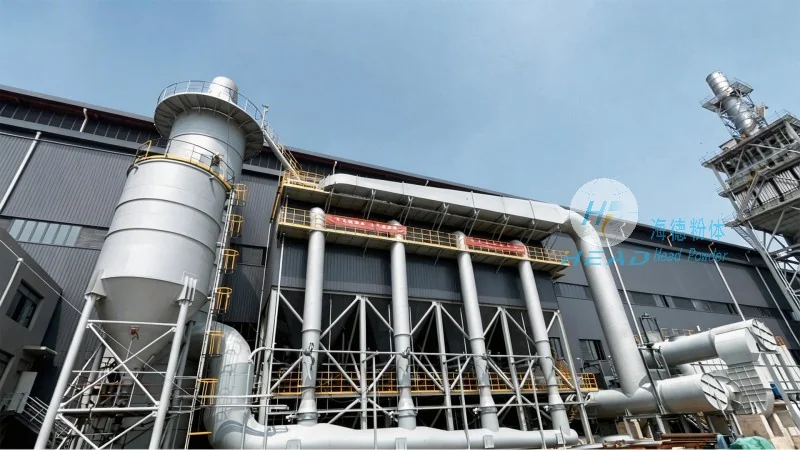
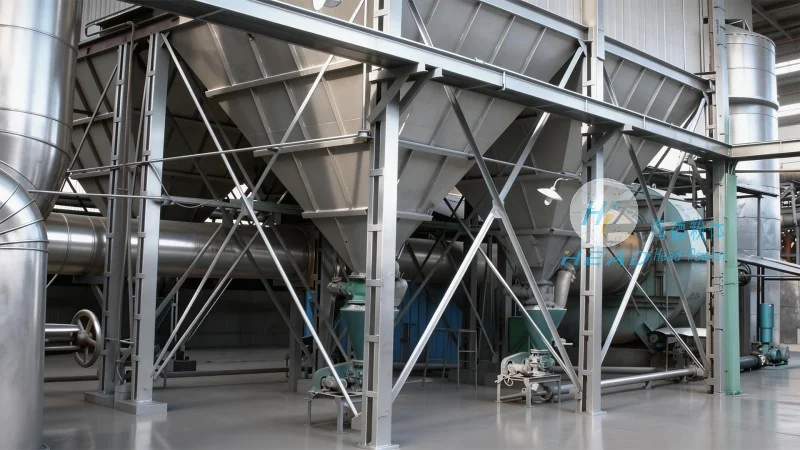
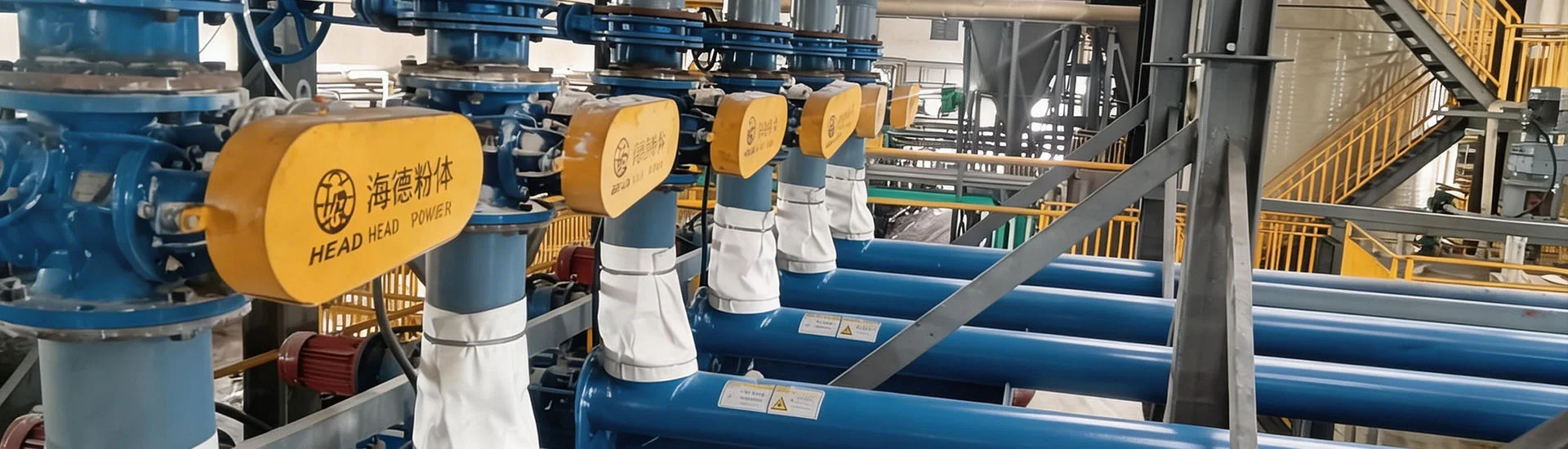
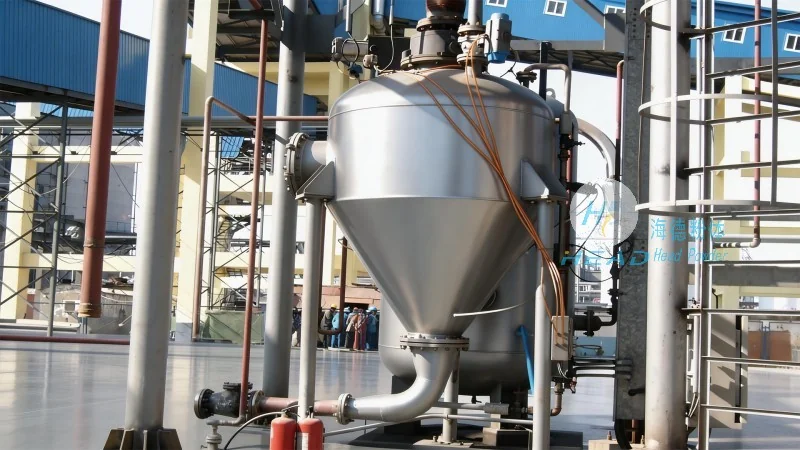
The headpowder sodium stearate pneumatic conveying system solution typically follows a dilute-phase or dense-phase design depending on the required capacity and distance. For most common applications—such as feeding extruders or packaging machines located 20 to 100 meters from storage—dense-phase conveying at low velocities (4–10 m/s) is recommended to minimize wear and degradation. The system comprises four core subsystems: (1) the material intake and feeding section, which uses a rotary valve or screw feeder with a variable-speed drive to meter the powder consistently; (2) the conveying line, constructed from stainless steel with polished internal surfaces and long-radius bends to reduce frictional resistance; (3) the air supply and control unit, including a roots blower or compressor, air dryer, and pressure/temperature sensors; and (4) the receiving station, typically a cyclone separator with a rotary airlock and a dust collector (e.g., pulse-jet bag filter) to ensure emission levels below 10 mg/Nm³. Each component is selected based on the plant's specific layout, conveying distance, and required throughput—commonly ranging from 500 kg/h to 5,000 kg/h for industrial-scale operations. A PLC-based control system synchronizes the feeder speed, air pressure, and filter cleaning cycles, enabling fully automatic operation with remote monitoring capabilities.
Because sodium stearate readily absorbs moisture, the conveying air must be conditioned to a dew point below –20 °C using refrigerated or desiccant dryers. In humid climates or during rainy seasons, headpowder also recommends pre-conditioning the stored sodium stearate with a gentle heated purge (below 60 °C) to avoid surface moisture that promotes caking. The pipeline should be insulated and, if necessary, traced with low-power heating cables to prevent condensation inside the pipe during idle periods.
Fine powders like sodium stearate tend to form deposits on horizontal pipe runs and at the bottom of bends. To counteract this, the system incorporates periodic blow-back pulses using compressed air to dislodge any accumulation without interrupting production. Additionally, all pipe connections use flanged couplings with smooth transitions rather than threaded fittings, which can trap material. Conveying lines are also designed with a slight continuous downward slope (1–2%) to facilitate material movement by gravity during shutdowns.
Sodium stearate dust is classified as combustible, with a minimum ignition energy (MIE) of approximately 10–30 mJ. The pneumatic conveying system must comply with international safety standards such as ATEX or NFPA 652. Headpowder integrates passive explosion protection (e.g., explosion vent panels on cyclones and filter housings) and active measures like spark detection and suppression, grounding verification of all metal components, and bonding of conductive hoses. The control system shuts down the blower and feeder immediately upon detecting abnormal temperature or pressure spikes.
Although sodium stearate is not severely abrasive, long-term conveying at high velocities can cause erosive wear on pipe elbows. headpowder uses ceramic-lined bends or replaceable wear-back plates at high-impact zones, extending service life to over 10,000 operating hours. Routine maintenance includes weekly inspection of rotary valve clearances, filter bag integrity checks, and monthly calibration of pressure sensors to ensure consistent conveying velocity within the optimal range.
No two sodium stearate handling requirements are identical. For a polyolefin masterbatch producer who needs to feed 800 kg/h of sodium stearate into a twin-screw extruder 50 meters from the storage silo, headpowder can configure a dense-phase system using a pressure vessel (blow tank) with bottom discharge and a 2-inch carbon steel pipeline. The receiving hopper includes a level sensor that modulates the feeding rate automatically. In another case, a rubber compounding facility requiring simultaneous conveying to multiple mix stations may opt for a multi-port diverter valve arrangement with a closed-loop air recirculation system to reduce compressed air consumption by up to 35%. For laboratory or pilot-scale operations, smaller mobile conveying units with a capacity of 100–300 kg/h are available, featuring a casters base and quick-connect couplings for easy relocation.
Field installations of headpowder's sodium stearate pneumatic conveying systems have demonstrated measurable improvements. Based on 2025–2026 industry benchmarks, typical results include: conveying efficiency exceeding 98% on-stream time (excluding scheduled maintenance), product degradation (measured by fines generation) reduced by over 40% compared to mechanical conveyors, and dust emissions consistently below 5 mg/Nm³. Energy consumption per ton of material conveyed averages 1.2–1.8 kWh for dilute-phase and 0.6–1.0 kWh for dense-phase configurations, representing a potential 25% reduction over older compressed-air-based systems. These figures align with the industry's growing emphasis on energy efficiency and sustainability, as many plants now aim for ISO 50001 certification. Additionally, the closed-loop design prevents product loss and minimizes housekeeping costs, yielding a typical payback period of 12 to 18 months for medium-sized facilities.
Deploying a tailored sodium stearate pneumatic conveying solution involves a structured process. First, headpowder conducts a comprehensive site audit covering material sampling, available utilities (air pressure, power, and water), existing layout constraints, and target throughput. A preliminary system design and capital cost estimate are delivered within two weeks. Following client approval, detailed engineering drawings, control logic documentation, and a project timeline are produced. Manufacturing and assembly typically require 6–8 weeks, during which factory acceptance testing (FAT) ensures all components operate within specified tolerances using simulated sodium stearate. On-site installation and commissioning take an additional 1–2 weeks, including operator training. Headpowder provides a standard 12-month warranty on all mechanical parts and offers extended service contracts for periodic performance optimization. To discuss your specific handling requirements or request a feasibility study, contact our engineering team directly (咨询热线:156-6277-7102).
Looking ahead to 2026 and beyond, the global market for fine chemical powders like sodium stearate is expected to grow at a compound annual rate of 4–5%, driven by expansions in the plastic additives and personal care sectors. This growth places higher demands on conveying systems for higher throughput, tighter environmental regulations, and digitalization. Smart conveying systems equipped with real-time sensors, predictive maintenance algorithms, and IIoT connectivity are becoming industry differentiators. Headpowder has already integrated vibration monitoring on fans and rotary valves, allowing operators to predict bearing failures weeks in advance. Furthermore, the trend toward modular and skid-mounted systems reduces installation downtime and enables easy scalability. As sustainability becomes a priority, closed-loop nitrogen conveying systems for oxygen-sensitive applications are gaining traction, especially for sodium stearate grades used in pharmaceutical excipients. The company's ongoing R&D focuses on further reducing energy consumption through advanced pressure drop modeling and optimized pipeline networks.
When evaluating a pneumatic conveying system provider for sodium stearate, look beyond initial capital cost. Consider the supplier's experience with cohesive, waxy powders, their willingness to test your actual material in a demonstration facility, and the availability of local after-sales support. Headpowder maintains a test lab equipped with a full-scale conveying loop where clients can witness system performance with their own sodium stearate samples before purchase. The company also provides detailed documentation including material safety data sheet compatibility analysis, risk assessments, and compliance certificates. This comprehensive approach, combined with a proven track record across more than 200 powder handling installations worldwide, makes headpowder a reliable choice for plants aiming to optimize their sodium stearate logistics.
Successful sodium stearate pneumatic conveying requires a deep understanding of the material's physical and chemical properties, careful system engineering to mitigate handling challenges, and a modular design that adapts to evolving production needs. By prioritizing dense-phase technology where applicable, managing moisture and temperature proactively, and incorporating robust safety and monitoring features, headpowder's solution delivers high reliability, low operating costs, and full regulatory compliance. Whether you are upgrading an existing line or designing a new facility, investing in a purpose-designed system pays dividends through reduced downtime, improved product quality, and enhanced workplace safety. For detailed technical consultation and a customized system proposal, reach out to our specialists (咨询热线:156-6277-7102) or visit the headpowder official website for case studies and technical whitepapers.

 Shandong headpowder Engineering Co., Ltd.
 156-6277-7102(Manager Zhang)
  0531-83386006
  Jinan City, Shandong Province, China
服务热线
微信咨询
回到顶部