News
Rich project cases across industries, showing real implementation and proven technical strength.In the modern agricultural and industrial processing landscape, the efficient handling of bulk solid materials such as sorghum has become a critical factor in maintaining product quality, reducing operational costs, and ensuring workplace safety. Sorghum, as a key grain used in food processing, animal feed, biofuel production, and brewing, presents unique challenges during transport due to its particle size, moisture content, and inherent fragility. Pneumatic conveying equipment systems have emerged as the preferred solution for moving sorghum gently and efficiently over various distances within processing facilities. This comprehensive guide explores the technical intricacies, design considerations, and operational benefits of sorghum pneumatic conveying systems, providing facility managers, engineers, and procurement specialists with actionable insights for selection and implementation.
The global market for pneumatic conveying systems in grain handling is projected to expand steadily through 2026, driven by increasing automation in food processing plants and stricter workplace safety regulations. Sorghum, with its distinct physical properties such as a bulk density typically ranging from 600 to 800 kg/m³ and a mean particle size between 2.5 and 4.5 mm, demands a carefully engineered conveying approach. Unlike free-flowing grains like wheat or corn, sorghum has a higher tendency to generate dust and can suffer from external hull damage if conveyed at excessive velocities. Therefore, selecting the right pneumatic system requires a thorough understanding of material characteristics, system pressure requirements, and the layout of the processing plant. This article serves as an expert-level resource for anyone seeking to optimize their sorghum handling operations.
Pneumatic conveying uses air flow to transport sorghum grains through a pipeline network, utilizing either positive pressure (dilute phase or dense phase) or vacuum (negative pressure) systems. In dilute phase conveying, high air velocities (typically 20-35 m/s) keep the sorghum particles suspended, making it suitable for longer distances but potentially causing more grain impact and dust generation. Dense phase conveying, on the other hand, moves sorghum at lower air velocities (4-10 m/s) as a moving bed or plug flow, significantly reducing grain damage and energy consumption. For sorghum processing facilities where grain quality is paramount—such as in breweries or gluten-free flour mills—dense phase pneumatic conveying is increasingly preferred. The choice between pressure and vacuum systems also depends on the number of pickup points and the need to contain dust. Vacuum systems excel at multiple feed points and eliminate dust leakage, while pressure systems are more efficient for long-distance single-source transport.
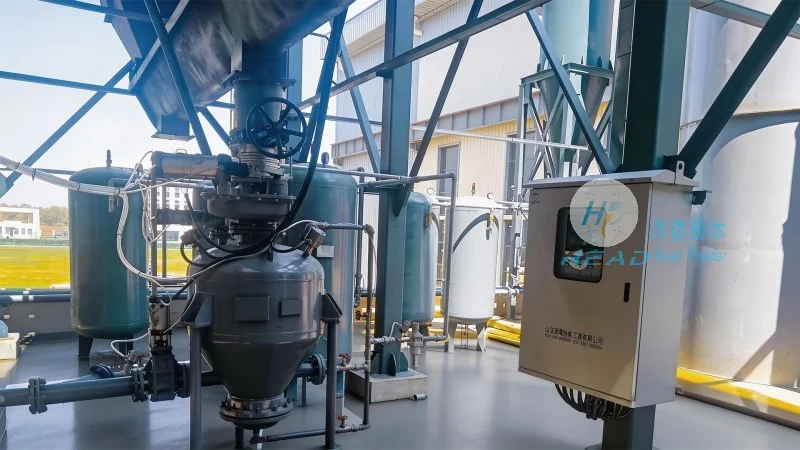
A well-designed sorghum pneumatic conveying system comprises several interdependent components, each engineered to handle the specific abrasion and flow characteristics of sorghum. Below is a detailed breakdown:
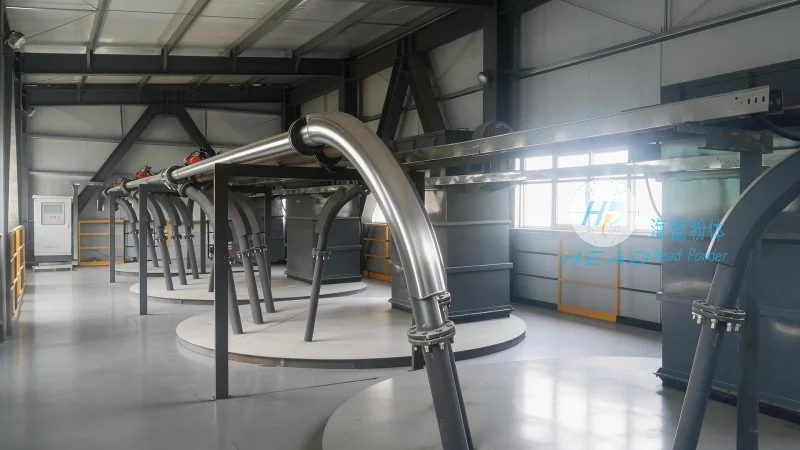
Selecting the correct pneumatic conveying system for sorghum involves analyzing several interdependent parameters. The conveying distance (horizontal + vertical equivalent), desired throughput (tons per hour), and material properties (particle size distribution, moisture content, angle of repose) form the foundation of system sizing. For example, a facility requiring 10 tons per hour over a 100-meter horizontal distance with 15-meter elevation might need a dilute phase system with a 6-inch pipeline and a 2000 CFM blower at 80 inches water gauge pressure. However, with high moisture sorghum (above 12%), the risk of bridging and rotor lock increases, necessitating a larger airlock or pre-conditioning. The industry standard for sorghum conveying velocity is ideally kept between 18 and 30 m/s in dilute phase, with dense phase operating at 4-8 m/s. Velocity too high leads to grain damage and pipe wear; too low causes pipeline plugging. Headpowder engineers use computational fluid dynamics (CFD) modeling to simulate particle trajectories and optimize velocity profiles before installation.
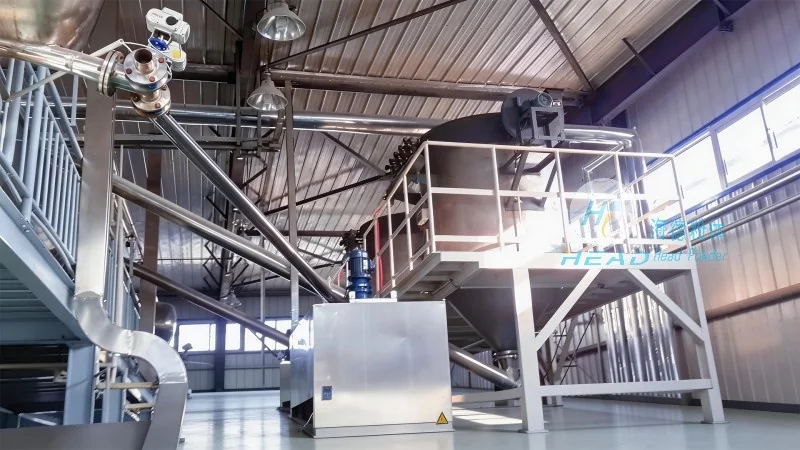
As the global sorghum production volume continues to rise—with the United States, Nigeria, and India as leading producers—the demand for energy-efficient and low-damage pneumatic systems is accelerating. By 2026, several key trends will shape system design: First, variable frequency drives (VFDs) on blower motors become standard, allowing real-time air speed adjustment based on product flow rate, reducing energy consumption by 20–35% compared to fixed-speed systems. Second, IoT-enabled sensors for real-time pipeline pressure, dust concentration, and grain moisture monitoring enable predictive maintenance and minimize downtime. Third, regulatory emphasis on grain dust explosion prevention (NFPA 61 compliance) drives the adoption of passive and active explosion protection systems such as vent panels, suppression systems, and isolation devices. Headpowder integrates all these advancements into its standard sorghum conveying packages, offering clients a future-proof solution that aligns with 2026 compliance expectations.
Investing in a properly designed sorghum pneumatic conveying system yields tangible returns beyond simple material movement. Closed-loop transport eliminates dust emissions, improving worker respiratory health and meeting OSHA permissible exposure limits for grain dust (10 mg/m³ total dust). The enclosed nature also prevents moisture loss and contamination from external sources, preserving sorghum quality for subsequent processing. Maintenance costs are predictable; with proper component selection, major wear items such as airlock vanes, pipe bends, and filter cartridges require replacement only after 3,000–5,000 operating hours. Headpowder offers a comprehensive maintenance program that includes wear-part audit services and locally stocked spare parts, minimizing unplanned downtime. For a mid-sized sorghum mill processing 15,000 tons annually, the total cost of ownership for a pneumatic system (including installation, energy, and maintenance) typically ranges from $0.30 to $0.60 per ton conveyed, substantially lower than mechanical bucket elevators when factoring in building space and safety costs.
Headpowder has implemented sorghum pneumatic conveying systems for breweries and bioethanol plants across multiple continents. In one recent installation for a gluten-free flour manufacturer processing 8 tons per hour of sorghum, the system integrated a 150-meter pipeline with four diverter stations, employing dilute phase at 22 m/s. Over a 12-month performance evaluation, grain breakage was measured at less than 0.5% compared to the customer’s previous mechanical elevator system which showed 1.8% breakage. Additionally, the enclosed pneumatic system reduced dust emissions by 97% as validated by independent air quality monitoring. In another case, a biofuel plant using high-moisture sorghum (14–16%) converted from a positive pressure to a custom dense phase system from Headpowder, achieving reliable plug-free operation and a 22% reduction in energy consumption per ton. These real-world results demonstrate the importance of tailoring the system to the specific sorghum variety and process conditions.
Given the complexity of sorghum pneumatic conveying—from material testing through pipe layout optimization—working with an experienced partner is essential. Headpowder brings over a decade of focus on grain and powder handling, with a dedicated research team that conducts actual sorghum conveyance tests in a lab-scale facility. The company provides complete turnkey services: process design, equipment manufacturing (including airlocks, filter receivers, and control panels), installation supervision, and commissioning. Every system is backed by a performance guarantee that covers throughput and grain damage rates. For facilities requiring retrofits or expansions, Headpowder’s modular design allows incremental capacity increases without replacing the entire infrastructure. (咨询热线:156-6277-7102) This direct line connects you with application engineers who can review your site layout and provide a preliminary system quotation within 48 hours.
A well-specified sorghum pneumatic conveying equipment system is not merely a material transportation solution—it is a strategic investment in product quality, operational efficiency, and regulatory compliance. As markets evolve toward higher quality standards and tighter environmental controls, the role of gentle, dust-free, and energy-smart conveying becomes more critical. Whether you are expanding an existing facility or designing a greenfield project, understanding the interplay of material properties, air flow dynamics, and system geometry ensures that your system delivers consistent performance for years. Headpowder remains committed to advancing sorghum conveying technology through continuous R&D, robust aftermarket support, and a customer-first approach. By integrating the latest IoT capabilities, wear-resistant components, and modular control architecture, your process can achieve both lower total cost of ownership and greater flexibility to adapt to changing product demands. Contact the team today to discuss your specific sorghum handling challenges and discover how an engineered pneumatic system can transform your operations.

 Shandong headpowder Engineering Co., Ltd.
 156-6277-7102(Manager Zhang)
  0531-83386006
  Jinan City, Shandong Province, China
服务热线
微信咨询
回到顶部