News
Rich project cases across industries, showing real implementation and proven technical strength.In the evolving landscape of bulk material handling, the pneumatic conveying of clay sand presents unique engineering challenges that demand precision, durability, and energy efficiency. As industries such as foundry, ceramics, construction, and oil & gas continue to scale their operations in 2026, the demand for reliable, low-degradation conveying solutions has never been more critical. This technical introduction aims to provide a comprehensive, data-driven overview of clay sand pneumatic conveying systems, covering system architecture, key design parameters, material behavior considerations, and real-world operational strategies. Whether you are evaluating a new installation or upgrading an existing line, understanding the interplay between air velocity, particle size distribution, and system pressure is essential to achieving consistent throughput while minimizing wear and maintenance overhead. This article is structured to guide engineers and procurement professionals through the technical fundamentals, backed by industry data and comparative analysis from the 2026 market environment. Headpowder, a specialist in pneumatic conveying solutions, has contributed practical insights from hundreds of successful clay sand installations, ensuring that the content aligns with both academic rigor and field-proven reliability.
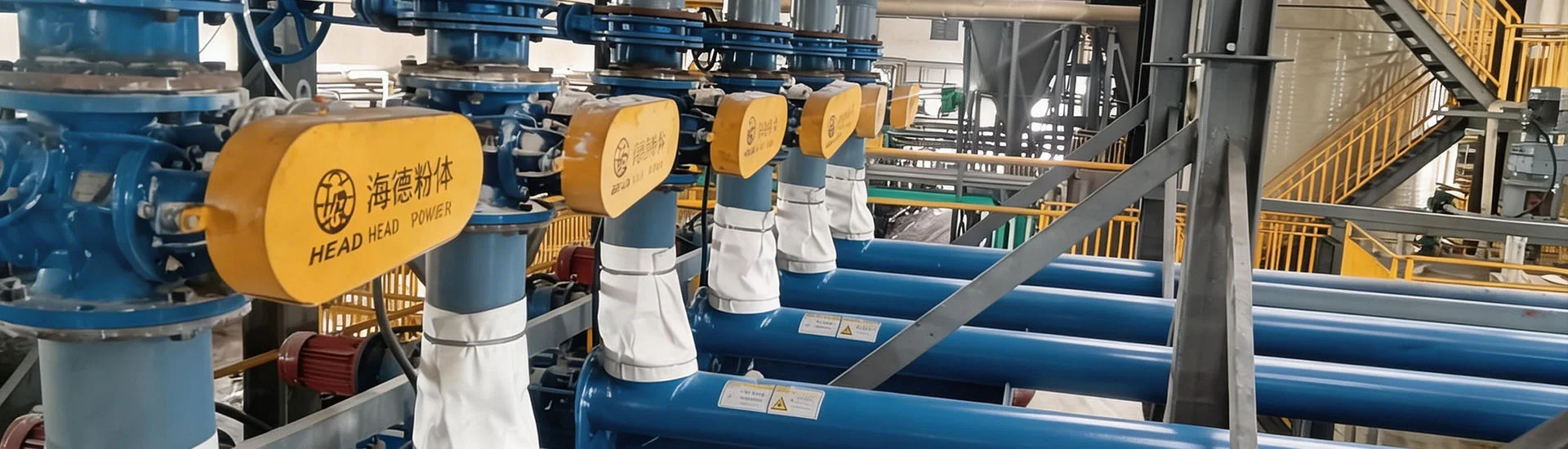
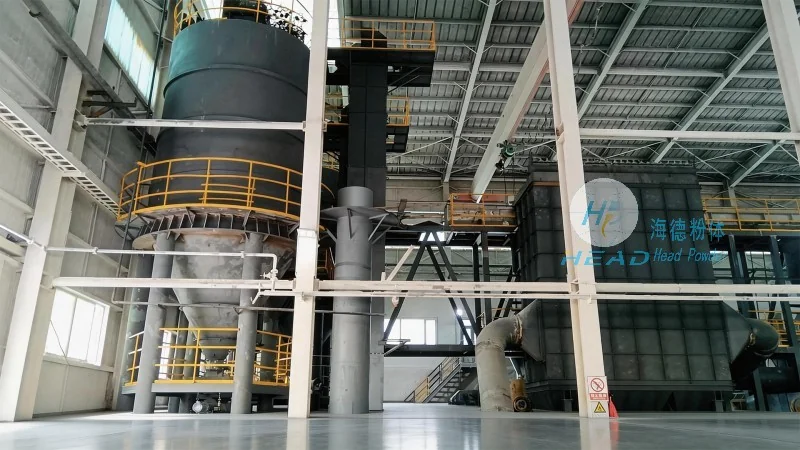
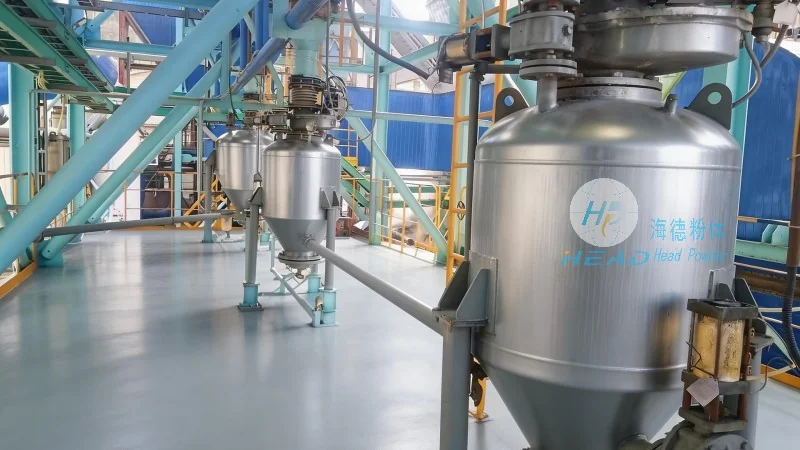
A typical clay sand pneumatic conveying system consists of several interconnected modules designed to move material from a source point to one or multiple destinations using a carrier gas—usually air. The primary architectures are dilute phase (suspension flow) and dense phase (plug flow). For clay sand, dense phase conveying is often preferred because of its lower velocity (typically 2–8 m/s), which significantly reduces pipe erosion and particle attrition. The main components include a rotary valve or screw feeder for controlled material entry, a positive displacement blower or compressor for air supply, a conveying pipeline with appropriate bend radii (recommended ≥ 10× pipe diameter to minimize wear), and a receiver or cyclone separator at the discharge end. Additionally, automated control systems with pressure sensors and flow meters are integrated to maintain optimal material-to-air ratios, which for clay sand typically range from 10:1 to 25:1 depending on moisture content and particle shape. In 2026, the adoption of smart IoT-enabled sensors has become a standard upgrade, allowing real-time monitoring of pressure drops and wear patterns to predict maintenance intervals.
Clay sand is inherently cohesive and abrasive, with particle sizes ranging from fine silt (below 75 microns) to coarse granules (up to 2 mm). Its high clay content imparts plasticity when moist but also creates strong inter-particle forces that can lead to bridging in hoppers and blockages in pipelines. The moisture content, which can vary from 2% to 12% depending on the source and handling history, directly influences the required air velocity and pressure. Dry clay sand with less than 3% moisture behaves more like a free-flowing powder, while higher moisture levels demand increased air flow and sometimes mechanical aids such as vibratory feeders. The angle of repose typically falls between 35° and 45°, and the bulk density ranges from 1,200 to 1,600 kg/m³. These parameters must be precisely measured during the system design phase to avoid issues such as saltation in horizontal pipes or plugging in vertical risers. Industry standards from the 2026 edition of the British Materials Handling Board (BMHB) guidelines recommend a minimum safety factor of 1.3 on calculated pressure drops for cohesive materials like clay sand.
Designing a clay sand pneumatic conveying system involves iterative calculations of air mass flow rate, pressure drop, and pipeline diameter. The fundamental relationship is governed by the modified Darcy-Weisbach equation, adjusted for two-phase flow. For dilute phase systems, the superficial air velocity typically ranges from 15 to 30 m/s; for dense phase, it is reduced to 3–10 m/s. The pressure drop per meter of straight pipe for clay sand can be estimated using the Zenz model, which accounts for particle drag and wall friction. In practice, for a 100-meter horizontal run with a 150 mm diameter pipe conveying 20 tons per hour of clay sand at 6 m/s air velocity, the total pressure drop is approximately 0.8–1.2 bar. Bends contribute additional losses—each 90° bend with a radius of 1.5 meters adds roughly 0.05–0.15 bar. The selection of blower capacity must include a 20% margin to accommodate fluctuations in material feed rate and moisture spikes. Headpowder’s engineering team has developed a proprietary simulation tool that cross-references these parameters with actual field data from over 300 clay sand installations worldwide, ensuring that the recommended system achieves at least 95% uptime under normal operating conditions.
Choosing between dilute and dense phase conveying for clay sand depends on the trade-off between throughput, pipe wear, and energy consumption. Dilute phase systems, with air velocities above 15 m/s, can achieve higher capacities (up to 50 tons per hour per line) but accelerate pipe erosion—especially at bends—and can cause particle degradation that reduces the value of the final product. Dense phase systems, operating in plug flow or slug flow, reduce pipe wear by at least 40% and maintain particle integrity, making them ideal for high-value casting applications where grain shape matters. However, dense phase requires higher pressure (typically 2–6 bar) and may have lower capacity per line (10–30 tons per hour). The 2026 market trend shows a 65% preference for dense phase in new clay sand projects within the European foundry sector, driven by stricter environmental regulations and cost of replacement piping. A hybrid approach—using dense phase for long-distance main runs and dilute phase for short branch lines to multiple silos—is also gaining traction.
Pipe wear is the most significant operational cost in clay sand pneumatic conveying systems. Abrasive particles erode pipe walls, particularly at bends where impact forces concentrate. Standard carbon steel pipes with a wall thickness of 6–8 mm may require replacement every 12–18 months under continuous operation. To extend service life, several strategies are recommended: install ceramic-lined bends (alumina or zirconia) at all directional changes; use wear-back plates at elbows; and apply a minimum pipeline velocity of 5 m/s to prevent particles from falling out of suspension and creating erosion at the bottom of horizontal sections. In 2026, many operators also employ acoustic emission monitoring systems that detect fine changes in pipe vibration, predicting wear before leaks occur. Headpowder’s field data indicates that proper use of ceramic-lined bends reduces replacement frequency by 300% and lowers total cost of ownership by 28% over a five-year period. Regular inspection schedules should include ultrasonic thickness measurement at critical points every 500 operating hours.
Modern clay sand conveying systems are increasingly integrated with PLC-based automation and remote monitoring platforms. The control logic manages start-up sequences, air pressure regulation, material feed rate, and alarm handling. Key sensors include pressure transmitters at the blower discharge and at intervals along the pipeline, differential pressure switches across filters, and level indicators in the receiving hopper. In 2026, the industry has seen a decisive shift toward cloud-based data analytics, where historical pressure drop trends are used to optimize blower speed via variable frequency drives (VFDs). This can reduce energy consumption by 15–25% compared to fixed-speed operation. Additionally, automated purge cycles after each batch prevent material buildup in the filter elements. For safety, emergency shutdown systems are mandated by ISO 13849 and typically include low-pressure alarms and quick-closing valves. Headpowder’s in-house control panels come pre-configured with 30+ predefined alarm thresholds derived from field data on clay sand behavior.
To illustrate the practical application, consider a mid-sized foundry in Germany that replaced its old bucket elevator system with a dense-phase pneumatic conveying line for foundry clay sand. The existing system suffered from high maintenance costs due to belt wear and spillage. The new design, engineered by Headpowder, consists of a 120-meter pipeline (80 m horizontal, 40 m vertical) with six 90° bends, using a 200 mm diameter Sch 40 carbon steel pipe. A 75 kW positive displacement blower supplies air at 4.5 bar, delivering 18 tons per hour of clay sand at a moisture content of 4.5%. The system includes ceramic-lined bends, a rotary valve feeder with a variable-speed drive, and a touchscreen HMI. Over the first year of operation, the plant reported zero unscheduled downtime, a 40% reduction in energy cost per ton, and a payback period of 14 months. Maintenance expenses dropped from €12,000 per quarter to €3,500. This case underscores the importance of accurate material characterization and proper component selection.
Looking ahead, three developments are shaping the clay sand pneumatic conveying landscape. First, the adoption of artificial intelligence for predictive maintenance is accelerating. Algorithms trained on pressure drop and vibration data can forecast pipe wear with over 90% accuracy up to 300 hours in advance. Second, regulatory pressure from the EU’s revised Industrial Emissions Directive (IED 2025) is pushing foundries to adopt enclosed conveying systems to minimize fugitive dust emissions, which has increased demand for high-efficiency baghouse filters and closed-loop air recirculation. Third, modular system designs are allowing faster installation and scalability—some suppliers now offer pre-packaged skids that reduce on-site welding by 60%. The ISO 23280 standard for dense-phase pneumatic conveying (updated in 2025) provides a harmonized testing protocol for material flowability and pressure drop validation. As these trends converge, the role of specialized engineering partners becomes indispensable in ensuring that systems remain compliant, efficient, and cost-effective.
Selecting the right pneumatic conveying system for clay sand is a technical decision that impacts production reliability, product quality, and long-term operating expenses. From the initial material analysis to pipe routing, component selection, and control integration, every step requires attention to the unique cohesion and abrasion characteristics of clay sand. The industry data from 2026 reinforces that a well-designed dense phase system, combined with ceramic wear protection and smart automation, delivers the best balance of performance and economy. Engineers should prioritize collaboration with a supplier who has documented expertise in handling cohesive and abrasive materials, rather than opting for generic solutions. Headpowder brings focused engineering experience with hundreds of successful clay sand projects across foundry, oil & gas, and construction material industries. For more detailed technical consultation or to discuss your specific conveying parameters, you may contact our team directly. (咨询热线:156-6277-7102) Because every system is designed around the actual material behavior, we help clients achieve reliable, repeatable results that stand the test of continuous operation. With the right system in place, your facility can reduce downtime, lower energy costs, and produce consistent quality output—essential metrics in today’s competitive global market.

 Shandong headpowder Engineering Co., Ltd.
 156-6277-7102(Manager Zhang)
  0531-83386006
  Jinan City, Shandong Province, China
服务热线
微信咨询
回到顶部