News
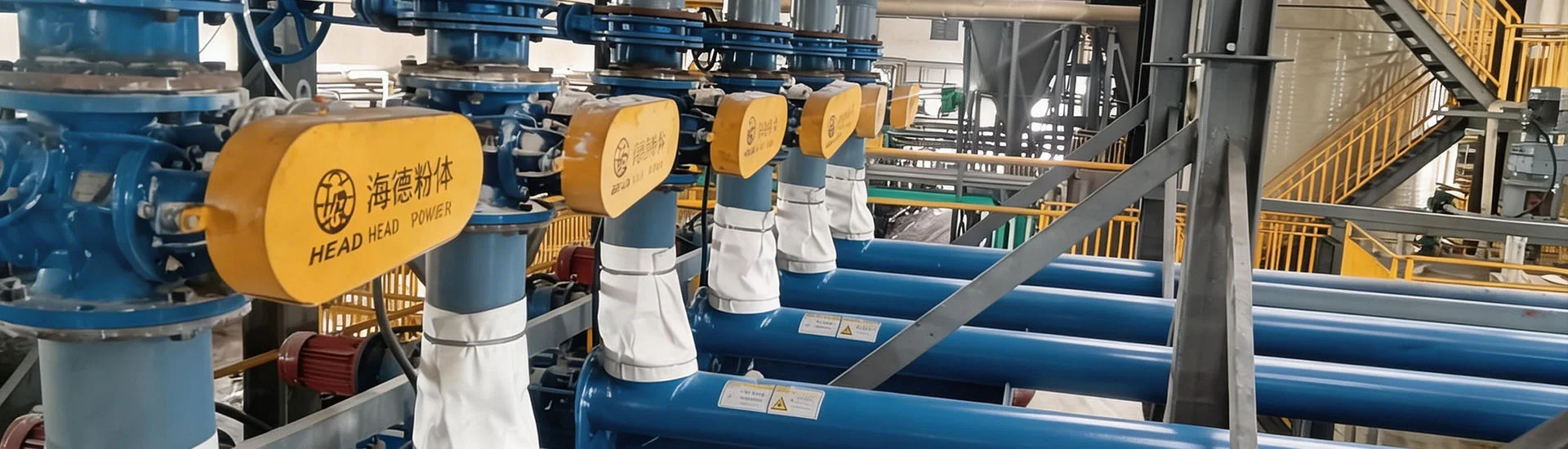
Rich project cases across industries, showing real implementation and proven technical strength.For industries handling ammonium nitrate—whether in fertilizer production, mining explosives, or industrial chemical processing—the pneumatic conveying system stands as a critical infrastructure component. Unlike mechanical conveyors, pneumatic systems transport ammonium nitrate particles through pipelines using air or inert gas, offering enclosed, dust-free, and explosion-sensitive material handling. As global safety regulations tighten and production capacities scale up toward 2026, understanding the technical underpinnings and specification frameworks for ammonium nitrate pneumatic conveying has become non-negotiable for plant engineers, project managers, and EPC contractors. This article provides a detailed technical overview, specification guidelines, selection criteria, and operational best practices, with insights grounded in real-world applications and evolving industry standards.
Pneumatic conveying relies on the controlled movement of bulk solids within a closed pipeline using a gas stream—typically air, nitrogen, or another inert medium. For ammonium nitrate, the choice of conveying gas is critical due to its oxidizing nature and potential for thermal decomposition under certain conditions. The system operates under two primary modes: dilute-phase (suspension flow) and dense-phase (plug or slug flow). Dilute-phase conveying uses high air velocity (usually 20–35 m/s) to suspend particles, while dense-phase systems employ lower velocities (2–10 m/s) and higher material-to-air ratios, reducing particle attrition and pipeline wear. For ammonium nitrate, dense-phase conveying is increasingly preferred in modern installations because it minimizes dust generation and lowers the risk of static electricity buildup—both key safety factors. The conveying pressure can range from 0.5 to 3.5 bar(g) depending on distance, elevation changes, and particle characteristics.
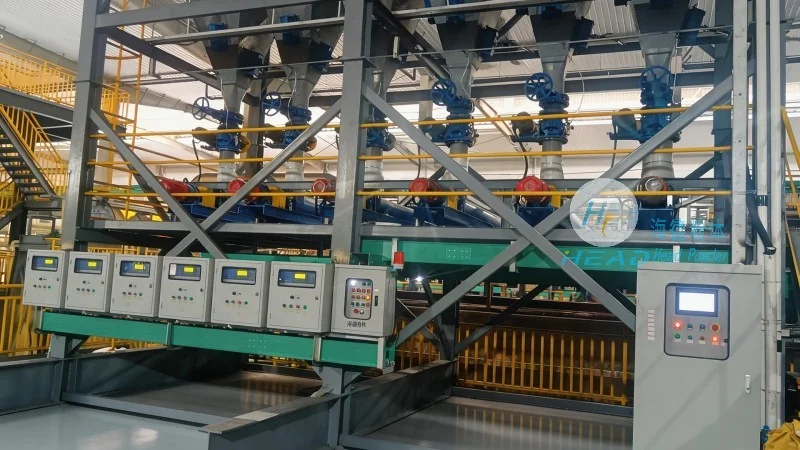
Ammonium nitrate exists in several forms: prilled (spherical granules), granular (irregular shaped), and crystalline (fine powder). Each form has distinct physical properties that directly influence conveying parameters. Bulk density typically ranges from 0.85 to 1.10 g/cm³ for prills and up to 1.60 g/cm³ for crystals. Particle size distribution, angle of repose (usually 30°–45°), and moisture content (typically below 0.5% for industrial grades) must be precisely characterized before system design. The Hazardous Area Classification (e.g., Zone 20, 21, 22 for dust, or Zone 1, 2 for gas) also dictates equipment selection. Ammonium nitrate is classified as a Division 5.1 oxidizing solid under the UN classification (UN 1942 for fertilizer, UN 2067 for industrial), requiring grounding, bonding, and inert gas blanketing in many jurisdictions. System designers must account for potential caking tendencies—ammonium nitrate can absorb moisture and form lumps, which may block conveying lines if air drying or dehumidification is not integrated.
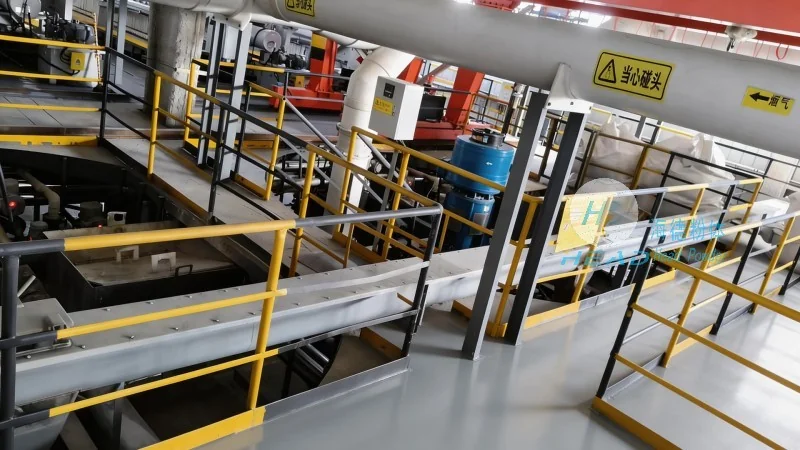
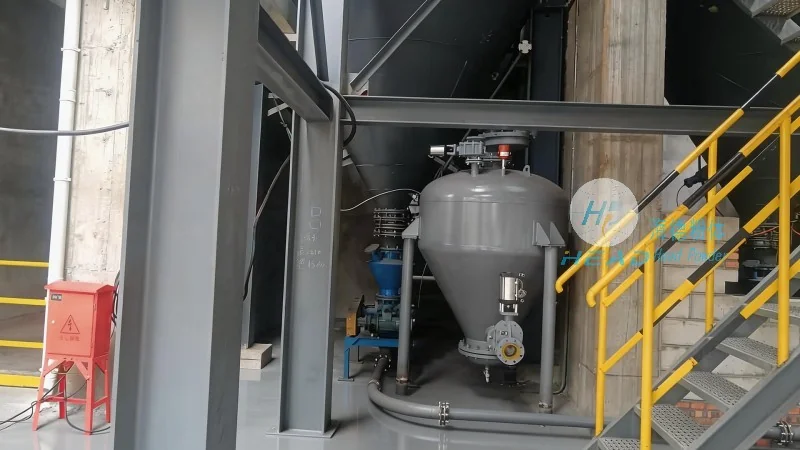
A well-engineered ammonium nitrate pneumatic conveying system comprises several integrated modules, each with specific specification criteria:
Handling ammonium nitrate requires adherence to multiple international and regional standards. Key codes include NFPA 490 (storage of ammonium nitrate), NFPA 654 (combustible dust), EN 13463 (non-electrical equipment for explosive atmospheres), and ATEX Directive 2014/34/EU for European installations. In the United States, OSHA Process Safety Management (PSM) and EPA Risk Management Plan (RMP) apply to facilities handling quantities above threshold levels. For pneumatic conveying specifically, the following safety measures are non-negotiable: (a) grounding of all conductive components with resistance-to-ground below 10 ohms, (b) installation of explosion isolation valves at both ends of the conveying line, (c) use of low-velocity conveying to minimize static generation, (d) inerting with nitrogen (oxygen content below 8% by volume) for systems handling fines or operating in confined spaces, and (e) emergency shutdown interlocking with fire and gas detection systems. Regular inspection and pressure testing of pipeline joints, couplings, and bends—per ASME B31.3 for process piping—is recommended at least every 12 months.
As energy costs rise and sustainability pressures mount, the pneumatic conveying industry is shifting toward intelligent systems. By 2026, variable-speed drives (VSDs) on blowers and compressors will become standard, enabling real-time velocity adjustment based on material flow rate, reducing energy consumption by 25–40% compared to fixed-speed designs. Advanced sensor integration—such as acoustic flow meters and microwave-based solids detection—allows precise monitoring of material-to-air ratio, minimizing product degradation and pipeline wear. For ammonium nitrate plants, closed-loop optimization algorithms can automatically adjust purge gas flow and venting pressure, improving overall system reliability. Headpowder, as a specialized solutions provider, has deployed such adaptive control systems in multiple fertilizer and mining operations, achieving conveying capacities exceeding 50 t/h over distances of 200+ meters with energy savings verified by third-party audits. Additionally, predictive maintenance modules using AI-based vibration and temperature trend analysis reduce unplanned downtime by over 30% in field installations.
Successful deployment of an ammonium nitrate pneumatic conveying system demands rigorous project phasing. During the design stage, Computational Fluid Dynamics (CFD) simulations should be performed to model particle trajectories, pressure drop, and erosion hotspots. Headpowder's engineering team routinely integrates CFD modeling into client proposals, enabling accurate risk identification before fabrication. For commissioning, a stepwise approach is recommended: (1) dry-run air testing to verify pipeline integrity and valve sequences, (2) cold material testing with inert simulants (e.g., alumina or glass beads) to validate conveying parameters, (3) warm material testing with actual ammonium nitrate under supervised conditions, and (4) full-load performance qualification. Key performance indicators during commissioning include conveying rate stability (within ±5% of design), pressure drop correlation with CFD predictions (within ±10%), and dust emission levels meeting local environmental limits. After commissioning, a comprehensive technical documentation package—including P&IDs, electrical schematics, O&M manuals, and safety data sheets—must be handed over to the plant operator.
When evaluating vendors for ammonium nitrate pneumatic conveying systems, clients should prioritize domain expertise, regulatory track record, and aftermarket support. Look for suppliers with proven references in the ammonium nitrate sector—preferably with installations in at least three different climate zones (arid, temperate, tropical) to demonstrate adaptability. Technical support should include remote monitoring capabilities, 24/7 emergency response, and a spare parts inventory for critical components such as rotary valve seals, filter bags, and pressure sensors. Headpowder has built a global service network covering Asia, the Middle East, and Africa, with local warehouses stocked for rapid deployment. In one recent case, a major ammonium nitrate producer in the GCC region upgraded its 15-year-old dilute-phase system to a dense-phase design engineered by Headpowder, achieving a 50% reduction in product breakage and a 20% increase in throughput while meeting revised local fire codes. For interested parties, direct technical consultation is available: Headpowder (咨询热线:156-6277-7102) welcomes inquiries on system feasibility studies, retrofits, and greenfield projects.
In conclusion, the pneumatic conveying of ammonium nitrate is a specialized discipline that marries bulk solids handling fundamentals with rigorous safety engineering. As the industry moves toward 2026, the convergence of digital controls, predictive analytics, and explosion-prevention technology will define best-in-class systems. plant owners and operators who invest in properly specified, professionally commissioned, and thoroughly maintained pneumatic conveying infrastructure will not only protect personnel and assets but also achieve significant operational efficiencies. Whether designing a new facility or upgrading an existing line, partnering with an experienced engineering firm ensures that every component—from the rotary valve to the filter pulse controller—is selected and integrated with ammonium nitrate's unique properties in mind. The path forward is clear: safer, smarter, and more sustainable material transport begins with the right pneumatic conveying architecture.

 Shandong headpowder Engineering Co., Ltd.
 156-6277-7102(Manager Zhang)
  0531-83386006
  Jinan City, Shandong Province, China
服务热线
微信咨询
回到顶部