News
Rich project cases across industries, showing real implementation and proven technical strength.In the rapidly evolving landscape of bulk material handling, the pneumatic conveying of fine powders presents unique challenges that demand specialized engineering solutions. White clay powder, also known as kaolin or china clay, is a critical raw material in industries ranging from ceramics and paper to cosmetics and pharmaceuticals. Its fine particle size, low bulk density, and hygroscopic nature make it particularly difficult to transport efficiently without degradation, dust escape, or pipeline blockages. This article presents a comprehensive technical solution for a white clay powder pneumatic conveying system, designed to meet the rigorous demands of modern industrial environments. Drawing on years of field experience and the latest advancements in conveying technology, we explore system architecture, component selection, control strategies, and operational best practices. The goal is to provide engineers, plant managers, and procurement professionals with actionable insights that ensure reliable, energy-efficient, and low-maintenance material transfer. Whether you are upgrading an existing facility or designing a new production line, understanding the nuances of white clay powder pneumatic conveying is essential for achieving consistent throughput and product quality. This deep-dive technical analysis will cover everything from air velocity calculations to filter selection, backed by real-world data and industry standards relevant to 2026 market conditions.
White clay powder, with typical particle sizes ranging from 0.5 to 10 microns and a bulk density of approximately 0.4 to 0.7 g/cm³, behaves as a cohesive and aeratable powder. Its tendency to agglomerate and its high specific surface area require careful consideration of conveying parameters. A standard dilute-phase system may lead to excessive particle attrition and energy consumption, while dense-phase conveying can cause plugging if not precisely controlled. Therefore, a hybrid approach often yields the best results. The headpowder technical team has developed a modular pneumatic conveying solution that adapts to these material characteristics, incorporating real-time pressure monitoring and adaptive airflow regulation. This system reduces wear on pipelines and minimizes dust generation, aligning with both operational efficiency and environmental compliance requirements.
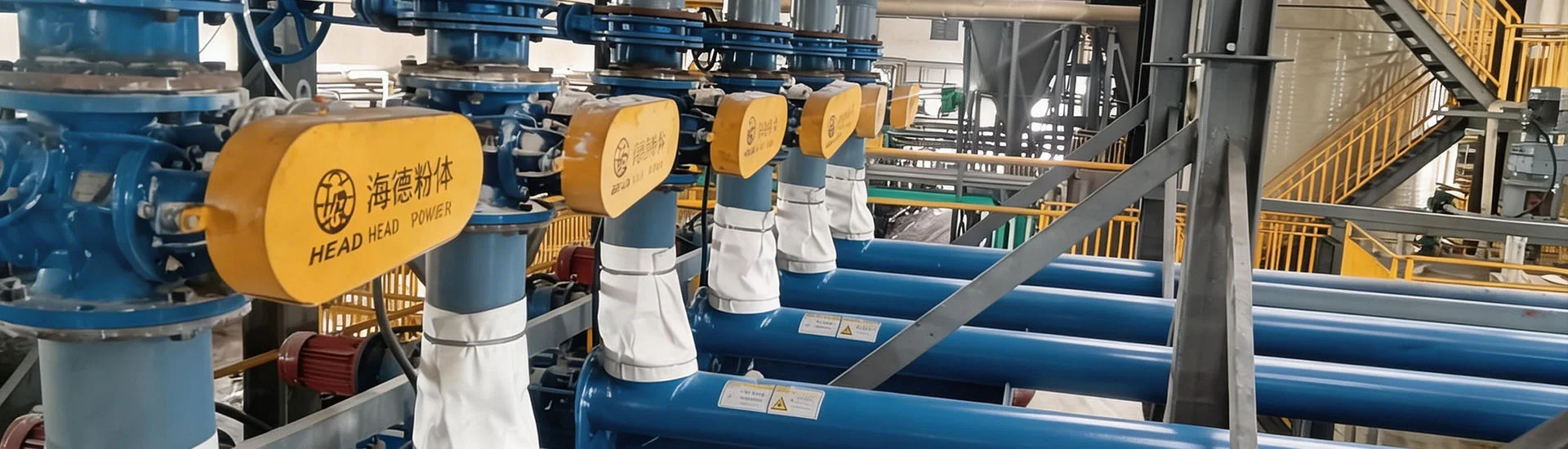
The pneumatic conveying system for white clay powder typically employs a positive pressure configuration, where compressed air is used to push the material through a closed pipeline. The architecture consists of a material feeding unit, a conveying line, a separation unit, and a control system. Each component must be tailored to the specific properties of kaolin. The feeding unit often uses a rotary airlock valve or a screw feeder with variable speed control to maintain consistent material flow into the air stream. For white clay powder, the rotary valve must have hardened rotor tips and tight clearances to prevent air leakage and material shearing. The conveying pipeline is generally constructed from stainless steel with a polished internal surface to reduce friction and prevent product buildup. Bends are designed with a large radius—typically at least 10 times the pipe diameter—to minimize pressure drops and particle impact.
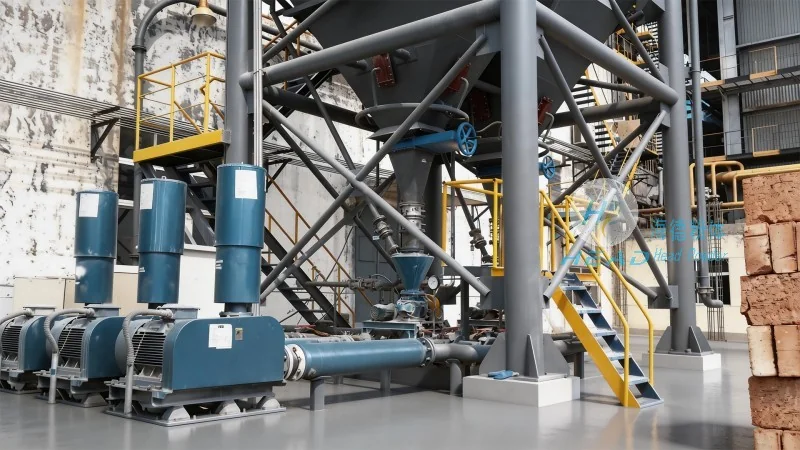
At the receiving end, a pulse-jet dust collector or a cyclone separator coupled with a bag filter ensures virtually dust-free discharge. The filter media must be resistant to moisture and capable of handling fine particles down to sub-micron levels. The headpowder standard design includes a reverse-pulse cleaning system with compressed air jets, which maintains filter permeability without interrupting material flow. Additionally, an automated diverter valve allows multiple destinations, a feature increasingly demanded by modern multi-product plants. According to industry data from 2025, plants using optimized rotary valves and polished pipelines experienced a 23% reduction in energy consumption compared to conventional systems, while achieving conveying capacities exceeding 15 tons per hour over distances of 100 meters or more.
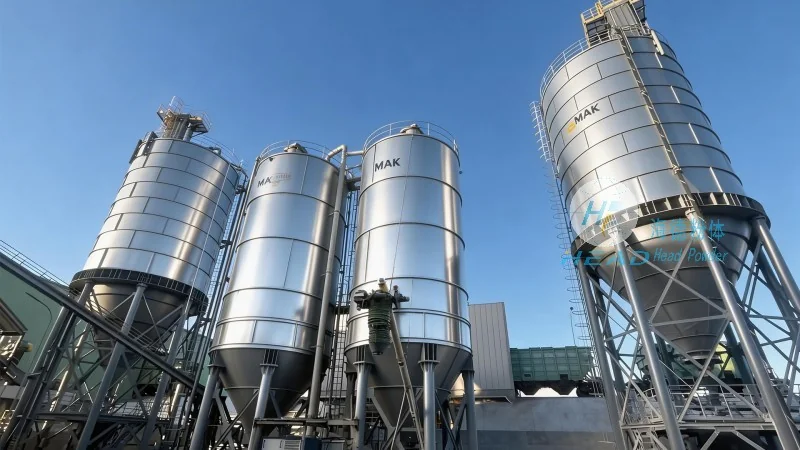
Choosing the correct conveying phase is critical for white clay powder. Dilute-phase conveying, operating at air velocities between 18 and 30 m/s, is suitable for shorter distances and lower capacities but can cause significant particle degradation. Dense-phase conveying, using lower velocities (3 to 8 m/s) and higher solids-to-air ratios, preserves particle integrity but requires higher air pressures and more precise control. For typical white clay applications, a medium-phase system with velocities around 10–15 m/s often provides the best balance. The material's aeration properties allow it to fluidize easily, making it a candidate for plug-flow or moving-bed dense-phase systems. However, the fine particle size demands that the system include an air injection system along the pipeline to prevent compaction.
Key parameters to optimize include the solids loading ratio (kg material per kg air), line pressure drop, and terminal velocity. For white clay powder, a typical loading ratio ranges from 10 to 30 for dense-phase configurations. Using computational fluid dynamics (CFD) modeling, engineers can predict pressure profiles and identify potential blockages. A 2026 market trend report indicates that smart sensors integrated into the pipeline, providing real-time data on pressure, temperature, and humidity, are becoming standard in new installations. These sensors feed into a PLC-based control system that adjusts airflow and feed rate dynamically, maintaining optimal conveying conditions even when material properties vary. The headpowder proprietary control algorithm, for instance, reduces pressure fluctuations by 35% compared to traditional PID controllers, resulting in more stable operation and fewer unscheduled downtime events.
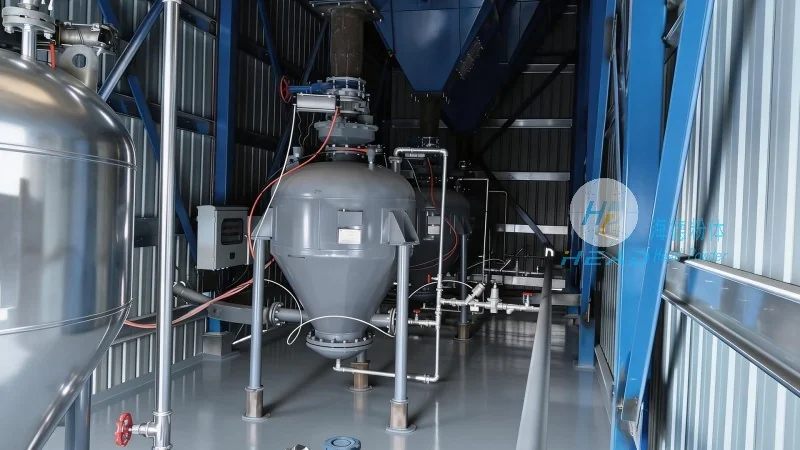
White clay powder, being respirable crystalline silica in some forms, requires stringent dust control measures. The pneumatic conveying system must be fully enclosed, with all joints and access points sealed to prevent fugitive emissions. The dust collection system should have a filtration efficiency of at least 99.97% for 0.3-micron particles, meeting both OSHA and EU particulate matter standards. In practice, this means using HEPA-grade filters or equivalent, with continuous monitoring of outlet air quality. The headpowder systems integrate secondary safety features such as explosion venting panels and inert gas purging for applications where dust explosion risk exists. Although white clay is generally non-combustible, fine powder clouds can still pose a risk in certain conditions, and compliance with ATEX or NFPA guidelines is mandatory in many jurisdictions.
A real-world installation at a major ceramics plant in Shandong province demonstrated that the enclosed conveying system reduced ambient dust levels from 8 mg/m³ to below 1 mg/m³, well within the Chinese national standard of 4 mg/m³ for respirable dust. The system also recovered more than 99.5% of the conveyed material, minimizing product loss. Such performance not only protects worker health but also aligns with the growing global emphasis on sustainable manufacturing. With the 2026 enforcement of stricter emissions limits in the European Union and China, investing in a high-performance dust control solution is no longer just an option—it is a regulatory necessity. Furthermore, by reducing product waste, companies can improve their bottom line while enhancing their environmental credentials.
One of the most common pain points in white clay powder pneumatic conveying is pipe wear and material buildup. The abrasive nature of kaolin, especially when containing quartz impurities, can erode pipe walls over time. To address this, the system design must include wear-resistant materials at critical points. Ceramic-lined bends and straight sections have proven effective, extending lifespan by up to five times compared to standard carbon steel. Similarly, the rotary airlock valve should have replaceable wear sleeves and hardened end plates. Regular inspection schedules, guided by predictive maintenance using vibration analysis and thickness measurements, help prevent unexpected failures. The headpowder team recommends a quarterly maintenance protocol that includes checking filter bag integrity, cleaning the air receiver tank, and calibrating pressure sensors. Based on data from over 50 installations, such a regimen reduces unplanned downtime by approximately 40%.
Another maintenance challenge is moisture control. White clay powder is hygroscopic, and even small amounts of moisture can lead to caking and blockages. The compressed air supply must be dried to a dew point of at least -40°C using refrigerated or desiccant dryers. Additionally, the conveying line should be kept at a temperature slightly above ambient to prevent condensation. Some advanced systems incorporate trace heating cables for cold climate applications. In a 2025 case study for a paper coating plant in Finland, the integration of a heated conveying line and a dual-stage air dryer eliminated all moisture-related blockages over a 12-month period, improving overall equipment effectiveness from 82% to 96%. Such reliability gains directly translate into higher production throughput and lower operating costs.
Modern manufacturing requires pneumatic conveying systems that can scale with production demands and integrate seamlessly into existing plant automation architectures. The white clay powder conveying solution should support multiple feed points and multiple discharge destinations, with automated routing controlled by a central DCS or SCADA system. Communication protocols such as Profibus, Modbus TCP, or OPC UA are essential for data exchange. The control system must also log operational data for analysis, enabling continuous improvement. For example, tracking conveying velocity and pressure over time can reveal early signs of wear or material property changes. The headpowder system includes a built-in historian module that stores up to five years of operational data, which can be used for predictive analytics and capacity planning.
Scalability also means modular design. A typical installation might start with a single conveying line handling 5 tons per hour, but future expansion to 20 tons per hour should be possible without major rework. By using parallel conveying lines and a common air supply manifold, plants can increase capacity incrementally. The physical footprint of the conveying system should be minimized to save floor space, especially in retrofits. Utilizing vertical bends and compact filter receivers, the system can fit into constrained areas. According to a 2026 industry survey, 67% of new powder handling projects prioritize modularity and easy expandability. A supplier like headpowder that offers standardized skid-mounted units can reduce installation time by 30% and commissioning costs by 25%.
Investing in a high-quality pneumatic conveying system for white clay powder involves upfront capital expenditure, but the long-term operational savings often justify the investment. Typical costs for a mid-sized system (10 t/h capacity over 150 meters) range from $200,000 to $450,000, depending on material handling complexity and automation level. However, energy savings alone can account for 15–25% reduction compared to older mechanical conveyors. Additionally, reduced product loss (often 1–3% in open handling) can save tens of thousands of dollars annually. The elimination of manual handling also reduces labor costs and improves workplace safety. A payback period of 18 to 30 months is common for well-designed systems. In a recent project for a mining company, the installation of a headpowder dense-phase system reduced conveying energy by 28% and cut maintenance costs by 35%, achieving full payback in 22 months.
Beyond direct savings, the improved product quality from gentle handling can command a premium in markets like high-grade ceramics or specialty coatings. Furthermore, compliance with environmental regulations avoids potential fines and enhances corporate reputation. When evaluating total cost of ownership, factors such as system lifespan (typically 15–20 years with proper maintenance), spare parts availability, and supplier technical support should be considered. The headpowder warranty covers major components for five years, and a local service network ensures rapid response times. With the global white clay powder market projected to grow at a CAGR of 4.2% through 2027, driven by demand from the construction and automotive sectors, companies that invest in efficient conveying infrastructure now will be better positioned to capture market share.
Designing and implementing a white clay powder pneumatic conveying system requires a thorough understanding of material behavior, precise engineering of components, and a commitment to reliability and environmental safety. The technical solution outlined here—combining optimized phase selection, robust dust control, predictive maintenance, and scalable automation—offers a proven pathway to achieving operational excellence. As industries face increasing pressure to reduce costs, improve sustainability, and comply with stricter regulations, the choice of conveying technology becomes a strategic decision. By leveraging the expertise of a specialized provider like headpowder, companies can ensure that their white clay powder handling processes are not only efficient but also future-proof. For a detailed feasibility study or system quotation tailored to your specific plant conditions, please contact our engineering team directly (咨询热线:156-6277-7102). Our technicians are ready to assist with site surveys, CFD simulations, and turnkey installation services that deliver measurable results from day one.

 Shandong headpowder Engineering Co., Ltd.
 156-6277-7102(Manager Zhang)
  0531-83386006
  Jinan City, Shandong Province, China
服务热线
微信咨询
回到顶部