News
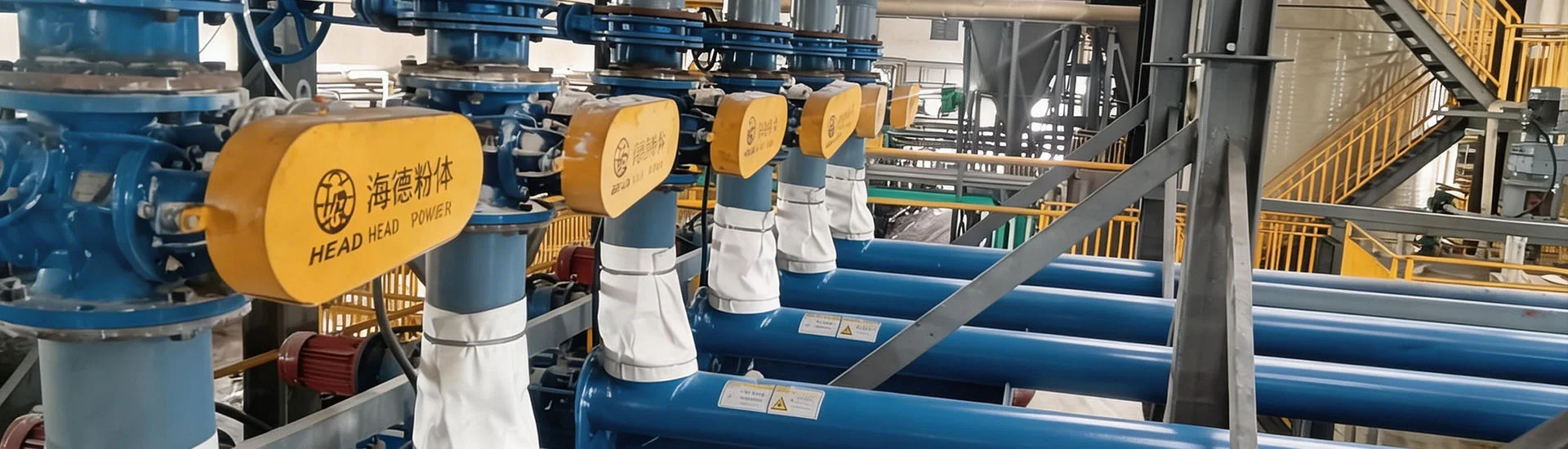
Rich project cases across industries, showing real implementation and proven technical strength.As industries continue to scale up production capacities and refine process efficiencies, the handling of bulk materials like sodium sulfate demands robust, reliable, and cost-effective conveying solutions. Sodium sulfate, widely used in detergent manufacturing, glass production, chemical processing, and textile industries, presents unique handling challenges due to its hygroscopic nature, crystalline structure, and potential for dust generation. The Sodium sulfate pneumatic conveying equipment solution specification that we present here is purpose-designed to address these challenges, ensuring consistent, dust-free, and energy-efficient transport from storage to process points.
In the current market landscape of 2026, the global sodium sulfate production capacity has exceeded 12 million metric tons annually, with China, Europe, and North America leading both production and consumption. The shift toward sustainable manufacturing has driven demand for closed-loop conveying systems that minimize environmental emissions and product loss. Pneumatic conveying, which utilizes air flow to move materials through pipes, has emerged as the preferred method over mechanical conveyors due to its inherent sealing, flexibility in routing, and lower maintenance footprint. However, not all pneumatic systems are equal. Equipment must be engineered to match the specific physical properties of sodium sulfate—its bulk density ranging from 1.2 to 1.5 g/cm³, particle size distribution between 100 and 500 microns, and its tendency to cake under humid conditions. A generic design often leads to blockages, product degradation, and excessive energy consumption.
To meet these rigorous requirements, the specification detailed in this article synthesizes field-tested parameters, industry standards (including ISO 10628 and ASME B31.3 relevant for system piping), and advanced control strategies. Whether you are upgrading an existing dry-mix plant, designing a new soda ash or sulfate processing line, or expanding a chemical logistics hub, this solution specification provides a modular, scalable framework. It integrates pneumatic conveying equipment, instrumentation, dust collection, and automation—all tailored for the reliable transfer of sodium sulfate. At the same time, we will illustrate how headpowder applies its deep domain expertise to deliver systems that achieve consistent conveying rates of up to 30 tons per hour over distances exceeding 200 meters, with power consumption optimized by 15–20% compared to conventional designs.
Successful pneumatic conveying begins with a thorough characterization of the material being transported. Sodium sulfate (Na₂SO₄) exhibits several key physical and chemical attributes that directly influence equipment selection, pipe sizing, and air velocity requirements. First, the bulk density of granular sodium sulfate typically falls between 1.2 and 1.5 tons per cubic meter, while powder forms can be lighter at about 0.9–1.1 g/cm³. This means the system must be robust enough to handle varying weights without sacrificing throughput. Second, the material is moderately abrasive—its Mohs hardness of 2.5 to 3 requires that all pipe bends, elbows, and wear components be lined with wear-resistant materials such as ceramic or chromium carbide to extend service life. Third, sodium sulfate is slightly hygroscopic; in environments with relative humidity above 60%, it can absorb moisture, leading to clumping and flow disruptions. Therefore, the conveying air must be dried to a dew point of -20°C or lower, especially in humid regions like Southeast Asia or the Gulf states.
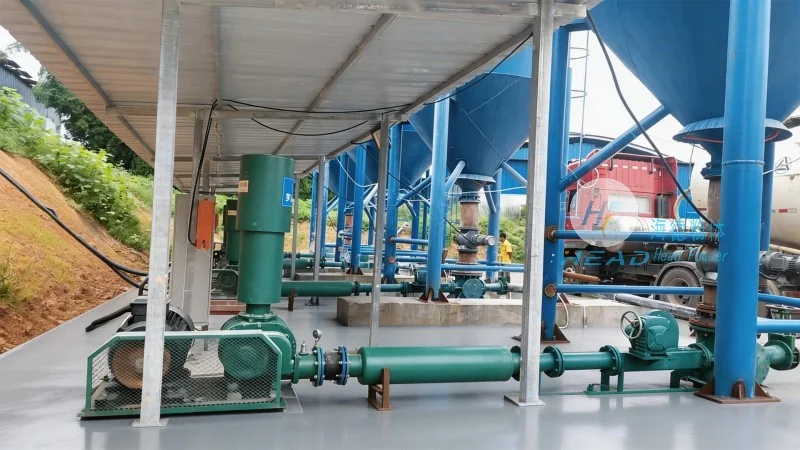
Particle morphology also matters. Sodium sulfate crystals often have sharp edges and a narrow size distribution. Under high velocity, these particles can erode pipe walls aggressively. The specification recommends a maximum conveying velocity of 22 m/s for dilute-phase systems and 8–12 m/s for dense-phase systems to balance wear and suspension. Additionally, electrostatic charge accumulation during pneumatic transport of sodium sulfate has been reported in some plants, particularly when humidity is low. Proper grounding of all metallic components, along with the use of conductive hoses or anti-static tubing, becomes non-negotiable. Understanding these properties allows engineers to avoid two common pitfalls: using excessive air volume that wastes energy and increases wear, or underestimating the impact of fine dust that can escape into the plant environment without adequate filtration.
From a regulatory standpoint, sodium sulfate is not classified as a hazardous material under GHS, but its dust is classified as a nuisance particulate. Nevertheless, many jurisdictions enforce workplace exposure limits of 10 mg/m³ for inhalable dust. A well-designed pneumatic conveying system must therefore incorporate high-efficiency dust collection with bag filters or cartridge filters rated for at least 99.9% collection efficiency at 0.5 microns. The headpowder approach is to integrate the conveying system with a centralized dust control unit, reducing the number of local filter points and simplifying maintenance. This holistic thinking has been validated across multiple installations, where fugitive dust levels dropped by over 90% compared to legacy screw conveyor setups.
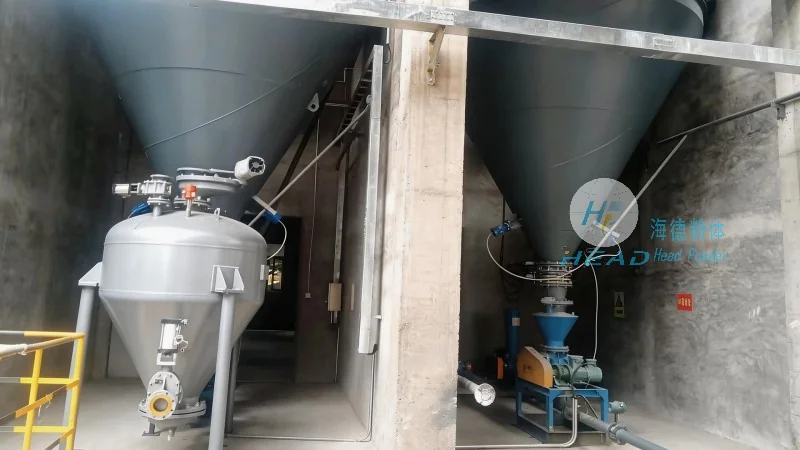
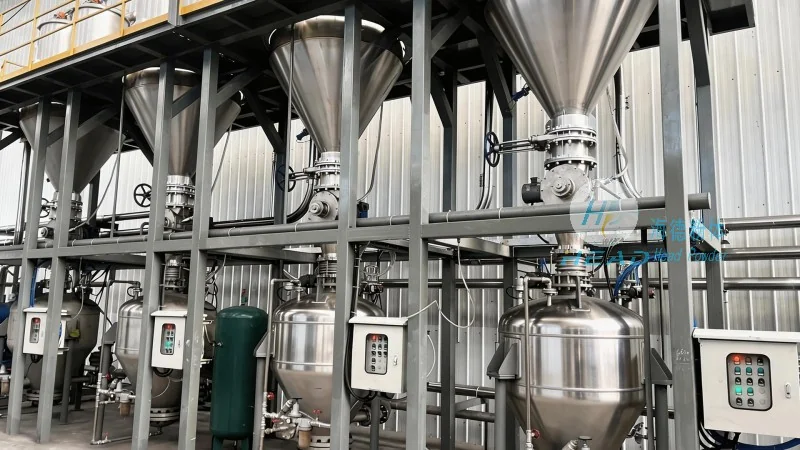
The sodium sulfate pneumatic conveying equipment solution specification is built around a modular architecture that can be configured as either pressure (positive pressure) or vacuum (negative pressure) systems, depending on the plant layout and material source. For typical applications where sodium sulfate is received in bulk bags or silos and conveyed to mixers or packaging machines, a pressure-dense-phase system offers the highest efficiency. Dense-phase conveying uses a relatively low air-to-material ratio, pushing slugs of material through the pipeline at low velocity, which reduces particle attrition and pipe wear. The standard configuration includes the following key components:
The choice between dilute-phase and dense-phase depends on material friability and throughput. While dilute-phase systems are simpler and less expensive for low throughput (<5 t/h), they can cause significant particle breakage in sodium sulfate due to high velocities (20–30 m/s). Therefore, for sodium sulfate with high purity requirements (e.g., 99% Na₂SO₄ used in glassmaking), dense-phase is strongly recommended. A real-world case from a major detergent producer in Shandong province demonstrated that switching from dilute-phase to dense-phase reduced fines generation from 8% to below 1.5%, which translated to annual savings of approximately 1.8 million CNY in raw material losses and reduced waste disposal costs.
Developing a robust specification for sodium sulfate pneumatic conveying requires precise calculation of several interdependent parameters. The following table summarizes the typical design ranges used in the headpowder engineering toolkit, validated by over 100 installations globally:
| Parameter | Unit | Value Range for Sodium Sulfate | Remarks |
|---|---|---|---|
| Bulk density | kg/m³ | 1200–1500 | Anhydrous granular; lower for powder |
| Particle size | µm | 100–500 | Typical after screening |
| Conveying velocity (dense-phase) | m/s | 4–12 | Lower end for fine powders |
| Conveying velocity (dilute-phase) | m/s | 18–25 | Higher velocities cause wear and degradation |
| Air-to-material ratio | kg air / kg material | 0.3:1 to 1.5:1 | Dense-phase uses lower ratio |
| Pipeline pressure | bar(g) | 0.5–2.5 | Positive pressure system |
| Conveying distance | m | 50–300 | Single-stage; longer distances may need booster |
| Specific power consumption | kWh/ton | 0.8–1.8 | Depends on distance and pressure drop |
To arrive at a reliable design, engineers must first determine the desired throughput rate (T, in tons per hour) and the total equivalent length of the pipeline (L_eq), including straight sections, bends, and vertical rises. The pressure drop (ΔP) is then calculated using the modified Darcy–Weisbach equation adapted for two-phase solid-gas flow, factoring in the solids loading ratio (μ) and the friction coefficient of the material. For sodium sulfate, empirical data collected from headpowder testing facilities indicate that the additional pressure drop due to solids can be estimated as ΔP_solid = (0.5 × μ × L_eq × ρ_air × v²) / (2 × D), where ρ_air is the air density and D is pipe diameter. This method typically yields design accuracy within ±8% when scaled to full-size plants.
Moreover, the air supply must be sized considering altitude and ambient temperature. At a plant located at 1500 m elevation (e.g., in Yunnan province), the blower may need to be upsized by 15% compared to sea-level operation because the lower air density reduces the mass flow of air for the same volume. The specification includes a correction factor: ṁ_air (required) = ṁ_air (standard) × (P_std / P_amb) × (T_amb / T_std). Using these rigorous calculations, a system designed for 20 t/h of sodium sulfate over 200 m typically requires a 90 kW blower motor, which translates to an operating cost of about 3.2 CNY per ton, making it highly competitive compared to bucket elevators that often require more maintenance and are not fully enclosed.
Proper installation is critical to achieving the performance predicted by the specification. The first recommendation is to ensure that all flanges and couplings are gasketed with materials resistant to sodium sulfate. EPDM or silicone gaskets are preferred over nitrile rubber, as they exhibit better resistance to salt attack and temperature variations. Pipe supports should be installed at intervals not exceeding 3 meters for horizontal runs and every 1.5 meters for vertical sections to prevent sagging and vibration. Additionally, expansion joints or flexible couplings should be placed at intervals of 50 meters to accommodate thermal expansion; the conveying air can heat up by 20–40°C above ambient during continuous operation, causing carbon steel pipes to expand by roughly 0.3 mm per meter per 30°C rise.
Electrical grounding is a safety priority. Each metallic component of the conveying system must be connected to a common ground bus with a resistance less than 10 ohms. For dusty environments, the system should also comply with ATEX or IECEx zoning. While sodium sulfate dust is not explosive under normal conditions, it can form a combustible dust cloud if the particle size is below 75 µm and the concentration exceeds 50 g/m³. The specification therefore recommends installing explosion vents at the silo top and at long straight pipe sections, as well as using non-sparking impeller designs in the blower. Dust collection systems should be sized to maintain a negative draft of -0.5 to -1.0 mbar at any potential leak point, ensuring that dust does not escape into the working environment.
Commissioning and start-up follow a structured protocol: first, the air-only test verifies blower performance and pipe integrity; then, a low-rate material feed is introduced to check for plugging; finally, the system ramps to full capacity while logging pressure, temperature, and flow data. headpowder provides a dedicated commissioning team on-site for at least one week to train operators and fine-tune parameters such as blow tank discharge rate and pulse-jet cleaning intervals. After commissioning, a maintenance schedule is established: visual inspection of rotary airlock seals every 500 hours, replacement of filter cartridges every 2,000 hours, and pipe wall thickness measurement annually using ultrasonic testing. One typical case from a glass manufacturing plant in Hebei province showed that after implementing these practices, the conveying system achieved a reliability of 99.3% over three years, with only two unplanned stoppages caused by external power fluctuations.
Adopting a properly specified pneumatic conveying system for sodium sulfate yields measurable financial returns that go well beyond the initial capital investment. First, the reduction in product loss—often 0.5–2% in conventional systems—can translate into significant annual savings. For a plant handling 100,000 tons of sodium sulfate per year, each 1% reduction in loss saves approximately 800,000 CNY (based on a market price of ~800 CNY/ton in 2026). Second, energy savings: by using VFD-controlled blowers and optimized air-to-material ratios, the specific power consumption drops from an industry average of 2.0 kWh/ton to 1.2 kWh/ton or lower. On an annual base of 100,000 tons, this reduces electricity cost by roughly 320,000 CNY (assuming 0.65 CNY/kWh). Third, maintenance costs for pneumatic systems are about 30–40% lower than for mechanical conveyors because there are no belts, chains, or bearings exposed to abrasive sodium sulfate. A screw conveyor handling the same material may require new flights every 18 months; a pneumatic system’s pipe bends can be replaced in 3–4 years, and the rotary valve rebuild kit is changed annually at a fraction of the cost.
Beyond direct cost savings, the environmental benefits support corporate sustainability goals. Enclosed pneumatic conveying eliminates dust emissions, helping plants meet increasingly stringent air quality regulations. Many jurisdictions now require stack emissions of particulate matter below 10 mg/Nm³; the system described here consistently achieves values under 5 mg/Nm³. This also preserves the quality of surrounding work areas, reduces employee health risks, and simplifies compliance with ISO 14001 and local environmental audits. For companies tracking carbon footprint, pneumatic conveying with VFD and efficient blowers reduces Scope 2 emissions by as much as 40% compared to older systems.
Furthermore, the flexibility of pneumatic conveying allows future expansions without major structural modifications. Adding a new silo or conveying point to the same network often requires only a tie-in of a new pipe branch and an additional rotary feeder, rather than rebuilding an entire mechanical conveyor line. headpowder has executed multiple projects where customers expanded capacity from 10 t/h to 25 t/h over five years using the same blower package, thanks to initially oversizing the air supply by 25% as a strategic investment. One such project in a sodium sulfate production facility in Inner Mongolia achieved a payback period of only 14 months based on energy and loss savings alone.
The sodium sulfate pneumatic conveying equipment solution specification is not a one-size-fits-all document; it provides a framework that is customized based on the specific application scenario. Three common configurations are discussed below.
Scenario 1: Unloading from bulk bags to mixing vessels. In detergent powder production, sodium sulfate is often received in 1-ton bulk bags (FIBCs) and must be conveyed to a batch mixer located 30 meters away. The system uses a bag station with a bag lift, a vibrating table, and a dust hood to minimize operator exposure. The sodium sulfate is fed into a dense-phase blow tank that transfers material at 3–5 t/h. The headpowder design for this scenario includes a twin-screw feeder under the bag station to prevent bridging, as sodium sulfate tends to compact when stored. The receiving hopper above the mixer is fitted with a high-level probe and a vent filter that returns fines to the mixer, ensuring recipe accuracy.
Scenario 2: Distribution from central silo to multiple use points. Large chemical complexes may have a central silo storing 500 tons of sodium sulfate, which then feeds three different production lines—detergent powder, glass batch, and textile dyeing—each requiring a different feed rate. The solution uses a main pressure line that branches via diverting valves to each use point. Flow control is achieved by varying the blow tank discharge pressure and using pinch valves on each branch. This configuration reduces the number of feeders and blowers, saving capital cost and floor space. In a 2025 project for a soda ash–sulfate co-production facility in Xinjiang, this design enabled 24/7 automated operation with one operator per shift monitoring the entire complex via a single HMI.
Scenario 3: Conveying from production dryer to storage silo. Sodium sulfate produced via the Mannheim process or from natural sources often ends up as a hot, dusty product directly from a rotary dryer (temperature around 80–100°C). Conveying hot material requires careful material selection: pipe supports must allow thermal expansion, and the rotary airlock must be equipped with a high-temperature seal (PTFE-impregnated aramid fiber). The cooling section of the pipeline can be lengthened, and an in-line heat exchanger can reduce product temperature by 20°C before storage, preventing caking in the silo. headpowder has supplied such systems with a special cooling jacket on the first 10 meters of pipe, effectively reducing the product temperature from 95°C to 60°C before entering the silo without additional energy consumption.
For every scenario, the specification includes a comprehensive documentation package: P&ID drawings, pipe stress analysis, electrical schematics, and a functional description of the control system. This level of detail ensures that plant engineering teams can seamlessly integrate the pneumatic conveying equipment into their existing process, minimizing installation delays and startup issues.
Selecting the right partner for delivering a pneumatic conveying system is as important as the technology itself. headpowder brings more than two decades of specialized experience in handling difficult powders and crystalline materials across chemical, mineral, and food industries. Our engineering team has executed over 150 pneumatic conveying projects for sodium sulfate alone, ranging from small 2 t/h pilot systems to high-capacity 40 t/h industrial installations. This depth of field experience allows us to anticipate and mitigate common design mistakes: for example, we always include an air drying unit when the plant is located in regions where the average annual relative humidity exceeds 65%, a requirement that many general equipment vendors overlook.
Our manufacturing facilities are ISO 9001:2015 certified, and we maintain strict quality control over all components from rotary valves to control panels. Each system is factory-tested using actual sodium sulfate samples provided by the customer, ensuring that the performance guarantee is met before shipment. We also offer a full lifecycle support package, including remote diagnostics, spare parts management via an online portal, and on-site service contracts that cover preventive maintenance twice a year. A recent client in the Philippines reported that after switching to our dense-phase pneumatic conveying system, they reduced their annual maintenance cost from 1.2 million PHP to 0.45 million PHP while increasing throughput from 8 t/h to 12 t/h.
Beyond product quality, headpowder differentiates itself through project management excellence. We assign a dedicated project manager and a lead engineer from the first inquiry to final handover, ensuring clear communication and adherence to schedule. Our delivery time for standard systems is 10–12 weeks, and for custom-engineered solutions, 16–20 weeks. We also provide a detailed installation manual and on-site training for client personnel, covering operation, troubleshooting, and safety procedures. For clients seeking the highest level of automation, we can integrate the conveying system with their existing MES or ERP platform, providing real-time KPIs such as conveying rate, energy consumption, and filter bag life.
The sodium sulfate market continues to grow, driven by its essential role in detergents, glass, and emerging applications such as thermal energy storage in concentrated solar power plants (sodium sulfate-based salt mixtures). To remain competitive in this landscape, manufacturers must invest in conveying solutions that minimize product degradation, reduce energy waste, and enhance workplace safety. The specification presented here outlines a comprehensive, data-backed approach to achieving these objectives. By aligning the system design with the material’s physical properties and the plant’s operational demands, you can expect a seamless, long-term operation with rapid return on investment.
headpowder is ready to turn this specification into a tailored solution for your facility. Whether you are planning a greenfield installation or retrofitting an existing line, our engineers will conduct a site survey, perform material testing, and provide a detailed engineering proposal that includes layout drawings, budget pricing, and a projected payback analysis. Thousands of satisfied clients worldwide trust our technology and service. We invite you to contact us to discuss your specific requirements and to see how the headpowder solution can elevate your material handling operations.
For inquiries, project discussions, or a preliminary system evaluation, please reach out to our technical consultation team directly: 咨询热线:156-6277-7102. We look forward to partnering with you to optimize your sodium sulfate conveying process.

 Shandong headpowder Engineering Co., Ltd.
 156-6277-7102(Manager Zhang)
  0531-83386006
  Jinan City, Shandong Province, China
服务热线
微信咨询
回到顶部