News
Rich project cases across industries, showing real implementation and proven technical strength.Selecting the right pneumatic conveying equipment for edible salt processing is a critical decision that directly impacts production efficiency, product quality, and operational safety. As a specialized industrial application, the transport of edible salt—whether in fine powder, granular, or iodized forms—requires meticulous attention to material characteristics, hygiene standards, and system reliability. This article serves as a comprehensive guide for engineers, plant managers, and procurement professionals who are involved in the design or upgrade of salt conveying lines. We will explore the key selection criteria, system configurations, and industry best practices, while integrating real-world considerations that align with current market trends in 2026. The goal is to provide a clear, actionable framework that helps you evaluate equipment options with confidence.
Edible salt, unlike industrial salt, must meet stringent food safety regulations. Any conveying system must ensure zero contamination, minimal dust generation, and easy cleanability. Additionally, salt’s hygroscopic nature can lead to caking and corrosion if the equipment is not properly designed. Therefore, the selection process goes beyond simple capacity calculations—it involves understanding the physical and chemical behavior of salt under different airflow conditions. In this article, we will break down the core components of a pneumatic system—such as blowers, rotary valves, filters, and pipelines—and examine how each element should be tailored for edible salt handling. We will also discuss common pitfalls, such as moisture ingress and particle degradation, and how to avoid them through proper system engineering. Whether you are considering dilute phase, dense phase, or vacuum conveying, the insights provided here will serve as a reliable starting point for your project evaluation.
From a market perspective, the global edible salt market is projected to grow steadily through 2026, driven by rising food processing demands and increased consumer awareness of premium iodized and specialty salts. This growth places higher expectations on conveying equipment manufacturers to deliver systems that are not only efficient but also compliant with evolving food safety standards such as FSSC 22000 and GMP. As a leading provider in this niche, headpowder has accumulated extensive experience in designing pneumatic conveying solutions for edible salt applications across Asia, Europe, and the Americas. With decades of engineering expertise and a portfolio of successful installations, the company offers a proven selection framework that aligns with the latest industry requirements. This article draws on that knowledge base to help you make an informed decision.
Before diving into equipment selection, it is essential to analyze the physical and chemical properties of the specific salt product you intend to convey. Edible salt can vary widely in particle size distribution, bulk density, moisture content, and flowability. For instance, fine table salt (typically 0.1–0.5 mm) behaves very differently from coarse sea salt (1–3 mm) or iodized salt with anti-caking agents. These differences affect the choice of conveying phase—dilute phase vs. dense phase—and the required air velocity, pressure, and component materials.
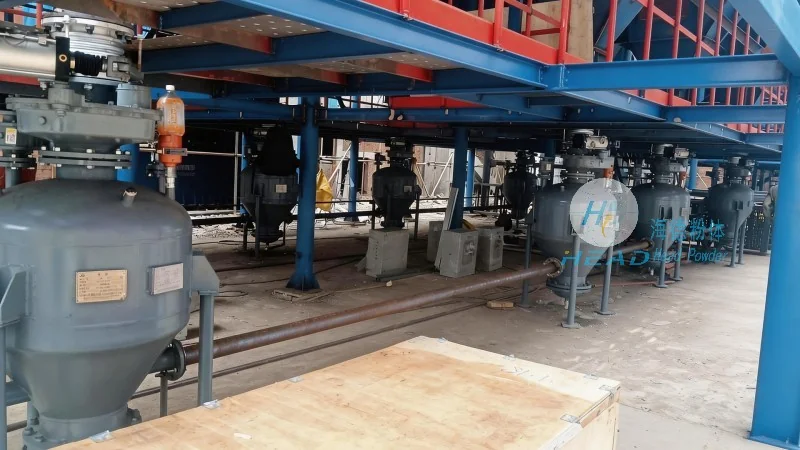
One critical property is the salt’s angle of repose and its tendency to bridge or rathole in hoppers. Salt with high moisture content (above 0.5%) can become sticky and lead to blockages in rotary valves or filter bags. Additionally, the presence of iodine compounds or other additives may introduce corrosive or abrasive characteristics. For example, potassium iodate, commonly used in iodized salt, can accelerate corrosion of carbon steel components. Therefore, all contact surfaces should be made of stainless steel 304 or 316L, with surface finishes of Ra ≤ 0.8 µm to minimize product adhesion and facilitate cleaning. In practice, headpowder has observed that using 316L stainless steel for pipelines and vessels significantly extends equipment life in iodized salt applications, reducing maintenance cycles by up to 40%.
Another key factor is the salt’s friability—its tendency to break down under impact. In dilute phase conveying, high velocity (20–30 m/s) can cause particle attrition, generating fines that degrade product quality and increase dust explosion risks. Dense phase conveying, which uses lower velocities (2–8 m/s) and higher pressures, minimizes breakage and is often preferred for premium salt products where crystal integrity matters. However, dense phase systems require more sophisticated control of air injection and pressure management. The selection between these two approaches should be based on a thorough material characterization, including a Jenike shear test and a dust explosion hazard analysis. For most edible salt applications, the industry standard is to maintain a minimum conveying velocity above the salt’s saltation velocity but below the threshold for excessive attrition—typically 12–18 m/s for dilute phase and 4–7 m/s for dense phase.
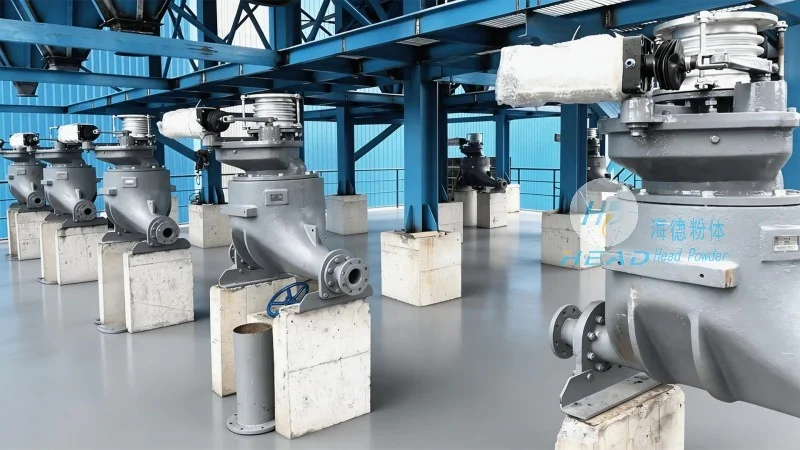
Every pneumatic conveying system consists of several interconnected components, each of which must be selected or engineered to suit the specific salt product. Below we break down the key parts and the considerations for edible salt applications:
Beyond these core components, auxiliary equipment such as hoppers, vibratory feeders, and sack-tip stations must be designed with hygienic considerations. For example, hopper walls should be steep (≥ 70 degrees) and lined with stainless steel or food-grade polymer to prevent bridging. All welds should be ground smooth to eliminate crevices where salt could accumulate or bacteria could grow.
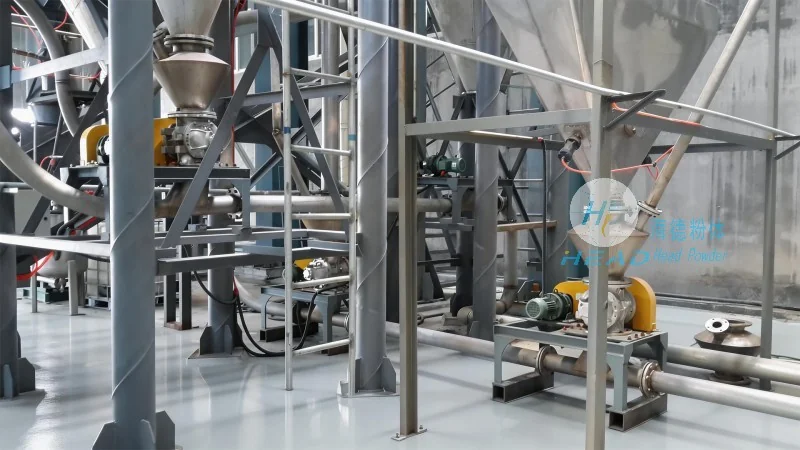
One of the most important decisions in edible salt pneumatic conveying is choosing between dilute phase and dense phase systems. Each has distinct advantages and limitations, and the ideal choice depends on product characteristics, distance, and budget.
Dilute phase conveying is the most widely used configuration for edible salt due to its lower capital cost and simpler design. In this system, salt is suspended in a high-velocity air stream and transported through the pipeline. It works well for short to medium distances (up to 200 meters) and for salt with good flowability and low moisture content. Typical throughputs range from 1 to 20 tons per hour. However, the high velocity can cause particle degradation, pipeline erosion (especially at bends), and higher energy consumption. For standard table salt with moderate friability, dilute phase remains a cost-effective solution, particularly when the target application is bulk packaging or blending where some fines are acceptable.
Dense phase conveying, on the other hand, uses a low-velocity, high-pressure air stream to push slugs or plugs of salt through the pipeline. This method dramatically reduces particle attrition and pipe wear, making it ideal for premium salts (e.g., flake salt, gourmet sea salt) where crystal shape and size are critical. Dense phase systems can handle longer distances (up to 500 meters) and are more energy-efficient per ton of product conveyed. However, the initial equipment cost is 30–50% higher, and the control system is more complex, requiring precise regulation of air injection at multiple points along the line. For iodized salt with anti-caking agents, dense phase also reduces the risk of additive segregation, which is a common issue in dilute phase due to differential particle velocities.
In many real-world projects, a combination of both phases is used. For instance, a dilute phase system might transport salt from a warehouse to a buffer hopper, while a dense phase system feeds the final packaging line to maintain product integrity. headpowder has successfully implemented hybrid solutions for several multinational salt processors, achieving throughput improvements of 15% and a reduction in fines generation by over 60% compared to pure dilute phase designs.
Food safety regulations, including the FDA’s Current Good Manufacturing Practices (cGMP) and the EU’s hygiene regulations for food contact materials, impose strict requirements on pneumatic conveying systems for edible salt. The system must be designed to prevent any contamination from lubricants, debris, or microbial growth. This involves using food-grade greases in bearings, ensuring all seals are NSF-certified, and incorporating clean-in-place (CIP) or manual wash-down capabilities for components that come into direct contact with salt.
Dust explosion safety is another critical aspect. Although salt itself is not combustible, fine salt dust can become explosive when suspended in air at certain concentrations. According to NFPA 68 and ATEX directives, a pneumatic conveying system for edible salt must include explosion venting panels, explosion isolation valves, and grounding to prevent static discharge. headpowder integrates ATEX-certified components as standard, especially for systems handling micronized salt or environments where dust clouds are inevitable.
Furthermore, moisture control is paramount. Hygroscopic salts can absorb ambient humidity during conveying, leading to caking and flow problems. The system should be pressurized with dry air, and all hoppers should be equipped with desiccant breathers. In humid climates (e.g., Southeast Asia or coastal regions), headpowder recommends installing a heated air dryer system upstream of the blower to maintain a relative humidity below 30% inside the pipeline. This simple measure can extend the storage life of salt in the downstream silo by several months.
To assist in equipment selection, we recommend the following structured approach, which headpowder uses in its engineering consultations:
A real case from headpowder’s experience involves a major salt producer in India that needed to replace an aging dilute phase system causing excessive fines (up to 12%) in their table salt line. After conducting a full material analysis and pilot test, headpowder proposed a dense phase system with 316L stainless steel pipelines and a custom rotary valve. The new system reduced fines to below 2%, increased throughput by 20%, and cut energy consumption by 25%. The client reported a full return on investment within 14 months.
As of 2026, the edible salt pneumatic conveying equipment market is seeing several notable trends. First, the integration of Industry 4.0 technologies—such as IoT sensors, predictive maintenance algorithms, and digital twins—is becoming more common. These tools allow operators to monitor real-time wear levels, filter pressure drops, and air leakage percentages, enabling proactive maintenance and reducing downtime. headpowder has developed a cloud-based monitoring platform that alerts users to anomalies before they cause production stoppages.
Second, there is a growing demand for zero-dust and low-noise systems, driven by stricter occupational health regulations. Enclosed conveying systems with sound attenuators and HEPA filters are now standard in new installations. Third, sustainability requirements are pushing manufacturers to design systems with lower energy consumption. Variable-speed drives and optimized pipeline routing can reduce power usage by 15–30% compared to fixed-speed systems. headpowder’s latest EcoLine series, for example, incorporates an AI-driven airflow optimizer that adjusts blower speed in real time based on salt flow variation, achieving an average 22% energy savings across multiple installations.
Finally, modular and skid-mounted designs are gaining popularity for salt processing plants that require fast installation and easy expansion. A complete conveying module—including blower, filter receiver, rotary valve, and controls—can be pre-assembled and tested at the factory, reducing site installation time by up to 60%. This approach also minimizes on-site welding and the associated risk of contamination.
Selecting a pneumatic conveying system for edible salt is not a simple off-the-shelf purchase. It requires deep material knowledge, precision engineering, and a commitment to food safety. A poorly designed system can lead to product loss, frequent blockages, costly downtime, and even safety incidents. By working with a specialized partner like headpowder, you gain access to decades of hands-on experience with thousands of salt installations worldwide. From initial feasibility studies to commissioning and after-sales support, headpowder’s team of engineers provides end-to-end expertise.
Whether you are upgrading an existing line or building a greenfield salt processing facility, the right equipment selection can make the difference between a struggling operation and a efficient, profitable one. With a proven track record of delivering systems that meet GMP standards, reduce waste, and optimize energy use, headpowder is a trusted name in the industry. For a detailed consultation on your specific edible salt conveying requirements, we invite you to reach out to our team. (咨询热线:156-6277-7102)
In summary, the selection of edible salt pneumatic conveying equipment should be approached methodically, with a clear understanding of material properties, system configuration options, and regulatory demands. By following a structured decision framework and leveraging the expertise of a seasoned provider, you can achieve a conveying system that delivers consistent, high-quality output while maintaining the highest standards of safety and hygiene. As the edible salt market continues to evolve, investing in well-engineered pneumatic conveying equipment will remain a cornerstone of competitive production.

 Shandong headpowder Engineering Co., Ltd.
 156-6277-7102(Manager Zhang)
  0531-83386006
  Jinan City, Shandong Province, China
服务热线
微信咨询
回到顶部