News
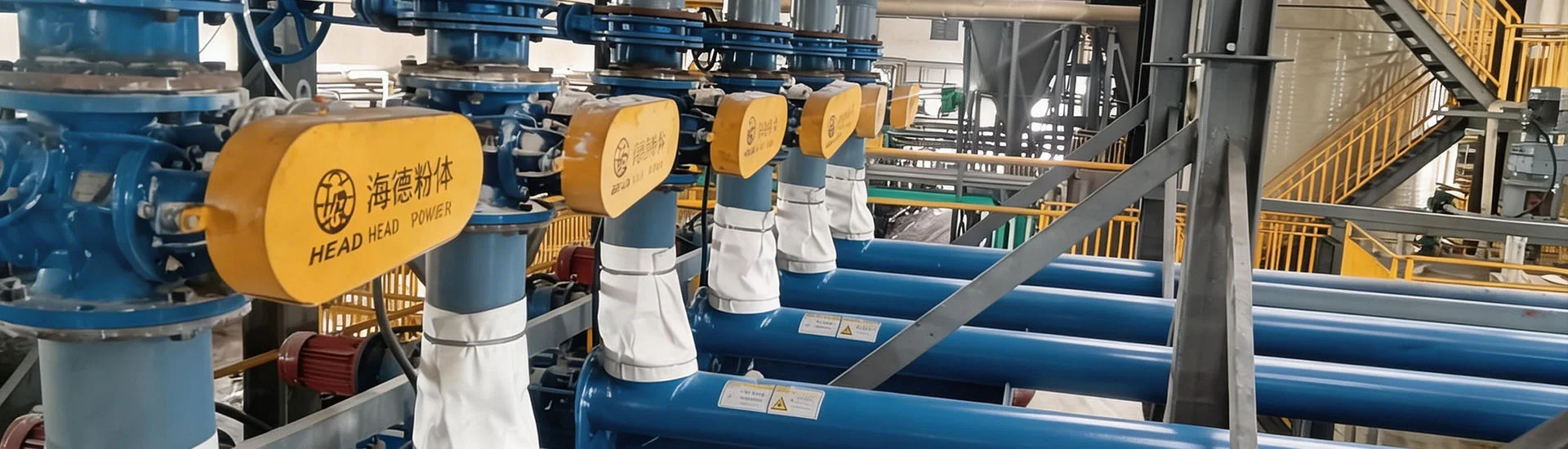
Rich project cases across industries, showing real implementation and proven technical strength.Titanium dioxide (TiO₂) is a widely used white pigment in industries ranging from paints, coatings, plastics, paper, to cosmetics and food. Its fine particle size, high density, and abrasive nature present unique challenges in material handling. Pneumatic conveying has become the preferred method for transporting TiO₂ across processing stages, from raw material intake to final packaging. This article focuses on the technical selection specifications for designing a reliable, efficient, and low-maintenance pneumatic conveying system specifically for titanium dioxide. By examining powder characteristics, system configurations, material selection, and operational parameters, plant engineers and project managers can make informed decisions that balance operational cost, equipment longevity, and product quality. The global titanium dioxide market is projected to maintain steady growth through 2026, driven by demand from construction and automotive sectors, which underscores the importance of robust conveying solutions. At headpowder, we have accumulated extensive hands-on experience in designing and optimizing pneumatic systems for abrasive and cohesive powders like TiO₂. This article draws on real-world case studies and engineering best practices to serve as a practical reference for professionals involved in plant design, expansion, or retrofit projects.
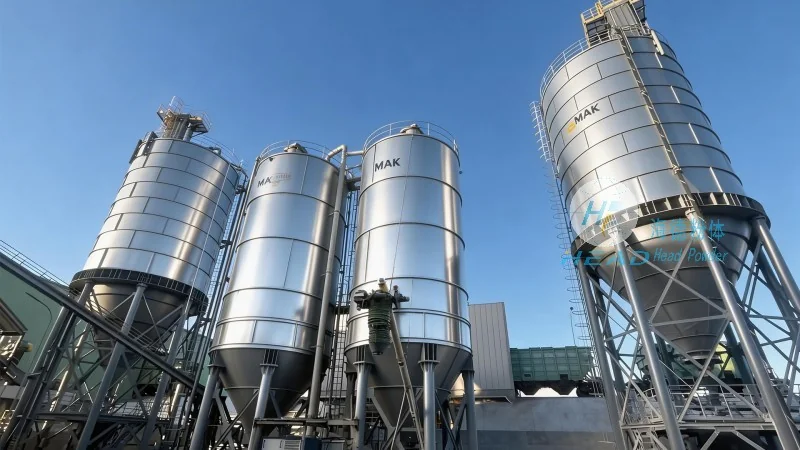
Before selecting a pneumatic conveying system, it is essential to characterize the powder being handled. Titanium dioxide, depending on its production route (sulfate or chloride process), exhibits bulk densities typically ranging from 0.4 to 0.8 g/cm³, with a true density around 4.0 g/cm³. Its mean particle size is generally between 0.2 and 0.4 micrometers, making it a fine, cohesive powder. Key properties that affect pneumatic conveying include:
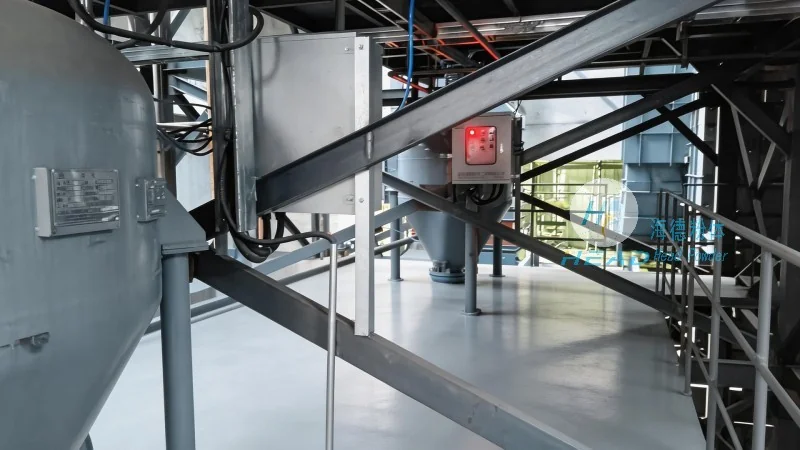
Understanding these characteristics allows engineers to select appropriate conveying velocities, pipe materials, and air treatment equipment. Data from field measurements and lab tests should be used to accurately determine parameters such as the minimum conveying velocity (pickup velocity) and the saltation velocity, which for TiO₂ typically falls between 8-14 m/s depending on particle size and moisture content.
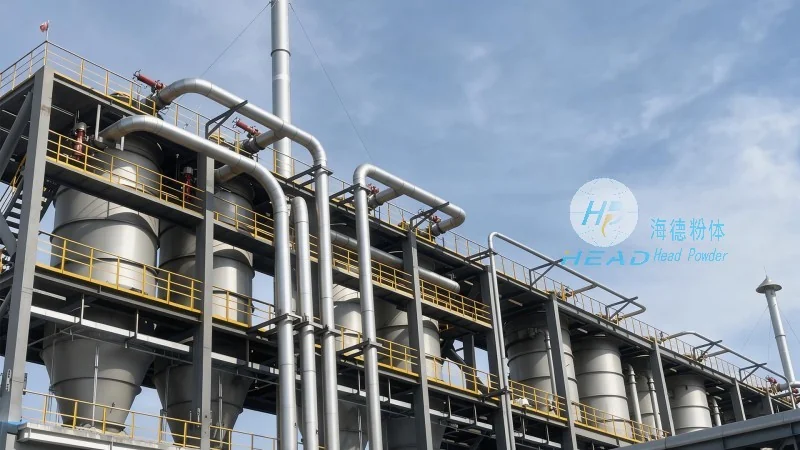
Pneumatic conveying systems are broadly classified into dilute phase and dense phase. Each has distinct advantages and limitations when handling TiO₂.
In dilute phase, material is suspended in a high-velocity air stream (typically 15-30 m/s). This method is simple and low in initial cost, suitable for short distances and moderate capacities. However, for abrasive TiO₂, dilute phase accelerates wear dramatically. Pipe elbows may need replacement within weeks. Additionally, high velocities degrade the pigment particle size, affecting product quality. Dilute phase is generally only recommended for temporary installations or when conveying pre-coated, less abrasive TiO₂ grades.
Dense phase systems operate at low velocities (2-8 m/s) and high material-to-air ratios. The powder moves as a fluidized plug or continuous moving bed. Benefits for TiO₂ include dramatically reduced pipe wear, lower energy consumption per ton transported, and minimal particle degradation. Dense phase systems can be either positive pressure or vacuum type. For titanium dioxide, positive pressure dense phase is most common, using a pressure vessel (blow tank) to push material through the pipeline. headpowder has implemented multiple dense phase installations for TiO₂ processes where system availability exceeds 98% and maintenance intervals are measured in years rather than months.
For quick reference: Dilute phase requires lower capital investment but higher operating costs due to frequent pipe replacements and compressed air consumption. Dense phase has higher upfront equipment cost but significantly reduces lifecycle cost for abrasive powders like TiO₂. Consider system capacity: dilute phase handles up to 20 t/h over 100 m; dense phase can handle 30 t/h over 500 m with proper design.
Material selection is the most impactful decision in designing a TiO₂ pneumatic conveying system. The following components demand careful specification:
A real-world example: In a TiO₂ packaging plant processing 10 tons per hour over a 150-meter conveyor with 12 bends, switching from carbon steel mild bends to ceramic-lined elbows reduced annual maintenance cost by 75% and eliminated downtime for unscheduled replacements.
Engineers must calculate several parameters to ensure reliable operation. The most critical include:
Using these parameters, a sample calculation: Suppose conveying 8 t/h of TiO₂ over 180 m with 10 bends, at a conveying velocity of 5 m/s, material-to-air ratio 35:1, pipe ID 150 mm. The required air volumetric flow rate = 8,000 kg/h / (35 × 1.2 kg/m³ air density) ≈ 190 m³/h, which equals about 3.2 m³/min. Compressor pressure must overcome 0.6 bar system pressure losses plus 0.3 bar margin; thus a 0.9 bar rotary screw compressor with 4 m³/min capacity is selected.
Even with careful design, TiO₂ handling can present operational issues. Below are frequent problems and proven countermeasures:
A case from headpowder's project log: A coating manufacturer experienced frequent plugging on a 120-meter dense phase line conveying TiO₂ with 3% moisture. After replacing the blow tank's fluidizing pad with a larger area and adding a small air knife at the pipe inlet, plugging frequency reduced from twice per shift to once per month.
Proper layout design minimizes both cost and operational risks. For TiO₂, consider these guidelines:
When comparing systems, initial capital expenditure (CAPEX) is only part of the equation. A 2025-2026 industry survey indicated that dense phase systems for TiO₂ have a 40-55% lower total cost of ownership over 10 years compared to dilute phase, primarily due to reduced wear and lower energy consumption. For a 15 t/h system operating 8,000 hours per year, the annual savings can exceed $80,000 in pipe replacements and compressed air costs alone. headpowder offers lifecycle cost modeling during the proposal stage, helping clients make evidence-based decisions.
Selecting the correct pneumatic conveying technology for titanium dioxide requires a thorough understanding of powder properties, system dynamics, and material science. To achieve reliable, cost-effective operation, follow these actionable recommendations: always opt for dense phase conveying when plant layout and budget permit; invest in high-quality wear-resistant components for elbows and blow tanks; implement real-time monitoring of pressure and flow to detect early signs of wear or blockage; commission the system with the actual powder lot to fine-tune parameters; and partner with an experienced engineering firm that has proven TiO₂ handling expertise. Companies like headpowder bring decades of application knowledge, from lab-scale testing to full-scale commissioning. By adhering to the selection specifications outlined in this article, plant operators can maximize uptime, protect product quality, and reduce total operating expenses. For a detailed engineering consultation or system design review for your titanium dioxide conveying project, contact headpowder directly. (咨询热线:156-6277-7102)

 Shandong headpowder Engineering Co., Ltd.
 156-6277-7102(Manager Zhang)
  0531-83386006
  Jinan City, Shandong Province, China
服务热线
微信咨询
回到顶部