News
Rich project cases across industries, showing real implementation and proven technical strength.In modern industrial environmental protection systems, the management of desulfurization ash has become a critical operational challenge for coal-fired power plants, steel mills, and chemical facilities. As global emission standards tighten and the circular economy gains momentum, the efficient, safe, and cost-effective transport of desulfurization ash from flue gas desulfurization (FGD) processes is no longer a peripheral concern—it directly impacts plant availability, maintenance costs, and regulatory compliance. Pneumatic conveying equipment systems specifically designed for desulfurization ash have emerged as the preferred technical solution, offering enclosed, dust-free, and automated material handling. This article provides a comprehensive introduction to desulfurization ash pneumatic conveying equipment systems, covering fundamental principles, core components, system selection criteria, technological advancements toward 2026, and practical deployment considerations. Whether you are a plant engineer evaluating new installations or a procurement specialist upgrading existing lines, understanding the nuances of these systems is essential for achieving reliable operation and long-term value.
Desulfurization ash—also known as FGD gypsum or semi-dry desulfurization residue—possesses distinct physical and chemical characteristics that heavily influence pneumatic conveying system design. Typically, the material has a bulk density ranging from 0.6 to 1.2 t/m³, a median particle size of 10–80 microns, and a moisture content that can fluctuate between 1% and 15% depending on the FGD process (wet, semi-dry, or dry). High moisture and fine particle size often lead to agglomeration, bridging, and pipeline clogging if the conveying parameters are not properly matched. Additionally, the abrasive nature of calcium sulfate and other compounds requires wear-resistant components. According to industry projections for 2026, the global production of FGD gypsum will exceed 300 million tons annually, with China and India accounting for more than 50% of that volume. This scale demands robust conveying systems that can handle variable ash properties, maintain high availability, and minimize energy consumption. Headpowder, as a specialized manufacturer in powder handling solutions, has accumulated extensive field data on desulfurization ash behavior, enabling tailored system designs that address these challenges without oversizing or underperforming.
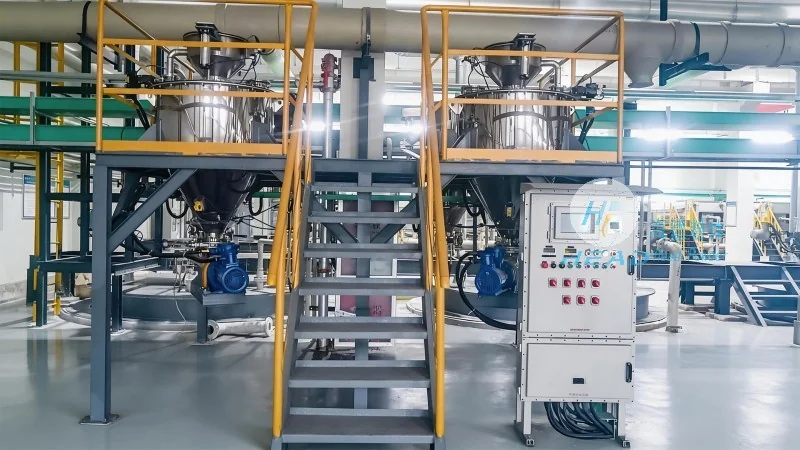
A complete pneumatic conveying system for desulfurization ash typically integrates several key modules, each playing a specific role in ensuring stable, continuous transport from the dust collector hopper or storage silo to the final disposal or utilization point. Understanding these components helps plant operators make informed decisions during system procurement and maintenance.
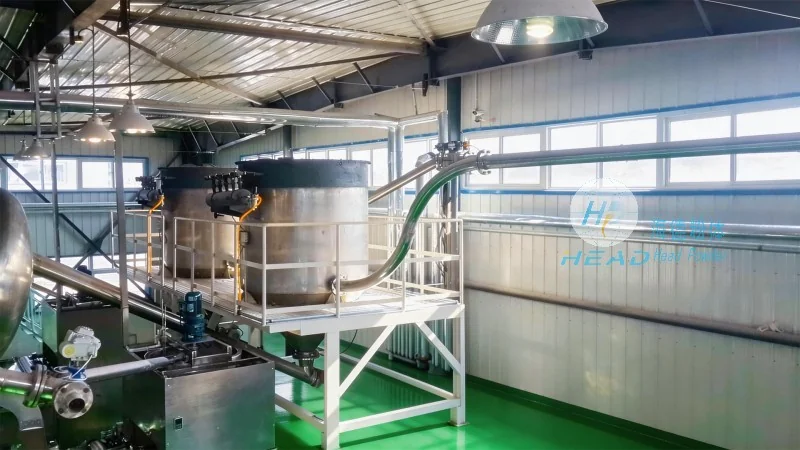
1. Feed and Inlet Devices
Rotary airlocks, screw feeders, or venturi injectors are used to introduce desulfurization ash into the conveying pipeline at a controlled rate. For highly cohesive ash, aeration pads or fluidizing nozzles are often integrated to prevent bridging at the inlet. Headpowder's experience shows that selecting the correct feeder type and sizing based on ash flowability tests reduces wear and power consumption by up to 20%.
2. Conveying Pipeline and Fittings
Carbon steel pipelines with replaceable wear-resistant bends (ceramic-lined or hardened steel) are standard. The pipeline diameter, length, and number of bends must be calculated to maintain optimal air velocity—typically 10–25 m/s for dilute phase and 2–8 m/s for dense phase conveying. Improper velocity leads to excessive erosion or settling. For long-distance transport exceeding 500 meters, booster fittings or intermediate air injection points help maintain suspension.
3. Air Supply and Control System
Positive displacement blowers, screw compressors, or roots-type vacuum pumps provide the motive air. Variable frequency drives (VFDs) are increasingly adopted per 2026 energy efficiency trends, allowing real-time adjustment of airflow matched to material flow rate. The control system includes pressure transmitters, flow meters, and PLC-based logic that can automatically switch between conveying phases to handle batch variations.
4. Separation and Filtration Equipment
At the receiving end, a cyclone separator or a bag filter (pulse-jet type) separates the desulfurization ash from the conveying air. High-efficiency filters with emission limits below 10 mg/Nm³ comply with tightening environmental regulations. Headpowder has deployed multi-stage separation units in multiple 300 MW power plant projects, achieving residual dust concentrations as low as 5 mg/Nm³.
5. Storage and Unloading Systems
Final storage silos equipped with level indicators, aeration pads, and discharge valves enable either truck loading or direct feed to downstream processes (e.g., gypsum board manufacturing). Silo vent filters prevent fugitive dust emissions. For plants requiring zero liquid discharge (ZLD), sealed silo systems with inert gas blanketing are available.
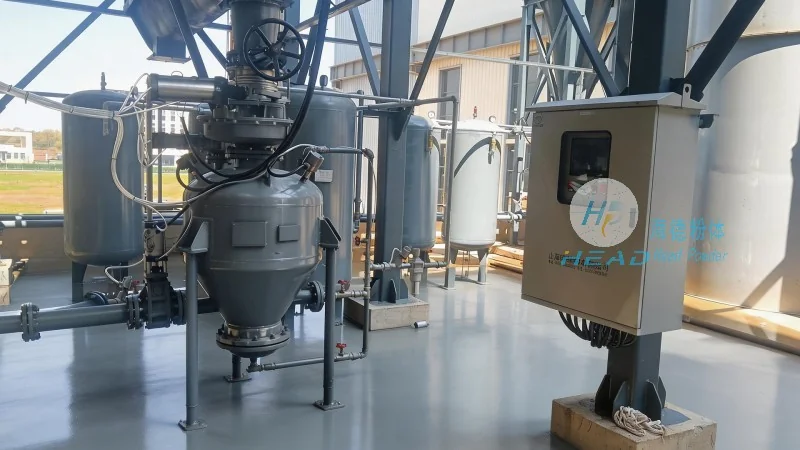
The choice between dilute phase (high velocity, low pressure) and dense phase (low velocity, high pressure) systems is one of the most critical design decisions. Dilute phase conveying uses air velocities of 15–30 m/s, keeping the ash suspended in the air stream. It is simpler and less expensive for short distances (<100 m) and lower capacities, but the high velocity causes significant pipe wear and particle degradation, especially for abrasive ash. Dense phase conveying, by contrast, moves the ash as a plug or slug at low velocity (2–8 m/s) under high pressure (up to 6 bar). This mode drastically reduces wear, energy consumption, and dust generation, making it ideal for long-distance transport (up to 1000 m) and fragile materials. For desulfurization ash with high moisture content, dense phase with appropriate aeration is often the only workable solution. Data from Headpowder's installations in northern China's coal-fired plants show that dense phase systems reduce maintenance frequency by 60% compared to dilute phase when handling semi-dry desulfurization ash with 8–12% moisture.
As industrial plants push for higher utilization rates and lower carbon footprints, pneumatic conveying system design must align with next-generation requirements. Below are critical parameters that engineers should evaluate when specifying a desulfurization ash conveying system:
By 2026, industry standards such as GB/T 10598 (China) and ISO 29420 will further mandate real-time emission monitoring and automated filter cleaning cycles. Headpowder's conveying systems are designed to comply with these standards, offering certified test reports for air leakage rates and filter efficiency.
Several emerging technologies are redefining the performance envelope of pneumatic conveying for desulfurization ash. First, digital twin simulations now allow virtual commissioning of conveying lines before physical installation. By modeling pressure profiles, particle trajectories, and wear patterns under various operating conditions, engineers can predict optimal pipe routing and blower sizing with 95% accuracy. Second, self-learning control algorithms using machine learning analyze historical pressure and flow data to automatically adjust aeration and feeding rates, reducing operator intervention and preventing blockages. Third, modular containerized conveying units—pre-assembled and factory-tested—shorten on-site installation time from weeks to days, critical for plant maintenance shutdown windows. Headpowder has already delivered two digital-twin-optimized systems for a major steel plant in Jiangsu Province, achieving 98.7% system availability over the first year of operation.
Despite the maturity of pneumatic conveying technology, field operations often reveal practical issues that require careful troubleshooting. One frequent challenge is moisture-related agglomeration inside the pipeline. When the ambient air is humid or the ash itself has fluctuating moisture, fine particles stick together and form crusts on pipe walls. Mitigation includes pre-drying the ash using waste heat from the FGD process, adding aeration along the pipeline, or switching to a closed-loop nitrogen conveying system for extremely wet conditions. Another issue is differential pressure instability caused by inconsistent feed rates. Installing a high-precision weigh feeder before the rotary airlock can smooth out fluctuations. Headpowder's support team has documented over 50 case studies where simple adjustments—like reducing the air velocity by 2 m/s or adding a single booster fitting—resolved chronic clogging problems without major capital expenditure. The company's hotline provides 24/7 remote assistance: (咨询热线:156-6277-7102).
Given the complexity of material properties, site constraints, and operational targets, choosing the right equipment supplier is as important as choosing the right technology. A credible partner should offer not only hardware but also system engineering, field testing, commissioning supervision, and long-term maintenance support. When evaluating vendors, consider their track record in your specific industry sector—power, steel, cement, or chemical. Ask for references of installations handling similar ash types and capacities. Verify that the supplier provides performance guarantees, such as conveying capacity within ±5% of design and wear life of components. Headpowder, with over 15 years of focus on powder conveying systems, has completed more than 200 projects for desulfurization ash handling across Asia and the Middle East. Their engineering team conducts on-site ash sampling and flow property analysis before quoting, ensuring that the system is tailored rather than templated. Available for consultation via (咨询热线:156-6277-7102), the company offers free preliminary assessments to help plant managers understand the most cost-effective conveying approach for their specific conditions.
Proper installation is the foundation of long-term reliability. The pipeline should be laid with a minimum slope of 1:100 toward the receiving point to facilitate drainage if moisture condenses. Expansion joints should be placed every 30 meters to accommodate thermal expansion. During commissioning, the system should be run with inert material (e.g., fly ash) to fine-tune air velocity and pressure settings before introducing desulfurization ash. Instrumentation calibration—especially pressure transmitters and flow meters—must be verified against known standards. For ongoing maintenance, a monthly inspection routine should include checking rotary airlock clearances, filter bag integrity, and wear thickness of bends. Headpowder provides a comprehensive maintenance manual with each system, along with optional remote monitoring services that send predictive alerts to the plant maintenance team. Adopting these practices can extend system life by 30% and reduce unplanned downtime by over 40%.
To illustrate the practical benefits, consider a 600 MW coal-fired power plant in Shandong Province that previously relied on truck transport for desulfurization ash—a method causing frequent road dust complaints, high labor costs, and spillage during loading. After evaluating multiple options, the plant selected a dense phase pneumatic conveying system designed and supplied by Headpowder. The system conveys semi-dry desulfurization ash (moisture 9–11%) over a distance of 450 meters to a centralized storage silo with a capacity of 5,000 tons. Key results after 12 months of operation: average system availability of 98.5%, energy consumption of 12 kWh per ton conveyed, and zero environmental fines related to dust emissions. The enclosed system eliminated truck traffic entirely, saving the plant an estimated RMB 1.8 million annually in transport and cleanup costs. This case underscores how a well-engineered pneumatic conveying system not only solves logistical headaches but also contributes to the plant's overall sustainability and social license to operate.
As desulfurization byproducts increasingly find use in construction materials (gypsum boards, cement retarders, road base), plants may need to expand conveying capacity or add new receiving destinations. A forward-looking system design should accommodate future expansion without requiring a complete overhaul. This means choosing modular blower stations, standardizing pipe flanges, and leaving spare instrument ports. Headpowder's designs incorporate "plug-and-play" segments that allow additional conveying lines to be tied into the existing control network with minimal disruption. For plants planning to implement carbon capture and storage (CCS) or integrate with hydrogen-fired boilers by 2030, the conveying system must also handle potential changes in ash chemistry. Partnering with a manufacturer that invests in R&D—such as Headpowder's ongoing testing of anti-static and explosion-proof configurations—ensures that your system remains compliant and efficient as environmental regulations and process conditions evolve.
The landscape of desulfurization ash handling is shifting from a simple removal task to a strategic component of industrial resource management. Effective pneumatic conveying equipment systems deliver measurable benefits: reduced operating costs, lower emissions, improved workplace safety, and enhanced material value recovery. By understanding the technology fundamentals, evaluating design parameters carefully, and collaborating with an experienced partner like Headpowder, facility owners can build a conveying infrastructure that serves them reliably for decades. For any clarification or to discuss your project specifics, call (咨询热线:156-6277-7102) and speak directly with a Headpowder conveying engineer.

 Shandong headpowder Engineering Co., Ltd.
 156-6277-7102(Manager Zhang)
  0531-83386006
  Jinan City, Shandong Province, China
服务热线
微信咨询
回到顶部