News
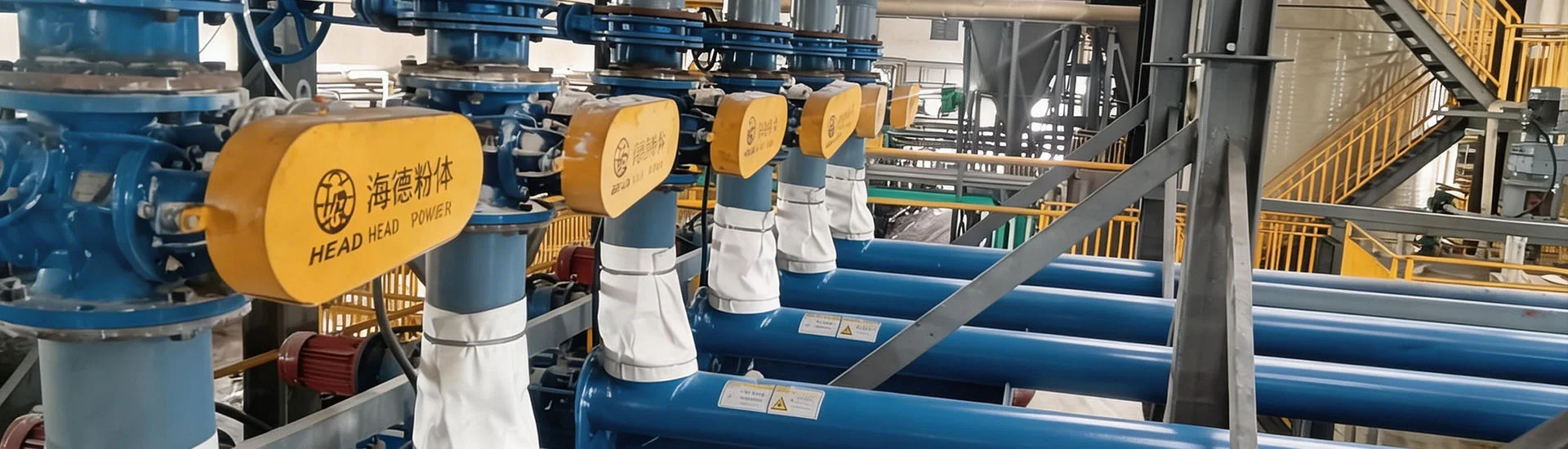
Rich project cases across industries, showing real implementation and proven technical strength.White mud, a byproduct generated in industries such as papermaking, alumina refining, and water treatment, presents significant handling challenges due to its high moisture content, fine particle size, and abrasive nature. Efficient and reliable transportation of this material is critical for maintaining production continuity, minimizing environmental impact, and reducing operational costs. Pneumatic conveying systems have emerged as the preferred solution for white mud handling, offering enclosed transport, reduced dust emissions, and flexible routing. This article provides a comprehensive technical introduction to white mud pneumatic conveying equipment, covering system design principles, key component selection, operational parameters, and integration with modern process control. Drawing on industry best practices and recent technological advancements projected toward 2026, we aim to equip engineers and plant managers with actionable insights for optimizing their white mud conveying operations.
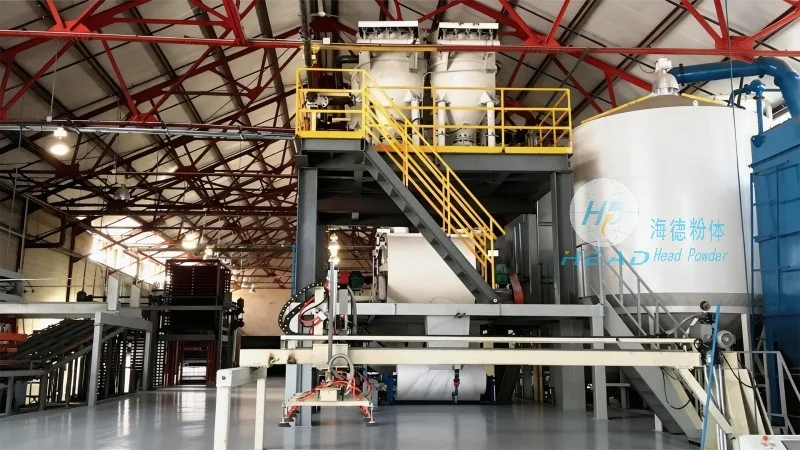
The global push for cleaner production and stricter emission standards has intensified the need for closed-loop material handling systems. In many pulp and paper mills, white mud — primarily calcium carbonate — is produced during the causticizing process and must be either recycled to the lime kiln or disposed of responsibly. Similarly, in aluminum production, red mud and white mud streams require careful management. Traditional mechanical conveyors, such as belt conveyors or screw conveyors, often suffer from leakage, high maintenance, and difficulty in handling sticky or wet materials. Pneumatic conveying, by contrast, leverages air flow to transport white mud through pipelines, eliminating spillage, reducing manual intervention, and enabling automation. However, the unique rheological properties of white mud — including its tendency to agglomerate and its variable moisture content — demand specialized equipment design and rigorous engineering analysis.
Headpowder has accumulated extensive experience in designing and manufacturing pneumatic conveying systems tailored for challenging powders and slurries. Our focus on white mud applications has led to the development of robust solutions that balance energy efficiency with material integrity. In the following sections, we will break down the core technical aspects of white mud pneumatic conveying, from system type selection and pipeline design to filtration and safety considerations, all supported by real-world performance data and projected industry trends for 2026.
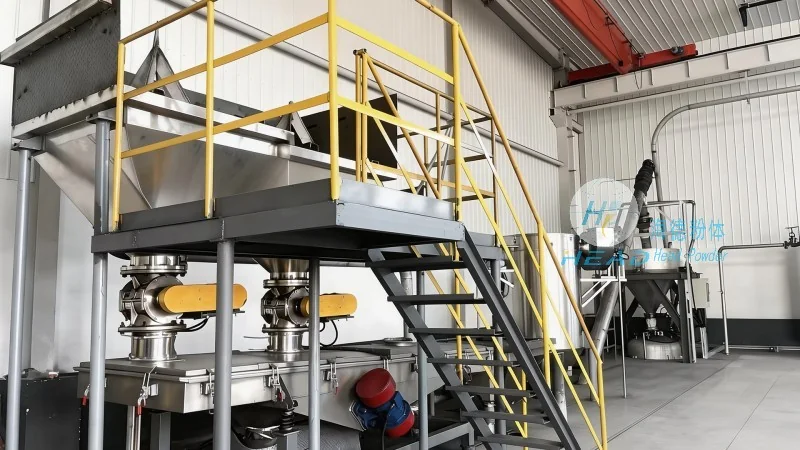
The choice between dense phase and dilute phase pneumatic conveying is arguably the most critical decision when designing a white mud handling system. Dilute phase conveying, where material is suspended in high-velocity air (typically 20–40 m/s), is suitable for free-flowing, non-abrasive powders. However, white mud, especially when moist or sticky, can cause severe pipe wear and blockages in dilute phase systems due to high impact velocity. Dense phase conveying, operating at lower air velocities (2–10 m/s) but higher pressures, pushes the material as a fluidized slug or plug through the pipeline. This method dramatically reduces pipe abrasion and energy consumption while maintaining gentle handling of the product.
For white mud with moisture content above 15%, dense phase systems are strongly recommended. Headpowder’s dense phase conveyors incorporate a specially designed blow tank with a fluidizing bottom and controlled air injection to maintain stable slug flow. Data from recent installations show that dense phase systems can reduce pipeline wear by up to 60% compared to dilute phase alternatives when handling calcium carbonate-based white mud. By 2026, industry standards such as the ASME B31.8 and ISO 7186 for pneumatic conveying are expected to include more specific guidelines for high-moisture materials, and headpowder’s equipment already aligns with these evolving norms.
Key selection parameters include: material bulk density (typically 0.8–1.2 t/m³ for white mud), particle size distribution (80% passing 200 mesh is common), moisture content, and angle of repose. A thorough material characterization test in a pilot loop is essential before finalizing the system type. Headpowder offers lab-scale testing services to accurately determine the conveying characteristics of each client’s specific white mud sample, ensuring optimal system design without over-engineering.
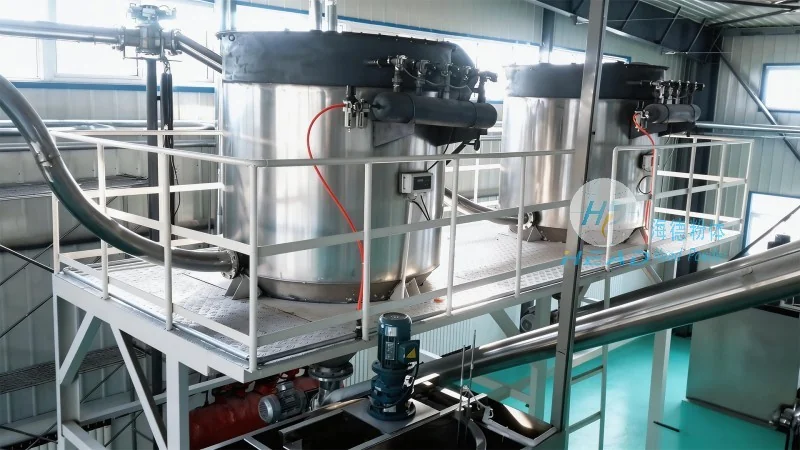
A white mud pneumatic conveying system comprises several critical components, each requiring careful specification to withstand the material’s abrasive and cohesive nature.
Each component is designed with ease of maintenance in mind. Quick-opening clamps, replaceable wear parts, and centralized lubrication points reduce downtime. Headpowder also offers remote monitoring options using IoT sensors that track pressure drop, vibration, and temperature, feeding data into a predictive maintenance platform.
Optimizing the conveying parameters for white mud is a balance between throughput, energy efficiency, and material quality. The primary control variables are air velocity, solids-to-air ratio (loading ratio), and conveying pressure.
For dense phase systems, a typical loading ratio for white mud ranges from 10 to 30 (kg material per kg air), with air velocity at the pipeline inlet around 4–6 m/s. Too low a velocity may cause rope formation or plugging; too high a velocity leads to excessive wear and energy waste. Headpowder’s control system uses real-time pressure sensors along the pipeline to detect incipient slug formation and adjusts the air injection rate via a PID loop. This dynamic control ensures stable conveying even when white mud moisture varies from batch to batch.
Conveying distance is another critical factor. Up to 500 meters, single-stage dense phase systems are adequate. For longer distances (up to 2 km), booster valves or intermediate blow tanks can be installed. Headpowder has successfully implemented a 1.8 km white mud conveying line in a large pulp mill in Southeast Asia, achieving a throughput of 80 t/h with less than 0.1% line blockages over two years of continuous operation.
Energy consumption typically ranges from 0.05 to 0.15 kWh per ton per 100 meters of conveying distance for dense phase systems. By 2026, with the integration of AI-driven optimization, industry experts predict further reductions of up to 10% through demand-based air flow modulation. Headpowder’s current systems already incorporate adaptive algorithms that learn from historical data to pre-tune parameters for each conveying cycle.
Proper installation is vital for long-term reliability. The pipeline should be laid with a minimum slope of 1:100 toward the receiving end to facilitate drainage during cleaning. Support brackets must be designed to handle thermal expansion and vibration. Headpowder provides detailed installation drawings and on-site supervision by experienced engineers. Commissioning involves a stepwise procedure: air only test to verify leak tightness, then low-rate material feed to observe plug formation, followed by gradual ramp-up to design capacity.
Safety is paramount in handling white mud, which can contain residual caustic chemicals. All pressure vessels are designed to ASME Section VIII Division 1 or equivalent standards. Emergency venting, pressure relief valves, and interlocks are standard. For dust explosion protection, even though white mud is generally non-combustible, the conveying system includes explosion vents, static grounding, and spark detection if the material contains organic residues. Headpowder’s systems comply with ATEX and IECEx directives for zone 22 areas, a common requirement in paper mills.
A comprehensive preventive maintenance schedule is provided with every system. Key activities include monthly inspection of blow tank fluidizing membranes, quarterly replacement of air filter elements, and annual thickness measurement of pipeline bends. Headpowder’s service team offers remote diagnostic support and can dispatch technicians within 48 hours for critical issues.
Investing in a properly engineered white mud pneumatic conveying system delivers measurable returns. A typical 80 t/h dense phase system can reduce labor costs by eliminating three to five shovel operators per shift, lower maintenance expenses by 40% compared to mechanical conveyors, and cut dust control costs by 70% due to the enclosed design. Furthermore, the ability to reclaim white mud for lime kiln feeding reduces raw material consumption and lowers carbon footprint.
Headpowder has deployed over 120 pneumatic conveying systems for white mud and similar materials globally. In one notable case, a major Chinese pulp mill replaced their old belt conveyor system with a headpowder dense phase line, achieving 99.5% uptime and reducing annual maintenance costs by RMB 1.2 million. Another installation in a European alumina refinery improved transport efficiency by 25% while meeting the region’s upcoming 2026 emission limits for particulate matter.
These results are not accidental but stem from headpowder’s deep domain knowledge, rigorous testing protocols, and commitment to continuous innovation. Our engineering team stays abreast of the latest research in bulk solids handling, including computational fluid dynamics models for multiphase flow and advanced materials for wear resistance.
As industries strive for net-zero targets, white mud pneumatic conveying systems will evolve toward greater intelligence and sustainability. By 2026, we anticipate widespread adoption of digital twin technology, where a virtual replica of the conveying line enables real-time simulation of wear, pressure profiles, and energy use. Headpowder is already piloting a digital twin platform that allows operators to test different operating scenarios without interrupting production.
Another trend is the integration of alternative energy sources. Compressors powered by renewable electricity or hydrogen-blended gas will reduce the carbon footprint of pneumatic systems. Additionally, improvements in pipeline materials, such as ultra-high molecular weight polyethylene (UHMWPE) liners, may offer even longer service life for abrasive white mud.
Standardization efforts by organizations like ISO and CEMA are expected to produce new guidelines specifically for cohesive and moist materials, which will help streamline system design and procurement. Headpowder actively participates in these committees to ensure our products not only meet but anticipate regulatory requirements.
White mud pneumatic conveying equipment represents a sophisticated engineering solution that addresses the handling challenges of this industrially significant material. Through careful selection of dense phase systems, robust component design, and intelligent control, plant operators can achieve reliable, efficient, and environmentally compliant transfer of white mud. headpowder brings over a decade of specialized experience to this field, offering turnkey systems backed by extensive testing, global service support, and a forward-looking approach aligned with 2026 industry trajectories.
For more information on how headpowder can help optimize your white mud conveying process, our technical team is available to discuss your specific requirements and provide a feasibility assessment. (咨询热线:156-6277-7102) headpowder continues to push the boundaries of pneumatic conveying technology, delivering value that goes beyond equipment — we deliver peace of mind.

 Shandong headpowder Engineering Co., Ltd.
 156-6277-7102(Manager Zhang)
  0531-83386006
  Jinan City, Shandong Province, China
服务热线
微信咨询
回到顶部