News
Rich project cases across industries, showing real implementation and proven technical strength.In the increasingly competitive spice processing industry, the pneumatic conveying of chili powder has emerged as a critical technology for manufacturers aiming to improve production efficiency, maintain product quality, and ensure workplace safety. Chili powder, with its fine particle size, low bulk density, and high volatility, presents unique challenges for traditional mechanical conveying systems such as screw conveyors, bucket elevators, and belt conveyors. These conventional methods often lead to issues like dust generation, material degradation, cross-contamination, and high maintenance costs. Pneumatic conveying, on the other hand, offers a sealed, automated, and gentle handling solution that is particularly well-suited for chili powder and other spice materials. As the global spice market continues to expand, with estimates projecting a compound annual growth rate of over 6% through 2026, the demand for reliable and hygienic powder handling systems is becoming more pronounced. This article provides a comprehensive technical introduction and specification guide for chili powder pneumatic conveying systems, designed to help plant managers, process engineers, and procurement professionals make informed decisions when selecting or upgrading their material handling infrastructure. We will explore the core principles of pneumatic conveying, compare dilute phase versus dense phase systems, discuss critical design parameters, and outline best practices for installation and maintenance. Throughout the discussion, we will incorporate practical insights from headpowder, a company with extensive experience in customized powder handling solutions, to illustrate how proper system design can directly impact operational efficiency and product quality.
Pneumatic conveying utilizes air or inert gas to transport bulk solid materials through a pipeline. For chili powder, the system typically consists of a feeding device, a conveying pipeline, an air mover (such as a blower or compressor), and a separation unit (cyclone or filter receiver). The fundamental advantage of this technology is its closed-loop nature, which minimizes dust escape, protects operators from inhaling fine particles, and prevents product contamination from external sources. Chili powder particles range from 20 to 200 mesh, and their irregular shapes and low density require careful calculation of conveying velocity. If the air velocity is too high, the powder will degrade, generating excessive fines and altering the color and pungency of the spice. If too low, blockages may occur due to settling. The optimal conveying velocity for chili powder typically falls between 10 and 20 m/s, depending on particle size distribution, moisture content, and pipeline configuration. Pressure conditions also play a vital role: positive pressure systems are commonly used for long distances, while vacuum systems are preferred for multiple pick-up points or when dust containment is a priority.
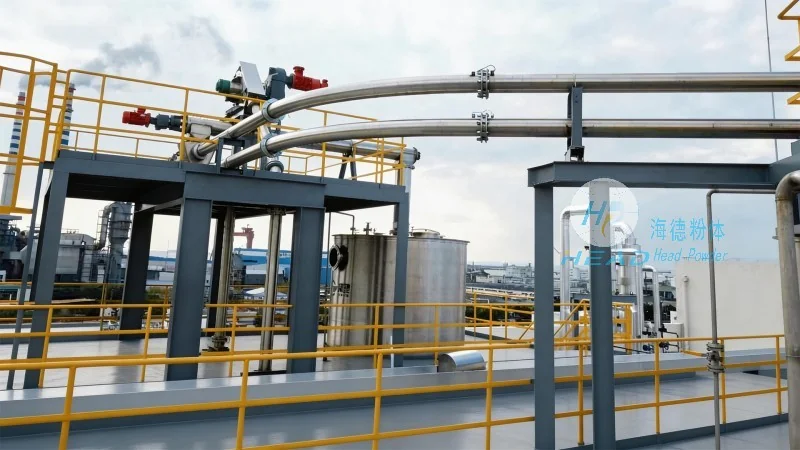
Two primary modes of pneumatic conveying exist: dilute phase and dense phase. In dilute phase conveying, the material is suspended in a high-velocity air stream, typically at a solid-to-air ratio of 1:5 to 1:10 by weight. This method is simple, cost-effective, and widely used for chili powder in shorter distances or smaller capacities. However, the high velocity can cause particle attrition, especially for brittle chili flakes or granules, leading to increased fines and loss of volatile oils. For many chili powder applications, especially those requiring high quality and consistent particle size, dense phase conveying is increasingly recommended. Dense phase systems operate at lower velocities (2–8 m/s) with higher material concentrations, using pressure or vacuum to push the powder as a slug or plug through the pipeline. This gentle handling preserves the integrity of the chili powder, reduces dust generation, and lowers energy consumption per ton of material. headpowder has implemented dense phase solutions in multiple chili processing plants across Asia and North America, achieving throughputs ranging from 500 kg/h to 10 t/h while maintaining product quality standards. The choice between the two modes depends on factors such as conveying distance, capacity, pipeline diameter, and the specific physical properties of the chili powder blend.
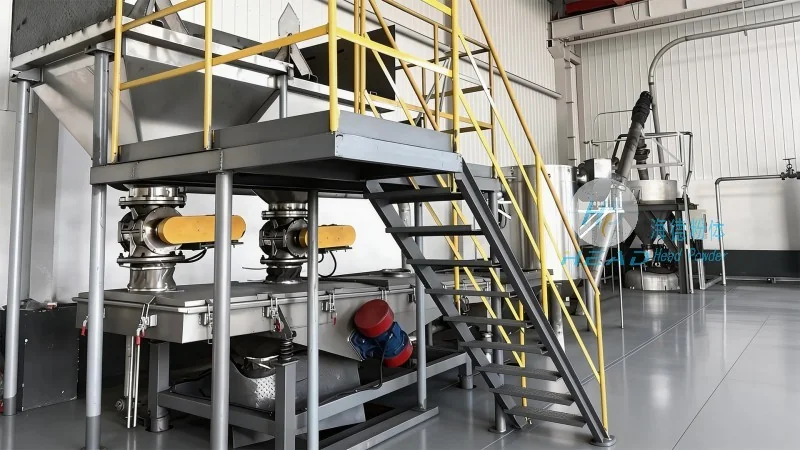
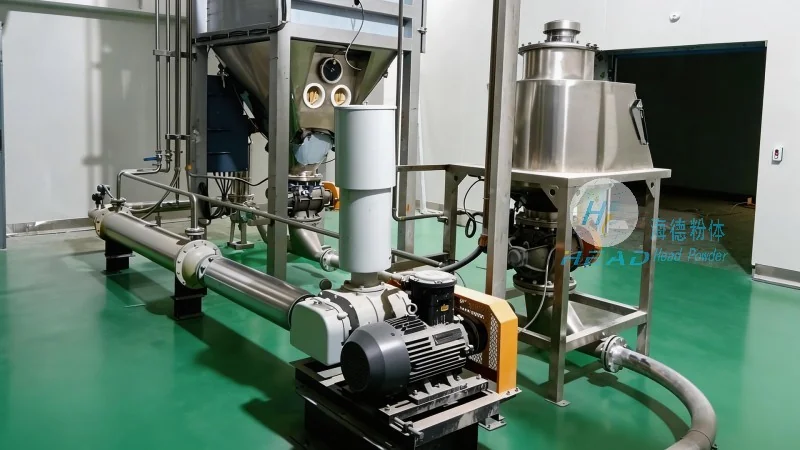
An effective chili powder pneumatic conveying system requires precise engineering of several parameters. First, the conveying distance: for horizontal runs up to 100 meters, dilute phase is often adequate, but for longer distances (100–300 meters) or vertical lifts, dense phase becomes more reliable. Second, the material density: chili powder bulk density is typically 0.3–0.6 g/cm³, and the particle shape is irregular, which affects the angle of repose and the likelihood of bridging at the feed point. Third, moisture content: chili powder can have moisture levels from 5% to 12%, and higher moisture increases cohesion, making a pneumatic system design with blow tanks or rotary valves with special coatings necessary. Standard system components include (1) the feed device: rotary airlocks are most common for chili powder, but for sticky or high-moisture powders, screw feeders with variable speed drives may be used; (2) the conveying line: stainless steel is recommended to prevent corrosion and facilitate cleaning, with pipe diameters typically ranging from 80 mm to 200 mm; (3) the air mover: positive displacement blowers for dilute phase, or screw compressors for dense phase; (4) the separation system: cyclone separators followed by cartridge filters or baghouses to meet emission standards. Modern systems also incorporate PLC-based controls with touch-screen interfaces, allowing operators to adjust air velocity, feed rate, and pressure differentials in real time.
When designing or purchasing a chili powder pneumatic conveying system, adherence to relevant industry standards ensures safety, reliability, and regulatory compliance. In food processing environments, the system must meet FDA and EU regulations regarding food contact surfaces and dust explosion prevention. Chili powder is classified as a combustible dust, with a Kst value typically between 80 and 150 bar·m/s, depending on particle size and moisture. Therefore, explosion protection measures such as venting panels, suppression systems, and grounding of all conductive components are mandatory. headpowder's systems are designed in accordance with ATEX and NFPA 61 standards, incorporating explosion isolation valves and pressure shock-resistant construction. Additionally, for organic or gluten-free chili powder lines, dedicated cleaning protocols and avoidance of cross-contamination are critical. The system should include clean-in-place (CIP) capabilities or quick-disconnect fittings for manual sanitation. For export-oriented chili processors, compliance with Global Food Safety Initiative (GFSI) schemes like BRC or FSSC 22000 is often required, and the conveying equipment must support traceability and validation of cleaning processes.
A well-designed pneumatic conveying system for chili powder delivers multiple operational benefits beyond product protection. Automated material transfer reduces labor costs and eliminates manual handling, which can cause repetitive strain injuries. Sealed systems prevent product loss due to spillage or dust escape, which can account for 2–5% of material in open mechanical systems. Energy efficiency is another crucial factor: dense phase systems consume 30–50% less power per ton than dilute phase systems due to lower air requirements. headpowder has documented cases where clients reduced their energy costs by 40% after switching from mechanical conveyors to optimized dense phase pneumatic lines. Maintenance is also simplified, as there are fewer moving parts compared to conveyor belts or bucket elevators. The primary wear components—bends and the feeding device—are designed for quick replacement, often using ceramic linings in high-wear zones to extend service life. Real-world performance data from chili powder plants shows that pneumatic systems can operate for over 8,000 hours annually with only scheduled preventive maintenance, achieving availability rates above 98%.
To illustrate the practical application of these principles, consider a mid-sized chili powder manufacturer in India that produces 6,000 tons per year of red chili powder for domestic and export markets. The plant originally used bucket elevators and screw conveyors, but faced frequent clogging, high dust levels, and contamination complaints. After evaluating various technologies, they chose headpowder to design and install a dense phase pneumatic conveying system with a capacity of 3 t/h over a total distance of 120 meters, including a 15-meter vertical lift. The system incorporated a blow tank feeder with a special anti-bridging design, a stainless steel pipeline with optimized bend radii (R=10D), and a reverse-jet filter receiver. Within the first six months, the client reported a 60% reduction in dust emissions, a 25% decrease in product fines, and a 15% improvement in overall equipment effectiveness. The system paid for itself in 18 months through reduced waste, lower energy bills, and fewer maintenance interventions. This case underscores how tailored pneumatic conveying solutions can directly impact a company's bottom line while meeting stringent food safety standards.
Given the complexity and cost of pneumatic conveying systems, choosing an experienced partner is as important as selecting the right technology. A reliable supplier should offer (1) thorough material testing using actual chili powder samples to determine conveying characteristics; (2) computational fluid dynamics (CFD) simulations to predict flow behavior and optimize pipeline layout; (3) modular system designs that allow future expansion or reconfiguration; (4) comprehensive after-sales support including installation supervision, operator training, and spare parts availability. headpowder brings over a decade of specialized experience in powder handling, with a dedicated laboratory for bulk material testing and a team of engineers who have completed over 200 spice processing projects worldwide. Their systems are built to last, using premium components from recognized brands, and they offer full documentation including P&IDs, electrical schematics, and validation protocols for regulatory audits. To discuss your specific chili powder conveying requirements and receive a preliminary system assessment, you are welcome to contact headpowder directly at 156-6277-7102. Their technical staff can help you evaluate your material properties, budget, and production goals to recommend the most suitable pneumatic configuration.
Looking ahead to 2026 and beyond, several technological developments are shaping the next generation of chili powder handling systems. The integration of Industry 4.0 principles, such as IoT sensors and predictive analytics, is enabling real-time monitoring of conveying parameters like velocity, pressure, and filter differential. This data can be used to automatically adjust system settings to compensate for variations in raw material characteristics, reducing human error and improving consistency. Another trend is the use of modular, skid-mounted systems that can be quickly deployed and relocated, catering to contract manufacturers or seasonal processors. Sustainability is also gaining traction: energy-efficient air movers, heat recovery from compressed air, and biodegradable filter media are becoming standard options. Additionally, advances in material science are producing more durable pipeline linings that resist abrasion from chili powder's capsaicin-containing oils, which can be corrosive over time. headpowder is actively researching these innovations and incorporating them into their product roadmap, ensuring that clients benefit from the latest advancements without compromising reliability. As global demand for chili powder continues to grow—especially in the convenience food and seasoning blends sectors—investing in a modern pneumatic conveying system will be a decisive factor for staying competitive.
In summary, pneumatic conveying offers a superior alternative for transporting chili powder compared to traditional mechanical methods, providing enhanced product quality, improved safety, and long-term cost efficiency. Whether you operate a small grinding facility or a large-scale spice processing plant, understanding the technical specifications—from conveying mode and air velocity to material properties and compliance requirements—is essential for successful implementation. By partnering with an experienced provider like headpowder, you can design a system tailored to your specific needs, backed by proven results and ongoing technical support. The information presented here serves as a starting point; a detailed engineering evaluation will ultimately determine the optimal configuration for your operation. For further technical consultation or a customized proposal, please reach out to headpowder at 156-6277-7102, where a dedicated team is ready to assist you in achieving your production goals.
```
 Shandong headpowder Engineering Co., Ltd.
 156-6277-7102(Manager Zhang)
  0531-83386006
  Jinan City, Shandong Province, China
服务热线
微信咨询
回到顶部