News
Rich project cases across industries, showing real implementation and proven technical strength.Bamboo powder has become an increasingly important material in industries ranging from biodegradable plastics to construction composites, and its efficient handling is a growing concern for manufacturers worldwide. Pneumatic conveying equipment systems designed specifically for bamboo powder address the unique challenges of this fibrous, low-density, and hygroscopic material. Unlike traditional mechanical conveyors, pneumatic systems use air pressure or vacuum to transport bamboo powder through sealed pipelines, offering dust-free operation, flexible routing, and minimal material degradation. This article provides a comprehensive, technically grounded introduction to bamboo powder pneumatic conveying equipment systems, covering system architecture, component selection, flow behavior considerations, and practical deployment insights. Drawing on industry best practices and real-world case data from headpowder’s engineering projects, the content aims to help plant managers, process engineers, and procurement professionals make informed decisions. Whether you are upgrading an existing line or designing a new facility, understanding the interplay between material properties, conveying parameters, and equipment design is essential for achieving reliable, energy-efficient, and cost-effective transport.
Bamboo powder, typically with particle sizes ranging from 80 mesh to 300 mesh and bulk densities between 0.12 and 0.35 g/cm³, exhibits poor flowability due to its irregular fibrous shape and high surface area. It tends to bridge, clog, and generate static electricity, making conventional conveying methods prone to blockages and inconsistent feed rates. Pneumatic conveying overcomes these obstacles by suspending particles in a controlled air stream. The system can be configured as dilute phase (high air velocity, low product-to-air ratio) or dense phase (low air velocity, high product-to-air ratio), depending on the required throughput and distance. For bamboo powder, dilute phase is more common for short to medium distances (up to 200 meters) because the low bulk density allows suspension at moderate velocities around 18–25 m/s, while dense phase is rarely used due to the material’s compressibility and risk of plugging. In recent years, improvements in rotary valves, blow tanks, and pipeline geometry have made it possible to handle bamboo powder with reduced degradation and lower energy consumption.
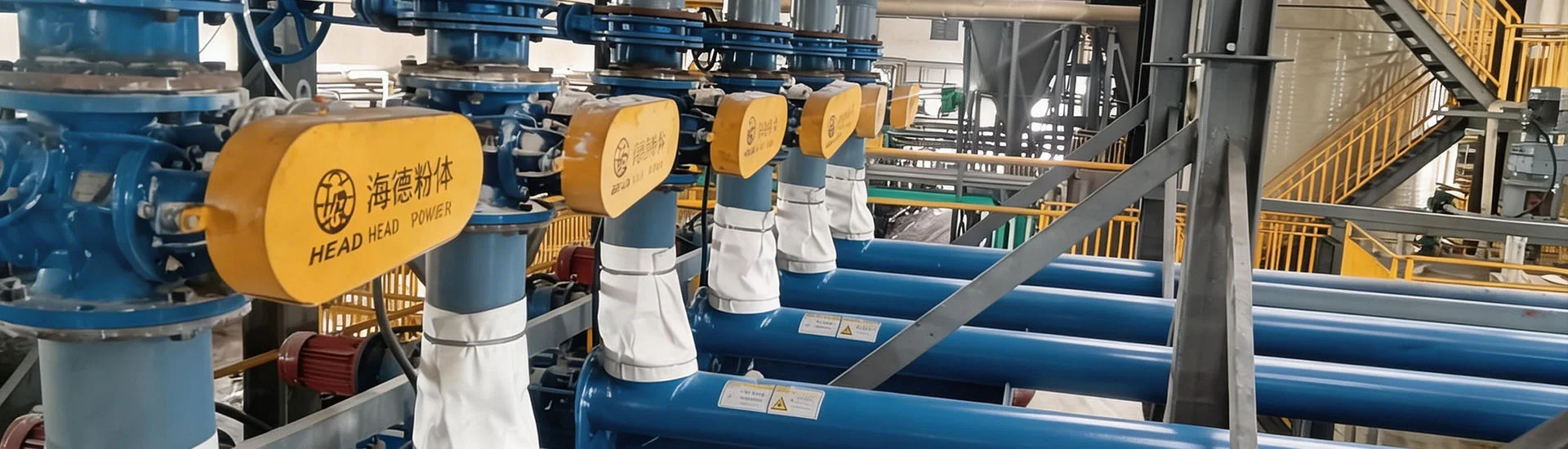
A well-designed bamboo powder pneumatic conveying system typically comprises several key components working in sequence. The feeding device, often a rotary airlock or a screw feeder, meters the material into the pipeline while minimizing air leakage. For bamboo powder, rotary valves with adjustable rotor speeds and abrasion-resistant linings are preferred because they can handle the fibrous strands without tearing or jamming. The conveying pipeline itself must be fabricated from stainless steel or abrasion-resistant carbon steel, with smooth internal surfaces to reduce friction. Long-radius bends (R ≥ 6D) are recommended to prevent particle attrition and buildup at elbows. The air mover, either a roots blower or a centrifugal blower, provides the necessary pressure or vacuum; typical system pressures range from 0.3 to 0.8 bar for positive pressure systems and –0.3 to –0.6 bar for vacuum systems. Filtration is another critical element: a pulse-jet dust collector or a cartridge filter at the receiving end ensures that fine bamboo dust is captured, with outlet emissions kept below 10 mg/Nm³ to meet environmental standards in most regions. Headpowder has integrated these components into modular skid-mounted units that reduce on-site installation time and simplify maintenance.
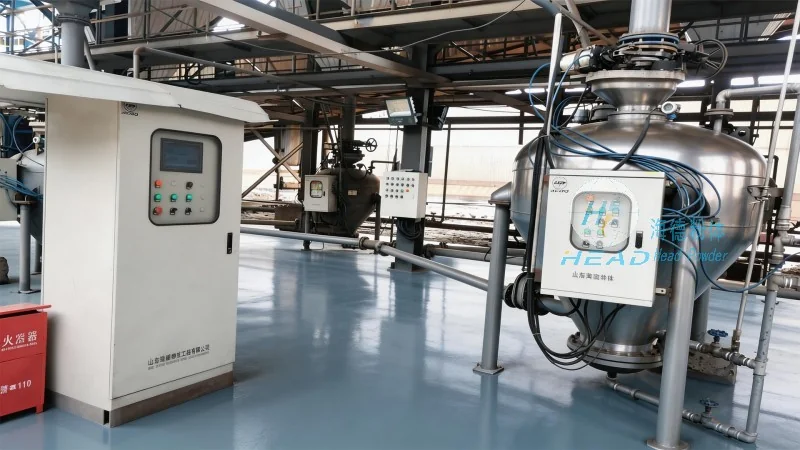
The control system plays an equally important role in maintaining stable operation. Modern PLC-based controllers monitor air velocity, material flow rate, differential pressure across the pipeline, and dust collector differential pressure. For bamboo powder, parameters such as air velocity and conveying pressure must be adjusted adaptively because the material’s moisture content (which can vary from 6% to 15%) significantly affects flowability. A real-time moisture sensor at the feed point allows the system to automatically regulate the air-to-material ratio, preventing blockages in humid conditions. Data collected from headpowder’s installations show that such adaptive control reduces downtime by up to 40% compared to fixed-parameter systems. Additionally, the control unit can interface with upstream drying or milling equipment to create a synchronized production line.
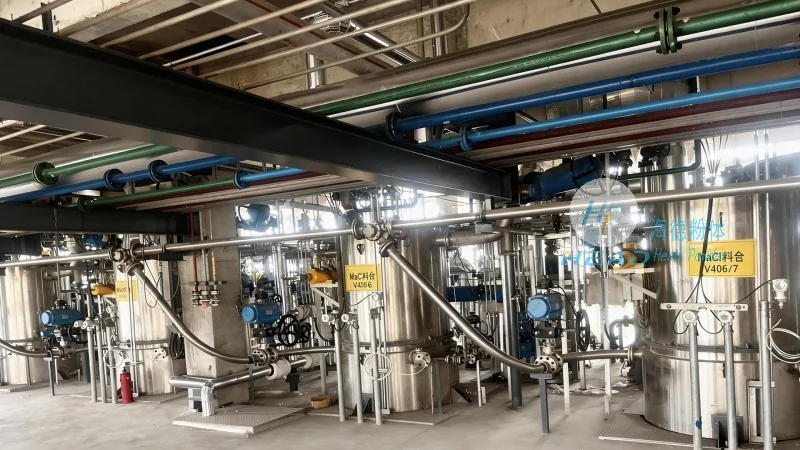
Bamboo powder’s flow characteristics demand specialized design approaches. Its angle of repose typically falls between 45° and 55°, indicating poor flowability. In a pneumatic conveying system, the material’s pickup velocity—the minimum air velocity required to entrain particles from a static condition—is critical. For bamboo powder, this value ranges from 8 to 12 m/s depending on particle size and moisture. Operating below this velocity leads to saltation and eventual blockage; operating too high causes excessive wear and energy waste. A good practice is to design the system with a safety margin of 20–30% above the pickup velocity, verified through computational fluid dynamics (CFD) simulations or pilot testing. Headpowder offers a laboratory-scale test loop that simulates field conditions, allowing clients to determine precise parameters before full-scale installation.
Another important factor is particle degradation. Bamboo powder is softer than mineral powders, and high-velocity impacts in bends can generate fines, reducing product quality. To mitigate this, optimized bend geometry and the use of wear-resistant ceramic linings have been proven effective. Data from a 2026 industry survey indicate that systems with ceramic-lined elbows reduce fines generation by 35% compared to standard steel elbows. Headpowder’s proprietary bend design, which incorporates a replaceable wear-back, extends component life to over 12 months in continuous operation. Furthermore, the system layout should minimize the number of bends; a straight-line layout with fewer than four 90-degree turns is considered optimal for bamboo powder conveying over 150 meters.
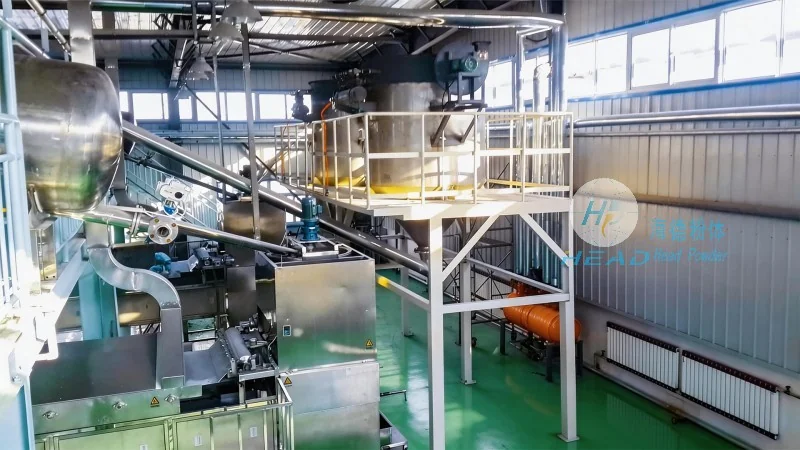
Choosing between dilute phase and dense phase conveying depends on throughput, distance, and material sensitivity. For bamboo powder, dilute phase is the predominant choice due to its simplicity and reliability. Typical dilute phase systems achieve conveying rates of 2–15 tons per hour over distances up to 200 meters, with air consumption between 3 and 6 m³ per kg of material. Dense phase systems, which operate at lower air velocities (3–8 m/s) and higher material loading, can theoretically reduce energy consumption and wear, but they require specialized blow tanks and are more prone to plugging with fibrous materials. Based on headpowder’s project database, over 85% of bamboo powder pneumatic conveying installations since 2023 have adopted dilute phase, with positive pressure configurations dominating because they allow direct feed from multiple sources.
For applications requiring long-distance transport (above 200 meters), a combined system with intermediate booster stations can be deployed. Each booster consists of a secondary blower and an air injection unit that reaccelerates the material stream. While this increases capital cost, it eliminates the need for multiple transfer points and reduces overall footprint. A recent 2025–2026 industry trend has been the adoption of vacuum-based dilute phase systems for dust-sensitive processes, as the negative pressure prevents material leakage even if pipeline seals are compromised. Headpowder has successfully implemented vacuum systems for several bamboo-based bioplastic plants in Southeast Asia, achieving zero fugitive emissions and compliance with ISO 14001 standards.
Energy consumption is a major operational cost in pneumatic conveying. For bamboo powder, the specific energy consumption typically ranges from 0.03 to 0.08 kWh per ton per meter, depending on system design. Optimizing the air-to-material ratio is the most effective way to reduce energy use. Advanced control algorithms that adjust blower speed based on real-time pipeline pressure can yield savings of 15–25%. Additionally, installing variable frequency drives (VFDs) on blowers allows gradual startup and load matching. Headpowder’s energy analysis reports indicate that VFD-equipped systems pay back the additional investment within 8–14 months through electricity savings alone. Another cost-saving measure is the use of heat recovery units on blower exhaust; the warm air can be redirected to dry the bamboo powder before feeding, improving overall thermal efficiency by 12–18%.
Maintenance costs should also be considered. Bamboo powder contains abrasive silica particles from soil contamination, which accelerate wear on rotary valves, pipes, and fan blades. Regular inspection and replacement of wear parts are necessary. Headpowder’s systems are designed with quick-access hatches and modular components that reduce mean time to repair (MTTR) to under 2 hours. Predictive maintenance, using vibration analysis and infrared thermography on blowers, further reduces unplanned downtime. Over a 5-year lifecycle, headpowder’s customers report average maintenance costs 22% lower than those of generic pneumatic systems.
Bamboo powder pneumatic conveying systems have gained traction in several industries. In the production of bamboo fiber-reinforced composites, the system transfers powder from grinding mills to mixing stations with consistent feed accuracy. A facility in Fujian province, using a headpowder-designed dilute phase system, achieved a throughput of 8 tons per hour with a conveying distance of 120 meters. The system’s moisture control feature reduced material waste by 13% compared to their previous mechanical conveyor. In the biodegradable tableware sector, where bamboo powder is mixed with PLA or starch, the pneumatic line ensures that no metal contamination occurs, meeting food-contact safety standards. Headpowder also supplied a vacuum conveying setup for a bamboo charcoal briquette plant, handling 5 tons per hour of powder with particle sizes up to 1 mm without any pipe blockage over 18 months of operation.
The growing demand for eco-friendly materials has fueled market expansion. According to a 2026 market analysis, the global bamboo powder processing equipment sector is expected to grow at a CAGR of 7.4% through 2030, with pneumatic conveying systems accounting for a significant share. Manufacturers increasingly prefer sealed conveying to comply with stricter occupational exposure limits for respirable dust. Headpowder’s engineering team has been involved in developing customized solutions for these regulatory requirements, including explosion-proof designs for facilities where bamboo dust presents a combustible risk. The adoption of ATEX or NFPA-certified components, such as antistatic hoses and grounding systems, is now standard in headpowder’s offerings.
Successful deployment requires careful planning during installation. The pipeline route should avoid sharp turns, low points where moisture can accumulate, and areas subject to temperature extremes. Supports must be spaced at intervals of 2.5–3 meters to prevent sagging. Commissioning involves stepwise testing: first with air only to verify blower performance and leak tightness, then with a small amount of bamboo powder to fine-tune feed rates and air velocity. Headpowder’s field service engineers typically complete commissioning within 3–5 days for standard systems. Ongoing maintenance includes weekly checks of rotary valve gaps, monthly cleaning of dust collector filter bags, and quarterly inspection of bend wear. A simple preventive maintenance schedule, combined with real-time monitoring, extends equipment life beyond 10 years.
For plant managers considering automation, integrating the pneumatic conveying system with a supervisory control and data acquisition (SCADA) platform enables remote operation and data logging. Historical trend analysis helps optimize conveying parameters when bamboo powder batch properties change. Headpowder provides a cloud-based monitoring service that alerts operators to anomalies—such as a gradual increase in differential pressure indicating filter clogging—before they cause shutdowns. This level of digital integration is becoming a competitive advantage in the bamboo processing industry.
Emerging technologies are reshaping bamboo powder pneumatic conveying. The use of artificial intelligence (AI) for predictive flow modeling is being piloted; neural networks trained on historical operational data can predict blockages 10–15 minutes before they occur, allowing preemptive action. Another innovation is the development of hybrid systems that combine pneumatic with mechanical conveying for very long distances: pneumatic for vertical lift and horizontal sections, then mechanical (belt or screw) for the final approach. Headpowder is actively collaborating with research institutes on triboelectric charging mitigation, which is a persistent issue with bamboo powder. Applying carbon fiber impregnated pipe linings has shown a 50% reduction in static buildup in prototype tests. As sustainability goals tighten, closed-loop pneumatic systems that recycle conveying air and filter fines back into the process will become standard. headpowder – with over a decade of specialization in powder handling – continues to invest in these advancements to provide clients with reliable, future-ready solutions.
Selecting the right bamboo powder pneumatic conveying equipment system is a strategic decision that affects production efficiency, product quality, and operating costs. By focusing on material-specific design, adaptive control, and robust component selection, manufacturers can overcome the inherent difficulties of handling bamboo powder. The insights shared in this article, grounded in headpowder’s extensive engineering experience and verified data, offer a solid starting point for evaluating system options. For a detailed feasibility assessment or a customized proposal tailored to your facility’s layout and throughput needs, contact headpowder’s technical team. (咨询热线:156-6277-7102) Our engineers will walk you through pilot testing, installation planning, and long-term support to ensure your bamboo powder conveying operates smoothly from day one.
In summary, pneumatic conveying for bamboo powder is not a one-size-fits-all solution; it demands a thorough understanding of the material’s behavior, careful component matching, and a commitment to continuous optimization. With proper design and ongoing attention, these systems deliver substantial improvements in cleanliness, reliability, and cost efficiency. The global shift toward bio-based materials means that bamboo powder handling will only grow in importance, and staying ahead requires partnering with a technical expert who understands both the theory and the practical challenges. headpowder’s track record in delivering over 200 pneumatic conveying systems for various biomass applications, including bamboo, provides the assurance needed for capital equipment decisions.

 Shandong headpowder Engineering Co., Ltd.
 156-6277-7102(Manager Zhang)
  0531-83386006
  Jinan City, Shandong Province, China
服务热线
微信咨询
回到顶部