News
Rich project cases across industries, showing real implementation and proven technical strength.In the industrial processing of barite, a mineral widely used in oil and gas drilling, paint production, and radiation shielding, the efficiency of material handling directly impacts operational costs and product quality. Barite, with its high specific gravity (typically 4.2–4.5 g/cm³) and abrasive nature, presents unique challenges for conventional mechanical conveying systems. Traditional belt conveyors, bucket elevators, and screw feeders often suffer from excessive wear, dust emissions, and material degradation when handling barite powder or granules. This is where pneumatic conveying technology emerges as an optimal solution, offering enclosed transport, reduced maintenance, and precise control over material flow. headpowder, a company specializing in powder handling equipment, has developed a comprehensive barite pneumatic conveying equipment system solution that addresses these industry-specific requirements. The system integrates air compression, feeding devices, pipeline routing, separation units, and automation controls to create a seamless, dust-free, and energy-efficient transport process. With the global barite market projected to reach USD 2.8 billion by 2026, driven by increased drilling activities and infrastructure development, the demand for reliable and scalable conveying systems is growing steadily. This article provides an in-depth exploration of the barite pneumatic conveying system solution, covering design principles, equipment selection, installation considerations, and operational best practices. By examining real-world applications and technical parameters, readers will gain a clear understanding of how this technology can enhance productivity, reduce downtime, and ensure regulatory compliance in barite processing facilities.
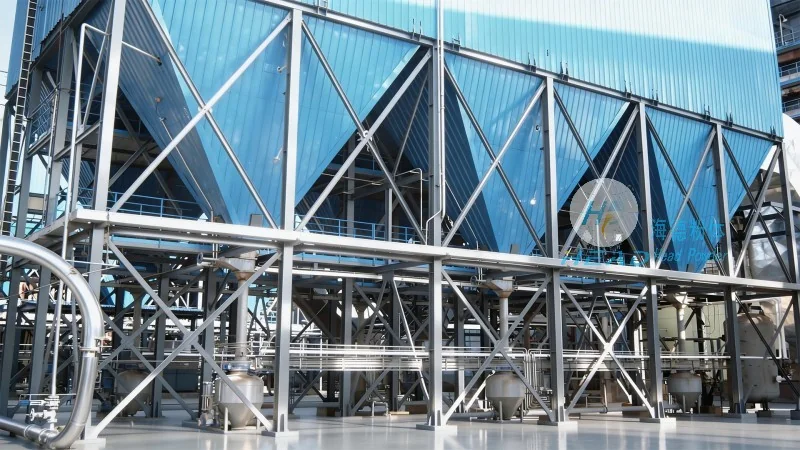
A well-designed barite pneumatic conveying system consists of several interconnected modules, each engineered to handle the unique physical properties of barite. The selection of components must account for factors such as particle size distribution (typically 200–325 mesh for barite powder), moisture content (ideally below 1%), abrasivity, and bulk density. Below is a breakdown of the essential parts:
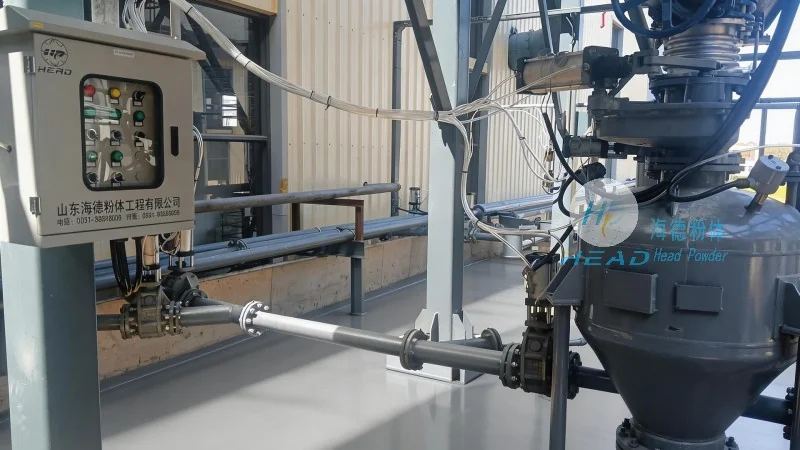
Barite's high density and abrasivity demand careful engineering during the design phase. Two primary conveying modes are used: dilute phase and dense phase. In dilute phase conveying, barite particles are suspended in a high-velocity air stream (20–30 m/s). This mode is suitable for shorter distances (up to 100 meters) and lower capacities, but it causes more pipe wear and particle attrition. Dense phase conveying, where material moves in slugs at low velocity (4–8 m/s) under high pressure, offers lower wear and better product integrity. headpowder's barite pneumatic conveying equipment system solution typically employs dense phase for long-distance transport (200 meters or more) or when downstream processes require precise particle size distribution. The decision between dilute and dense phase depends on the following parameters:
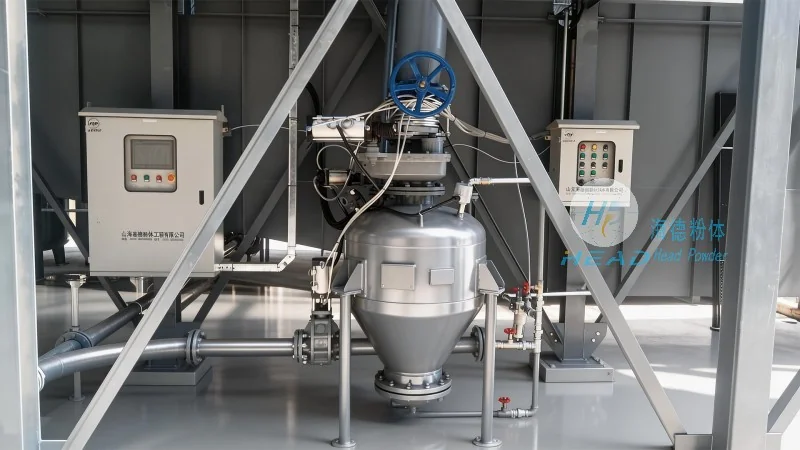
Additionally, the pipeline routing must avoid sharp changes in direction. A typical design rule for barite is to keep the angle of bends at 45 degrees or less, with bend radius at least 10 times the pipe diameter. headpowder applies computational fluid dynamics (CFD) modeling during the pre-sales engineering phase to predict pressure drops and wear zones, ensuring the system operates within optimal parameters for a minimum of 15,000 operating hours before major maintenance.
Successful installation of a barite pneumatic conveying system requires careful site preparation and coordination. The air compressor should be placed in a clean, ventilated area away from dust sources. The pipeline supports must be spaced every 3–5 meters to prevent sagging, with vibration dampeners installed near bends. headpowder provides a detailed installation manual and on-site supervision for the first 48 hours of commissioning. During startup, the following steps are critical:
One common challenge during commissioning is the accumulation of static electricity, especially in dry environments. headpowder addresses this by installing grounding straps at every flange connection and using conductive hoses in flexible sections. Static discharges can ignite dust clouds, so grounding resistance must be below 10 ohms. The company also recommends using explosion-proof electrical enclosures for all components in classified areas.
Once operational, the barite pneumatic conveying system should achieve a conveying efficiency of 90–95% with minimal unscheduled downtime. Regular maintenance is essential due to the abrasive nature of barite. headpowder suggests a preventive maintenance schedule:
Field data from existing installations show that with proper maintenance, the average service life of a headpowder barite pneumatic conveying system exceeds 12 years, with major component replacements (like pipes and valves) occurring only after 6–8 years. In one case study, a barite processing plant in Guizhou, China, replaced their bucket elevator system with a headpowder dense phase pneumatic system. The system handles 25 tons per hour of barite powder over a 180-meter distance with a 30-meter elevation gain. After two years of operation, the plant reported a 40% reduction in maintenance costs, a 25% decrease in energy consumption per ton, and zero dust emissions. The ROI was achieved within 14 months.
By 2026, the barite market is expected to see increased demand from the oil and gas sector, particularly in deepwater drilling and hydraulic fracturing. Environmental regulations are also tightening globally, with stricter limits on particulate emissions and occupational exposure to silica and barite dust. Pneumatic conveying systems are well-positioned to meet these challenges. headpowder continues to innovate, incorporating features like self-cleaning filters, AI-based predictive maintenance algorithms, and energy recovery systems that reuse compressed air exhaust. For example, the company's latest system uses a variable-frequency drive on the air compressor that reduces energy use by 15% compared to fixed-speed models. Additionally, modular skid-mounted designs are gaining popularity, reducing installation time by up to 50% and allowing easy relocation if plant layout changes.
For companies considering a new barite conveying system, it is critical to evaluate the total cost of ownership rather than just the initial capital expenditure. Dense phase systems have higher upfront costs but lower operating costs over the long term. headpowder provides detailed lifecycle cost analysis for each project, factoring in power rates, labor costs, and spare parts consumption. The company also offers a 24-month warranty on all conveying components, with optional extended service contracts.
headpowder has accumulated over a decade of experience in designing and manufacturing pneumatic conveying solutions for abrasive minerals. Their barite-specific system is built around robust components that withstand heavy use. The engineering team has extensive knowledge of barite properties gained from dozens of successful installations, ranging from small pilot plants handling 2 tons per hour to large industrial systems moving 80 tons per hour. Every system is individually engineered to match the client's site layout, material characteristics, and performance goals. headpowder also provides turnkey services including feasibility studies, 3D layout design, fabrication, installation, commissioning, and after-sales support. For more information on how a barite pneumatic conveying equipment system can improve your operation, contact the company directly. (咨询热线:156-6277-7102)

 Shandong headpowder Engineering Co., Ltd.
 156-6277-7102(Manager Zhang)
  0531-83386006
  Jinan City, Shandong Province, China
服务热线
微信咨询
回到顶部