News
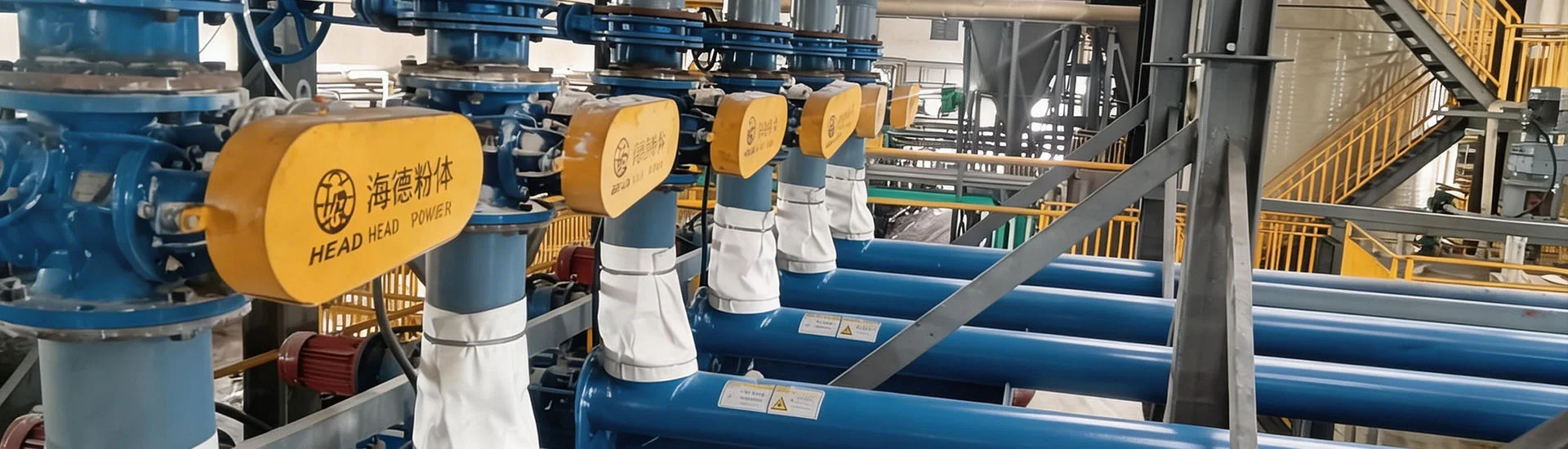
Rich project cases across industries, showing real implementation and proven technical strength.In the evolving landscape of industrial material handling, the efficient and reliable transport of fine, abrasive, and often challenging bulk solids such as white ash has become a critical operational priority. White ash, a byproduct generated from various combustion processes including power generation, waste incineration, and industrial boilers, presents unique handling difficulties due to its low bulk density, high abrasiveness, tendency to fluidize unpredictably, and potential for hazardous dust emissions. Traditional mechanical conveyors often fall short in maintaining sealed, dust-free operations, leading to material loss, equipment wear, and environmental compliance risks. For processing facilities aiming to meet 2026 emission standards and optimize energy consumption, the pneumatic conveying system has emerged as the preferred technological solution. Specifically designed to handle white ash in a fully enclosed, automated, and low-maintenance manner, modern pneumatic conveying systems leverage compressed air or inert gas to move materials through pipelines, offering unparalleled flexibility in layout, minimal moving parts, and superior containment. This article provides an in-depth introduction to white ash pneumatic conveying system equipment, covering core components, operating principles, selection criteria, and emerging industry trends. It also highlights how headpowder, a specialized manufacturer with over a decade of field-proven experience, delivers engineered solutions that address real-world challenges such as pipeline erosion, moisture sensitivity, and variable particle size distribution. By understanding the technical nuances of these systems, plant engineers and procurement managers can make informed decisions that enhance productivity, reduce downtime, and align with global sustainability goals.
White ash pneumatic conveying systems operate on the principle of using a gas stream—typically compressed air, nitrogen, or other inert gases—to suspend and transport particulate material through a closed pipeline network. The key distinction from mechanical conveyors lies in the absence of moving belts, chains, or screws within the material path, which drastically reduces wear points and maintenance requirements. Depending on the specific properties of the white ash, such as particle size distribution (commonly ranging from 1 to 100 microns), moisture content (often below 5% for dry handling), and abrasivity (measured by the Mohs hardness scale, typically 4 to 6), engineers select either a dilute phase or dense phase conveying regime. In dilute phase systems, the material is fully suspended in the air stream at relatively high velocities (usually 20 to 40 m/s) and low pressure (0.2 to 1 bar), making it suitable for free-flowing ash with low moisture. Dense phase systems, on the other hand, operate at lower velocities (2 to 8 m/s) and higher pressures (1 to 6 bar), pushing plugs of material through the line—ideal for fragile, moist, or highly abrasive ash where minimizing particle degradation and pipeline erosion is critical. Headpowder’s engineering team conducts comprehensive flowability tests and particle analysis before recommending the appropriate conveying regime, ensuring that equipment longevity and energy efficiency are optimized for each specific white ash source.
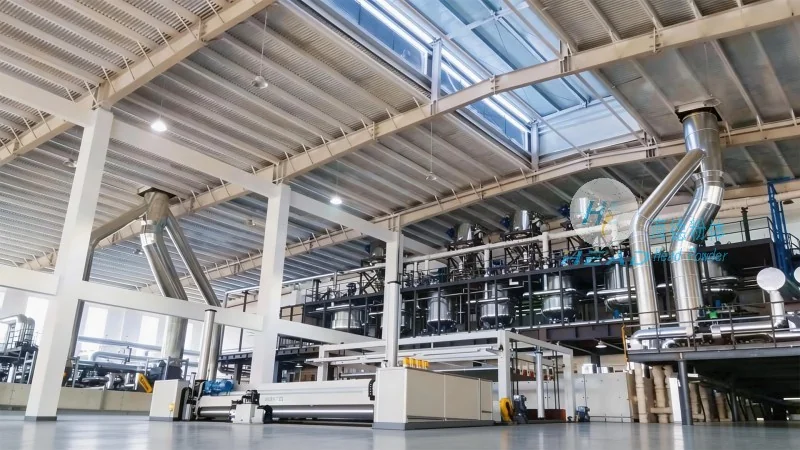
A complete white ash pneumatic conveying system integrates several precisely engineered components, each playing a vital role in maintaining consistent, safe, and efficient material transfer. The primary equipment categories include feeding devices, conveying pipelines, air-moving equipment, separation units, and control instrumentation.
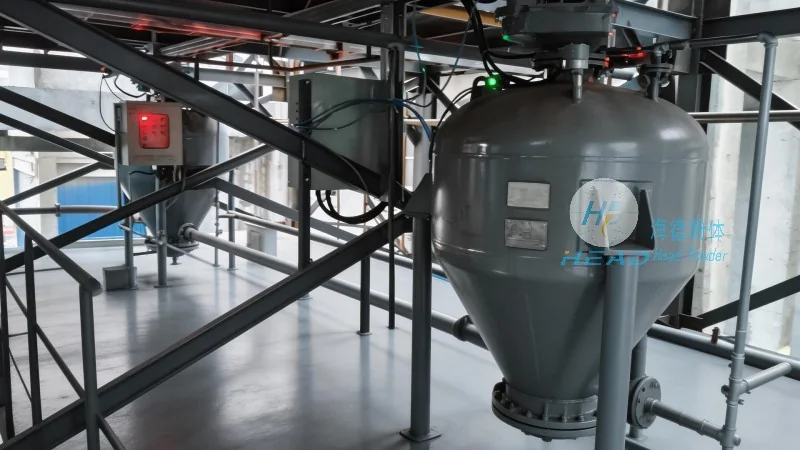
The feeding device—often a rotary airlock valve, screw feeder, or venturi eductor—regulates the rate at which white ash enters the conveying line while preventing air loss and maintaining seal integrity. For highly abrasive white ash, headpowder uses wear-resistant ceramic or hardened steel linings in rotary valves to extend service life beyond conventional cast iron designs. The conveying pipeline is designed with smooth internal surfaces, gradual bends with large radius ratios (typically R/D 10 to 15), and wear-resistant material grades such as stainless steel 304L or alumina-lined carbon steel. These design choices minimize the risk of ash buildup and reduce frictional wear that can lead to punctures or pressure drops over years of continuous operation. Air-moving equipment—ranging from positive displacement blowers for dilute phase to screw compressors for dense phase—must be sized accurately based on conveying distance (distances can exceed 500 meters in large industrial plants), elevation changes, and ash characteristics. At the receiving end, a cyclone separator or baghouse filter disengages the white ash from the conveying air, with the fine dust captured by pulse-jet filters to achieve emission levels below 10 mg/Nm³, compliant with 2026 environmental regulations in most jurisdictions. The entire system is managed by a programmable logic controller (PLC) integrated with sensors monitoring pressure, flow rate, temperature, and level, enabling fully automated start-up, shutdown, and fault detection. Headpowder provides customized control panels that include remote monitoring capabilities, allowing operators to adjust conveying parameters in real time from a central control room.
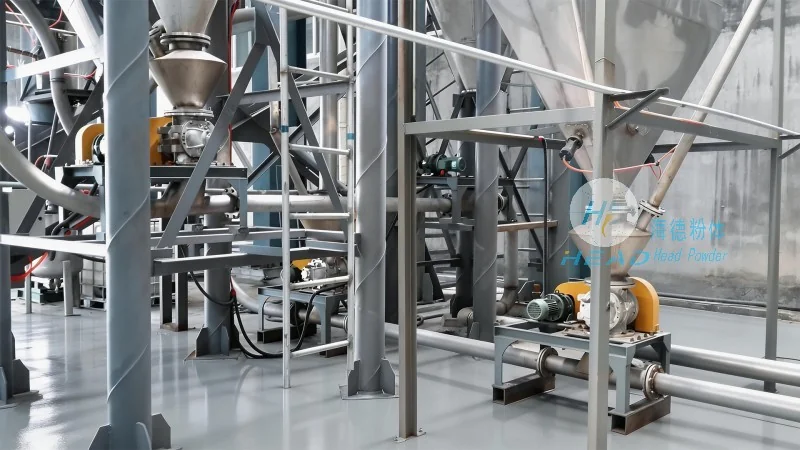
White ash is notorious for several material-specific problems that must be addressed in system design to avoid downtime and safety hazards. One of the most prevalent issues is pipeline erosion caused by the hard, angular particles that act like sandblasting media against pipe walls. Headpowder counters this by specifying pipe bends with replaceable wear-back inserts and using flow-smoothing devices such as venturi nozzles at injection points to reduce impact velocity. Another common challenge is bridging or rat-holing in storage hoppers and feeders due to the cohesive nature of fine ash when it absorbs atmospheric moisture. Hot air drying systems, vibrating bin activators, and air-swept silos are integrated into headpowder designs to maintain consistent discharge. Additionally, the electrostatic charge generated during conveying can lead to dust explosions in enclosed spaces. To mitigate this risk, all equipment is grounded, and passive explosion relief panels are installed at strategic points. Headpowder also incorporates inert gas blanketing for systems handling reactive white ash, such as those containing unburned carbon or trace metals. In a recent installation at a biomass-fired power plant in northern Europe, headpowder’s dense phase system reduced pipeline replacement frequency from every two years to over five years while cutting energy consumption by 18% compared to the client’s previous dilute phase setup.
Choosing the right white ash pneumatic conveying system requires a careful evaluation of multiple technical and economic factors. Key selection parameters include conveying distance, throughput capacity (ranging from 5 to 100 tons per hour for typical industrial applications), particle size distribution, and the physical and chemical properties of the ash. For example, white ash with high silica content demands more robust wear protection, while ash with high calcium oxide content may require moisture control to prevent hydration. The plant layout—available space, height restrictions, and existing equipment integration—also dictates whether a positive pressure or negative pressure (vacuum) system is more appropriate. Positive pressure systems are generally more energy-efficient for long distances, while vacuum systems excel at point-of-use collection from multiple sources. Headpowder offers a comprehensive system design checklist that includes a full material characterization report, Computational Fluid Dynamics (CFD) simulation of particle trajectories, and lifecycle cost analysis covering installation, energy, maintenance, and spare parts. According to industry data from 2025–2026, facilities that adopt engineered pneumatic systems for white ash see an average of 30% reduction in unplanned maintenance events and a 12% improvement in overall equipment effectiveness (OEE).
The latest generation of white ash pneumatic conveying equipment is designed for seamless integration into digital plant ecosystems under the Industry 4.0 framework. Sensors along the conveying line transmit real-time data on pressure drop, material flow velocity, and filter differential pressure to a central SCADA or cloud-based platform. Predictive maintenance algorithms, powered by machine learning models trained on thousands of operating hours, can forecast component wear with over 90% accuracy, enabling scheduled replacements during planned outages rather than emergency shutdowns. Headpowder’s in-house software platform, PowderLink, offers a modular interface that connects to existing plant DCS systems and provides dashboards for energy consumption, conveying efficiency, and emission tracking. In 2026, the trend toward carbon accounting and environmental reporting has pushed plant operators to demand more transparency in material handling operations; headpowder’s system integrates directly with emission monitoring systems to generate auditable reports compliant with ISO 14064. Furthermore, remote diagnostic features allow headpowder’s support team to access system parameters from anywhere in the world, offering real-time troubleshooting that minimizes travel costs and response time—an advantage increasingly valued by global customers.
A concrete example illustrates the practical advantages of headpowder’s white ash pneumatic conveying expertise. A major cement plant in Southeast Asia was struggling with a 15 ton/hour white ash stream generated from a coal-fired kiln. The existing mechanical screw conveyors experienced rapid wear—screw flights needed replacement every four months—and dust leakage caused regulatory fines. After headpowder conducted a site audit and laboratory flowability tests, a dense phase system was designed featuring a pressure vessel feeder with a 10 m³ capacity, a 200-meter pipeline with aluminum oxide ceramic bends, and a reverse-pulse bag filter. The conveying line operated at 4 bar pressure and a velocity of 6 m/s, reducing ash breakage by 40% and eliminating visible dust emissions. Installation was completed within eight weeks with minimal disruption to ongoing operations. Within the first year, the plant recorded a 25% reduction in compressed air consumption due to optimized purge cycles, and maintenance costs dropped by 60%. The project payback period was under 18 months, a result that headpowder attributes to precise system sizing and robust component selection. This case demonstrates how a well-engineered white ash pneumatic conveying system can transform a liability into an efficient, revenue-protecting asset.
Looking ahead to 2027 and beyond, the white ash pneumatic conveying market is expected to see continued innovation driven by stricter environmental regulations, rising energy costs, and the growing adoption of circular economy principles. Hybrid conveying systems that combine dilute and dense phase in different sections of the same pipeline are being developed to handle broader ash variability without requiring multiple dedicated lines. Additionally, the use of low-pressure rotary feeders with magnetic coupling drives is gaining traction as a way to eliminate shaft seals and further reduce maintenance. Headpowder is actively researching wear-monitoring technologies based on ultrasonic thickness gauging that can be installed permanently on pipe bends, sending alerts when wall thickness approaches a critical threshold. Another frontier is the integration of carbon capture and utilization (CCU) systems with ash handling, since white ash can serve as a mineral feed for CO₂ mineralization processes—a development that could reshape the value chain for power and cement plants. As an ISO 9001:2025 certified manufacturer, headpowder continues to invest in R&D to meet these emerging needs, offering not only equipment but also full-service engineering consultation from first-concept to commissioning.
To discuss your specific white ash conveying requirements or request a preliminary system feasibility study, contact headpowder’s technical sales team directly. (咨询热线:156-6277-7102) With decades of combined experience and hundreds of successful installations worldwide, headpowder delivers pneumatic conveying solutions that are reliable, efficient, and future-ready. From material testing to after-sales support, every step is managed with the precision and accountability that heavy industries depend on. Whether you are retrofitting an existing line or designing a greenfield plant, leveraging expert system design from an experienced partner is the most effective way to ensure long-term operational success.

 Shandong headpowder Engineering Co., Ltd.
 156-6277-7102(Manager Zhang)
  0531-83386006
  Jinan City, Shandong Province, China
服务热线
微信咨询
回到顶部