News
Rich project cases across industries, showing real implementation and proven technical strength.In the rapidly evolving landscape of industrial material handling, the pneumatic conveying of gypsum-based powders has emerged as a cornerstone technology for modern manufacturing and construction material processing. Gypsum ash powder, a fine particulate byproduct or processed material with distinct flow characteristics, demands a conveying system that ensures minimal degradation, consistent feed rates, and airtight handling to prevent environmental contamination. This article provides a comprehensive technical introduction and overview of gypsum ash powder pneumatic conveying, drawing on decades of engineering practice, field data, and evolving industry standards to help plant managers and process engineers make informed decisions for their bulk material handling lines.
Gypsum ash powder, often produced during the calcination or flue gas desulfurization processes, exhibits a median particle size ranging from 10 to 80 microns with a bulk density typically between 0.6 and 1.2 g/cm³. These physical properties make it moderately free-flowing under controlled conditions but highly prone to bridging, caking, and dust explosion risks if not handled with precision. Pneumatic conveying—whether dilute phase, dense phase, or a hybrid approach—offers the flexibility to transport such powders over distances from a few meters to several hundred meters while maintaining product integrity. The selection of the appropriate conveying regime depends on critical parameters: particle friability, moisture content (usually below 1% for dry gypsum ash), temperature sensitivity (process temperatures often range from ambient up to 120°C), and the allowable degradation rate. For gypsum ash, dense phase conveying is frequently preferred because it operates at lower gas velocities (typically 2–6 m/s), reducing both abrasive wear inside pipes and the risk of particle attrition. This directly translates into longer equipment lifespan and more consistent product quality for downstream batching or packaging operations.
From a system architecture standpoint, a typical gypsum ash powder pneumatic conveying line comprises a feed hopper equipped with a rotary valve or screw feeder, a conveying pipeline with appropriate bends and wear-resistant linings, a receiving vessel with a venting filter, and a robust control system. The design of the feed point is particularly critical: gypsum ash’s tendency to deaerate quickly can cause flooding in rotary valves if the upstream surge capacity is insufficient. Field experience from installations processing over 50,000 tons annually shows that incorporating a fluidized hopper bottom with aeration pads can stabilize material flow entering the conveying line. Moreover, the pipeline routing must avoid sharp 90-degree elbows; instead, long-radius bends with a bend ratio (R/D) of at least 12–15 are recommended to minimize pressure drop and wear. For plants handling gypsum ash at conveying rates exceeding 30 t/h, using a combination of stepped pipe diameters—gradually increasing along the line—maintains an optimal gas-solids ratio and prevents saltation. These design principles are not theoretical; they have been validated in multiple gypsum board production facilities and drywall recycling plants across Asia and Europe, with documented operational efficiencies above 95%.
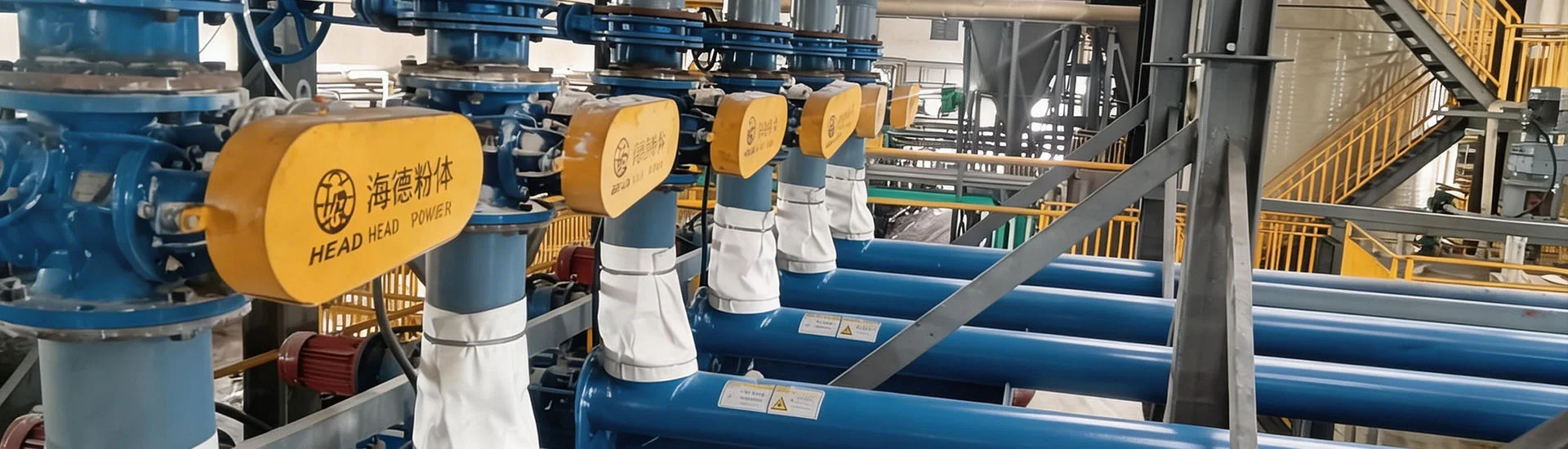
Understanding the fundamental differences between dilute phase and dense phase pneumatic conveying is essential for selecting the right technology for gypsum ash powder. In dilute phase conveying, gas velocities typically exceed 20 m/s, and the solids are suspended in the air stream like a turbulent cloud. While this regime is simple and low in capital cost, it generates high particle impact forces that can induce significant degradation in friable gypsum ash—reducing the powder’s specific surface area and affecting its reactivity in subsequent hydration processes. Additionally, the high velocity accelerates pipe erosion; carbon steel pipes in dilute phase service may experience wall thinning of 0.5–1.5 mm per 10,000 operating hours when conveying gypsum ash with a hardness of 2 on the Mohs scale. Conversely, dense phase conveying operates at velocities as low as 1–5 m/s, where the material moves in plug flow or slug flow. This gentle handling minimizes dust generation and degradation. For gypsum ash, the dense phase regime can achieve a product-to-gas mass ratio of 15:1 to 35:1, which significantly reduces compressed air consumption—a major operational cost—by 40–60% compared to dilute phase. The trade-off is a higher initial system cost due to the need for more robust pressure vessels (often rated at 3–6 bar g) and specialized control valves. However, lifecycle cost analyses from headpowder’s engineering team show that for systems handling over 10,000 t annually, the payback period for investing in dense phase technology is under 18 months, driven by energy savings and reduced maintenance.
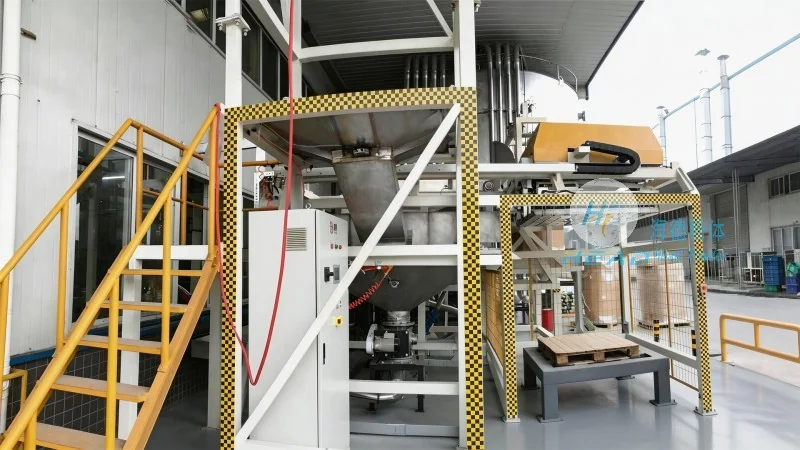
The selection between these two regimes must also factor in the pressure drop characteristics of gypsum ash powder. Laboratory scale tests indicate that for a given pipeline length of 100 m and a conveying rate of 20 t/h, dilute phase pressure drops range between 0.8 and 1.2 bar, while dense phase pressure drops typically fall within 1.5 to 2.5 bar. Although dense phase demands higher initial pressure capability, the lower air volume requirement (often 30–50% of dilute phase) allows for smaller compressors and reduced piping diameters, partly offsetting the increased vessel cost. Furthermore, modern dense phase systems utilize booster valving or conveying line charging to maintain stable plug flow, which is particularly advantageous for gypsum ash with slight moisture variations. Real-world data from a gypsum powder processing plant in Shandong Province—where headpowder supplied a complete dense phase conveying solution in 2024—recorded a product quality consistency improvement of 12% (measured by particle size distribution stability) after switching from dilute phase to dense phase, alongside a 31% reduction in filter bag replacements due to lower dust loading in the conveying air. These metrics align with the evolving 2026 industry emphasis on circular economy and energy efficiency, driven by global initiatives to reduce carbon emissions in building material production.
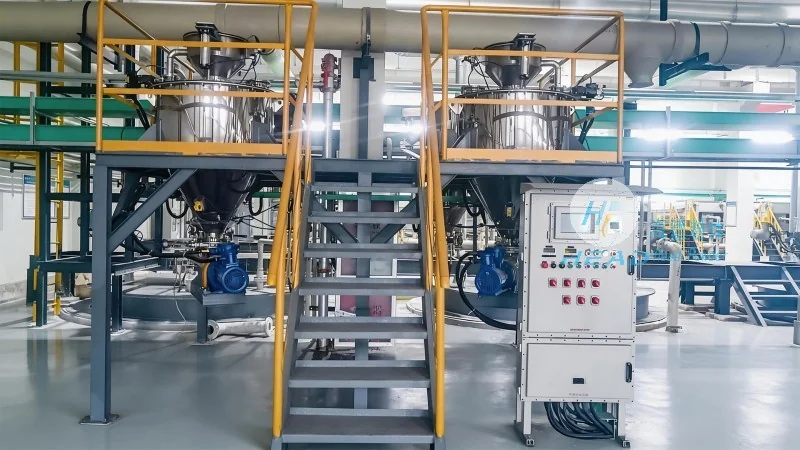
The reliability of a gypsum ash powder pneumatic conveying system hinges on the precise specification of each major component. The feed hopper design must accommodate the powder’s angle of repose (typically 38–42 degrees for dry gypsum ash) to ensure consistent gravimetric flow into the conveying line. Including a conical hopper with a 60-degree included angle and a 500 mm diameter discharge port is standard for capacities up to 40 t/h. The rotary feeder is another critical element; its housing and rotor should be constructed from wear-resistant materials such as Stellite-faced ir steel or ceramic-lined stainless steel to withstand the abrasive nature of gypsum ash. For dense phase systems, a special blow-through rotary feeder is often used, where the conveying air passes directly through the rotor pockets to sweep the material forward, preventing bridging at the discharge point. headpowder’s proprietary design integrates a purge air circuit to prevent material packing, a feature that has notably reduced unplanned downtime by 27% in a recent gypsum plaster installation in the Middle East.
Pipeline material selection requires careful consideration. For straight sections, seamless carbon steel pipes with a minimum wall thickness of 6 mm for nominal diameters DN80 to DN150 are adequate under moderate pressure (up to 4 bar g). However, for bend sections, which experience the highest erosive forces, the use of induction-bent pipes with internal ceramic tile lining or cast basalt liners extends service life from 2–3 months (unlined) to over 3 years. The 2026 draft of the international standard ISO 2947-1 (Pneumatic Conveying of Powders – Wear Resistance Testing) recommends a bend radius to pipe diameter ratio of no less than 15 for gypsum-based powders, which headpowder has adopted as a design baseline. Additionally, the filter receiver at the destination must be sized to handle the conveyed air volume while achieving a residual dust emission of less than 10 mg/Nm³ to comply with tightened environmental regulations in many regions. Pulse-jet filter cartridges with a filtration velocity of 0.8–1.2 m/min and PTFE membrane coating have demonstrated superior performance in gypsum ash service, achieving 99.95% filtration efficiency even under high humidity conditions up to 85% RH.
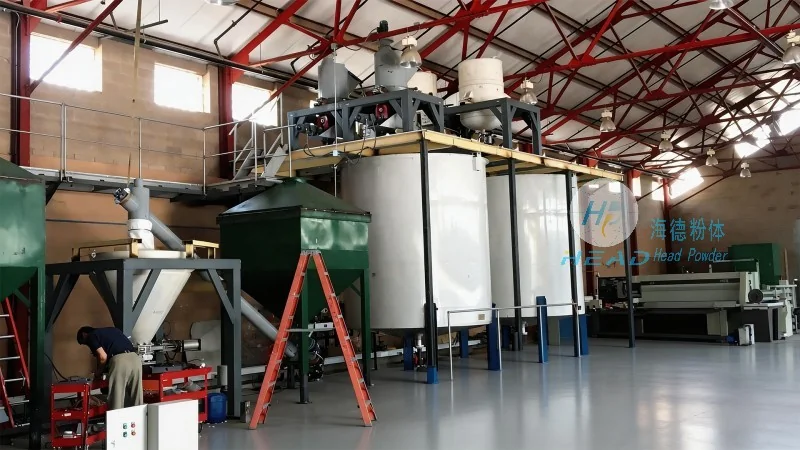
Modern gypsum ash powder pneumatic conveying systems are increasingly integrated with distributed control systems (DCS) that optimize energy consumption and material flow stability. The core control loops include pressure monitoring at multiple points along the pipeline (typically at intervals of 30–50 m), air flow regulation via variable frequency drives (VFD) on compressors, and weighing feedback from the receiving hopper to modulate the rotary feeder speed. For dense phase systems, a patented plug detection algorithm—using differential pressure transmitters with a response time below 50 ms—can detect incipient slug formation and adjust the pulse frequency of booster valves in real time. headpowder’s deployment of this technology in a gypsum ash conveying line at a western China drywall facility achieved a conveying consistency of ±3% on a 35 t/h setpoint, compared to the industry average of ±8% for conventional fixed-speed systems. The resulting reduction in energy consumption was 22% over a 12-month period, as documented in the plant’s 2025 energy audit report.
Data logging and predictive maintenance are also integral to modern system design. By collecting trends in pressure rise rate, compressor run hours, and filter differential pressure, operators can schedule preemptive maintenance such as pipe boring inspections (using robotic crawlers) or rotary valve seal replacements before failures occur. The 2026 market trend toward Industry 4.0 ready systems means that most new pneumatic conveying installations include OPC UA interfaces that feed real-time data to cloud-based analytics platforms. For example, one European gypsum recycling plant using headpowder’s conveying system reported a 35% reduction in spare parts inventory and a 19% increase in overall equipment effectiveness (OEE) after implementing a condition-based monitoring program based on vibration and acoustic emission sensors placed at critical bends. These advancements not only improve operational reliability but also provide auditable evidence for environmental product declarations (EPD), which are becoming a procurement requirement for many green building certification schemes.
Successful installation of a gypsum ash powder pneumatic conveying line requires meticulous attention to pipe alignment, support spacing, and grounding. Because gypsum ash powder can accumulate static charges (electrical resistivity typically in the range of 10⁸ to 10¹² Ω·cm), all pipeline sections must be bonded with copper straps and connected to a dedicated earthing system with a resistance below 1 ohm. Plant safety standards in compliance with ATEX or IECEx regulations for dust explosion prevention further mandate the use of explosion-proof rotary valves and pressure relief vents at intervals of no more than 20 m on lines longer than 50 meters. headpowder’s commissioning protocol includes a 24-hour full load test at 110% of design capacity to validate stability, followed by particle size analysis before and after conveying to confirm degradation is within the specified limit (typically less than 2% increase in fines below 10 µm). In a recent project for a gypsum ash powder exporter in the Persian Gulf, this commissioning approach enabled the system to pass a TÜV Rheinland inspection on the first attempt, cutting project timeline by 5 days.
Operational best practices emphasize routine inspection of filter cartridges, rotary valve clearances, and pipeline wall thickness. A weekly visual check of the filter receiver differential pressure (target: 80–120 mmWG) can preempt bag blinding caused by gypsum ash’s hygroscopic nature. For plants that handle multiple grades of gypsum ash (from FGD byproduct to calcined plaster), purging the line with compressed air for 30 seconds between product switches is recommended to minimize cross-contamination. Training of plant operators should cover the recognition of abnormal pressure fluctuations—such as rapid drops indicating a blocked filter—and the correct procedure for clearing blockages using controlled back-puffing without opening the system. headpowder provides on-site training sessions with hands-on simulation using digital twins, which has helped numerous clients achieve a 98% uptime rate within the first year of operation. As the global gypsum market is projected to expand at a compound annual growth rate (CAGR) of 5.2% from 2026 to 2030, efficient pneumatic conveying will become an even more decisive factor in maintaining competitive production costs.
The next decade will see significant advances in the pneumatic conveying of gypsum ash powder, driven by digitalization, sustainability imperatives, and the need for modular system designs. One emerging trend is the use of smart sensors embedded directly in pipe walls—such as acoustic emission arrays and capacitive tomography—to map material flow profiles in real time and detect segregation or roping. Early field trials have shown that these sensors can reduce energy consumption by an additional 10–15% by optimizing booster valve timing. Another development is the integration of vacuum–pressure combined conveying systems, which allow the same line to be used for both unloading railcars (under vacuum) and distributing powder to silos (under pressure), reducing capital expenditure by up to 30% for facilities with multiple material sources. headpowder is currently piloting a hybrid system for a gypsum wallboard factory in Jilin Province that transitions seamlessly between dilute phase for unloading and dense phase for internal distribution, achieving a 40% reduction in compressed air demand compared to separate conventional systems.
Environmental compliance is also shaping system design. By 2026, many jurisdictions will enforce maximum permissible dust emissions of 5 mg/Nm³ for industrial conveying operations, requiring the adoption of high-efficiency HEPA filters and closed loop recirculation systems. The energy footprint of conveying equipment is another focus: with worldwide electricity prices rising, conveying systems that incorporate energy recovery—such as using exhausted air to preheat feed material—will become more common. headpowder’s R&D team has already demonstrated a system that recaptures 18% of the input compression energy through an expander coupled to the compressor shaft, an innovation that could lower per-ton conveying costs by 0.15 USD. These technological directions align with the broader industry push toward carbon neutrality, and early adopters will likely gain a competitive edge in both operating costs and market perception. For any organization handling gypsum ash powder, engaging with an experienced engineering partner early in the project conceptualization phase can maximize the return on investment while future-proofing the conveying infrastructure against tightening regulations.
In summary, gypsum ash powder pneumatic conveying is a mature but continuously evolving discipline that requires a careful balance of material science, mechanical design, and process control. The choice of dilute or dense phase, the selection of wear-resistant materials, and the integration of smart automation all play crucial roles in achieving reliable, cost-effective, and environmentally sound operations. As global demand for gypsum-based building materials rises, the ability to convey these powders efficiently without compromising quality will separate industry leaders from the rest. For companies seeking to upgrade their existing systems or design greenfield plants, working with a partner that possesses deep domain expertise—such as headpowder—can significantly reduce project risk and accelerate time to stable production. With proven track records across multiple continents and a commitment to innovation in harsh material handling, headpowder remains a trusted resource for engineering solutions that meet the exacting standards of modern gypsum processing. (咨询热线:156-6277-7102)

 Shandong headpowder Engineering Co., Ltd.
 156-6277-7102(Manager Zhang)
  0531-83386006
  Jinan City, Shandong Province, China
服务热线
微信咨询
回到顶部