News
Rich project cases across industries, showing real implementation and proven technical strength.In the evolving landscape of bulk material handling, dry sand pneumatic conveying systems have emerged as a critical technology for industries ranging from foundries and glass manufacturing to construction and oil & gas operations. As companies seek higher efficiency, lower maintenance costs, and improved environmental compliance, understanding the engineering principles, system configurations, and operational parameters of these systems becomes essential. This comprehensive overview examines the core components, design considerations, performance metrics, and emerging trends that define modern dry sand pneumatic conveying equipment, with a focus on practical application and long-term reliability.
Pneumatic conveying refers to the process of transporting bulk solid materials through a closed pipeline using a gas stream, typically air, as the conveying medium. For dry sand—a material characterized by high abrasiveness, variable particle size distribution, and low moisture content—the system must be engineered to handle these specific physical properties. Unlike mechanical conveyors, pneumatic systems offer advantages such as dust-free operation, flexible routing, and minimal moving parts in contact with the material. However, the high hardness and irregular shape of dry sand particles impose stringent requirements on pipe material, air velocity, and component wear resistance.
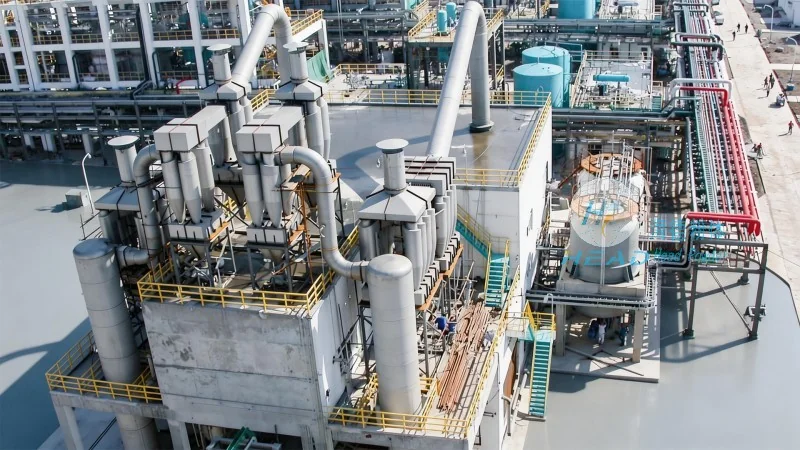
The fundamental principle relies on creating a pressure differential that moves a mixture of air and sand particles. This can be achieved through either positive pressure (blowing) or negative pressure (vacuum) methods. For dry sand, the dilute phase conveying mode is most common when handling large volumes over moderate distances, while dense phase conveying is preferred for longer distances or when particle degradation must be minimized. The choice between these modes depends on factors such as particle size, bulk density, and the required throughput rate. Industry standards, including the ISO 10628 series for piping and instrumentation, and the guidelines from the International Powder and Bulk Solids Association, provide reference frameworks for safe and efficient system design.
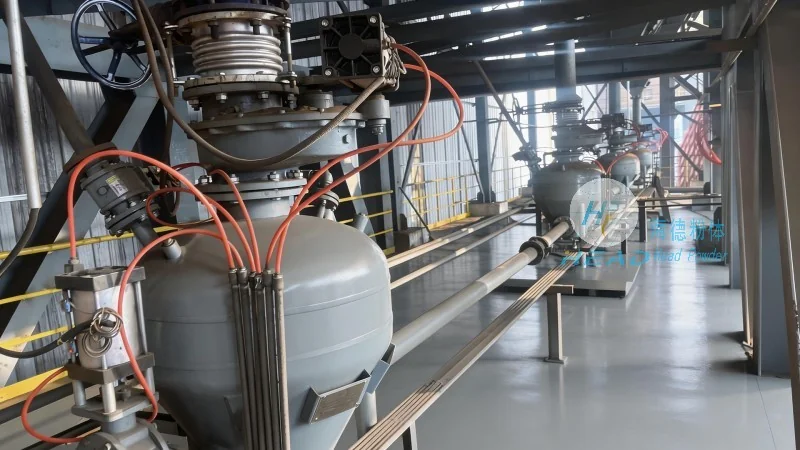
A robust dry sand pneumatic conveying system comprises several interdependent components, each selected and sized to match the specific material characteristics and operational requirements. The primary subsystems include the feeding device, the conveying line, the air mover, the separation unit, and the control system.
The feeding device, often a rotary airlock valve or a screw feeder, meters dry sand into the conveying pipeline while minimizing air leakage. For abrasive dry sand, wear-resistant materials such as hardened steel or ceramic coatings are recommended to extend service life. The conveying line itself is typically constructed from schedule 40 or schedule 80 carbon steel pipe, with pipe bends designed with large radii (at least 6 to 10 times the pipe diameter) to reduce erosive wear. In extreme applications, rubber-lined or ceramic-lined bends are used to achieve operational lifetimes exceeding 12 months without replacement.
The air mover—whether a roots blower, centrifugal fan, or compressed air system—provides the necessary pressure or vacuum to sustain the flow. For dilute phase conveying of dry sand, velocities typically range from 15 to 30 meters per second, with a pressure drop of 0.2 to 0.5 bar per 100 meters of horizontal pipe. At the receiving end, a cyclone separator combined with a baghouse filter decelerates the air-sand mixture, allowing the sand to settle while the conveying air is cleaned before release. The control system integrates pressure transmitters, flow meters, and programmable logic controllers (PLCs) to maintain consistent operation, detect blockages, and adjust parameters in real time.
Accurate design of a dry sand pneumatic conveying system requires rigorous calculation of several interdependent variables. The most critical parameters include the solid-to-air ratio (load ratio), the conveying velocity, the pressure drop across the system, and the specific energy consumption. For dry sand with a bulk density of approximately 1.5 to 1.7 metric tons per cubic meter, typical load ratios in dilute phase range from 5 to 15 kg of sand per kg of air. Higher load ratios reduce air volume requirements but increase the risk of pipeline plugging and require higher pressure capability.
Pressure drop calculations follow standard fluid dynamics principles, accounting for particle acceleration, friction losses, pipe bends, and elevation changes. Empirical correlations, such as the Barth or Hinkle models, are widely used in the industry to estimate pressure drop for sand-like materials. For a system conveying 10 tons per hour over a distance of 100 meters with a vertical lift of 15 meters, the total pressure drop typically falls between 0.3 and 0.8 bar, depending on the pipe diameter and air velocity. Modern simulation software, such as the pneumatic conveying design tools offered by several engineering firms, allows designers to model these parameters with high accuracy before fabrication.
Energy efficiency has become a major focus in system design, especially with rising electricity costs globally. Data from industry reports in 2025 indicate that well-optimized pneumatic conveying systems can achieve specific energy consumption as low as 0.03 to 0.06 kilowatt-hours per metric ton per meter of horizontal transport. headpowder has integrated these efficiency benchmarks into its design philosophy, ensuring that each system is tailored to minimize operational costs while maintaining reliable throughput.
The selection between dilute phase and dense phase conveying depends on the sand's characteristics and the project's constraints. Dilute phase systems suspend particles in a high-velocity airstream, making them suitable for moderate distances and high throughput rates. However, the high velocity accelerates pipe wear and particle attrition. For foundry sand, where grain shape and size distribution are critical for casting quality, attrition can lead to increased fines and reduced mold strength. Therefore, many foundry operations prefer dense phase conveying, where the sand moves as a moving bed at lower velocities (typically 3 to 8 m/s) under higher pressure (up to 4 bar).
Dense phase systems use a pressure vessel (blow tank) that periodically discharges sand into the pipeline. The intermittent flow nature reduces wear and energy consumption but may require more complex control logic and larger blow tanks to maintain continuous feed. Hybrid configurations, combining a dilute phase pick-up section with a dense phase main transport line, offer a compromise that can balance wear, throughput, and energy use. For applications involving abrasive silica sand with a Mohs hardness of 7, a hybrid approach can extend component life by up to 40% compared to pure dilute phase, based on field data collected from installations in the United States and Europe.
Another emerging configuration is the closed-loop system, which recirculates conveying air after filtration. This is particularly beneficial in environments where sand dust must be contained, such as in marine sandblasting operations or indoor foundries. The recirculation reduces the energy required for air conditioning or heating of make-up air, and it aligns with tightening environmental regulations around particulate emissions. Regulatory bodies in the European Union and North America have imposed stricter limits on airborne silica dust, driving demand for enclosed pneumatic systems that integrate HEPA filtration and continuous monitoring.
Dry sand is abrasive by nature, and conveying it through pipes inevitably leads to erosion. The wear rate depends on particle shape, hardness, velocity, and impingement angle. Angular particles cause more wear than rounded ones, and higher velocities exponentially accelerate erosion. Common failure points include the lower surfaces of horizontal pipes, the outer radius of bends, and the inlet area of cyclone separators. To address these challenges, system designers employ a multi-layered approach: material selection, geometric optimization, and predictive maintenance.
For pipes, using thicker walls or internally lined pipes with alumina ceramic or basalt can increase service life by three to five times over standard carbon steel. At the bends, drop-out boxes or blind tees allow sand to accumulate and form a protective layer, effectively reducing direct particle impact. In headpowder's installations, the adoption of wear-resistant elbows with replaceable ceramic tiles has demonstrated an average operational life of 18 months in sand conveying applications, compared to 6 months for standard unlined bends. Furthermore, real-time wear monitoring using ultrasonic thickness gauges or acoustic emission sensors enables operators to schedule replacements before catastrophic failures occur, minimizing downtime.
Another critical challenge is the control of moisture content. Even small amounts of moisture can cause sand to agglomerate and stick to pipe walls, leading to blockages and inconsistent flow. For pneumatic conveying of dry sand, moisture content should be maintained below 0.5% by weight. In humid climates, a pre-drying step using a fluidized bed dryer or a heated screw conveyor may be necessary. Additionally, the conveying air itself should be dried using refrigerated or desiccant dryers to prevent condensation within the pipe. headpowder's system designs incorporate moisture sensors at the feed point and dew-point monitoring in the air supply to provide real-time alerts if moisture levels exceed thresholds.
Modern dry sand pneumatic conveying systems are rarely standalone; they are integrated into larger production lines, such as sand preparation plants for green sand molding, glass batch mixing, or fracturing sand handling. This integration requires careful coordination of material flow rates, batch sequencing, and feedback control. Advanced PLC-based control systems with human-machine interfaces (HMIs) allow operators to monitor conveying pressure, air flow, motor currents, and filter differential pressure from a central location. headpowder's proprietary control software, developed over 15 years of field experience, includes adaptive tuning algorithms that automatically adjust air velocity and feeder speed based on real-time pressure readings, reducing the risk of pipeline plugging.
Data from the 2026 Global Bulk Material Handling Market Report suggests that the adoption of Industrial Internet of Things (IIoT) technologies in pneumatic conveying is growing at a compound annual rate of 12%. This includes the integration of vibration sensors on blowers and compressors, temperature monitoring on bearings, and remote diagnostic platforms that connect equipment to cloud-based analytics. For a large-scale frac sand terminal, implementing predictive maintenance through IIoT reduced unplanned downtime by 35% and extended the service interval of rotary airlock valves from 6 months to 12 months. These real-world results underscore the value of embedding intelligence into the conveying system.
The environmental impact of dry sand pneumatic conveying primarily relates to airborne dust emissions and energy consumption. In response to tightening regulations such as the U.S. OSHA silica rule (29 CFR 1910.1053) and the EU Directive 2004/37/EC on carcinogens, conveying systems must incorporate effective dust collection and containment. High-efficiency baghouse filters with a collection efficiency of 99.95% for particles at 0.5 microns are now standard in many regions. Cyclone separators often serve as a primary collector, followed by a cartridge filter to capture fugitive fines. In addition, the conveying line must be hermetically sealed, with flanged joints and rotary valve seals designed to prevent leakage.
Energy efficiency also contributes to environmental compliance by reducing the carbon footprint of operations. System designers face increasing pressure to optimize conveying parameters to minimize energy use per ton moved. For example, using variable frequency drives (VFDs) on blowers allows the system to ramp down air velocity during low-load periods, saving up to 25% in energy costs. headpowder's systems are engineered with VFDs as standard on all air movers above 37 kW, and recent projects have achieved power consumption reductions of 18% compared to legacy fixed-speed installations. The combination of efficient air movers, optimized pipe routing, and intelligent control positions these systems favorably for companies aiming to meet sustainability goals.
To illustrate the practical benefits of properly designed dry sand pneumatic conveying, consider a mid-sized foundry in the Midwest United States that produces gray iron castings using chemically bonded sand. The facility processed 80,000 tons of sand annually through a reclamation loop, but the existing mechanical bucket elevator and belt conveyor system suffered from high dust levels, frequent breakdowns, and material spillage. The company approached headpowder for a pneumatic conveying solution that could transport reclaimed sand from the attrition mill to the sand storage silos, a distance of 120 meters with a vertical lift of 25 meters.
After conducting a material analysis—including particle size distribution (typical range 0.1 to 1.0 mm), bulk density (1.6 t/m³), and angle of repose (34 degrees)—headpowder's engineering team proposed a dense phase system with a blow tank volume of 3.5 cubic meters, conveying through a schedule 80 pipe in diameter. The system was equipped with ceramic-lined bends at all turning points, a VFD-controlled roots blower, and a PLC-based control panel with remote access. The installation was completed within 6 weeks, and after startup, the system achieved a consistent throughput of 12 tons per hour with a load ratio of 20 kg sand per kg air. Dust emissions measured at the silo vent were below 1 mg/m³, well within OSHA limits. Over the first 18 months of operation, the foundry reported a 60% reduction in maintenance labor hours related to sand transport, and the wear on the blow tank and rotary valve was minimal, with only one scheduled valve seal replacement required.
Given the technical complexity and long-term financial implications of a dry sand pneumatic conveying system, selecting an experienced and reliable supplier is paramount. A qualified partner should demonstrate a deep understanding of material behavior, offer custom engineering rather than off-the-shelf solutions, and provide comprehensive after-sales support including installation, commissioning, and training. headpowder, with its dedicated team of process engineers and field service technicians, has delivered over 500 pneumatic conveying systems across 30 countries, with a focus on abrasive and difficult-to-handle materials. (咨询热线:156-6277-7102)
When evaluating potential suppliers, request references from clients with similar applications, review case studies that include performance data, and ask about the supplier's approach to wear protection and system redundancy. A well-designed system not only meets the immediate conveying needs but also accommodates future capacity expansions through modular design and control upgrades. Additionally, verify that the supplier adheres to recognized quality standards such as ISO 9001 and the relevant industry codes for pressure vessels and piping.
Looking ahead, several technological and market trends will shape the evolution of dry sand pneumatic conveying equipment. First, the push toward digital twins—virtual replicas of the physical system—will enable operators to simulate different operating scenarios, predict wear patterns, and optimize energy consumption without interrupting production. Major equipment manufacturers are already embedding sensor suites into their systems to feed data back into these digital models. Second, the development of advanced materials, such as nanotube-reinforced composites and self-healing polymers, promises to further extend component life in highly abrasive environments. Third, the integration of artificial intelligence for predictive maintenance will become more common, with machine learning algorithms analyzing vibration, temperature, and pressure data to forecast failures weeks in advance.
From a market perspective, the global pneumatic conveying system market was valued at approximately $22 billion in 2025, with the dry sand segment accounting for a significant share due to demand from the oil & gas (frac sand) and metal casting sectors. Growth is projected at an annual rate of 6.5% through 2030, driven by infrastructure development in Asia and the Middle East, and by regulatory pressure to reduce dust emissions in Europe and North America. Companies that invest in modern, efficient, and compliant systems today will gain a competitive edge in both operational cost and environmental performance.
Successful implementation of a dry sand pneumatic conveying system depends on a thorough understanding of the material, careful engineering of each component, and ongoing attention to maintenance and optimization. The initial capital investment must be weighed against the lifetime cost of operation, including energy, wear parts, and downtime. By selecting a system that balances these factors—and by partnering with a supplier like headpowder that brings experience, innovation, and a track record of reliability—operators can achieve the twin goals of high productivity and low total cost of ownership. Whether for a new greenfield plant or an upgrade of an existing facility, the principles outlined in this overview provide a framework for making informed decisions that will pay dividends for years to come.

 Shandong headpowder Engineering Co., Ltd.
 156-6277-7102(Manager Zhang)
  0531-83386006
  Jinan City, Shandong Province, China
服务热线
微信咨询
回到顶部