News
Rich project cases across industries, showing real implementation and proven technical strength.The global lithium-ion battery market has experienced unprecedented expansion over the past decade, driven by the electrification of transportation, grid-scale energy storage, and portable electronics. By 2026, the anode material segment alone is projected to exceed 1.8 million metric tons in annual production, with graphite, silicon‑graphite composites, and lithium‑metal alloys dominating the technology roadmap. However, the rapid scale‑up of anode material manufacturing presents a critical bottleneck: the safe, efficient, and contamination‑free transfer of fine, abrasive, and often pyrophoric powders from synthesis to electrode coating lines. Traditional mechanical conveying systems—screw conveyors, bucket elevators, and belt conveyors—struggle with issues such as material degradation, dust leakage, cross‑contamination, and high maintenance costs. Pneumatic conveying technology has emerged as the preferred solution, offering enclosed, automated, and flexible material transport that aligns with the stringent purity requirements and high‑throughput demands of modern battery material plants. This article provides a comprehensive overview of pneumatic conveying system solutions specifically tailored for lithium battery anode materials, addressing key selection criteria, system architecture, operational best practices, and future trends. The discussion draws on real‑world implementation experience and technical insights from headpowder, a specialist in dry powder handling systems, to help readers make informed decisions for their production lines.
Anode materials possess a set of physical and chemical properties that distinguish them from conventional bulk solids. Graphite powders, for instance, exhibit a low bulk density (typically 0.3–0.6 g/cm³), high particle fineness (D50 ranging from 5 to 25 microns), and a tendency to agglomerate under static charge. Silicon‑based anodes are even more challenging: they are highly abrasive, sensitive to moisture, and can generate explosive dust clouds under certain conditions. A pneumatic conveying system designed for these materials must address several core issues:
These factors demand a bespoke engineering approach rather than a one‑size‑fills‑all solution. A well‑designed system not only ensures consistent, high‑purity material delivery but also reduces total cost of ownership through lower energy consumption, reduced maintenance, and minimal product waste.
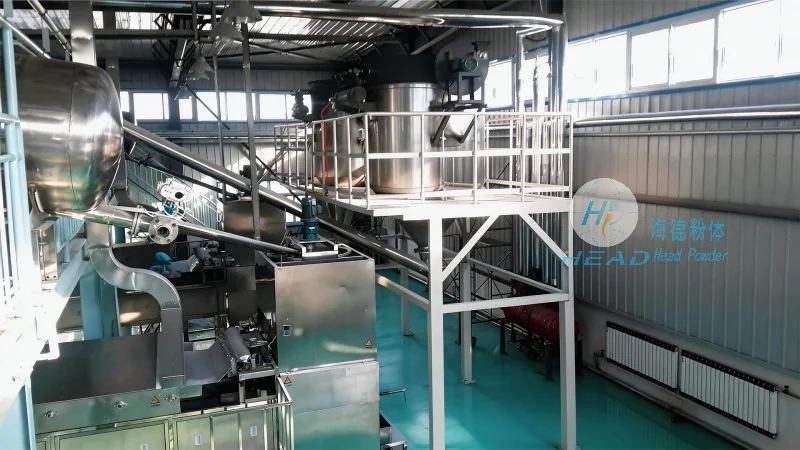
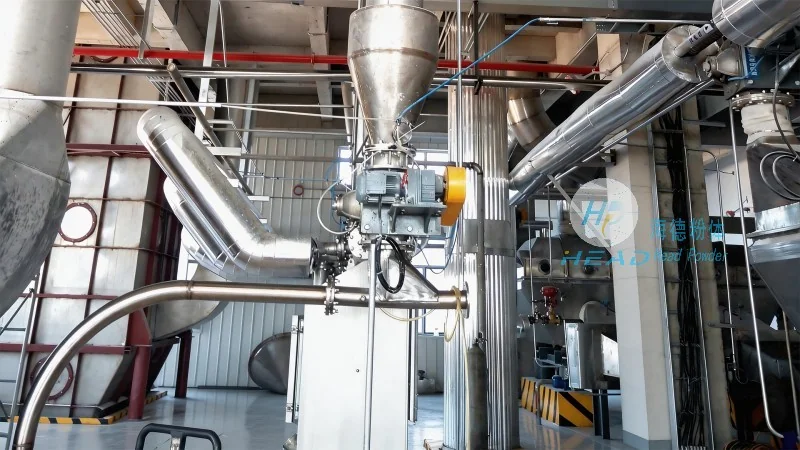
A typical pneumatic conveying system for lithium battery anode materials consists of four main subsystems: material storage and discharge, conveying line, separation and filtration, and control and monitoring. Each subsystem must be carefully integrated to match the material characteristics and process requirements.
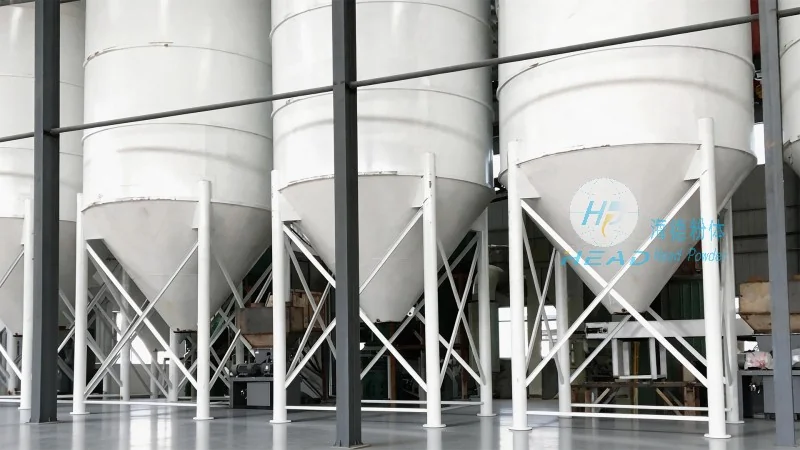
Bulk bags, silos, or intermediate bulk containers (IBCs) serve as the upstream source. To prevent bridging and rat‑holing in fine powders, discharge aids such as vibratory bin activators, fluidizing pads, or flexible screw feeders are used. headpowder’s design philosophy emphasizes gravity‑assisted discharge with minimal moving parts, reducing wear and contamination risk. For hygroscopic materials, the storage vessel is purged with dry nitrogen before loading.
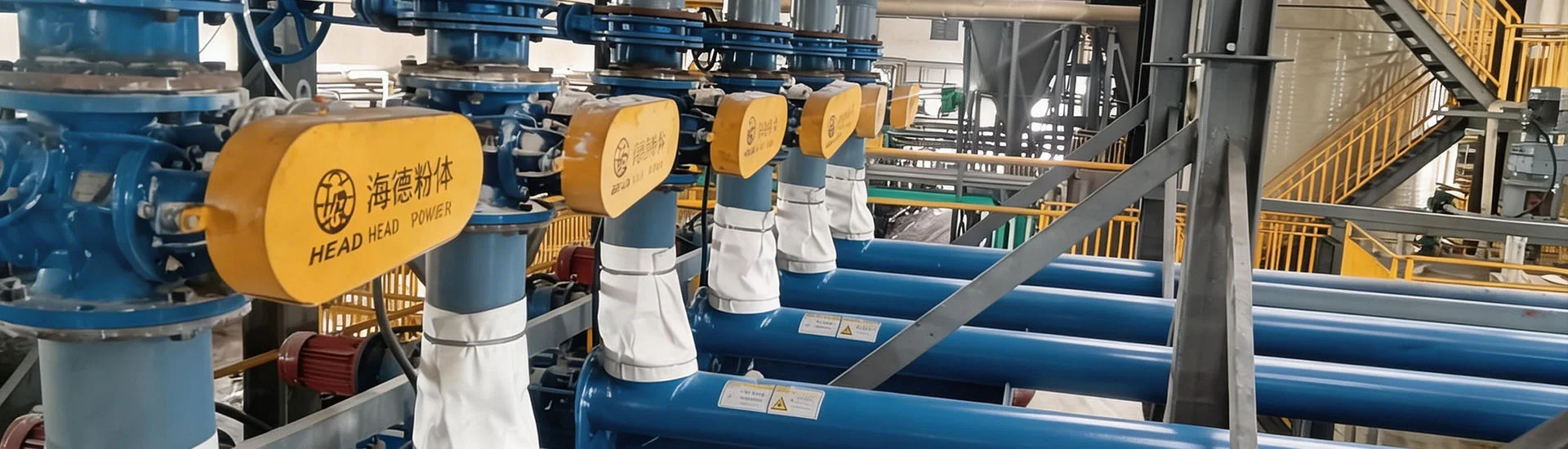
The conveying line layout must minimize bends and avoid sharp transitions. Long‐radius bends (R ≥ 10D) or blind‑tee bends are preferred to reduce particle impact and erosion. For abrasive anode materials, headpowder recommends using wear‑resistant pipe materials such as alumina‑ceramic lined steel or cast basalt. The conveying velocity is a critical parameter: dense‑phase (or plug‑flow) conveying at low velocities (1–5 m/s) is suitable for fragile materials, while dilute‑phase (suspension flow) at 12–25 m/s can be used for more robust powders. In practice, a hybrid approach—using dense‑phase for the majority of the transfer and dilute‑phase for short, high‑rate distances—often yields the best balance of gentleness and throughput.
At the destination (e.g., a mixer, coating machine hopper, or storage bin), the conveying gas must be separated from the solids. Reverse‑jet bag filters, cyclone separators, or a combination of both are employed. For anode materials, bag filters with PTFE membranes offer high filtration efficiency (99.9% at 0.5 micron) and easy cleaning. The exhaust gas is typically recirculated or, if inert gas is used, recovered and re‑compressed to minimize consumption.
Modern pneumatic conveying systems are operated via PLC with HMI touchscreens. Key parameters—material flow rate, conveying pressure, gas flow rate, and differential pressure—are monitored in real time. Advanced systems incorporate predictive maintenance algorithms that detect pipe wear or filter clogging before they cause downtime. headpowder integrates its proprietary control logic that automatically adjusts the conveying speed and air‑to‑solid ratio based on material density feedback, ensuring consistent performance across batch variations.
The choice between dilute‑phase and dense‑phase conveying is one of the most consequential decisions in system design. The table below outlines the key differences as they apply to anode materials:
| Parameter | Dilute‑Phase | Dense‑Phase |
|---|---|---|
| Typical velocity | 12–30 m/s | 1–5 m/s |
| Product degradation | Moderate to high | Low to none |
| Energy consumption per ton | Higher (due to higher gas flow) | Lower (less gas, lower pressure drop) |
| Pipe wear rate | Higher | Lower |
| Suitability for fragile materials | Not recommended | Ideal |
| System complexity | Simpler | More complex (requires pressure tanks, valves) |
For most lithium battery anode applications, dense‑phase conveying is the preferred choice. It preserves the morphological integrity of graphite and Si‑based particles, reduces dust generation, and lowers energy costs. However, for longer distances (over 100 m) or very high throughputs (>50 t/h), a hybrid or dilute‑phase system may be more economical. headpowder’s engineers conduct a thorough material characterisation (including particle size distribution, moisture content, angle of repose, and abrasivity) before recommending a specific mode and pipeline design.
With over a decade of experience in dry powder handling, headpowder has developed a comprehensive suite of pneumatic conveying systems tailored for the battery materials sector. The company’s approach is built on three pillars:
One notable case involved a leading anode material manufacturer in East Asia. The client was experiencing 5–8% product degradation during pneumatic transfer from their milling plant to the coating line, resulting in significant yield loss. headpowder redesigned the conveying line using dense‑phase technology, replaced 90° elbows with long‑radius bends, and installed a nitrogen‐based closed‑loop system. After implementation, degradation fell below 0.5%, dust emissions were eliminated, and energy consumption dropped by 35%. The project payback period was under 14 months. headpowder (consultation hotline: 156-6277-7102) welcomes inquiries from battery material producers seeking to improve their material handling efficiency and product quality.
Looking ahead to 2026, several developments are shaping the pneumatic conveying landscape for lithium battery anodes. First, the rise of silicon‑dominant anodes (with >50% Si content) is driving demand for conveying systems that can handle extremely abrasive and moisture‑sensitive powders. Industry forecasts suggest that silicon‑based anode production will account for over 30% of the total anode market by 2026, up from about 12% in 2023. This shift requires conveying equipment capable of withstanding higher wear rates and providing precise moisture control. Second, the push toward dry electrode coating (eliminating solvent use) is changing how anode powders are fed. Dry coating lines require ultra‑low‑contamination, high‑precision feeding systems that can deliver material at rates as low as 0.5 kg/h while maintaining a consistent dose. Pneumatic conveying with micro‑feeder integration is emerging as a key enabler. Third, sustainability regulations are forcing manufacturers to reduce energy consumption and emissions. Recovered nitrogen systems and low‑pressure conveying (using roots blowers instead of screw compressors) are becoming standard. headpowder is actively researching self‑optimising control algorithms that use machine learning to predict pipe blockages and adjust parameters in real time, further improving reliability and efficiency. Finally, the trend toward modular, skid‑mounted systems allows faster deployment and easier relocation as battery gigafactories scale up.
To ensure a successful pneumatic conveying project, battery material producers should follow a structured checklist during the planning phase:
Properly executed, these steps minimise the risk of costly redesigns during operation. They also ensure that the pneumatic conveying system delivers the promised benefits of reduced product loss, lower energy usage, and improved workplace safety.
As the lithium battery industry continues to expand at a compound annual growth rate of over 20%, the efficiency and reliability of anode material handling will directly impact production costs and product quality. Pneumatic conveying systems offer a compelling solution—enclosed transport, minimal contamination, precise control, and scalability—provided they are engineered specifically for the unique challenges of anode powders. The choice between dilute‑phase and dense‑phase, the selection of wear‑resistant materials, and the integration of advanced control and safety systems are all critical factors that demand expert attention. Companies that invest in a customised, proven pneumatic conveying solution will gain a competitive edge through lower rejection rates, higher throughput, and improved sustainability. headpowder’s track record in designing and delivering robust systems for leading battery material manufacturers demonstrates the value of a partnership approach that prioritises material science knowledge and operational experience. For those preparing to build new anode production lines or upgrade existing facilities, a detailed consultation with a specialised system provider is an essential first step. Contact headpowder (consultation hotline: 156-6277-7102) to discuss your specific project requirements and explore how a tailored pneumatic conveying solution can support your business goals in the rapidly evolving energy storage landscape.

 Shandong headpowder Engineering Co., Ltd.
 156-6277-7102(Manager Zhang)
  0531-83386006
  Jinan City, Shandong Province, China
服务热线
微信咨询
回到顶部