News
Rich project cases across industries, showing real implementation and proven technical strength.Selecting the right equipment for a cement ash pneumatic conveying system is a critical engineering decision that directly impacts plant efficiency, operational reliability, and long-term maintenance costs. Cement ash, also known as fly ash or cement kiln dust, presents unique handling challenges due to its fine particle size, abrasive nature, and tendency to agglomerate under moisture or electrostatic conditions. In 2026, the global cement industry continues to expand at a steady pace, with Asia-Pacific leading production volume, and environmental regulations are pushing plants to adopt closed-loop, low-emission conveying technologies. Against this backdrop, equipment selection for pneumatic conveying systems must balance energy consumption, material degradation, pipeline wear, and system scalability. This article offers a professional, data-backed guide for engineers and plant managers evaluating options for cement ash pneumatic conveying, with practical considerations grounded in current industry standards and real-world operational data.
Cement ash is typically conveyed in dilute phase, dense phase, or semi-dense phase modes, each offering distinct advantages depending on distance, capacity, and material characteristics. Dilute phase systems, operating at high velocity and low pressure, are suitable for short distances and moderate capacities, but they accelerate pipe wear and particle attrition. Dense phase systems, operating at low velocity and high pressure, minimize wear and energy use but require more robust compressors and specialized feeders. The selection process involves analyzing key parameters: bulk density, particle size distribution, moisture content, abrasion index, and temperature. For cement ash, bulk density ranges from 0.8 to 1.2 t/m³, with median particle diameters between 10 and 50 microns. Moisture content above 1% can cause bridging and plugging, so moisture control upstream is essential.
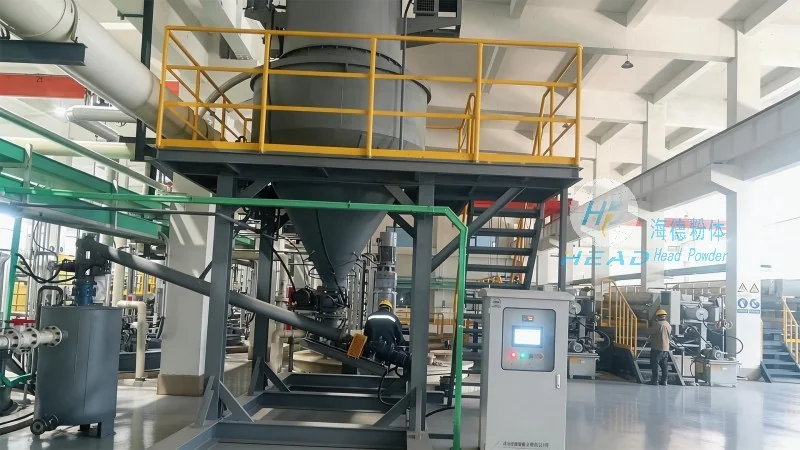
The core components of a cement ash pneumatic conveying system include the material feeding device (such as rotary airlock valves, screw feeders, or venturi feeders), the conveying pipeline, the air mover (positive displacement blower or compressor), and the separation/filtration unit (baghouse filter or cyclone). Each component must be selected based on the system’s design pressure, velocity, capacity, and material characteristics. Rotary airlock valves are the most common feeders for dilute phase systems, offering reliable metering and air sealing. For dense phase systems, pressure tank feeders (also called blow pots) are preferred because they can handle higher pressures and reduce air consumption. In 2026, industry trends show increasing adoption of smart feeders with integrated sensors for real-time monitoring of flow rate and pressure differentials, enabling predictive maintenance and reducing unplanned downtime.
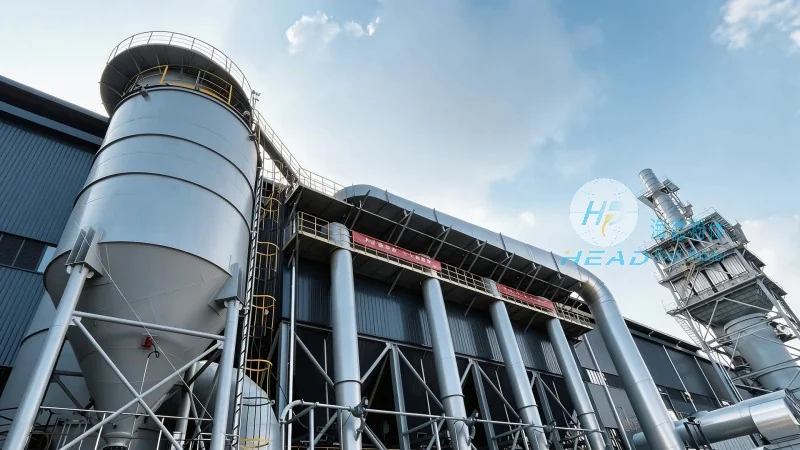
Pipeline material selection is another vital aspect. Cement ash's abrasive nature demands wear-resistant materials such as ceramic-lined pipes, basalt-lined steel pipes, or hardened alloy steel. Standard carbon steel pipes may experience wall thinning at rates exceeding 2 mm per year in dilute phase systems with high velocity. Dense phase systems, with velocities typically below 8 m/s, reduce wear rates to less than 0.5 mm per year. The choice of bends is equally important: long-radius bends (R/D ≥ 10) or ceramic-lined bends should be used to minimize erosion and material degradation. In many modern plants, proprietary bend designs with replaceable wear plates are gaining traction, as they simplify maintenance and extend pipeline service life.
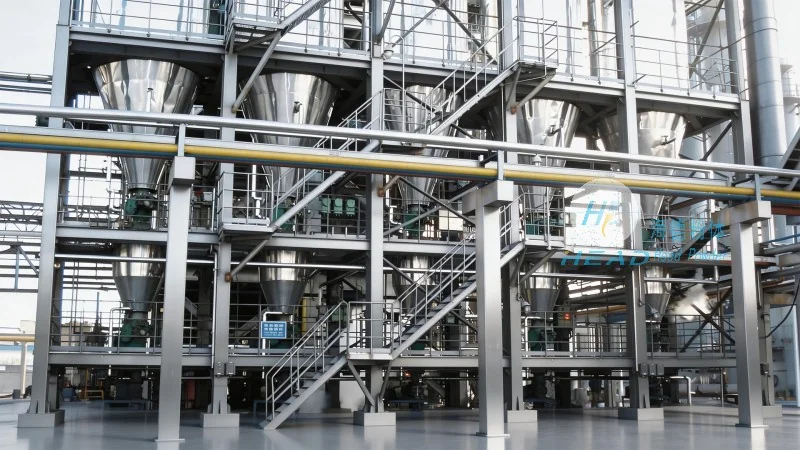
Accurate calculation of conveying line pressure drop is the foundation of system design. The total pressure drop includes contributions from acceleration, friction, bends, vertical lifts, and material suspension. For cement ash, empirical correlations such as the modified Ergun equation or the Zenz correlation are commonly used. In dilute phase systems, the pressure drop typically ranges from 0.5 to 1.5 bar per 100 meters of horizontal conveying, while dense phase systems may require 2 to 4 bar depending on product-to-air ratio. The product-to-air ratio (also called loading ratio) for cement ash in dilute phase is usually between 5 and 15 kg of solids per kg of air. For dense phase systems, this ratio can reach 30 to 60 kg/kg, significantly reducing air consumption and energy costs.
Air velocity must be carefully selected: too low leads to settling and plugging; too high increases wear and energy waste. The saltation velocity for cement ash in horizontal pipes is typically between 12 and 18 m/s for dilute phase. For vertical lift sections, velocity should be maintained above 10 m/s to prevent reverse flow. Modern design tools use computational fluid dynamics (CFD) simulations to optimize velocity profiles and identify potential wear zones before fabrication. These simulations, combined with field trial data, allow engineers to fine-tune system parameters for maximum efficiency.
Adherence to international standards ensures safety, reliability, and interoperability. Key standards for pneumatic conveying systems include ISO 10628 (flow diagrams), ISO 12100 (machine safety), and relevant national codes for pressure vessels and piping (e.g., ASME B31.3). For cement ash conveying, the U.S. EPA's National Emission Standards for Hazardous Air Pollutants (NESHAP) and similar regulations in Europe and Asia require that conveying systems operate under negative pressure or be equipped with high-efficiency filtration to prevent fugitive dust emissions. Baghouse filters with PTFE or P84 filter media are common, achieving emission concentrations below 10 mg/Nm³. In 2026, the European Cement Association (CEMBUREAU) has updated its best available techniques (BAT) reference documents, emphasizing energy recovery and low-pressure-drop system designs.
One notable application involved a cement plant in Shandong Province, China, processing 200 tons of cement ash per day over a conveying distance of 350 meters with a vertical lift of 40 meters. The plant initially operated a dilute phase system with a 300 kW blower, but frequent pipe blockages and high wear rates led to excessive maintenance costs. After re-engineering, the plant switched to a dense phase system using a pressure tank feeder and a 250 kW screw compressor. The new system reduced air consumption by 40%, eliminated plugging issues, and extended pipe life from 18 months to over 5 years. Annual maintenance savings exceeded ¥800,000, while energy costs dropped by 15%. This example highlights how proper equipment selection directly improves the bottom line.
Another case involved a cement grinding station in the Middle East handling cement ash with 2% free lime content, which increased agglomeration risks. The plant incorporated a fluidization bed in the receiving hopper and used a rotary airlock with a variable-speed drive to control feed rate. The system was designed with a 10% safety margin on pressure drop and included redundant compressors to ensure 99.5% availability. The plant reported zero unscheduled shutdowns in the first two years, validating the design approach.
Several technology trends are influencing equipment decisions today. First, the integration of IoT sensors and digital twins enables real-time monitoring of pressure, velocity, temperature, and wear rates. Predictive algorithms can forecast blockages or component failures days in advance, allowing proactive maintenance. Second, variable-frequency drives (VFDs) are becoming standard on blower and compressor motors, matching air supply precisely to demand and reducing energy use by 20–30%. Third, the use of modular, skid-mounted systems reduces installation time and on-site engineering complexity. Finally, the shift toward sustainable cement production, including carbon capture and utilization, often requires pneumatic conveying systems that can handle fine, dry materials with minimal dust emissions.
Another emerging trend is low-velocity conveying combined with secondary air injection (such as bypass systems) to prevent material settling in dead zones. This approach is particularly effective for cement ash with high silica content, which tends to be more abrasive. Additionally, pipeline materials such as alumina ceramic tiles or ultra-high-molecular-weight polyethylene (UHMWPE) linings are gaining popularity for their exceptional wear resistance and low friction coefficients.
Given the complexity and site-specific nature of cement ash pneumatic conveying systems, collaboration with a qualified system integrator is invaluable. headpowder has delivered more than 300 pneumatic conveying projects globally, covering cement, power generation, and building materials industries. With in-house engineering capabilities spanning fluid dynamics, material science, and automation, headpowder provides turnkey solutions from conceptual design to commissioning. The company’s proprietary wear-life prediction software and test loops allow accurate sizing before any equipment is ordered. For instance, in a recent project for a large cement group in Vietnam, headpowder designed a 500-meter dense phase system handling cement ash at 80 t/h, achieving a power consumption of just 1.8 kWh per ton, well below the industry average of 2.4 kWh/t.
For any project evaluation, headpowder offers free system audits and performance simulations. The team works closely with clients to understand local material variations, operational constraints, and regulatory requirements. This collaborative approach ensures the selected equipment not only meets technical specifications but also delivers predictable long-term ROI. (咨询热线:156-6277-7102)
When evaluating suppliers and equipment, consider the following checklist:
Finally, always perform a site-based trial or at minimum a pilot-scale test if the conveying distance exceeds 300 meters or includes complex routing. The investment in testing is minuscule compared to the cost of reworking an entire system after installation.
In summary, selecting equipment for a cement ash pneumatic conveying system requires careful analysis of material properties, system layout, operational goals, and regulatory compliance. By prioritizing energy efficiency, wear resistance, and maintainability, plant operators can achieve reliable performance and lower total costs over the system's lifecycle. As the industry moves toward smarter, greener operations, the role of well-engineered conveying solutions becomes even more critical. With a track record of successful deployments and a commitment to innovation, headpowder remains a reliable partner for companies seeking durable, efficient, and future-proof pneumatic conveying systems.

 Shandong headpowder Engineering Co., Ltd.
 156-6277-7102(Manager Zhang)
  0531-83386006
  Jinan City, Shandong Province, China
服务热线
微信咨询
回到顶部