News
Rich project cases across industries, showing real implementation and proven technical strength.As the global shift toward electrification and energy storage accelerates, the demand for high-purity copper oxide (CuO) in applications such as lithium-ion battery cathodes, semiconductor manufacturing, and chemical catalysis has surged significantly. By 2026, the global copper oxide market is expected to exceed USD 1.2 billion, driven by the expansion of electric vehicle production and renewable energy infrastructure. In these industrial processes, the reliable and safe handling of copper oxide powder—a fine, abrasive, and often cohesive material—poses considerable engineering challenges. Pneumatic conveying systems have become the preferred method for transporting copper oxide because of their enclosed design, precise metering capability, and flexibility in plant layout. However, selecting the right pneumatic conveying solution for a specific copper oxide production or processing line is far from straightforward. Factors such as particle morphology, moisture sensitivity, bulk density, and abrasiveness must be carefully evaluated to avoid line blockages, premature component wear, and product degradation. This article provides an in-depth technical guide for engineers and plant managers who are evaluating pneumatic conveying systems for copper oxide, focusing on solution selection criteria, system architecture, and real-world performance considerations. By understanding the interplay between material properties and conveying dynamics, users can make informed decisions that enhance operational efficiency and reduce total cost of ownership.
Copper oxide (CuO) is a black or brownish-black crystalline powder with a typical particle size ranging from 0.5 to 100 microns, depending on the production method. Its true density is around 6.3–6.4 g/cm³, making it a high-density powder compared to many other metal oxides. However, the bulk density can vary significantly from 0.8 to 2.5 g/cm³ due to particle shape, porosity, and agglomeration. The material is moderately abrasive, with a Mohs hardness of approximately 3.5–4, which accelerates wear on conveying pipelines and rotary valves if not properly addressed. Additionally, copper oxide tends to be hygroscopic in humid environments, leading to caking and flowability issues. These characteristics demand a pneumatic conveying system that can handle high solids loading, maintain low conveying velocities to minimize attrition and erosion, and provide effective dehumidification or inert gas blanketing when required. The selection process must begin with a thorough characterization of the specific copper oxide grade—whether it is nano-sized, micronized, or granular—as well as its flow function and cohesive strength. Standard tests such as the Jenike shear cell, Hausner ratio, and angle of repose are essential for predicting behavior in a conveying system.
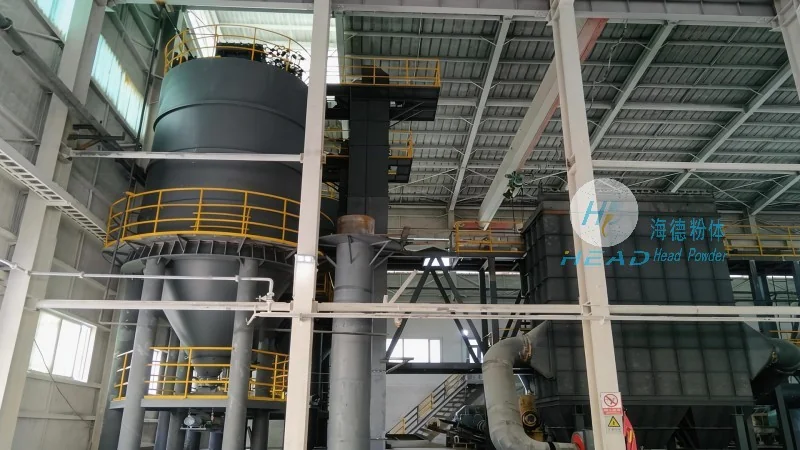
Pneumatic conveying systems are broadly classified into dilute phase, dense phase, and negative pressure (vacuum) systems. Each mode presents distinct advantages and limitations when handling copper oxide.
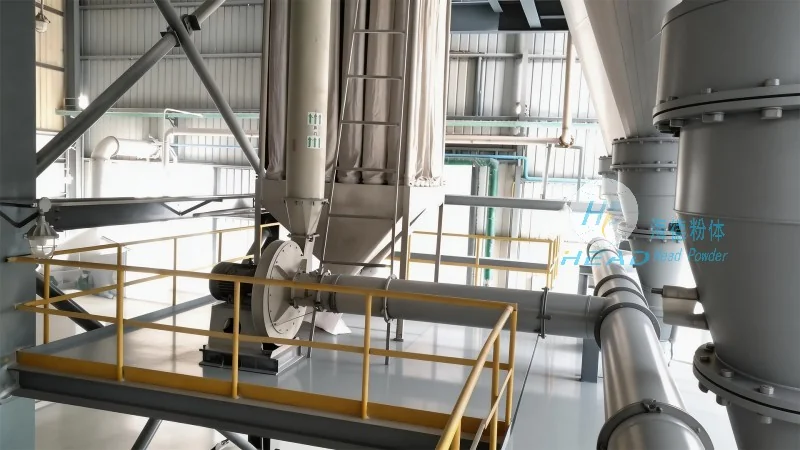
In dilute phase conveying, the powder is suspended in a high-velocity gas stream (usually 20–35 m/s). This mode is widely used for short distances and low-tonnage applications because of its simplicity and lower capital cost. However, for copper oxide, the high particle velocity can cause significant pipe erosion and particle breakage, especially when transporting irregularly shaped particles. The high gas consumption also increases energy costs and may require larger dust collection equipment. Dilute phase is generally not recommended for abrasive copper oxide unless the conveying distance is under 50 meters and the powder is coarse (over 50 microns) with low hardness.
Dense phase conveying operates at low gas velocities (1–8 m/s) while maintaining a high solids-to-gas ratio. The material moves as a plug or slug along the pipeline, reducing both wear and particle degradation. This mode is ideal for copper oxide because it minimizes abrasive contact with pipe walls and preserves particle size distribution. Dense phase systems can handle bulk densities up to 3 g/cm³ and convey over 200 meters without excessive pressure drop. They are particularly suitable for high-tonnage batching and continuous processes in battery material production. The main trade-off is higher initial system complexity, requiring specialized blow tanks, boosters, and control logic. For copper oxide with a high angle of internal friction, dense phase conveying with a fluidized moving bed design often yields the best results.
Vacuum conveying uses a pressure differential created by a vacuum pump or venturi to draw powder into a receiving vessel. It is commonly employed for unloading bulk bags, feeding multiple from a single source, or handling toxic powders where leakage must be avoided. For copper oxide, vacuum systems offer the advantage of containing dust emissions completely. However, the conveying distance and capacity are limited—typically within 30–60 meters and less than 5 tons per hour. The system's energy efficiency is lower than dense phase positive pressure systems. When copper oxide is very fine (sub-micron), vacuum conveying can suffer from filter blinding and poor material release in the receiver. A hybrid approach—combining vacuum for pick-up with dense phase for long-distance transport—is sometimes used in complex multi-stage processes.
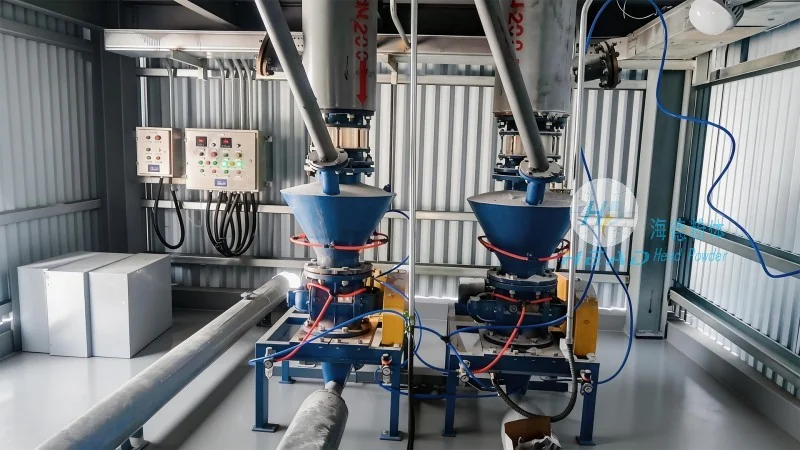
Selecting the appropriate system requires evaluating several critical parameters beyond just the conveying mode. The table below summarizes the most influential factors and their recommended ranges or considerations for copper oxide.
Every pneumatic conveying system for copper oxide must be engineered with components that withstand abrasion, prevent material accumulation, and allow for easy maintenance. The following components deserve special attention:
Rotary airlock valves are the most common feeders for dilute phase, but for copper oxide, the rotor tips and housing must be made from hardened steel or coated with tungsten carbide. However, for dense phase systems, a blow tank with a bottom discharge cone and fluidization nozzles is preferred. The blow tank should have a conical angle of at least 60 degrees to promote mass flow. A load cell arrangement on the blow tank enables precise batch weighing, which is critical for battery-grade copper oxide dosing accuracy.
Schedule 40 carbon steel pipe is standard for non-abrasive powders, but for copper oxide, schedule 80 or stainless steel pipe is recommended. Pipe bends should be long-radius (R/D > 10) or use a blind-tee design to direct wear onto a replaceable wear plate. For high-wear zones, ceramic tile lining can extend pipe life by 5–10 times. The inner surface finish should be smooth (Ra < 0.8 µm) to reduce friction and prevent powder adhesion.
Cyclone separators followed by baghouse filters are typical. For copper oxide with a mean particle size below 20 microns, high-efficiency cartridge filters with PTFE membrane media are necessary to meet emission limits of < 10 mg/Nm³. Reverse-pulse jet cleaning should be used with a differential pressure setpoint of 150–200 Pa. The receiver vessel must be equipped with a level sensor and a rotary discharge valve to maintain air lock while extracting the product.
A PLC-based control system should manage conveying parameters such as gas velocity, material flow rate, and filter cleaning cycles. For dense phase systems, the control algorithm must handle the transition between the filling, fluidization, and conveying phases. An operator interface that displays real-time mass flow, pressure profiles, and wear alerts is highly beneficial for proactive maintenance.
A leading cathode precursor manufacturer producing NMC (nickel-manganese-cobalt) materials required a system to convey 8 tons per hour of copper oxide from a vibratory mill to a blending silo 150 meters away. The copper oxide had a d50 of 8 microns, bulk density of 1.2 g/cm³, and a moisture content of 0.3%. The initial dilute phase design caused severe pipe wear and particle agglomeration within three months of operation. After a thorough analysis, headpowder (咨询热线:156-6277-7102) provided a customized dense phase solution consisting of a 2.5 m³ blow tank with fluidizing cone, a 6-inch schedule 80 stainless steel pipeline with ceramic-lined bends, and a 32-cartridge PTFE filter receiver. The system operates at a conveying velocity of 4 m/s, reducing pipe wear to negligible levels and maintaining the particle size distribution within specification. The overall energy consumption dropped by 40% compared to the previous dilute phase setup. The plant has been running continuously for 18 months with only scheduled maintenance every 6 months. This example illustrates how proper solution selection based on material properties and system configuration can significantly improve reliability and cost efficiency.
Copper oxide dust can cause respiratory irritation, so enclosed conveying is mandatory. The system should include a vacuum break valve to prevent line collapse and an emergency shutdown sequence that isolates the blow tank and vents the line to a safe location. Earthing continuity across all flanges and valves must be verified with a resistance of less than 10 ohms. Maintenance schedules should focus on inspecting pipe bends for wall thinning using ultrasonic testing every 2000 operating hours. Rotary valve clearances should be checked semi-annually; a gap increase of 0.5 mm can reduce conveying efficiency by 15%. Spare parts for wear items—such as blow tank gaskets, valve liners, and filter cartridges—should be stocked to minimize downtime. Environmentally, the system should be designed for zero fugitive emissions, with all flanges meeting API 5000 or equivalent sealing standards. Waste product collected from the filter should be recycled back into the process when possible, aligning with circular economy principles.
By 2026, several trends are reshaping copper oxide handling. The integration of Industry 4.0 sensors—such as acoustic flow detectors, non-contact particle size analyzers, and vibration monitors—enables predictive maintenance and real-time quality control. Conveying systems are increasingly paired with inert gas generators (using nitrogen or argon) to mitigate oxidation risks in ultra-pure copper oxide grades. Energy efficiency is a major focus; variable-speed drives on compressors and blowers can reduce power consumption by up to 35% compared to fixed-speed designs. Modular skid-mounted conveying units are gaining popularity for retrofitting existing plants, as they reduce installation time and allow easy capacity scaling. Moreover, the demand for closed-loop material recycling within battery gigafactories is driving the development of fully integrated conveying lines that handle both raw copper oxide and recovered fines from filter dusts. These innovations require conveying equipment manufacturers to continuously improve their engineering knowledge of copper oxide behavior. A holistic solution that combines proper material testing, advanced control algorithms, and robust mechanical design will define the market leaders in the coming years.
With decades of hands-on experience in handling abrasive and cohesive powders, headpowder has developed a proven methodology for copper oxide pneumatic conveying system selection. Every project begins with a complete material property analysis using in-house lab equipment, followed by computational fluid dynamics (CFD) simulation to predict pressure drop, wear zones, and particle velocity distribution. Our team of application engineers works closely with clients to define the exact conveying parameters—tonnage, distance, space constraints, and regulatory compliance—before proposing a system design. We offer a full range of components: blow tanks, rotary valves, pipe bends with replaceable wear liners, and advanced filter receivers, all sourced from ISO 9001-certified partners. Our after-sales support includes on-site commissioning, operator training, and a 24-month warranty on all conveying lines. A recent 2025 project for a copper oxide supplier in Southeast Asia achieved a 98.7% system availability over two years with zero unscheduled downtime. By focusing on data-driven customization, headpowder ensures that each conveying solution not only meets current production needs but also adapts to future process changes. For a detailed assessment of your copper oxide conveying requirements, contact our engineering team to begin the solution selection process.
Selecting a pneumatic conveying system for copper oxide is a multi-dimensional decision that hinges on accurate material characterization, understanding of conveying dynamics, and alignment with operational targets. Dense phase conveying, with its low velocity and high material-to-gas ratio, consistently proves to be the most reliable choice for copper oxide grades that are fine, abrasive, or cohesive. Dilute phase may still be acceptable for coarse products and short distances, provided that wear protection is sufficiently robust. Vacuum systems serve niche applications where containment is paramount but capacity is limited. Beyond the conveying mode, careful component selection—especially for feeders, pipelines, and filtration—determines the long-term economic viability of the installation. The 2026 market landscape demands systems that are not only efficient but also smart, safe, and sustainable. By partnering with a specialized solution provider like headpowder, plant operators gain access to deep technical expertise, proven reference installations, and a commitment to delivering measurable results. Whether you are upgrading an existing line or designing a new facility, the principles outlined in this article will help you evaluate vendor proposals, ask the right questions, and ultimately commission a system that maximizes your copper oxide handling productivity. For further consultation, reach out to the headpowder team and take the first step toward an optimized conveying process. (咨询热线:156-6277-7102)

 Shandong headpowder Engineering Co., Ltd.
 156-6277-7102(Manager Zhang)
  0531-83386006
  Jinan City, Shandong Province, China
服务热线
微信咨询
回到顶部