News
Rich project cases across industries, showing real implementation and proven technical strength.Salt, as a bulk material widely used in food processing, chemical manufacturing, water treatment, and de-icing applications, presents unique handling difficulties due to its hygroscopic nature, crystalline structure, and tendency to cake or bridge. Traditional mechanical conveying methods—such as belt conveyors or bucket elevators—often lead to dust emissions, product degradation, and equipment corrosion. Pneumatic conveying has emerged as the preferred technical solution for salt handling, offering enclosed transport, reduced maintenance, and improved product integrity. However, designing a reliable salt pneumatic conveying system requires deep understanding of material flow behavior, particle size distribution, moisture sensitivity, and abrasion resistance. A well-engineered solution must address three fundamental operational risks: moisture-induced blockages, pipe wear from abrasive salt crystals, and electrostatic accumulation that can compromise safety. The industry is increasingly adopting closed-loop systems with nitrogen purging or dehumidified air to mitigate these risks, especially in facilities where salt is stored or processed in humid environments. According to market analysis conducted in early 2026, the global pneumatic conveying equipment market for hygroscopic materials is projected to grow at a compound annual growth rate of 5.8%, driven by stricter workplace safety regulations and the demand for automated, dust-free handling. This makes investing in a robust technical solution not just an operational need but a strategic advantage for salt producers and end-users alike.
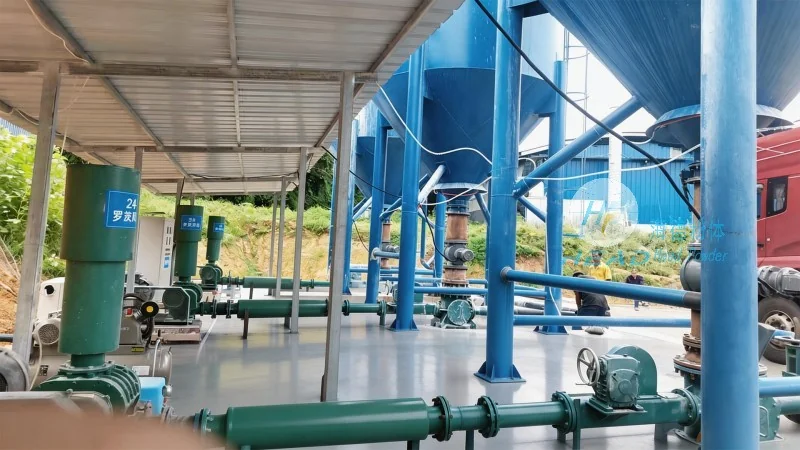
A complete salt pneumatic conveying system typically comprises several interdependent modules: the material feeding device, the conveying pipeline, the air mover (positive displacement blower or compressor), the separation unit (cyclone or bag filter), and the control system. Each component must be selected and sized according to the specific physical and chemical properties of the salt being handled. For instance, fine-grade vacuum salt with particle sizes below 200 mesh exhibits high dust generation and requires gentle conveying velocities around 8–12 m/s to prevent particle attrition. Conversely, coarse rock salt with particle sizes above 5 mm demands higher air velocities (18–25 m/s) and reinforced piping with wear-resistant liners such as ceramic tiles or hardened steel. The feeding device is often the most critical part; rotary airlocks with proprietary sealing mechanisms are widely used to minimize air leakage while preventing salt build-up. Some advanced systems incorporate vibratory feeders with variable frequency drives to ensure a consistent material flow rate, especially when dealing with salt that has been stored for extended periods and may have consolidated. The pipeline layout should avoid sharp bends; long-radius elbows with replaceable wear backs are recommended to extend service life. In terms of air handling, the use of dry air with dew point below −20°C is strongly advised to prevent moisture condensation inside the pipeline, which can instantly trigger caking and blockages. HeatPoint Technology (headpowder) has developed a proprietary online moisture monitoring module that can be integrated into the conveying line, providing real-time data to adjust air conditions before problems occur.
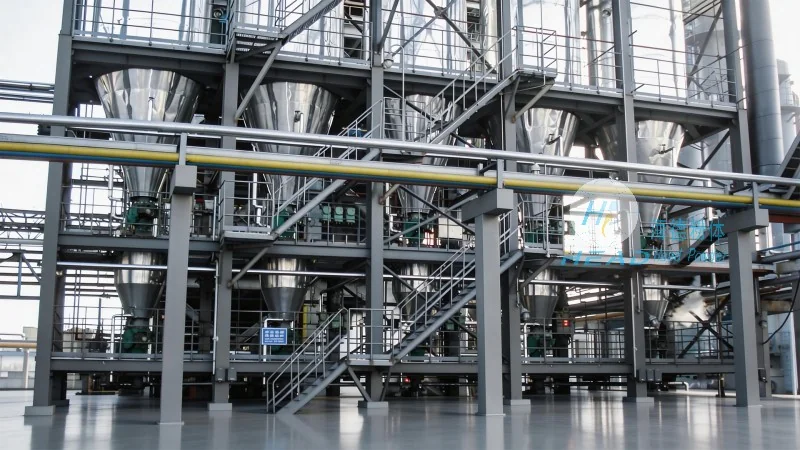
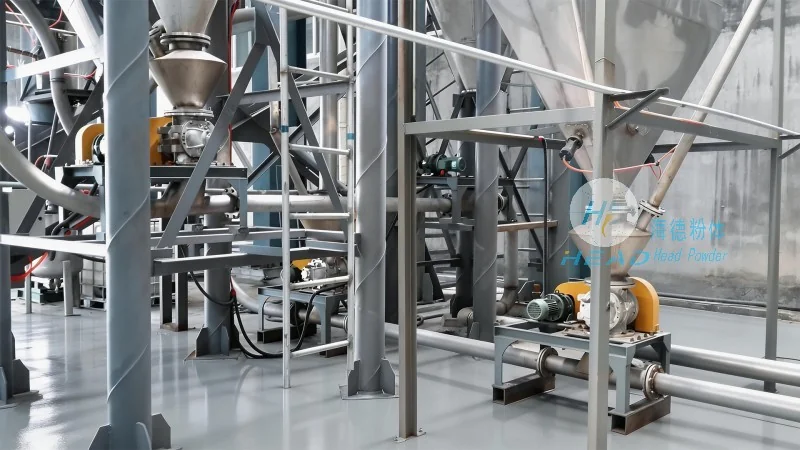
Choosing between dilute phase and dense phase pneumatic conveying is a pivotal decision that affects capital expenditure, energy consumption, and product quality. Dilute phase conveying, where salt particles are suspended in a high-velocity air stream (typically 15–30 m/s), is suitable for short distances and low-capacity applications. It is simple in design and lower in initial cost, but can cause significant particle degradation and pipe wear. For many salt processors, especially those handling food-grade salt where crystal shape and size are quality parameters, dilute phase is not ideal. Dense phase conveying, on the other hand, moves salt at low velocity (3–8 m/s) in a fluidized slug or plug form, using high-pressure air pulses. This approach drastically reduces attrition and energy consumption, and is better suited for long distances (up to 300 meters or more) and high throughput (up to 50 tons per hour). However, dense phase systems require more sophisticated pressure control and air management. A well-designed dense phase solution for salt can achieve a product-to-air ratio of 30:1 or higher, compared to 5:1 to 10:1 in dilute phase. Industry standards such as ASTM D1071-17 provide guidelines for testing pneumatic conveying performance, but real-world salt characteristics often demand customized engineering. headpowder has implemented dense phase systems for several sodium chloride and potassium chloride applications, achieving less than 0.5% fines generation and near-zero pipeline blockages over 24-month operational periods. For de-icing salt used in winter road maintenance, where high throughput and low cost dominate, dilute phase with heavy-duty pipe wall thickness (Schedule 80 or greater) remains a viable option, but the trend is shifting toward hybrid systems that combine dilute phase for short transfer and dense phase for long-distance or vertical lifts.
Salt is inherently corrosive to carbon steel, especially in the presence of moisture. Even seemingly dry salt can contain residual moisture that becomes liberated during pneumatic transport due to friction heat. The resulting chloride-rich environment accelerates degradation of pipelines, fittings, and support structures. To combat this, leading system designers specify 304L or 316L stainless steel for all salt-contact surfaces. In high-humidity regions or for salt with magnesium chloride content, duplex stainless steel (e.g., 2205) may be employed for its superior pitting resistance. Another effective strategy is the application of internal coatings such as epoxy or PTFE linings, which create a smooth, non-stick surface that also reduces friction and prevents salt adhesion. headpowder’s engineering team has validated a dual-layer coating system that combines a zinc-rich primer with a high-build epoxy topcoat, achieving a dry film thickness of 450–500 microns and extending pipe lifespan by 3–5 times compared to uncoated carbon steel in accelerated corrosion tests. For the air mover, closed-coupled Roots-type blowers with corrosion-resistant rotors are standard, while the rotary airlock blades can be made from nylon or polyurethane to avoid galling against metallic housings. The control system enclosures must meet NEMA 4X or IP66 ratings to withstand washdown environments typical in salt processing plants. Additionally, all pipeline joints should be sealed with food-grade silicone gaskets or O-rings to prevent moisture ingress from the outside.
Modern salt pneumatic conveying systems rely heavily on advanced control logic to maintain stability and prevent unplanned downtime. Programmable logic controllers (PLCs) with human-machine interfaces (HMIs) are used to regulate air velocity, material feed rate, and filter cleaning cycles. In dense phase systems, the control algorithm must detect plug formation and adjust pulse frequency and pressure accordingly. headpowder integrates an adaptive flow control algorithm that learns the characteristic pressure curves of each salt type and automatically tunes parameters for optimal performance. The system also features real-time vibration monitoring at critical bends and receiver vessels to predict wear before failure occurs. For facilities that handle multiple salt grades, quick-change filter cartridges and automatic diverter valves enable product switching without cross-contamination. In 2025, the first salt conveying system with a fully digital twin capability was commissioned, allowing operators to simulate conveying behavior and optimize energy consumption before changing material properties. headpowder offers this as an optional module for clients requiring highest reliability. The user interface displays key performance indicators such as specific energy consumption (kWh/ton), line loading ratio, and filter differential pressure, empowering maintenance teams to implement predictive rather than reactive strategies. Integration with plant-level supervisory control and data acquisition (SCADA) systems is standard, and all data can be exported for continuous improvement analysis.
A major chlor-alkali producer in Southeast Asia faced severe caking issues with its vacuum salt conveying system, resulting in an average of three unscheduled shutdowns per month and an annual loss of over 220 tons of material. The existing dilute phase system used ambient air with no dehumidification, leading to moisture absorption during the monsoon season. headpowder conducted a full site audit, including particle size analysis (D90 = 180 μm), moisture content measurement (up to 0.12% by weight after storage), and pipeline pressure drop modeling. The recommended solution replaced the existing blower with a water-cooled rotary screw compressor providing dry air at 5 bar gauge and −30°C dew point. A dense phase conveying configuration was adopted with a 6-inch diameter stainless steel pipeline and ceramic-lined bends. The rotary airlock was upgraded to a proprietary design with a slotted rotor and purge gas injection to prevent salt accumulation at the sealing faces. After commissioning, the system achieved 15 tons per hour continuous operation with less than 0.1% product degradation. Downtime due to blockages dropped to zero in the first 12 months, and energy consumption decreased by 38% compared to the previous system. The plant’s maintenance manager reported that the payback period was under 14 months, driven primarily by reduced material loss and lower labor costs for cleanouts. This case illustrates how a tailored technical approach—combining proper air drying, phase selection, and component customization—can transform salt handling operations.
Looking ahead to 2027 and beyond, the salt pneumatic conveying industry is converging toward smart, sustainable designs that align with ISO 14000 environmental management standards and emerging local regulations. One prominent trend is the use of variable-speed drives on blowers and compressors to match energy consumption precisely with actual demand, which can reduce energy costs by up to 35% in partial-load conditions. Another development is the incorporation of electrostatic dissipative materials in filter housings and pipelines to mitigate explosion risks, especially for fine salt dust with low minimum ignition energy. In the European Union, ATEX 2014/34/EU directives now require that any conveying system handling combustible dust—and certain grades of salt can produce combustible clouds—must undergo a documented risk assessment and implement appropriate grounding and bonding measures. headpowder has designed its systems to comply with both ATEX and NFPA 652 standards, offering integrated grounding monitoring that alerts operators if continuity is broken. The market is also seeing increased demand for mobile pneumatic conveying units that can be moved between silos or to different production lines, providing flexibility for seasonal salt production. With the global salt production exceeding 300 million tons annually, the need for reliable, efficient, and environmentally responsible conveying technology has never been greater. Companies that invest in advanced pneumatic solutions today will gain a competitive edge in operational costs, product quality, and regulatory compliance.
With over a decade of dedicated engineering in pneumatic conveying of hygroscopic and abrasive materials, headpowder brings a combination of technical depth, field-proven components, and a commitment to delivering real-world results. Every system begins with a thorough material characterization using a dedicated test facility capable of simulating industrial conveying conditions. Our engineers analyze flowability, angle of repose, compressibility, and electrostatic charge generation to ensure the design matches your specific salt grade—whether it is solar salt, rock salt, purified vacuum salt, or a customized blend. We offer turnkey solutions from conceptual layout and pipe routing to commissioning and operator training. Our after‑sales support includes remote diagnostics, spare parts optimization, and annual performance audits. For more information on how a properly designed salt pneumatic conveying system can reduce your total cost of ownership and improve workplace safety, please contact us at 156-6277-7102. headpowder looks forward to collaborating with your team to develop a solution that meets both your current production targets and future scalability requirements.

 Shandong headpowder Engineering Co., Ltd.
 156-6277-7102(Manager Zhang)
  0531-83386006
  Jinan City, Shandong Province, China
服务热线
微信咨询
回到顶部