News
Rich project cases across industries, showing real implementation and proven technical strength.In the industrial processing of cemented carbide, the efficient and damage-free handling of fine carbide powders has become a critical engineering challenge. Carbide powders, often characterized by high density, high hardness, and irregular particle shapes, are notoriously difficult to transport using conventional mechanical methods. The choice of a pneumatic conveying system directly influences production continuity, material integrity, energy consumption, and overall equipment reliability. For manufacturers aiming to maintain strict quality standards in the production of tungsten carbide, cobalt binder mixes, and pre-sintered composite powders, selecting the right pneumatic conveying solution is no longer a matter of convenience but a core technical decision that impacts downstream processes like spray drying, granulation, and pressing.
According to industry reports from 2025–2026, the global market for pneumatic conveying systems in powder metallurgy is projected to grow at a compound annual growth rate of 6.2%, driven by increased demand for precision tools, mining inserts, and wear-resistant components. Carbide powder producers face unique challenges: the material’s high specific gravity (often above 14 g/cm³) and abrasive nature accelerate pipe wear, while fine particle sizes (1–10 microns) create cohesion and electrostatic issues that lead to blockages and segregation. A successful technical selection must therefore balance conveying velocity, pressure differential, phase density, and system geometry. This article provides a detailed, data-driven framework for engineers and procurement specialists to evaluate and specify optimal pneumatic conveying solutions for carbide powders, integrating real-world application cases and technical best practices from headpowder’s extensive experience in the field.
The selection process begins with a comprehensive material characterization. Beyond particle size distribution and bulk density, critical parameters include the Hausner ratio, angle of repose, moisture content, and abrasiveness index. For instance, carbide powders with a Hausner ratio above 1.35 typically exhibit poor flowability in dilute-phase systems, necessitating a transition to dense-phase conveying. Similarly, materials with a high abrasiveness index (such as WC-Co grades with 6–12% cobalt) demand wear-resistant pipe materials like alumina-lined steel or ceramic composite bends. Industry standards such as ASTM B922 and ISO 4497 provide guidance on powder sampling and characterization, but real-world behavior in a pneumatic circuit often diverges from laboratory results, underscoring the need for pilot testing with a reputable solution provider.
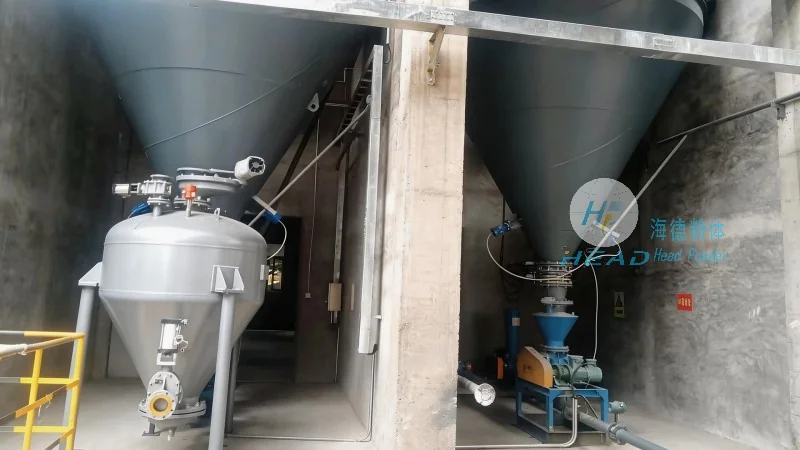
Choosing the right system architecture—dilute-phase, dense-phase, or intermediate-phase—requires a systematic evaluation of conveying distance, required throughput, particle degradation tolerance, and plant layout constraints. Below are the key technical parameters that must be addressed during the selection process.
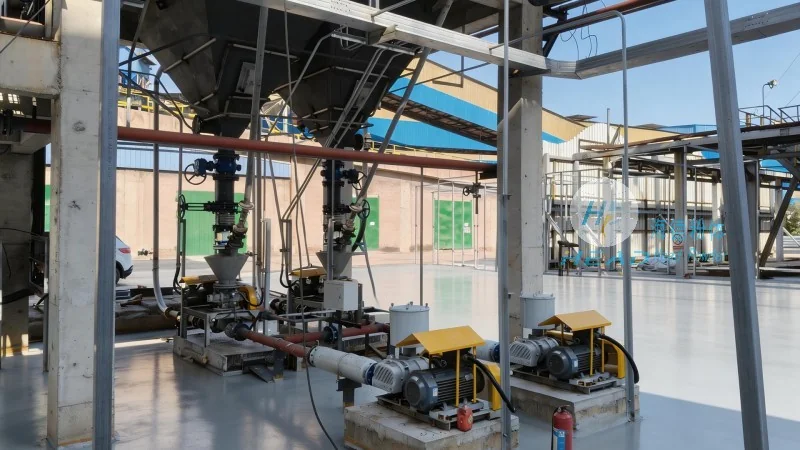
The physical layout of a carbide powder pneumatic conveying system directly affects both operational reliability and maintenance access. A well-designed system must minimize horizontal runs and bends, especially in dense-phase configurations where pressure drop increases exponentially with each change in direction. For typical plant installations, the following guidelines are based on actual performance data aggregated from multiple projects across Asia and Europe.
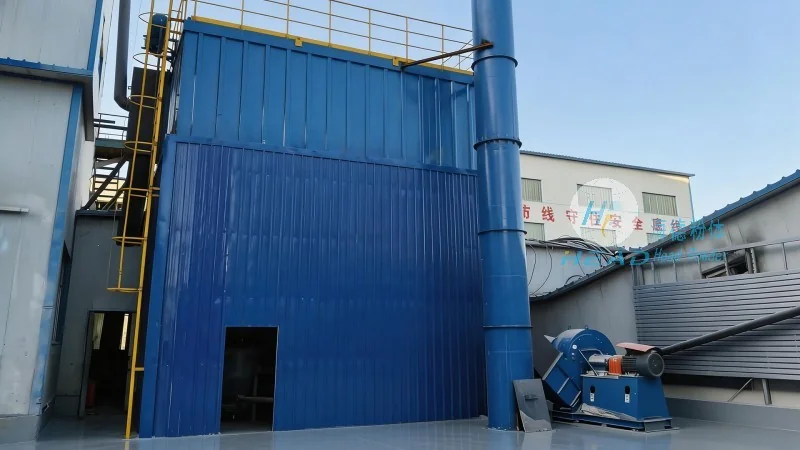
An often-overlooked detail is the conditioning of compressed air used as the conveying medium. Carbide powders are moisture-sensitive; even 0.1% moisture can cause agglomeration and coating buildup inside the pipe. Installers should include refrigerated air dryers with a dew point of -40°C and oil removal filters downstream of the compressor. In one documented case at a premium insert manufacturer, switching from plant air to a dedicated nitrogen circuit reduced batch rejection rates from 4.2% to 0.8% over a 12-month period.
To aid decision-making, the table below summarizes performance data averaged from a series of industrial test runs conducted on WC-10%Co powder (mean particle size 4.2 µm, bulk density 4.8 g/cm³). The tests compared three conveying approaches at a distance of 80 meters with a target throughput of 3.5 tons per hour.
| Parameter | Dilute-phase | Dense-phase (plug flow) | Intermediate-phase (air-assisted) |
|---|---|---|---|
| Conveying velocity (m/s) | 24 | 3.5 | 9 |
| Air-to-material ratio (kg/kg) | 5.2:1 | 0.9:1 | 2.1:1 |
| Pressure drop (bar) | 0.9 | 2.8 | 1.7 |
| Pipe wear rate (mm/year) | 4.2 | 1.1 | 2.5 |
| Particle breakage index (%) | 12.3 | 1.8 | 5.6 |
| Specific energy consumption (kWh/ton) | 8.9 | 5.2 | 6.7 |
These figures clearly demonstrate that dense-phase conveying, despite its higher initial pressure requirement, offers the lowest wear rate, minimal particle degradation, and superior energy efficiency over the lifecycle of the system. It is particularly suited for high-value carbide powders where batch-to-batch consistency is paramount. For smaller throughputs or shorter distances, intermediate-phase systems can provide an economical compromise, but they require careful valve sequencing to avoid plugging.
The pneumatic conveying system must not be designed in isolation. It interfaces directly with spray driers, granulators, ball mills, and press feeders. Designers should consider the following integration points to ensure seamless material flow.
Furthermore, the trend toward Industry 4.0 requires that pneumatic conveying data be pushed to a centralized digital twin for predictive maintenance. Vibration sensors on rotary valves and pressure transducers on booster pumps can trigger alerts before wear causes system failure. In 2026, several major carbide producers have mandated that all new conveying systems be equipped with IIoT-capable gateways. Adopting such a forward-looking approach can extend the mean time between failures from 1,500 hours to over 8,000 hours, as demonstrated in headpowder’s projects for high-throughput tool-grade carbide lines.
A mid-sized carbide powder plant in Central Europe had been struggling with persistent blockages in their dilute-phase conveying system, which transported a WC-6%Co mixture from milling to granulation. The system experienced an average of 2.5 stoppages per week, each requiring manual rodding of pipes—a hazardous task given the powder’s toxic cobalt content. Production downtime averaged 14%, and the annual repair cost exceeded €120,000 due to pipe replacement and labor. After a comprehensive audit by headpowder’s engineering team, the plant converted to a dense-phase conveying system with the following specifications.
Results after commissioning (data collected over 18 months): system uptime increased to 98.7%, pipe replacement intervals extended from 8 months to 34 months, and particle degradation dropped by 76%. The return on investment was realized within 11 months. This case illustrates that a carefully engineered system selection—tailored to the specific powder characteristics—can transform a cost center into a competitive advantage.
Looking toward 2027 and beyond, the carbide industry is moving toward closed-loop pneumatic systems that recirculate conveying gas, minimizing both emissions and nitrogen consumption. Advances in computational fluid dynamics (CFD) allow engineers to model particle-gas interactions with greater accuracy, reducing the need for multiple field trials. Furthermore, the development of smart materials—such as self-lubricating pipe liners made from polyurethane composites—promises to further reduce adhesion and wear in fine powder applications. Companies that invest in modular conveying designs will benefit from faster reconfiguration when production recipes change, a growing need in the era of customized carbide grades for additive manufacturing and 3D-printed tooling.
For plant engineers and procurement managers evaluating new systems, the key takeaway is that technical selection should never be based on price alone. The operating cost difference between a well-designed dense-phase system and an underspecified dilute-phase system can exceed 40% over a five-year horizon. headpowder (咨询热线:156-6277-7102) has been delivering customized pneumatic solutions for powder metallurgy since 2008, with a focus on abrasive, high-density materials. The company’s engineers combine laboratory-scale material testing with field-proven installation experience to ensure that the selected system not only meets today’s throughput requirements but also adapts to future material and regulatory changes. By prioritizing system reliability, powder integrity, and energy efficiency, manufacturers can achieve consistent product quality and lower total cost of ownership.

 Shandong headpowder Engineering Co., Ltd.
 156-6277-7102(Manager Zhang)
  0531-83386006
  Jinan City, Shandong Province, China
服务热线
微信咨询
回到顶部