News
Rich project cases across industries, showing real implementation and proven technical strength.The global grain processing industry has entered a phase of rapid transformation, driven by increasing automation demands, stricter hygiene standards, and the need for higher energy efficiency. By 2026, the market for pneumatic conveying systems in the rice and flour sectors is projected to exceed USD 3.8 billion, with a compound annual growth rate of approximately 6.2%. This growth is fueled by the shift from manual or mechanical conveying to enclosed, dust-free, and low-maintenance pneumatic solutions. Rice and flour mills are under pressure to reduce product loss, prevent cross-contamination, and improve overall equipment effectiveness (OEE). Pneumatic conveying systems, which use air pressure or vacuum to transport bulk solids through pipelines, have become the preferred technology for handling both raw grains and finished powders. Compared to traditional bucket elevators or screw conveyors, pneumatic systems offer significant advantages in terms of flexibility, cleanliness, and gentleness of handling—critical for preserving the quality of fragile rice grains and low-moisture flour.
However, designing an optimized pneumatic conveying system for these specific materials requires deep domain knowledge. Rice grains are free-flowing but can break under excessive velocity, while flour is cohesive, hygroscopic, and extremely explosive when airborne. A generic system often leads to pipeline blockages, high energy consumption, or product degradation. This is where specialized engineering becomes essential. headpowder, as a professional solution provider, has accumulated extensive experience in tailoring rice and flour pneumatic conveying equipment to actual production conditions. In the following sections, we will explore the core technology, system architecture, key parameters, and real-world deployment strategies that define a high-performance pneumatic conveying system for these staple food materials.
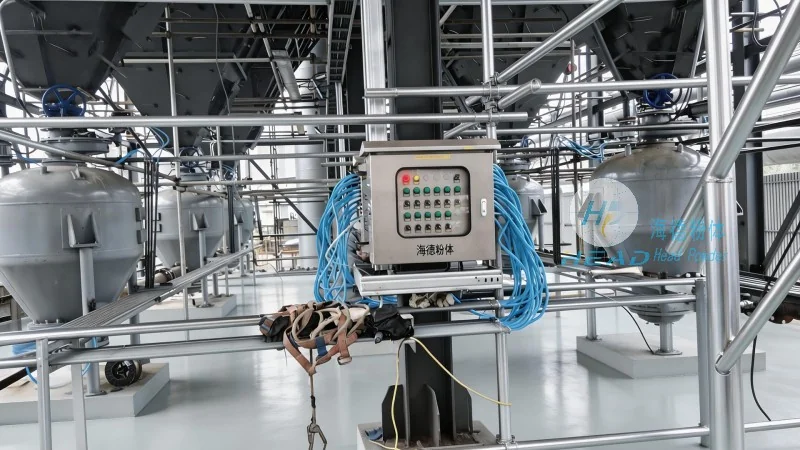
Pneumatic conveying can be broadly classified into two primary modes: dilute phase and dense phase. Understanding the difference is crucial for making the right selection for rice and flour applications.
In practice, many rice mills combine both modes: dilute phase for paddy or rough rice from silos to debranning machines, and dense phase for finished white rice to packaging stations. Flour mills almost exclusively use dense phase or lean-phase (a middle ground) to preserve gluten structure and avoid heat generation that can damage starch. headpowder's engineering team applies computational fluid dynamics (CFD) simulation to confirm the optimal mode for each specific product and layout, ensuring that the conveying air velocity stays below the material's critical impact speed.
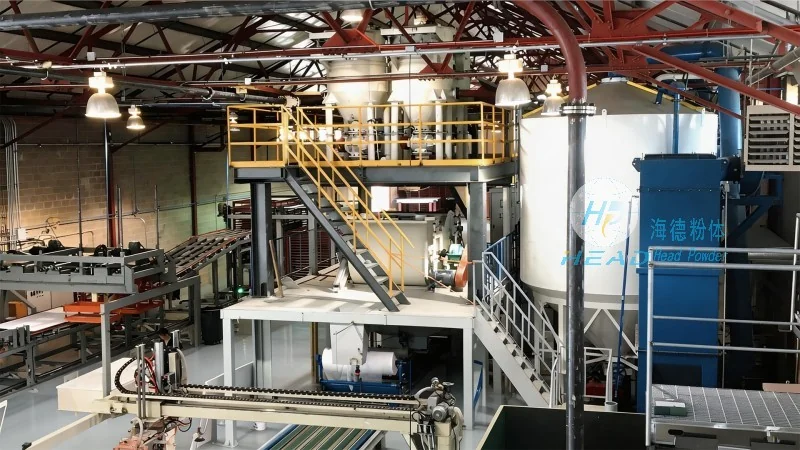
A complete rice and flour pneumatic conveying system solution comprises several interconnected modules. Each component must be selected and sized with precision to match the material properties and throughput requirements.
The air source is the heart of the system. For dilute phase, centrifugal fans or Roots blowers are common, offering moderate pressure (up to 1 bar). Dense phase systems require rotary screw compressors or high-pressure blowers capable of delivering up to 3–4 bar. Energy consumption here can account for 30–50% of total system operating cost, so variable frequency drives (VFDs) are highly recommended to adjust airflow to actual load. headpowder integrates energy-efficient blowers with intelligent control logic, reducing power usage by up to 25% compared to conventional fixed-speed designs.
Rotary airlock valves or screw feeders are used to introduce material into the conveying line while preventing air leakage. For flour, a special double-dump valve or pneumatic blow-tank is often employed to handle the cohesive nature of the powder without bridging. Rice grains, being larger and more uniform, can be metered using adjustable rotary valves with hardened rotors. headpowder's feeding systems incorporate wear-resistant coatings (e.g., tungsten carbide) for extended service life in abrasive applications.
Pipeline diameter, material, and bend radius directly affect pressure drop and product quality. Standard carbon steel pipes with a wall thickness of 4–6 mm suffice for rice, but flour lines often require stainless steel (304 or 316L) to meet food safety standards and prevent corrosion from moisture absorption. Long-radius bends (R ≥ 8× pipe diameter) reduce impact forces, while wear-back bends with ceramic lining can withstand abrasive rice husk particles. headpowder provides custom pipe routing with minimal bends to maintain optimum flow and easy cleaning.
At the discharge end, cyclones and bag filters separate the product from the air stream. For flour, high-efficiency cartridge filters with HEPA-grade elements capture submicron dust, ensuring compliance with OSHA and ATEX dust explosion directives. Rice systems may use a simple cyclone followed by a rotary sieve to remove broken grains. headpowder's filter designs include pulse-jet cleaning mechanisms that reduce filter cake build-up and maintain consistent pressure drop.
Modern pneumatic conveying is not a "set and forget" technology. PLC-based control with HMI touchscreens enables real-time monitoring of material flow rate, air pressure, temperature, and filter differential pressure. Advanced systems can automatically adjust blow-tank discharge cycles or air velocity based on feedback from load cells and pressure transmitters. headpowder's proprietary control software includes predictive maintenance alerts and remote monitoring capabilities, which have been proven to reduce unplanned downtime by 35% in a recent flour mill installation in Southeast Asia.
Specifying the correct pneumatic conveying system requires a thorough analysis of multiple variables. The following parameters must be precisely determined through material testing and line calculations:
headpowder offers on-site material testing using a dedicated lab-scale conveying loop, generating accurate pressure drop models and energy consumption forecasts before any equipment is built. This data-driven approach has helped clients avoid costly over-specification or under-performance. For example, a large flour milling group in the Middle East reduced their initial capital expenditure by 18% after headpowder's analysis revealed that a lower-pressure dense phase system could handle their 120 t/day feedstock with greater reliability than the originally proposed high-pressure design.
In a recent project for a integrated rice processing plant in Vietnam, headpowder designed and installed a complete pneumatic conveying system covering paddy intake, husk removal, whitening, and finished rice packaging. The system conveyed 8 tons of paddy per hour over 180 meters using dilute phase from the silos to the huller, then switched to dense phase for white rice to the packing station. The client reported a 40% reduction in broken rice percentage compared to their previous mechanical conveyor system, and electricity consumption dropped by 30% due to optimized blower control. The system has been running continuously for 18 months with zero blockages.
For a flour manufacturer in Germany, headpowder implemented a closed-loop pneumatic conveying network for five different flour grades (from cake flour to high-gluten bread flour). The challenge was to minimize cross-contamination during grade changes. headpowder installed divert valves with integrated purging cycles and a centralized clean-in-place (CIP) system using compressed air. The result: grade changeover time was reduced from 4 hours to 45 minutes, and product purity consistently exceeded 99.9%. This case demonstrates how a well-engineered pneumatic solution can directly improve operational flexibility and profitability.
To sustain high performance, a pneumatic conveying system requires a structured maintenance protocol. The most critical areas are the blower/compressor, rotary valves, and filter cartridges. headpowder provides comprehensive service packages including quarterly inspection of seals, bearing lubrication, and pipe wall thickness measurement. Their IoT-connected sensors can detect abnormal vibration in blowers or pressure spikes in the pipeline, alerting maintenance teams via mobile app. In one case, an early warning of a failing bearing prevented a complete blower breakdown that would have cost the mill USD 85,000 in lost production.
Looking toward 2026 and beyond, the pneumatic conveying industry is converging with Industry 4.0 principles. Predictive analytics using machine learning will optimize conveying parameters in real time based on material density variations. Energy recovery systems—such as regenerative blowers and heat exchangers—are gaining traction to reduce the carbon footprint of milling operations. Additionally, modular plug-and-play conveying skids are becoming popular for small-to-medium enterprises that need quick installation without complex civil works.
headpowder is actively developing a "Digital Twin" platform that mirrors the complete pneumatic system in a virtual environment, allowing operators to simulate different production scenarios without interrupting actual production. This innovation has already been piloted in two rice mills in India, resulting in a 12% increase in overall line efficiency. As the global food industry continues to demand higher throughput with lower waste, specialized pneumatic conveying solutions will remain a cornerstone of modern grain processing infrastructure.
For decision-makers evaluating a new system or upgrading existing equipment, the choice of partner is as important as the technology itself. headpowder brings over a decade of focused expertise in rice and flour pneumatic conveying, with a track record of over 300 successful installations worldwide. The company’s engineering team can perform a free preliminary assessment of your material properties and plant layout, providing a clear comparison of dilute-phase versus dense-phase options along with estimated operating costs.
headpowder (咨询热线:156-6277-7102) invites mill owners, plant managers, and engineering consultants to discuss specific requirements. Whether the goal is to reduce breakage, eliminate dust hazards, or increase throughput, a custom-engineered pneumatic conveying system is a proven investment that delivers measurable returns from the first day of operation.

 Shandong headpowder Engineering Co., Ltd.
 156-6277-7102(Manager Zhang)
  0531-83386006
  Jinan City, Shandong Province, China
服务热线
微信咨询
回到顶部