News
Rich project cases across industries, showing real implementation and proven technical strength.In the rapidly evolving landscape of bulk material handling, river sand remains one of the most widely used aggregates in construction, infrastructure development, and industrial manufacturing. As global urbanization accelerates, the demand for efficient, environmentally responsible, and cost-effective sand transportation continues to surge. Traditional mechanical conveying methods—such as belt conveyors, screw conveyors, and bucket elevators—often fall short when dealing with the unique challenges posed by river sand: high moisture content, abrasiveness, varying particle sizes, and the need for dust-free operations. This is where pneumatic conveying technology emerges as a game-changing solution. headpowder, a trusted provider of industrial material handling systems, has developed a comprehensive river sand pneumatic conveying equipment solution that addresses these challenges head-on. By leveraging decades of engineering expertise and a deep understanding of material flow dynamics, the company enables operators to achieve seamless, enclosed, and low-maintenance sand transfer from extraction points to storage silos, processing units, or loading stations. This article provides an in-depth overview of the equipment, system design principles, selection parameters, operational considerations, and real-world application cases—all tailored to help plant managers, engineers, and procurement professionals make informed decisions for their sand handling operations. (咨询热线:156-6277-7102)
River sand is not a uniform material. Its physical properties vary significantly depending on the source location, seasonal conditions, and extraction methods. Typical river sand has a bulk density ranging from 1,400 to 1,800 kg/m³, with moisture content often between 3% and 12% by weight. The presence of fine particles (silts and clays) and the irregular, angular shape of grains contribute to high inter-particle friction and potential for bridging or clogging in conveying lines. Furthermore, river sand is highly abrasive, causing accelerated wear on pipes, bends, and components if not properly managed. For pneumatic conveying systems, these characteristics demand careful selection of conveying velocity, air pressure, and line diameter to maintain stable flow without excessive energy consumption or equipment degradation. A robust solution must incorporate wear-resistant materials, moisture control strategies, and precise airflow regulation. headpowder’s approach integrates these considerations into every system design, ensuring reliable performance even under the most demanding operating conditions.
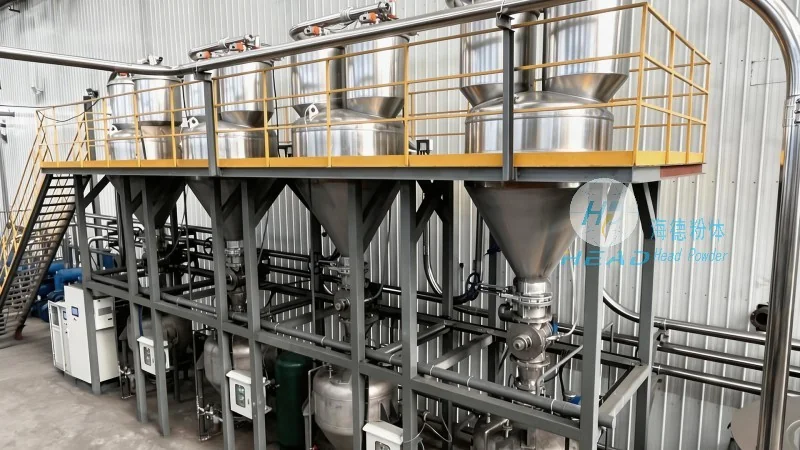
A well-engineered pneumatic conveying system for river sand typically consists of several key modules, each playing a critical role in the overall material handling process. Understanding these components helps end-users evaluate system suitability and plan for installation and maintenance.
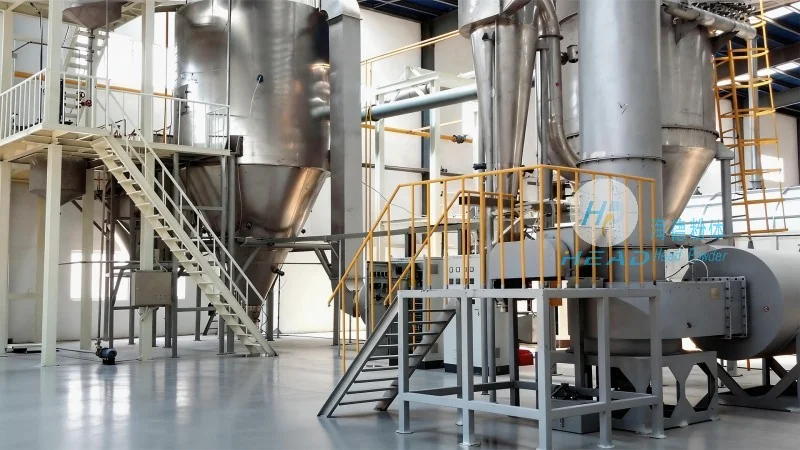
The feeding stage is where river sand enters the conveying pipeline. For positive pressure (dilute phase) systems, rotary airlock valves are commonly used to meter sand into the airstream while minimizing air leakage. headpowder recommends heavy-duty rotary valves with replaceable wear plates and adjustable rotor tips to withstand sand abrasion. In dense phase systems, pressure vessels or blow tanks are employed to batch-feed sand at higher pressures, enabling lower velocities and reduced pipe wear. The air intake system must include efficient filtration and drying units to prevent moisture from condensing in the lines, which could cause blockages. Compressed air is typically supplied by screw compressors with aftercoolers and moisture separators, ensuring dew point control below ambient temperature.
The pipeline is the backbone of the system. For river sand, carbon steel pipes with a minimum wall thickness of 8–10 mm are standard, though high-chromium alloy or ceramic-lined pipes are recommended for high-wear zones such as bends and vertical rises. Long-radius bends (R ≥ 15D) reduce particle impact velocity and extend service life. headpowder’s standard design uses a combination of straight sections with flanged connections and smooth, streamlined elbows to minimize pressure drop and material degradation. The pipe diameter is calculated based on the required conveying capacity, conveying distance, and air velocity—typically between 20 and 35 m/s for dilute phase, and 2 to 8 m/s for dense phase systems.
At the discharge end, river sand must be separated from the conveying air. Cyclone separators are the primary device for bulk separation, achieving 95–99% collection efficiency for particles above 10 microns. A secondary baghouse filter or cartridge filter is then used to capture fine dust, ensuring emissions comply with local environmental regulations. headpowder integrates automatic pulse-jet cleaning systems to maintain filter efficiency without interrupting operation. The separated sand can be directed into storage silos, hoppers, or directly to process equipment via diverter valves. Dust collection discharge is typically recycled back into the product stream or collected for disposal.
Modern pneumatic conveying requires precise control over multiple variables: air pressure, flow rate, material feed rate, and system pressure differentials. headpowder’s control platform uses PLC-based logic with HMI touchscreens, enabling operators to set conveying parameters, monitor real-time performance, and receive alerts for abnormal conditions like line blockage or excessive wear. Advanced systems can incorporate pressure transmitters, flow meters, and level sensors to optimize energy consumption and prevent over-conveying. For facilities with multiple destinations, automatic valve manifolds and programmable routing enable flexible material distribution without manual intervention.
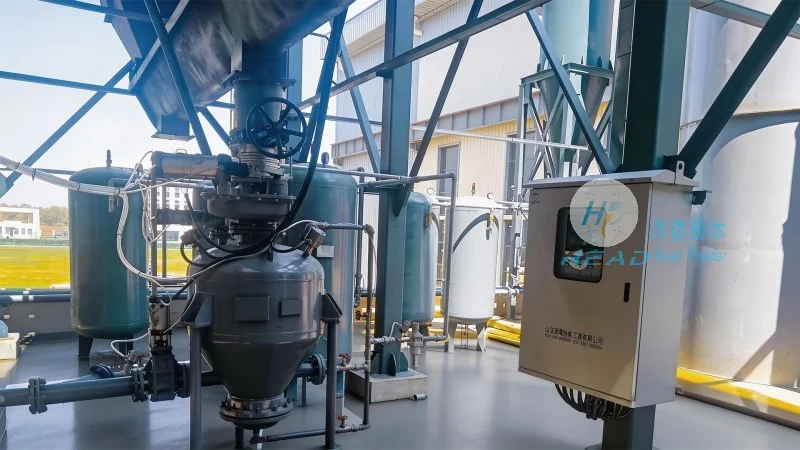
Choosing between dilute phase and dense phase pneumatic conveying depends on the specific properties of the river sand, the required conveying distance, and the desired material integrity. Dilute phase systems operate with high air velocities and low pressure (typically 0.5–1.5 bar), suspending sand particles in a turbulent airstream. They are well-suited for short to medium distances (up to 200 meters) and moderate capacities (10–50 tons per hour). However, higher velocities increase pipe wear and can cause particle attrition, which may degrade sand quality for certain applications like glass manufacturing or high-grade concrete. Dense phase systems, by contrast, convey sand at low velocities (2–8 m/s) using high pressure (2–6 bar) in a fluidized or plug-flow regime. This reduces wear, preserves particle shape, and lowers energy consumption per ton. headpowder’s dense phase solutions are particularly recommended for long-distance conveying (300–1000 meters), abrasive materials, and applications where dust generation must be minimized. The trade-off is higher initial equipment cost and the need for more sophisticated control. Many operators opt for a hybrid approach—using dilute phase for short transfers within a plant and dense phase for overland conveyances.
Accurate system design relies on a thorough analysis of material properties and operating conditions. The following parameters are essential for sizing a river sand pneumatic conveying system:
By integrating these calculations with real-world data from over 200 installed systems, headpowder delivers designs that consistently achieve 98% uptime and energy savings of 15–25% compared to conventional solutions.
High moisture content in river sand is one of the most common causes of conveying problems. When sand with moisture above 8% enters a pipeline, fine particles can stick to walls, leading to gradual buildup and eventual blockage. headpowder addresses this through several strategies. First, a pre-drying stage using fluidized bed dryers or rotary drum dryers can reduce moisture to below 3% before conveying. For applications where drying is impractical, the pneumatic system can be designed with heated air or with additives such as hydrated lime to reduce stickiness. Second, the pipeline layout should minimize horizontal runs and include "blow-down" cycles that periodically purge accumulated material. Third, all pipe joints must be airtight to prevent moisture ingress, and filters should be equipped with hydrophobic media. For wear management, headpowder recommends ceramic-lined elbows in areas with direction changes, and schedule 80 carbon steel for straight sections. Regular wall thickness inspection using ultrasonic sensors is integrated into the maintenance protocol. In a recent installation for a large river sand quarry in Southeast Asia, headpowder’s moisture-adaptive system achieved continuous operation for 14 months without a single blockage event, reducing maintenance downtime by 40% compared to the previous belt conveyor system.
Pneumatic conveying systems are often perceived as energy-intensive, but modern designs can achieve high efficiency through proper optimization. headpowder’s systems incorporate variable frequency drives (VFDs) on compressors and fans to match air production to actual demand. Real-time pressure monitoring allows the control system to reduce airflow during low-load periods, cutting energy consumption by up to 30%. Additionally, dense phase conveying inherently uses less air per ton of sand, lowering compressor power requirements. On the environmental front, fully enclosed pneumatic systems eliminate dust emissions, worker exposure to silica, and material spillage. headpowder’s filtration units meet EU EN 13284-1 and US EPA PM10 standards, with particulate emissions below 5 mg/Nm³. For plants subject to carbon pricing, the reduced electricity consumption and elimination of diesel-powered loaders (often used in mechanical systems) contribute to a lower carbon footprint. Many clients report achieving carbon payback within 18 months after switching to pneumatic conveying from traditional methods.
A mid-sized concrete producer in the Middle East previously relied on a fleet of front-end loaders to transfer river sand from stockpiles to overhead bins. The operation suffered from high labor costs, dust pollution, and inconsistent feed rates that affected concrete quality. After evaluating multiple options, the plant selected headpowder to design and install a dilute-phase pneumatic conveying system with the following specifications: conveying distance 180 meters (120 horizontal, 60 vertical), capacity 50 tons per hour, pipeline diameter 200 mm, and a rotary airlock feed. The system was integrated with the plant’s existing silo level sensors and batching controls. Results after six months of operation showed a 55% reduction in direct labor cost, a 22% decrease in sand wastage due to spillage, and a 0.5 MPa reduction in compressive strength variability of produced concrete. The enclosed system also improved site safety and eliminated dust complaints from neighboring residential areas. The client has since ordered two additional systems for their other plants, citing the reliability and low maintenance of headpowder’s equipment. (咨询热线:156-6277-7102)
Looking ahead to 2026, several trends are shaping the evolution of pneumatic conveying for river sand. First, the integration of Industry 4.0 technologies—such as IoT sensors, digital twins, and predictive maintenance algorithms—will enable real-time condition monitoring and automatic parameter adjustments. headpowder is already piloting a cloud-based platform that uses machine learning to predict pipe wear and schedule maintenance before failures occur. Second, the growing emphasis on circular economy in construction is driving demand for conveying systems that can handle recycled sand from demolition waste, which has different flow properties than virgin river sand. System flexibility and quick changeover capabilities will become critical. Third, stricter regulations on occupational silica exposure (OSHA’s revised PEL and EU Directive 2019/130) will push more plants to adopt fully enclosed pneumatic solutions. Finally, energy storage systems and hybrid compressors powered by solar or battery storage will help reduce operational costs in remote sand mining locations. headpowder is actively investing in R&D to address these trends, ensuring that its river sand pneumatic conveying solutions remain at the forefront of performance, safety, and sustainability.
Transitioning to a new conveying system requires careful planning and execution. headpowder provides end-to-end service: from site survey and pipeline routing optimization to fabrication, installation, and commissioning. A typical project timeline for a medium-scale system (50–100 tons per hour) is 12–16 weeks from order to full operation. During commissioning, the system undergoes a 72-hour continuous run test under full load, with all performance parameters verified against the design specifications. Operators receive on-site training on system operation, routine maintenance, and troubleshooting. Post-installation, headpowder offers a comprehensive service package including annual inspections, spare parts kits with wear items, and remote diagnostic support via secure VPN. The company’s warranty covers manufacturing defects for 24 months, and extended maintenance contracts are available for clients seeking predictable budgeting. Customer feedback consistently highlights the responsiveness of headpowder’s technical support team, which maintains a 98% first-call resolution rate for standard issues.
Selecting the right pneumatic conveying equipment for river sand is a strategic decision that directly impacts production efficiency, operational costs, workforce safety, and environmental compliance. By partnering with a specialist like headpowder, plant operators gain access to proven technology, customized design, and unmatched after-sales support. The company’s solutions are not one-size-fits-all; each system is engineered based on thorough material analysis, site conditions, and client-specific goals. Whether you are upgrading an existing facility or designing a greenfield project, a well-designed pneumatic conveying system can transform your sand handling from a bottleneck into a competitive advantage. With 2026 fast approaching, now is the time to evaluate your current processes and explore how enclosed, automated, and energy-efficient conveying can future-proof your operation. For a detailed feasibility study or a quotation tailored to your requirements, reach out to headpowder’s engineering team directly. (咨询热线:156-6277-7102)

 Shandong headpowder Engineering Co., Ltd.
 156-6277-7102(Manager Zhang)
  0531-83386006
  Jinan City, Shandong Province, China
服务热线
微信咨询
回到顶部