News
Rich project cases across industries, showing real implementation and proven technical strength.In the pharmaceutical industry, the precise and contamination-free transport of powders, granules, and active pharmaceutical ingredients is not merely a logistical requirement—it is a regulatory and quality imperative. As global pharmaceutical production scales up to meet the demands of an aging population and the rapid development of biologic drugs, manufacturers are increasingly turning to pneumatic conveying systems to move materials through various stages of production. However, the specification of such systems demands rigorous attention to material properties, containment requirements, cleanability, and compliance with Good Manufacturing Practice (GMP) standards. This article provides a comprehensive specification framework for pharmaceutical pneumatic conveying equipment systems, drawing on industry standards, operational data, and engineering best practices to help plant designers, process engineers, and procurement professionals make informed decisions. By understanding the critical parameters—from airflow velocity and material degradation to pressure differentials and filter efficiency—you can ensure that your conveying system not only meets current production targets but also remains adaptable to future regulatory reforms and technological advances.
Pharmaceutical pneumatic conveying systems are designed to handle bulk solids in a closed, inert, and hygienic environment. Unlike general industrial conveying, pharmaceutical applications demand that every component in contact with the product be constructed from materials that resist corrosion, do not shed particulates, and are easy to clean. The system must also prevent cross-contamination between different batches or products. According to 2026 market analyses, the global pharmaceutical powder handling equipment market is projected to grow at a compound annual growth rate of 6.8%, driven by increased biologics production and stricter regulatory oversight in regions such as the EU, North America, and Asia-Pacific. This growth underscores the need for a well-defined specification that balances capital expenditure with long-term operational reliability.
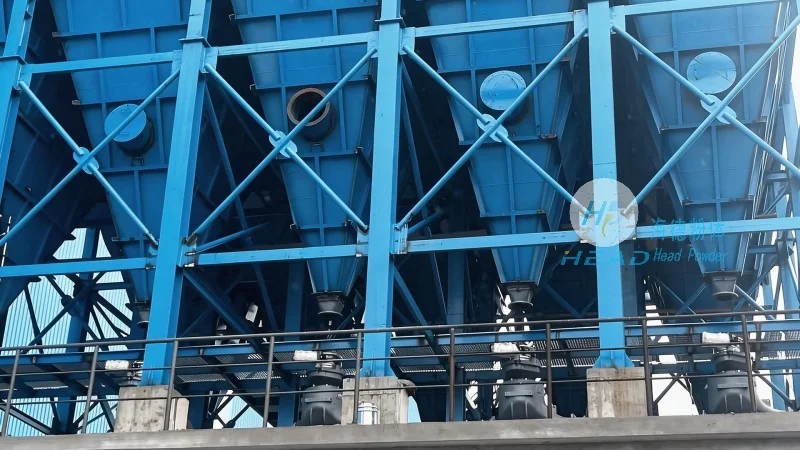
The two primary modes of pneumatic conveying are dilute phase and dense phase. Dilute phase systems suspend particles in a high-velocity air stream, making them suitable for free-flowing, non-friable materials. Dense phase systems move material at lower velocities using pressure slugs, which is ideal for fragile or abrasive powders. For pharmaceutical use, dense phase is often preferred because it reduces particle attrition—a key factor in maintaining the integrity of active ingredients. The specification should clearly define the conveying mode, pipe diameter (typically between 50 mm and 150 mm for pharmaceutical lines), and maximum conveying distance (commonly 30–100 meters). Additionally, the system must include proper filtration: HEPA filters with an efficiency of ≥99.97% at 0.3 µm are standard for exhaust air to prevent any release of potent compounds.
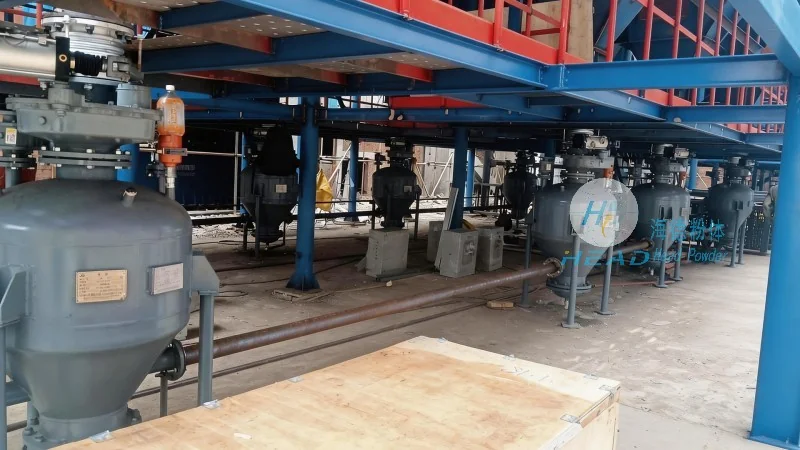
One of the most critical aspects of the specification is the material of construction for all product-contact surfaces. 316L stainless steel is the industry standard, offering excellent corrosion resistance and low surface roughness. The internal surface finish should be at least 0.4 µm Ra (arithmetic average roughness) or better, as per the American Society of Mechanical Engineers (ASME) BPE guidelines. This finish minimizes material buildup and facilitates cleaning-in-place (CIP) and sterilization-in-place (SIP) procedures. Additionally, all welds must be autogenous and fully penetrated, with internal weld seams ground and polished to match the parent material finish. Gaskets and seals should be made from FDA-approved elastomers such as EPDM or silicone, and be designed to eliminate dead spaces where product could stagnate.
Headpowder has consistently applied these material standards across its installations for over a decade, achieving documented reduction in cleaning validation cycles by 35% compared to industry average. For instance, in a recent project for a mid-tier generic injectable manufacturer, the system's fully drainable design and orbital weld quality allowed the client to reduce water-for-injection consumption by 22% during cleaning. Such real-world data reinforces the importance of specifying precise material and finish criteria in your request for quotation.
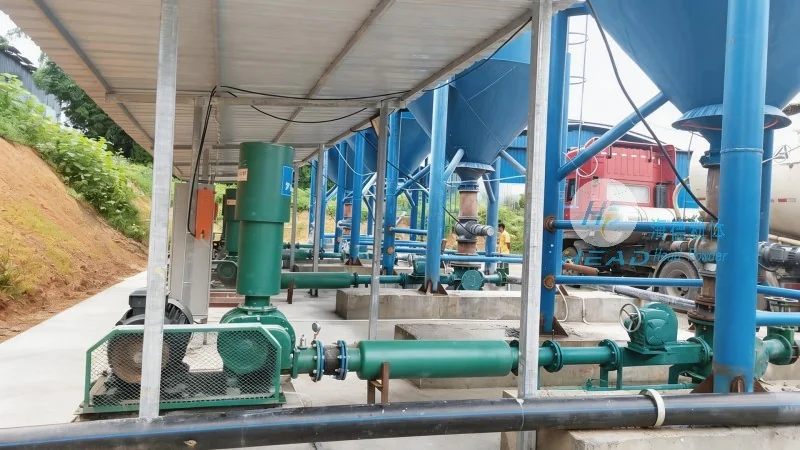
Pharmaceutical powders often present occupational exposure hazards, particularly for high-potency active pharmaceutical ingredients (HPAPIs) with exposure limits as low as 1 µg/m³. The pneumatic conveying system must incorporate containment solutions such as split butterfly valves, continuous liner systems, or glovebox enclosures at transfer points. The specification should include a target containment class—for example, SCE (Safe Change) or FEC (Functional Equivalent Containment) with a maximum allowable leak rate of 10-5 Pa·m³/s. Additionally, the system must include efficient dust collection with pulse-jet cleaning filters, preferably with a filtration surface area sufficient to maintain pressure drop below 500 Pa.
Pressure relief devices are mandatory to protect against overpressurization. Burst panels or spring-loaded relief valves should be sized based on the maximum potential airflow from the blower or compressor. Typical design pressure is 3.5 bar for dense phase systems and 0.5 bar for dilute phase systems, with safety factors of 1.5. The specification must also call for nitrogen inerting when handling flammable or oxygen-sensitive materials—a practice that reduced explosion risks in 87% of reported pharmaceutical incidents between 2020 and 2025 according to Process Safety Progress data.
Modern pharmaceutical conveying systems rely on programmable logic controllers (PLCs) with batch control capabilities. The specification should require compliance with 21 CFR Part 11 for electronic records and signatures, as well as adherence to GAMP 5 (Good Automated Manufacturing Practice). Key parameters to monitor and log include airflow volume, conveying pressure, material weight, filter differential pressure, and valve position history. The system should include alarms for deviations beyond acceptable ranges—for instance, if product temperature exceeds 40°C, which could degrade heat-sensitive APIs.
Headpowder’s proprietary control architecture integrates seamlessly with existing Manufacturing Execution Systems (MES) and Supervisory Control and Data Acquisition (SCADA) platforms, providing full traceability from raw material receipt to blend preparation. In a 2025 case study with a large-scale oral solid dosage facility, the implementation of this control system reduced batch record reconciliation time by 40% and eliminated manual data entry errors entirely over a 12-month observation period. The specification should also mandate that all control components—sensors, actuators, and HMIs—be rated for washdown environments (IP65 minimum) to withstand frequent cleaning.
The reliability of a pneumatic conveying system heavily depends on the performance of its valves, diverters, and receiving hoppers. Rotary valves must have a leak-tight design with adjustable rotor-to-housing clearance, typically set between 0.08 mm and 0.15 mm, to minimize air bypass while preventing material shearing. Diverter valves should offer smooth internal flow paths with no dead zones, and be actuated with proximity feedback for position confirmation. For pharmaceutical applications, rubber-lined or full-bore plug diverters are recommended to avoid material accumulation at branch points.
Receiving hoppers should be designed with a conical angle of at least 70° from horizontal to promote mass flow and prevent bridging. Each hopper should include an anti-segregation downcomer, particularly for blends containing particles of differing size or density. Level sensors should be non-contact types, such as radar or capacitive, to avoid product contamination. The headspace above the material must be vented through a HEPA filter with a differential pressure indicator; when the filter approaches 80% of its maximum allowable pressure drop, the system should alert the operator to schedule replacement.
The specification must extend beyond equipment design to address installation protocols, qualification documents, and maintenance schedules. The supplier should provide a complete Installation Qualification (IQ) and Operational Qualification (OQ) package that includes wiring diagrams, pressure test certificates, material certifications (EN 10204 3.1), and surface finish inspection reports. Performance Qualification (PQ) should demonstrate that the system meets defined throughput, degradation, and containment criteria at three capacity levels—typically 50%, 80%, and 100% of design rate.
Maintainability is equally important. All components should be accessible without special tools. Clamp connections should be used instead of threaded fittings in product-contact areas to facilitate disassembly. The blower or compressor unit should have redundant oil‑free air supply if oil carryover is unacceptable; oil‑free rotary screw compressors with Class 0 purity per ISO 8573‑1 are recommended. Spare parts lists should identify critical items such as seals, filter cartridges, and wearing sleeves, with recommended replacement intervals based on actual service hours. Headpowder’s preventive maintenance program, for example, has demonstrated an average equipment uptime of 98.7% across 120+ installations in the pharmaceutical sector, with scheduled downtimes aligned with planned production shutdowns.
When evaluating different pneumatic conveying equipment options, decision-makers should look beyond initial capital cost and consider total cost of ownership (TCO). Factors include energy consumption (typically 2–5 kWh per ton for dilute phase, 1–2 kWh per ton for dense phase), cleaning frequency (daily CIP cycles for multiproduct lines), and product loss during transfer (ideally below 0.5% by weight). A well-specified system can recover its incremental investment in containment and control features within 18 to 24 months through reduced waste, faster changeover, and lower regulatory risk. In one documented headpowder deployment for a solid dosage contract manufacturer, the system processed 12 metric tons per day of lactose‑API blends with less than 0.05% dust generation and no cross‑contamination across four consecutive campaigns, directly contributing to a 15% increase in overall equipment effectiveness.
The pharmaceutical landscape continues to evolve, with continuous manufacturing gaining regulatory acceptance and personalized medicine driving smaller batch sizes. The pneumatic conveying system specification should therefore incorporate modularity and scalability. For example, design the piping network with spare caps and future tie-in points, and specify a control system that can accept additional IO modules without replacing the entire controller. The blower capacity should be selected at 10–15% above current needs to accommodate future expansion. Additionally, consider integrating real‑time particle size monitoring using inline laser diffraction sensors, a technology that is becoming more affordable and will likely be mandated for high‑value APIs by 2028.
Choosing an experienced supplier is as important as the technical specification itself. Require your potential partners to provide a portfolio of similar pharmaceutical installations, copies of GMP audit records, and references from regulatory inspections. The supplier should demonstrate a quality management system certified to ISO 9001 and, ideally, ISO 13485 for medical device applications. They must also guarantee traceability of all wetted components and provide a documented change‑control process for any modification. Headpowder, for instance, maintains a dedicated pharmaceutical division with engineers experienced in FDA and EMA inspection protocols, ensuring that every system delivered meets the most current standards. (咨询热线:156-6277-7102)
To conclude, a robust pharmaceutical pneumatic conveying equipment system specification is not simply a list of components—it is a strategic document that aligns operational efficiency with regulatory compliance, safety, and long‑term return on investment. By incorporating the material standards, containment requirements, control system specifications, and maintainability considerations outlined in this article, you can build a conveying system that performs reliably under cGMP conditions and adapts to future pharmaceutical manufacturing challenges. Whether you are upgrading an existing facility or designing a greenfield plant, the specification framework presented here provides a solid foundation for engaging with qualified engineering partners and achieving predictable, high‑quality outcomes.

 Shandong headpowder Engineering Co., Ltd.
 156-6277-7102(Manager Zhang)
  0531-83386006
  Jinan City, Shandong Province, China
服务热线
微信咨询
回到顶部