News
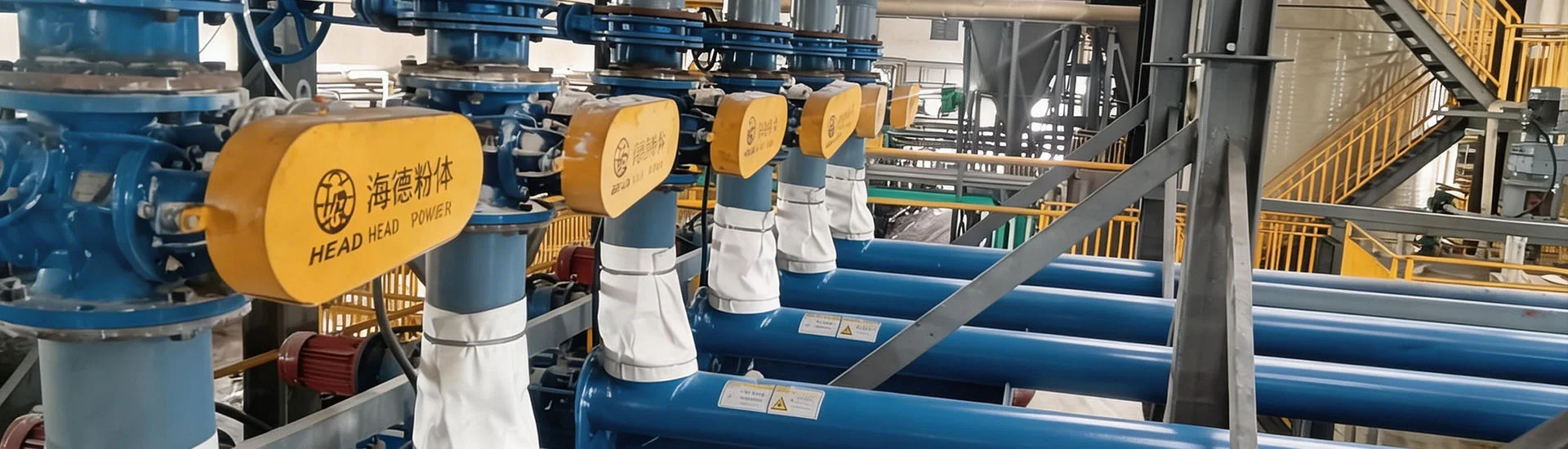
Rich project cases across industries, showing real implementation and proven technical strength.Vanadium oxide, in its various forms such as vanadium pentoxide (V₂O₅) and vanadium trioxide (V₂O₃), plays a critical role in modern industrial applications, ranging from high-grade steel alloying and chemical catalysis to the rapidly emerging vanadium redox flow battery (VRFB) energy storage sector. The physical characteristics of these materials—fine particle size, high density, abrasive nature, and in some cases electrostatic or hygroscopic behavior—present unique challenges for material handling. Traditional mechanical conveying methods, such as belt conveyors or bucket elevators, often lead to material degradation, dust emissions, equipment wear, and contamination risks. This is where pneumatic conveying systems have become the industry-standard solution, offering enclosed, automated, and highly controllable transport for vanadium oxide powders. A well-engineered pneumatic conveying system not only ensures consistent material flow and minimal product loss but also aligns with stringent environmental and safety regulations. As global demand for vanadium continues to climb—driven by clean energy policies and advanced manufacturing—the need for reliable, efficient, and technically robust conveying solutions grows proportionally. This article provides an in-depth technical introduction to vanadium oxide pneumatic conveying systems, covering operational principles, core components, design considerations, application scenarios, and selection criteria. Whether you are a plant engineer, a process designer, or a procurement professional, understanding these fundamentals is essential for optimizing your material handling operations and achieving long-term cost efficiency.
Pneumatic conveying uses a gas stream—typically compressed air or nitrogen—to transport bulk powders through a closed pipeline system. For vanadium oxide, two primary modes are employed: dilute phase and dense phase. In dilute phase conveying, the material is suspended in the gas flow at high velocity (typically 15–30 m/s), which is suitable for shorter distances and lower throughput applications. However, due to the abrasive nature of vanadium oxide, high-velocity dilute phase systems can accelerate pipe wear and particle attrition. Dense phase conveying, on the other hand, operates at lower velocities (2–8 m/s) by pushing the material in a plug-like flow under higher pressure. This method significantly reduces wear, maintains particle integrity, and lowers energy consumption. The choice between dilute and dense phase depends on factors such as transport distance, required capacity, particle size distribution, and material sensitivity. Modern systems increasingly incorporate variable frequency drives (VFDs) and smart pressure control to switch between modes dynamically, adapting to real-time process demands. The fundamental thermodynamic and aerodynamic principles governing gas–solid two-phase flow remain central to system design, requiring careful calculation of pressure drop, gas-to-solid ratio, and saltation velocity.
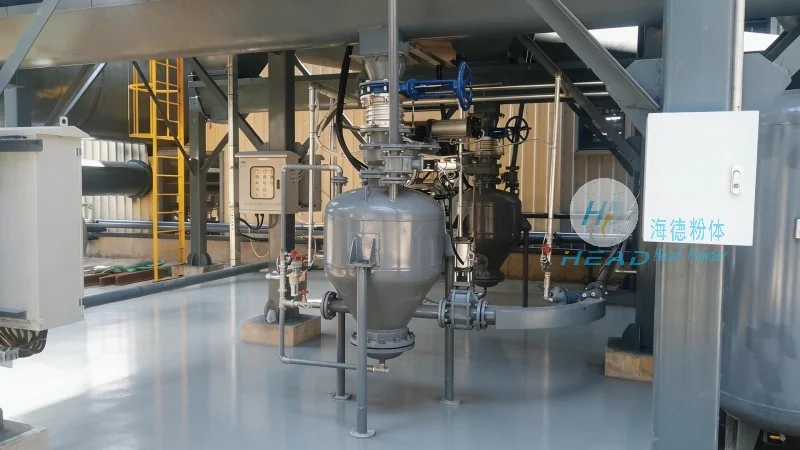
A complete pneumatic conveying line consists of several key subsystems, each engineered to handle vanadium oxide’s specific properties. The air supply unit typically includes a rotary screw compressor or blower, with filtration and drying accessories to ensure oil-free, moisture-controlled gas—critical because even trace moisture can cause vanadium oxide to agglomerate or form hard deposits. The feeding device, often a rotary airlock valve or a screw feeder, meters the powder into the pipeline while maintaining pressure integrity. For highly abrasive vanadium pentoxide, specialized hard-facing or ceramic-lined components are recommended to extend service life. The conveying pipeline itself is made from carbon steel, stainless steel, or wear-resistant alloys, with wall thickness calculated based on operating pressure and particle impact angle. Bends, a common wear zone, should use long-radius elbows or pipe-within-pipe designs to reduce erosion. At the receiving end, a filter receiver or cyclone separator captures the conveyed powder from the gas stream. For fine vanadium oxide particles (often below 50 microns), high-efficiency pulse-jet cartridge filters are essential to achieve emission levels below 10 mg/Nm³. Finally, a control panel equipped with PLC and HMI integrates all components, allowing operators to monitor flow rates, pressure differentials, and alarm conditions in real time.
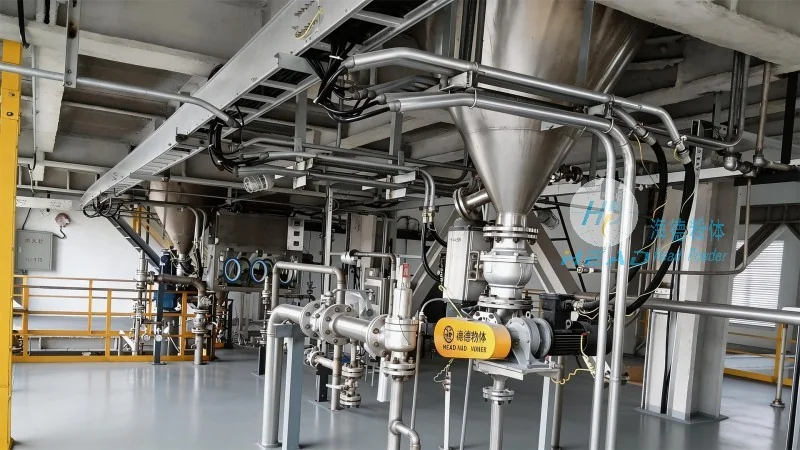
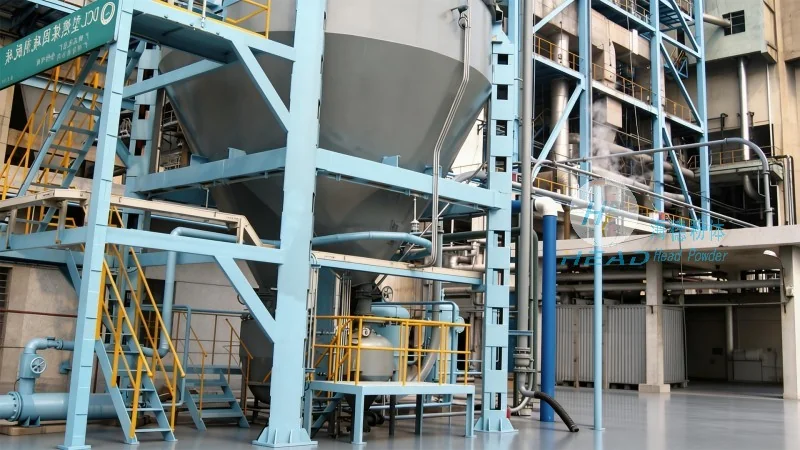
Designing a pneumatic conveying system for vanadium oxide requires precise calculation of several interdependent parameters. The most critical are conveying velocity, solid loading ratio (mass of solids per mass of gas), and line pressure drop. For vanadium pentoxide with an average particle size of 20–100 microns and a bulk density of 0.6–1.2 g/cm³, typical dense phase conveying velocities range from 4 to 8 m/s, while dilute phase velocities stay between 18 and 25 m/s. The solid-to-gas ratio in dense phase can reach 10–30 kg/kg, compared to 0.5–5 kg/kg in dilute phase. The pipeline diameter is determined by the required throughput; for example, transporting 5 tons per hour over 50 meters might require a 4-inch schedule 40 pipe in dense phase. Pressure loss calculations must account for horizontal runs, vertical lifts, bends, and pipe roughness. In addition, the electrostatic charge generated during conveying of vanadium oxide—which can lead to dust explosion hazards—necessitates grounding and bonding of all conductive components. Industry standards such as ISO 10628, DIN 2403, and ASME B31.3 provide guidance for pipe material selection and safety margins. Headpowder engineers typically perform computational fluid dynamics (CFD) simulations to validate system performance before fabrication, ensuring that the final design operates within safe and efficient bounds.
Vanadium oxide’s physical and chemical properties impose several unique design constraints. First, the material is moderately abrasive: V₂O₅ crystals have a Mohs hardness of approximately 3–4, but sharp-edged particles can cause rapid wear in pipelines, especially at bends and fittings. Using induction-hardened or ceramic-lined pipe sections can increase service life by a factor of 3–5 compared to standard carbon steel. Second, vanadium pentoxide is toxic and classified as a hazardous substance (skin irritant, respiratory sensitizer under EU CLP and OSHA HCS). Therefore, the conveying system must be fully enclosed with negative pressure control to prevent fugitive emissions. All filter receivers should be equipped with explosion vents and rupture discs if combustible dust conditions exist—the minimum explosible concentration (MEC) for vanadium oxide dust is around 30 g/m³. Third, temperature sensitivity: some vanadium compounds, such as ammonium metavanadate, decompose or oxidize at elevated temperatures. The conveying air should be cooled if necessary, and pipe surface temperature must be monitored. Fourth, moisture management: V₂O₅ is hygroscopic, absorbing water from ambient air and forming sticky agglomerates that clog feeders and pipelines. Dried compressed air (dew point below -40°C) is recommended, along with heated jacketing for feed hoppers in humid climates. By addressing these factors upfront, system reliability and operator safety are significantly enhanced.
The typical engineering process for a vanadium oxide pneumatic conveying system follows a phased approach. Phase 1: material characterization. A sample of the actual vanadium oxide powder is tested for particle size distribution, bulk density, angle of repose, moisture content, and abrasivity. Phase 2: process requirement definition, including conveying distance (horizontal and vertical), required capacity (tons per hour), operating hours, and site constraints (space availability, power supply, ambient temperature). Phase 3: conceptual design and system selection — dilute or dense phase, pressure or vacuum configuration, number of pick-up points and destinations. For most vanadium oxide applications, positive pressure dense phase systems are preferred because they provide better control over flow and minimize dust release. Phase 4: detailed engineering, including pipe routing, valve selection, compressor sizing, and instrumentation. Phase 5: fabrication and factory acceptance testing (FAT), where the system is assembled and run with surrogate material (e.g., alumina or limestone) to verify performance. Phase 6: site installation, commissioning, and training. Throughout this process, adherence to local codes (e.g., ATEX for explosive atmospheres in Europe, NFPA 68 for dust explosion prevention in the US) is mandatory. Headpowder offers turnkey solutions from concept to handover, with optional remote monitoring and predictive maintenance packages.
Vanadium oxide pneumatic conveying systems are deployed across several high-value industries. In vanadium production plants, the system transports intermediate powders (e.g., vanadium slag, ammonium metavanadate, or V₂O₅ flake) between roasting furnaces, leaching tanks, and final packaging stations. In steelmaking, fine vanadium oxide powder is injected into ladles or tundishes to produce high-strength low-alloy (HSLA) steels; pneumatic conveying ensures precise dosing and minimal oxidation before melt contact. In the energy storage sector, V₂O₅ is used as an electrode material in VRFBs; automated conveying to mixer-blender units enhances production consistency. A recent project for a major vanadium refinery involved a 150-meter dense phase system handling 8 t/h of V₂O₅ with a ceramic-lined pipeline. After two years of continuous operation, pipe wall wear was measured at less than 0.5 mm, and dust emission levels remained below 5 mg/Nm³. Another client, a chemical catalyst manufacturer, reduced material loss by 40% after switching from a lost-cost dilute phase system to a headpowder-engineered dense phase solution. Such results underscore the importance of investing in properly designed, high-quality equipment rather than generic off-the-shelf components.
Headpowder brings over a decade of focused experience in designing and fabricating pneumatic conveying systems for challenging powders, including vanadium oxides. Our engineering team consists of process specialists, material scientists, and mechanical designers who collaborate to deliver solutions that balance performance, durability, and total cost of ownership. We utilize proprietary calculation algorithms validated against actual field data from more than 200 installations globally. All systems are modularly built, allowing easy capacity expansion or reconfiguration without major downtime. Our manufacturing facilities are ISO 9001 certified, and every component—from rotary valves to filter cartridges—is sourced from qualified suppliers with proven track records. Importantly, headpowder offers comprehensive after-sales support: on-site commissioning, operator training, spare parts inventory management, and 24/7 technical hotline. We also provide system audits for existing installations, identifying efficiency improvements and wear risk areas. For vanadium oxide applications specifically, we have developed wear-resistant coating solutions and specialized feeding devices that handle sticky or cohesive powders without plugging. If you are looking to improve your material handling reliability, reduce maintenance costs, or meet stricter environmental standards, contact us for a technical consultation. (咨询热线:156-6277-7102)
In conclusion, the technical landscape of vanadium oxide pneumatic conveying has evolved into a mature, highly specialized discipline. From the fundamental fluid dynamics of gas–solid flow to the practical challenges of abrasion, safety, and humidity control, every aspect of system design demands careful attention. A properly engineered solution not only boosts operational efficiency and product quality but also ensures regulatory compliance and worker protection. As vanadium markets continue to expand—with projections indicating a compound annual growth rate of 8–10% through 2026 in VRFB and specialty steel applications—the importance of reliable bulk handling infrastructure cannot be overstated. Companies that invest in advanced pneumatic conveying technology today position themselves for sustainable growth tomorrow. By partnering with an experienced provider like headpowder, you gain access to deep technical knowledge, proven field applications, and a commitment to long-term performance. Whether you are planning a new plant or upgrading an existing line, understanding the principles outlined in this guide will help you make informed, confident decisions.

 Shandong headpowder Engineering Co., Ltd.
 156-6277-7102(Manager Zhang)
  0531-83386006
  Jinan City, Shandong Province, China
服务热线
微信咨询
回到顶部