News
Rich project cases across industries, showing real implementation and proven technical strength.As the global market for zinc oxide continues to expand — driven by its widespread use in rubber, ceramics, paints, electronics, and personal care industries — the demand for reliable and efficient material handling solutions has never been higher. Zinc oxide powder, with its fine particle size, low bulk density, and tendency to agglomerate under moisture or static conditions, presents unique challenges for pneumatic conveying. Traditional mechanical conveying methods often fail to maintain product integrity, leading to dust emissions, material waste, and equipment wear. By 2026, the global pneumatic conveying systems market is projected to exceed USD 12 billion, with the chemical and mineral sectors accounting for a significant share. Within this landscape, the need for specialized equipment solutions that address the specific flow characteristics of zinc oxide is critical. A well-designed pneumatic conveying system not only ensures consistent throughput but also enhances workplace safety by reducing airborne dust exposure.
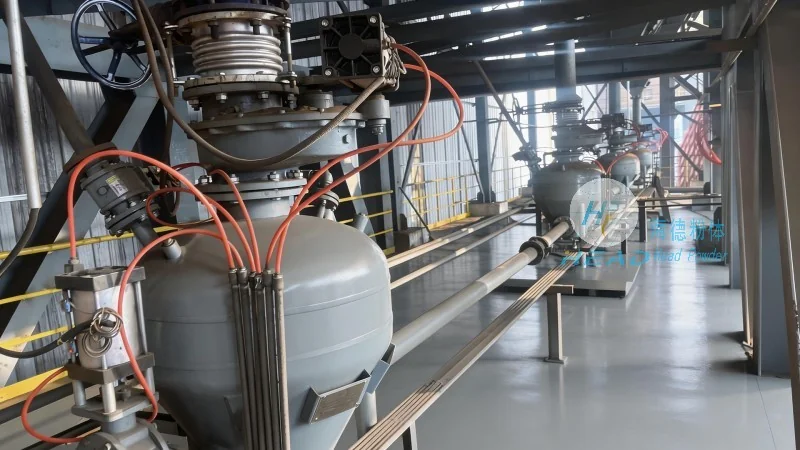
Zinc oxide manufacturers and downstream processors are increasingly turning to dilute phase or dense phase pneumatic conveying depending on their material properties and process requirements. The choice between these two modes hinges on factors like particle size distribution, abrasiveness, and moisture sensitivity. For zinc oxide, which can be both cohesive and mildly abrasive, the correct system design must incorporate appropriate air velocity, pipeline material selection, and dust collection integration. The equipment solution must also consider the plant layout, conveying distance, and whether multiple feed points or destinations are needed. A holistic approach — from the initial feasibility study to the final commissioning — is essential to avoid costly downtime and product contamination.
Headpowder (a trusted name in powder handling technology) has developed a comprehensive zinc oxide powder pneumatic conveying system equipment solution that addresses these challenges head-on. By combining years of field experience with advanced computational modeling, the company delivers systems that optimize energy consumption while maintaining high conveying rates. The following sections provide a detailed technical breakdown of the key components, selection criteria, and operational best practices for zinc oxide pneumatic conveying systems.
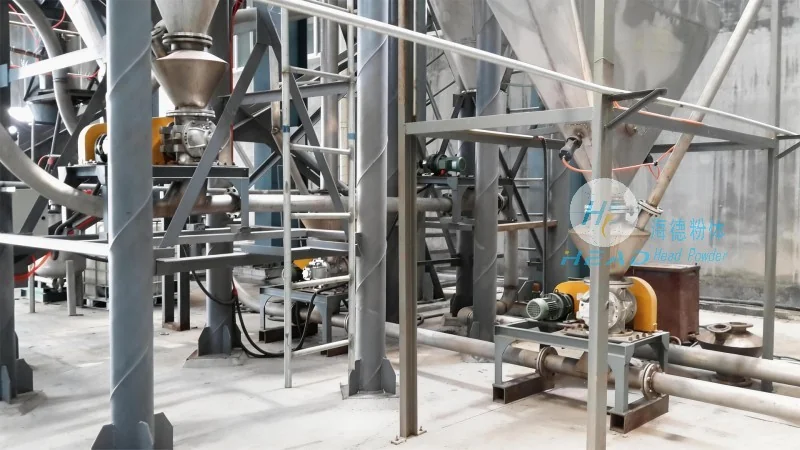
A robust pneumatic conveying system for zinc oxide consists of several integrated subsystems, each playing a critical role in maintaining material flow and system reliability. Understanding these components helps engineers specify the right equipment for their specific application.
The selection between dilute phase and dense phase conveying is one of the most critical decisions in designing a zinc oxide powder handling system. Each approach has distinct advantages depending on the powder’s characteristics and the application requirements.
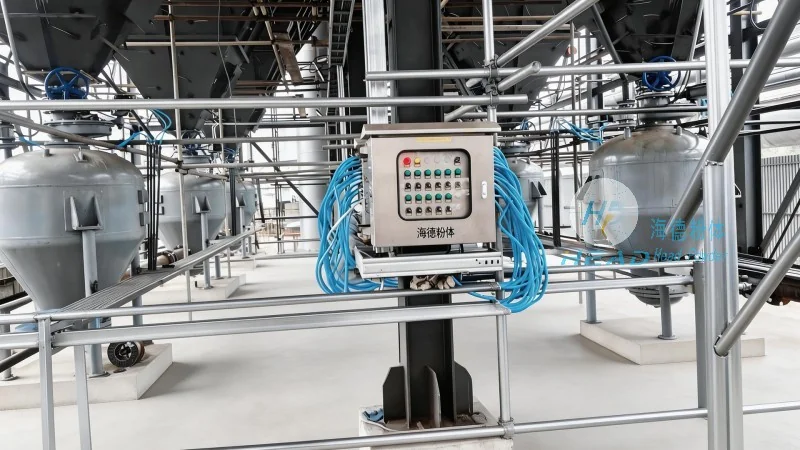
Dilute phase conveying, where the powder is suspended in a high-velocity airstream (typically 15–30 m/s), is suitable for free-flowing, non-abrasive powders with low bulk density. For zinc oxide with a moderate abrasiveness index (e.g., Mohs hardness around 4), dilute phase works well when the conveying distance is short (under 80 meters) and the material does not degrade easily. However, high velocities can cause particle breakage and pipeline wear over time. The air volume requirements are higher, leading to larger filter areas and higher operating costs. Dilute phase systems are generally simpler in design and lower in initial capital cost, making them a popular choice for small to medium capacities.
Dense phase conveying, by contrast, moves material at low velocities (1–8 m/s) in a high concentration (solid-to-air ratio above 10 kg/kg). Because the powder moves in plugs or slugs, particle-to-particle and particle-to-wall contact is minimized, preserving the particle size distribution — a critical factor for zinc oxide used in high-end rubber compounding or electronic applications. Dense phase systems also consume less energy per tonne of material conveyed, as the air volume is significantly lower. They are ideal for long distances (over 200 meters), abrasive materials, and products sensitive to attrition. The trade-off is a more complex control system, larger pressure vessels or boosters, and higher initial investment.
For zinc oxide powder with a bulk density of 0.4–0.6 g/cm³ and a median particle size of 0.1–5 microns, headpowder’s engineers often recommend dense phase conveying when the product must maintain its original shape and surface properties. In cases where the zinc oxide is used as a filler in rubber tyres, dense phase reduces dust generation and ensures consistent feed to downstream mixing equipment. However, for applications in zinc oxide pigment production where slight agglomeration is acceptable, dilute phase remains a cost-effective option. Headpowder provides free sample testing and flow characteristics analysis to guide this decision — ensuring that each client receives a solution tailored to their exact process needs. Information on customized testing services is available from the team. (咨询热线:156-6277-7102)
To achieve reliable and efficient pneumatic conveying of zinc oxide, several key parameters must be optimized during the design phase. These include the conveying velocity, solid loading ratio, pipe layout, and auxiliary equipment selection.
Conveying velocity: The saltation velocity — the minimum air velocity required to keep particles suspended — for zinc oxide typically ranges from 6 to 10 m/s depending on particle size. Operating at 1.5 to 2 times this velocity ensures stable flow without excessive energy waste. Actual design velocities for dilute phase systems are usually set at 15–20 m/s for horizontal pipe sections. For vertical risers, velocities may be slightly lower (12–15 m/s) as gravity aids particle movement. Using computational fluid dynamics (CFD) modeling, headpowder engineers can simulate the flow profile to optimize velocity and prevent blockages.
Solid loading ratio (SLR): This ratio (kg of powder per kg of conveying air) directly affects system efficiency. For dilute phase zinc oxide conveying, SLR values between 1 and 5 are common. Higher SLR values (6–15) are achievable in dense phase but require careful air injection control. Increasing the SLR reduces air volume and energy consumption but also raises the pressure drop. A balanced design considers the trade-off between capital cost (smaller blowers and pipes) and operating cost (lower electricity consumption).
Pipeline layout: Bends are the primary sources of wear and pressure drop in any pneumatic system. For zinc oxide, long-radius bends (r/d ratio of 10–20) or blind tee bends are recommended to minimize particle impact and abrasion. The number of bends should be minimized, and vertical sections should be avoided where possible because they create additional pressure losses. Headpowder’s modular pipe design allows for easy replacement of worn sections, extending the overall system life by 30–50% compared to conventional layouts.
Moisture and static control: Zinc oxide powder is hygroscopic, meaning moisture can cause agglomeration and clogging. Incorporating a drying system or inline moisture sensor before the feeding hopper is critical in humid environments. Additionally, static charge buildup between zinc oxide particles and pipe walls can cause erratic flow. Grounding the entire pipeline and using conductive hoses or anti-static filters eliminates this risk. Headpowder’s standard offering includes fully grounded components and optional ionizing air nozzles at the feeder inlet to neutralize charge — a feature that reduces cleaning frequency by up to 60% in high-humidity plants.
The versatility of zinc oxide pneumatic conveying systems is demonstrated across multiple industries. Each application imposes unique constraints that system engineers must address during commissioning.
Looking ahead to 2026, several emerging trends are redefining how pneumatic conveying systems for zinc oxide are designed, implemented, and maintained. These developments are driven by sustainability goals, Industry 4.0 connectivity, and stricter environmental regulations.
Energy recovery and reduced carbon footprint: Traditional blowers consume substantial electricity. New variable-speed drive (VSD) blowers can reduce energy use by up to 35% by matching air supply to actual demand. Additionally, heat recovery from conveying air can be used to preheat drying systems or plant HVAC, lowering overall operational emissions. Headpowder’s energy optimization module — available as an add-on — monitors real-time pressure and flow data to automatically adjust blower speed, achieving an average energy saving of 28% across recent installations.
Digital twin and predictive maintenance: By creating a digital twin of the conveying system, plant operators can simulate different scenarios (e.g., feedstock changes, pipe blockages) and optimize parameters without disrupting production. Machine learning algorithms analyze vibration, temperature, and pressure data to predict filter clogging or blower bearing failure days before it happens. Headpowder now offers an IoT-enabled condition monitoring package that sends alerts to mobile devices, reducing unplanned downtime by an average of 40%.
Modular and skid-mounted designs: To speed up installation and reduce engineering costs, manufacturers are moving toward pre-assembled, modular conveying systems. A typical zinc oxide system can be delivered as two or three skids — feed module, conveying module, and filter module — that are bolted together on site. This approach reduces installation time from weeks to days and allows easier relocation should the plant layout change. Headpowder’s modular design is validated by ISO 9001:2025 certified processes, ensuring every skid meets consistent quality standards.
Choosing the right pneumatic conveying system for zinc oxide requires a systematic evaluation of both technical and commercial aspects. The following checklist can help project teams avoid common pitfalls.
In summary, the effective pneumatic conveying of zinc oxide powder demands a deep understanding of material properties, system dynamics, and operational trade-offs. Whether you opt for dilute or dense phase, the right equipment solution must integrate robust feeding, gentle conveying, efficient separation, and intelligent control. By prioritizing wear resistance, dust containment, and energy efficiency, manufacturers can reduce total cost of ownership while maintaining product quality. As the industry moves toward higher automation and sustainability standards in 2026, partnering with an experienced solution provider like headpowder ensures that your system stays competitive and compliant. The team’s technical engineers are ready to discuss your specific requirements and provide a detailed system proposal, including a free material analysis. For more information about headpowder’s zinc oxide powder pneumatic conveying system equipment solution and to arrange a site visit or sample test, please reach out via the contact line. (咨询热线:156-6277-7102) By investing in well-engineered equipment, you are not only improving your production efficiency but also safeguarding the consistency and purity that high-grade zinc oxide demands.

 Shandong headpowder Engineering Co., Ltd.
 156-6277-7102(Manager Zhang)
  0531-83386006
  Jinan City, Shandong Province, China
服务热线
微信咨询
回到顶部