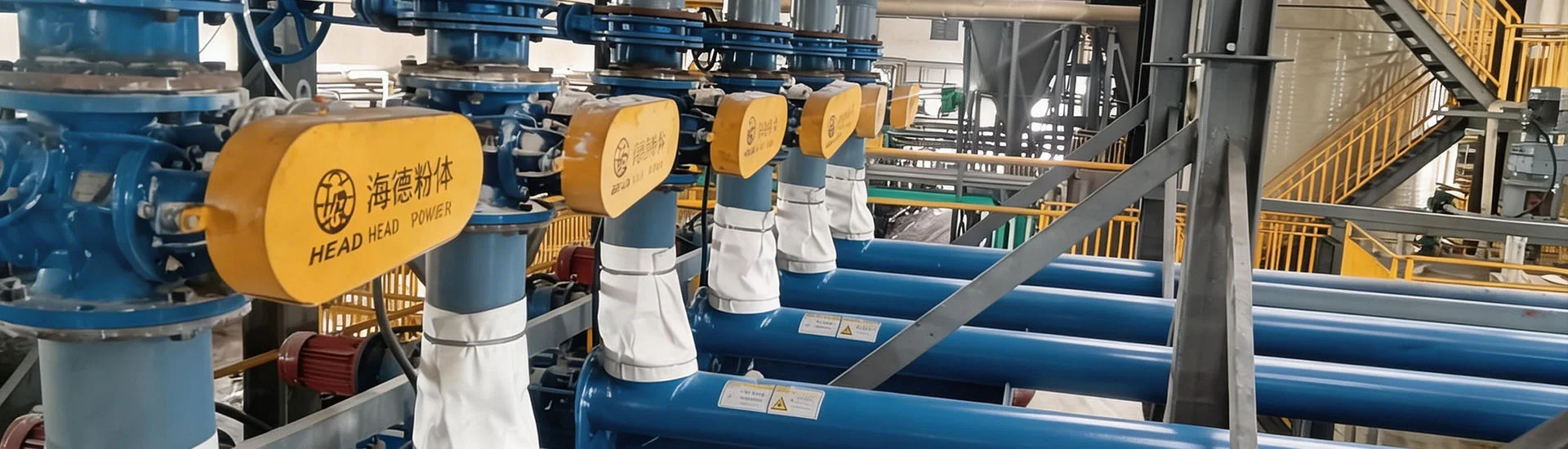
With over a decade of experience in the pneumatic conveying industry, our company specializes in a full range of pneumatic conveying system equipment.
您的当前位置:首页 >> News >> Industry News

News

Rich project cases across industries, showing real implementation and proven technical strength.

Calcium carbonate powder pneumatic conveying solution technical selection

2026-07-20

Understanding the Technical Selection Criteria for Calcium Carbonate Powder Pneumatic Conveying Systems

Calcium carbonate powder, widely used in plastics, rubber, paper, coatings, and building materials, demands reliable and efficient material handling solutions. Pneumatic conveying, which moves fine powders through pipelines using air or gas, has become the preferred method for transferring calcium carbonate in modern industrial plants. However, selecting the right pneumatic conveying system is not straightforward—it requires careful evaluation of powder characteristics, system configurations, operational constraints, and long-term cost efficiency. This article provides a technical deep dive into the selection principles, key parameters, and best practices for calcium carbonate powder pneumatic conveying solutions, helping engineers and procurement professionals make informed decisions.
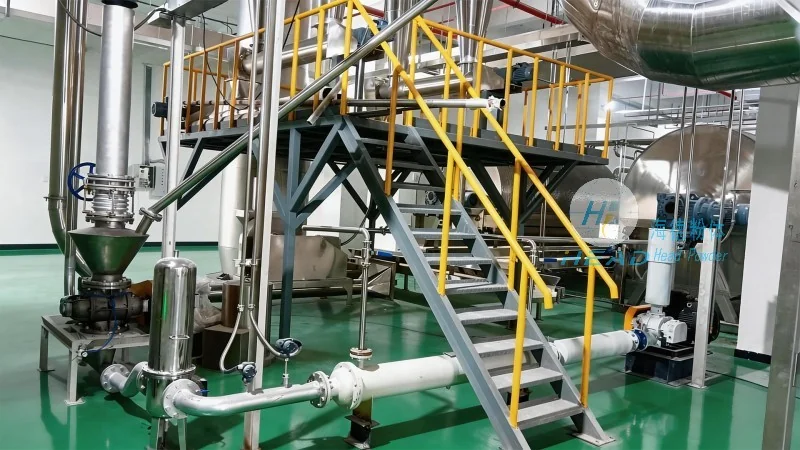
Calcium carbonate powder pneumatic conveying solution technical selection

The global calcium carbonate market was valued at approximately USD 24 billion in 2025 and is projected to grow steadily toward 2030, driven by rising demand in plastic masterbatch, paper coating, and construction sectors. As production scales increase, so does the need for automated, dust-free, and low-energy conveying systems. Pneumatic conveying offers clear advantages: enclosed transport reduces dust emissions, flexible routing accommodates plant layout changes, and minimal moving parts ensures lower maintenance. Yet, improper system design can lead to pipe blockages, product degradation, high energy consumption, and poor flow stability. Therefore, a methodical technical selection process is essential.

This article systematically covers the following aspects: powder property analysis, conveying phase selection (dense versus dilute phase), system component design, pipeline sizing, air source selection, and integration with downstream equipment. Real-world case references and performance data are included to illustrate how tailored solutions improve uptime, product quality, and operational cost. Headpowder, a specialized provider of powder handling equipment, has accumulated extensive experience in calcium carbonate applications and offers turnkey engineering support for such projects. By the end of this article, readers will have a clear framework to evaluate and specify a pneumatic conveying solution that aligns with their production requirements.
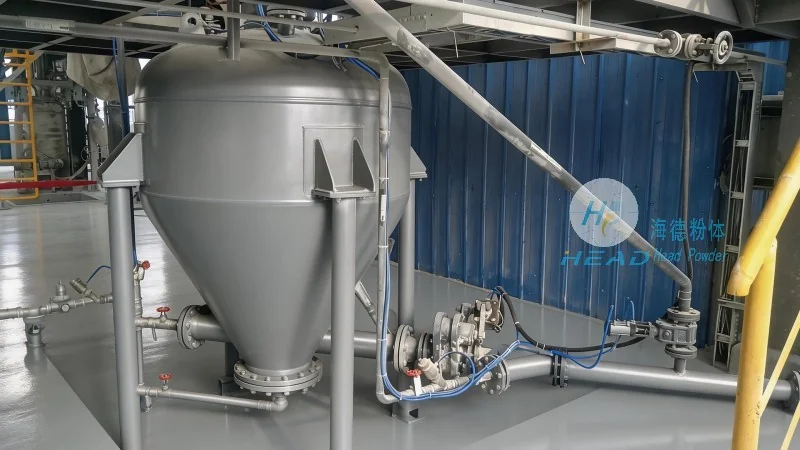
Calcium carbonate powder pneumatic conveying solution technical selection

Critical Powder Properties That Influence Conveying Behavior

Before selecting any pneumatic conveying system, it is necessary to characterize the specific grade of calcium carbonate powder. Different particle sizes, moisture contents, and bulk densities dramatically alter flow behavior. For example, ground calcium carbonate (GCC) with 325 mesh (44 µm) and 2.7 g/cm³ true density behaves differently from precipitated calcium carbonate (PCC) with nano-scale particles and high specific surface area. The key properties to measure include:

  • Bulk density: For calcium carbonate, aerated bulk density typically ranges from 0.4 to 0.8 g/cm³ depending on particle shape and compaction. Lower bulk density increases air consumption and requires higher gas velocities to suspend particles.
  • Mean particle size and distribution: Fine powders (<10 µm) are cohesive and prone to sticking on pipe walls, leading to blockages. Coarse powders (>100 µm) are easier to convey but may cause erosion at high velocities.
  • Moisture content: Calcium carbonate is hygroscopic. Even 0.5% moisture can cause caking in storage bins and impede flow in conveying lines. Drying may be required before pneumatic transfer.
  • Abrasive index: Calcium carbonate is mildly abrasive. High conveying velocities accelerate pipe wear, especially at bends. Selecting abrasion-resistant materials and optimizing bend geometry become important.
  • Angle of repose and flowability: Powders with high cohesion tend to form stable arches in hoppers. Aeration pads or vibratory feeders may be needed to ensure consistent feed into the conveying line.

Headpowder recommends performing a simple bench-scale test—such as a Jenike shear cell or a simple flow funnel—to quantify flowability. For projects involving a new calcium carbonate source, a pilot conveying test at a certified lab can validate design assumptions before committing to full-scale equipment. This step alone often prevents costly retrofits down the line.
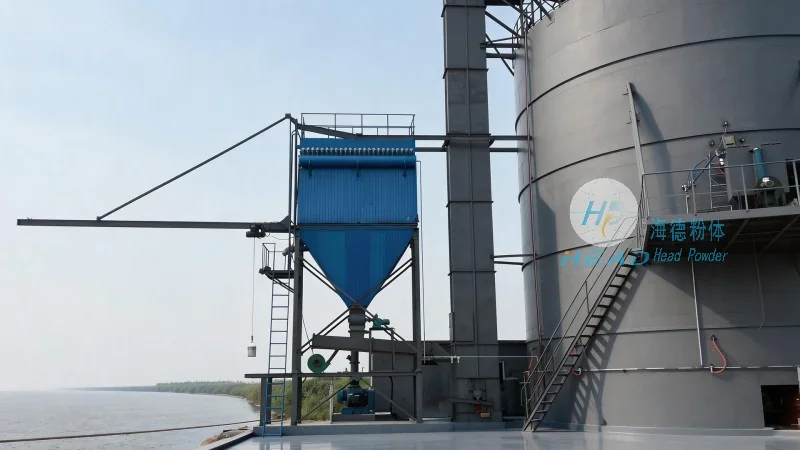
Calcium carbonate powder pneumatic conveying solution technical selection

Dense Phase versus Dilute Phase: Which Configuration Fits Your Application?

The fundamental decision in pneumatic conveying system design is the operating phase. Dilute phase conveying uses high gas velocity (typically 15–30 m/s) to suspend particles in a stream, achieving high throughput but also high energy consumption and more product attrition. Dense phase conveying operates at lower velocities (3–8 m/s) by moving a slug or plug of powder with high solids loading, which drastically reduces air usage and particle degradation. For calcium carbonate, the choice depends on the following factors:

  • Product quality requirements: In applications like plastic masterbatch or toner, even minor particle breakage can affect final product color and dispersion. Dense phase is strongly preferred because the low velocity minimizes attrition. Typical 325-mesh GCC shows less than 0.5% fines generation in dense phase versus up to 3% in dilute phase.
  • Conveying distance and throughput: For long distances (over 200 meters) or high capacities (over 20 t/h), dilute phase may be more cost-effective due to simpler equipment. However, modern dense phase systems with pressure vessels and bottom discharge can also handle long distances if properly sized.
  • Energy efficiency: Dense phase can reduce energy consumption by 30–50% compared to dilute phase because the air-to-powder ratio is much lower. For a typical plant running 10 t/h for 300 days per year, this translates to thousands of dollars in annual electricity savings.
  • Pipeline wear: Lower velocity in dense phase significantly extends pipe life. Carbon steel pipes in dilute phase conveying of calcium carbonate may need replacement every 2–3 years, while dense phase can last 5–8 years or more.

Headpowder has deployed both systems across various industries. In one case, a GCC grinding mill in Shandong replaced a dilute phase system with a headpowder-designed dense phase pressure vessel system, reducing energy cost by 40% and eliminating product fines that had been rejected by downstream customers. The system now operates at 5 t/h over 180 meters with 6 barg supply pressure and automatic PLC control. This illustrates that while dense phase requires higher upfront investment in pressure-rated vessels and valves, the total cost of ownership is often lower over a 5-year horizon.

Key Components and Their Selection Guidelines

A complete pneumatic conveying system for calcium carbonate includes a feeding device, conveying pipeline, air source, separation equipment, and control system. Each component must be matched to the powder's properties and the project's conditions.

  • Feeding device: Rotary valves are commonly used for dilute phase feeding, but positive pressure from a blow tank (pressure vessel) is more suitable for dense phase. The blow tank should have a conical bottom with an aeration disk to aid fluidization. For cohesive powders, a screw feeder with variable speed drive can provide a steady feed rate.
  • Pipeline routing: Minimize the number of bends—each 90-degree bend adds pressure drop equivalent to 10–15 meters of straight pipe. Use long-radius bends (R/D > 6) to reduce wear and product degradation. If abrasive wear is a concern, install replaceable ceramic-lined bend sections at high-wear points.
  • Air source: Roots blowers are adequate for dilute phase up to 0.8 barg. For dense phase requiring 2–6 barg, screw compressors or reciprocating compressors are used. Oil-free air is recommended to avoid contaminating the calcium carbonate. In some food-grade or electronic-grade applications, nitrogen can be used as the conveying gas to prevent oxidation or moisture pickup.
  • Separation: Cyclones are efficient for particles > 10 µm, but bag filters or cartridge filters are needed for fine calcium carbonate to capture sub-micron dust. The filter area should be sized to keep the pressure drop below 200 mbar. Pulse-jet cleaning is standard for continuous operation.
  • Control system: A PLC with touch-screen HMI manages start-up, shutdown, and automatic pressure and flow adjustments. For dense phase, cycle timers regulate the filling and discharging of the pressure vessel. Modern systems also incorporate load cells to monitor mass flow and adjust air supply in real time.

Headpowder's engineering team customizes each component based on the specific powder analysis. For example, when handling high-moisture calcium carbonate (up to 1% moisture), they add a hot air injection ring at the feed point to prevent condensation and caking inside the pipeline. Such tailored details make the difference between a system that runs smoothly and one that experiences frequent stoppages.

Sizing the Pipeline and Airflow for Optimal Performance

Proper sizing of the conveying pipeline ensures that the powder moves without settling or blocking. The key parameters are pipe diameter, gas velocity, and pressure drop. For calcium carbonate, the following empirical rules apply:

  • Minimum conveyance velocity: For dilute phase, maintain an air velocity of 18–22 m/s at the pipe inlet and 12–15 m/s at the outlet. For dense phase, keep the velocity between 4–6 m/s. Falling below the saltation velocity (the speed at which particles start to drop out) leads to blockages.
  • Pipe diameter: Typically 50–200 mm for industrial systems. A larger diameter reduces velocity for a given flow rate, which may help transition from dilute to dense phase, but also increases capital cost. Use a standard schedule 40 carbon steel pipe, or schedule 80 for high-pressure dense phase.
  • Pressure drop calculation: The total pressure drop includes friction loss, elevation gain, and acceleration. Online calculators or software (like PneuCalc or proprietary tools from headpowder) can estimate this accurately. As a rule of thumb, for a 100-meter horizontal line conveying 5 t/h of GCC at dense phase, the pressure drop is about 0.5–1.0 bar.
  • Air-to-powder ratio: For dense phase, a typical ratio is 1:10 to 1:20 (kg air per kg powder). For dilute phase, it ranges from 1:1 to 1:5. This directly impacts compressor sizing. A lower ratio means smaller compressor and lower operating cost.

Headpowder often performs a Computational Fluid Dynamics (CFD) simulation for complex installations—such as multiple discharge points or vertical lifts over 30 meters—to verify that particle trajectories avoid dead zones. In one project for a calcium carbonate masterbatch plant, the simulation identified a 10-degree downward slope in one section that allowed better flow, eliminating previous blockage issues. This attention to detail ensures reliable performance from day one.

Integration with Storage and Downstream Equipment

The pneumatic conveying system does not operate in isolation. It must be seamlessly integrated with upstream grinding mills, storage silos, and downstream mixers or packaging machines. Key considerations include:

  • Silo design: Storage silos for calcium carbonate should have a hopper angle of at least 60–70 degrees from horizontal to encourage mass flow. Use aerated bottom discharge to prevent bridging. Silo level indicators (radar or capacitance) feed into the conveying system's PLC to control start/stop.
  • Mill-to-conveyor transition: After grinding, the powder is typically hot (60–80°C). The conveying system must be designed to handle elevated temperatures without degrading the pipe seals or filter bags. Cooling cyclones or jacketed pipes may be required if the temperature exceeds 80°C.
  • Multiple destinations: If the same conveying line feeds several silos or packing stations, use diverting valves with wear-resistant seals. Headpowder recommends flap-type diverters for fine powders to avoid dust leakage, with position feedback to the PLC for automated routing.
  • Dust collection: All storage and transfer points must be connected to a central dust collection system. For calcium carbonate, standard baghouses with PTFE membranes offer high filtration efficiency. The collected dust can be returned to the conveying line to minimize product loss.

One successful implementation by headpowder involved a plastic compounding facility that receives GCC from three different mills. By designing a single dense-phase conveying line with automatic switching between sources and a distribution manifold to six holding silos, the client reduced equipment footprint by 35% and eliminated cross-contamination. The system uses a centralized compressor station, further lowering noise levels and maintenance costs.

Economic Evaluation and Total Cost of Ownership

Selecting a pneumatic conveying solution is ultimately a business decision. Beyond initial capital expenditure, the total cost of ownership (TCO) over a 10-year life includes energy, maintenance, replacement parts, and downtime losses. For calcium carbonate conveying, the following factors dominate TCO:

  • Energy cost: Compressors typically consume 60–70% of total system energy. A dense phase system can cut energy use per ton by half compared to dilute phase. At an electricity price of USD 0.10/kWh, a 10 t/h dilute system costing USD 50,000/year in power can be reduced to USD 30,000/year with dense phase—saving USD 20,000 annually.
  • Pipe replacement: Carbon steel pipe for dilute phase may need replacement every 2–3 years at a cost of USD 15,000–30,000, whereas dense phase pipes last 6–8 years. Ceramic-lined bend sections add about 20% to initial cost but extend life significantly.
  • Maintenance labor: Rotary valves and compressors require periodic overhaul. Dense phase systems have fewer moving parts (no high-speed rotary valve) and thus lower maintenance hours. A typical dense phase pressure vessel valve needs service every 12 months versus 6 months for a dilute rotary valve.
  • Downtime cost: An unexpected blockage can halt production for hours. For a plant producing 10 t/h and selling at USD 200/t, even 2 hours of downtime costs USD 4,000 in lost revenue. Reliable dense phase systems with proven flow stability reduce this risk.

Headpowder provides comprehensive TCO analysis during the quotation phase, helping clients compare options transparently. In a recent comparison for a 15 t/h GCC site, the dense phase system showed a payback period of 18 months versus a cheaper dilute system that had 24% higher overall TCO. The client chose dense phase and has since reported 99.2% uptime over two years.

Future Trends and Smart Conveying Technologies

The pneumatic conveying industry is moving toward digitalization and predictive maintenance. For calcium carbonate applications, several trends are emerging:

  • Real-time flow monitoring: Non-invasive sensors (microwave or triboelectric) can detect changes in flow velocity and solid loading, enabling early warning of blockages. Headpowder integrates these sensors with the control system to automatically adjust air supply or initiate reverse-pulse cleaning.
  • Variable frequency drive (VFD) compressors: Matching compressor output to actual demand via VFD reduces energy waste during partial load conditions. Combined with a PID control loop, the system maintains optimal conveying velocity without manual intervention.
  • Digital twin simulation: Operators can simulate different conveying scenarios (e.g., changing powder grade, switching to a different silo) using a digital twin that mirrors the actual pipeline. This helps train staff and optimize shift schedules without disrupting production.
  • Low-carbon designs: As carbon footprint regulations tighten, dense phase conveying is gaining favor because it uses less energy and generates less CO₂ per ton transferred. Headpowder is developing hybrid systems that combine compressed air with vacuum assist for ultra-low energy consumption.

By staying ahead of these trends, plant managers can future-proof their investments. Headpowder offers upgrade packages that retrofit existing dilute lines to dense phase operation, often with a 12-month payback from energy savings alone.

Conclusion: A Structured Approach to Technical Selection

Selecting a calcium carbonate powder pneumatic conveying solution requires balancing powder characteristics, system performance, economic factors, and long-term reliability. There is no one-size-fits-all answer; each plant must evaluate its unique conditions—particle size distribution, moisture, conveying distance, throughput, and product quality standards. The technical selection process should begin with thorough powder testing, followed by phase selection (dense phase recommended for most fine calcium carbonate grades), careful pipeline sizing, component matching, and integration with existing equipment. Total cost of ownership should guide the final decision, with attention to energy efficiency, maintenance simplicity, and uptime.

Headpowder, with over a decade of experience in handling abrasive and cohesive powders, has delivered more than 200 calcium carbonate conveying projects globally. Their engineering team offers in-plant audits, CFD simulation, and turnkey installation services. By partnering with headpowder, clients gain access to proven design methodologies, real-time monitoring capabilities, and responsive after-sales support. For projects requiring a reliable, energy-efficient, and low-maintenance pneumatic conveying system, a detailed technical consultation is the first step toward achieving operational excellence.

For more information and to discuss your specific calcium carbonate conveying requirements, contact headpowder directly. (咨询热线:156-6277-7102)

相关推荐

Shandong headpowder Engineering Co., Ltd. All rights reserved.

回到顶部