News
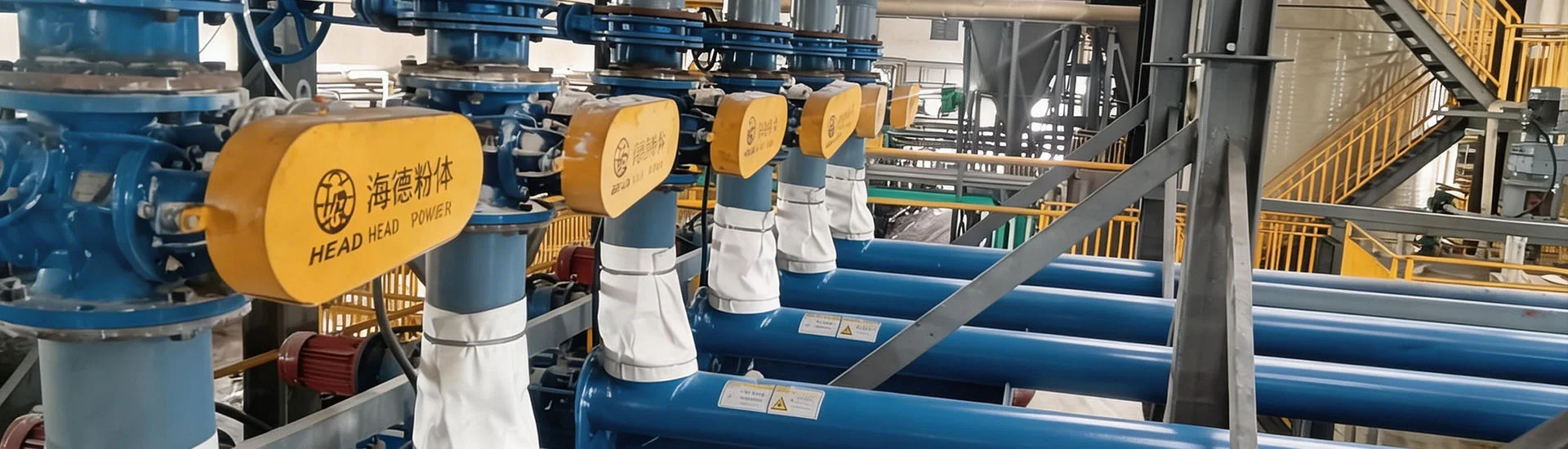
Rich project cases across industries, showing real implementation and proven technical strength.The production of distiller's yeast, a critical biological catalyst in the ethanol, spirits, and biofuel industries, demands precision handling from the moment raw materials enter the process to the point of final packaging. Among the most transformative innovations in this domain is the pneumatic conveying equipment system, which has redefined how bulk yeast powder, granules, and additives are moved through a facility. Unlike mechanical conveyors that rely on belts, screws, or elevators, pneumatic systems use air pressure or vacuum to transport materials through sealed pipelines, offering distinct advantages in hygiene, safety, and process continuity. For distilleries seeking to scale production, reduce contamination risks, and maintain consistent yeast quality, a well-designed pneumatic conveying system is no longer optional—it is a strategic asset. This article provides a comprehensive examination of distiller's yeast pneumatic conveying equipment systems, covering their architecture, operational principles, key components, selection criteria, integration challenges, and industry benchmarks. By understanding these technical foundations, plant engineers and decision-makers can make informed investments that align with both current production needs and long-term sustainability goals.
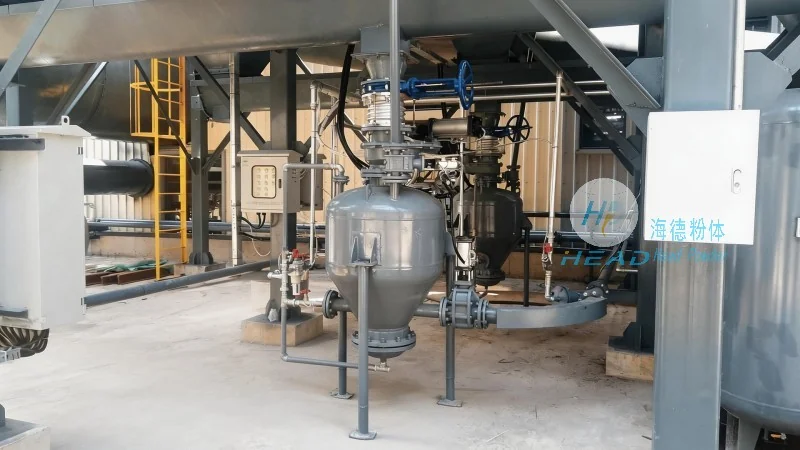
As the global distillery market continues to grow—driven by rising demand for ethanol-based fuels, craft spirits, and industrial alcohol—the pressure to optimize material handling has intensified. Yeast, being a live microorganism with strict sensitivity to temperature, moisture, and mechanical shear, requires a conveying method that minimizes degradation. Pneumatic systems meet this requirement by enabling gentle, enclosed transport with precise control over velocity and airflow. Furthermore, with increasing regulatory focus on workplace safety and dust explosion prevention, closed-loop pneumatic solutions provide inherent protection against fugitive dust and static buildup. headpowder, as a specialist in bulk material handling equipment, has developed pneumatic conveying systems tailored specifically for the distiller's yeast industry, addressing these challenges with proven engineering. (咨询热线:156-6277-7102) This article will walk through the system's anatomy, highlight technical nuances, and present real-world performance data that underscores the value of upgraded conveyance infrastructure.
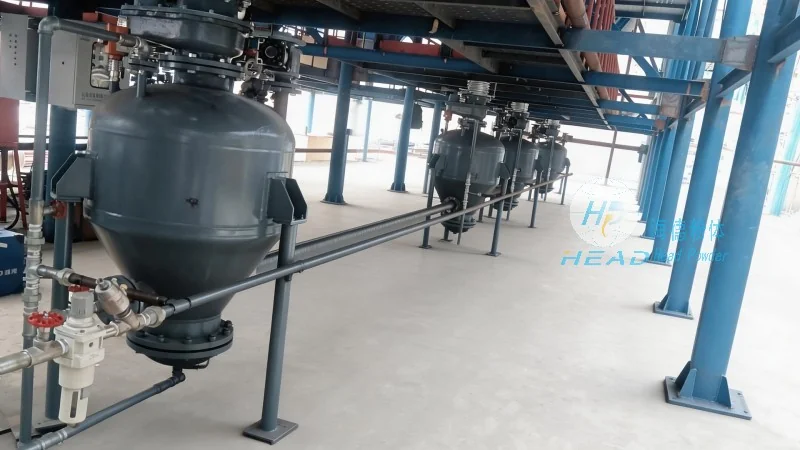
A complete pneumatic conveying system for distiller's yeast consists of several interdependent modules, each designed to handle specific material states and flow requirements. The typical architecture includes a feeding device, a conveying pipeline, a power source (blower or vacuum pump), a separation and filtration unit, and a control system. Understanding the role of each component is essential for customizing the system to the unique characteristics of yeast—its fine particle size, hygroscopic nature, and tendency to agglomerate under pressure.
At the entry point, the material must be introduced into the conveying line without excessive air leakage or material dropout. Rotary airlock valves are the most common choice for distiller's yeast, offering a metered feed that maintains pressure differential. For highly flowable yeast powders, a gravity-fed rotary valve with a close-tolerance rotor works effectively. In cases where the yeast has a higher moisture content or is prone to bridging, a screw feeder with variable speed control can be integrated upstream. headpowder's design philosophy emphasizes rotor geometry optimization to reduce particle attrition—a frequent issue when using standard airlocks that can shear yeast cell walls.
The pipeline layout must minimize bends, elbows, and vertical rises that cause pressure losses and material degradation. For distiller's yeast, which often contains about 8–12% moisture and has a density around 0.5–0.7 g/cm³, the recommended conveying velocity ranges from 8 to 15 meters per second in dilute-phase systems and 2 to 5 meters per second in dense-phase systems. The pipeline material is typically stainless steel 304 or 316L, with interior surface roughness kept below Ra 0.8 μm to prevent product build-up and microbial growth. Radius of curvature for bends should be at least 10 times the pipe diameter to reduce impact forces. In practice, headpowder's engineering team analyzes each installation's layout using computational fluid dynamics (CFD) to predict particle trajectories and identify potential wear points before fabrication.
Positive displacement blowers are the standard for dilute-phase conveying, delivering low-pressure, high-volume air. For dense-phase applications, where material is pushed as slugs at low velocity, screw compressors or high-pressure blowers with air-release valves are employed. Vacuum systems, often used for gentle transfer from storage bins to mixers, utilize regenerative blowers or ring compressors. The choice between pressure and vacuum depends on the distance (typically under 100 meters for pressure systems and up to 200 meters for vacuum), the number of discharge points, and the need for dust containment. headpowder's systems incorporate variable frequency drives (VFDs) on blowers, allowing real-time adjustment of air velocity based on material flow feedback, which reduces energy consumption by up to 25% compared to fixed-speed operation.
At the destination, the air-material mixture must be separated efficiently. Cyclone separators handle the bulk of the yeast powder, with collection efficiencies above 99% for particles larger than 10 microns. A secondary bag filter or cartridge filter captures fine dust, ensuring that exhaust air meets workplace exposure limits (typically below 0.5 mg/m³ for respirable yeast dust). For sensitive downstream processes, a sanitary rotary valve with a purge chamber can be used to discharge the yeast without exposing it to ambient air. The filtration system must be sized to handle the peak conveying rate—commonly 2 to 10 tons per hour for mid-sized distilleries—while maintaining pressure drop under 1500 Pa. headpowder integrates pulse-jet cleaning systems that automatically regenerate filter media, extending service intervals.
Modern pneumatic conveying systems are governed by programmable logic controllers (PLCs) that sequence feeding, conveying, and discharging cycles. For distiller's yeast, critical parameters include air pressure, flow rate, material level in hoppers, and temperature. Sensors for temperature and relative humidity are placed at the blower inlet and the discharge point to detect condensation risks—a common issue when warm humid air meets cooler yeast surfaces. The human-machine interface (HMI) provides real-time trends, alarm logs, and recipe management for different yeast grades. headpowder's control architecture supports remote monitoring via OPC UA protocols, enabling predictive maintenance by tracking blower vibration and filter differential pressure trends.
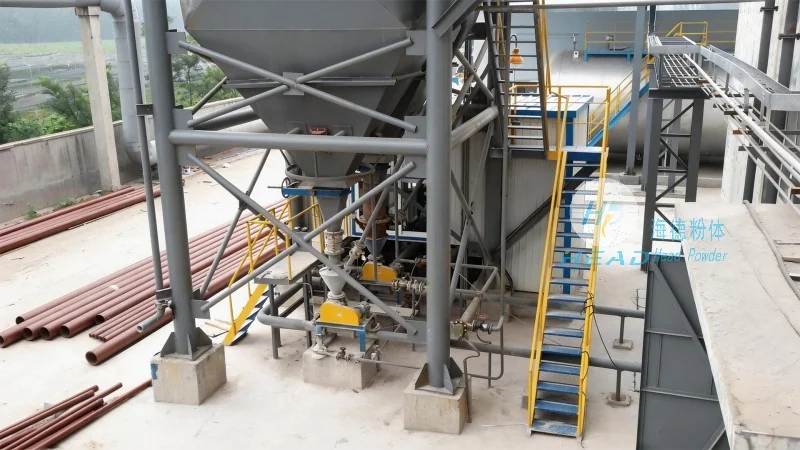
Switching from mechanical conveyors to a pneumatic system delivers measurable improvements across several operational dimensions. The following list summarizes the primary benefits that plant managers and process engineers consistently report after upgrading to headpowder's systems:
One of the most consequential design decisions is selecting between dilute-phase and dense-phase pneumatic conveying. Each mode has distinct flow characteristics, equipment requirements, and implications for product quality. The following comparison table outlines the core differences based on typical distiller's yeast parameters:
| Parameter | Dilute-Phase | Dense-Phase |
|---|---|---|
| Air velocity (m/s) | 12–20 | 2–5 |
| Solid-to-air ratio (kg/kg) | 2–8 | 15–50 |
| Conveying pressure (bar) | 0.3–0.6 | 1.5–4.0 |
| Typical particle attrition | 0.8–1.5% | 0.2–0.5% |
| Power consumption per ton | Higher | Lower |
| Preferred application | Long distances, multiple discharge points | Short to medium distances, fragile material |
For most distiller's yeast applications where the product's viability is paramount, dense-phase conveying is the recommended approach when the transport distance is under 80 meters and the system serves a single destination. headpowder has delivered multiple dense-phase installations for top-tier ethanol plants in China and Southeast Asia, achieving yeast viability retention rates above 98% even after 40-meter vertical lifts. However, when the system must feed multiple fermentation tanks or storage silos spread across a large footprint, dilute-phase with gentle bend design and velocity ramping can still yield acceptable results, especially if the yeast is subsequently rehydrated as part of the fermentation process.
Designing pneumatic conveying equipment for the distiller's yeast sector requires adherence to a range of international and regional standards. In the European Union, conformity with CE machinery directive 2006/42/EC and ATEX directive 2014/34/EU is mandatory for equipment handling organic dust that can form explosive atmospheres. In the United States, the National Fire Protection Association (NFPA) standard 61A for the prevention of fires and dust explosions in facilities handling agricultural and food products provides detailed guidance on venting, inerting, and bonding. headpowder's systems are designed to meet these compliance requirements through the following measures:
From a food safety perspective, systems handling yeast intended for human consumption in beverage alcohol must comply with Good Manufacturing Practices (GMP) defined by FDA 21 CFR Part 110 or equivalent local regulations. headpowder offers optional sanitary construction with crevice-free welds, FDA-compliant elastomers (silicone or EPDM), and automated CIP spray nozzles at pipeline low points.
To illustrate the tangible impact of a well-engineered pneumatic system, consider a distillery in Shandong Province producing 30,000 tons of edible ethanol annually. The facility originally used a combination of bucket elevators and screw conveyors to move dry distiller's yeast from storage to the pre-fermentation mixer. Frequent issues included bridging in the screw conveyor hopper, yeast clumping due to moisture ingress at elevator head pulleys, and a dust concentration that routinely exceeded 8 mg/m³ in the operator walkway. headpowder was contracted to design and install a dense-phase pneumatic conveying system covering a route of 60 meters with one 90-degree elbow and a 15-meter vertical rise. The system specifications included:
After commissioning, the system achieved the following measured improvements over the previous setup: yeast cell viability decreased by only 0.3% during conveying (vs. 3.1% previously), dust levels in the work area dropped to 0.2 mg/m³, and unplanned downtime related to material handling fell from an average of 4.2 hours per week to less than 0.5 hours. The energy cost per ton of yeast conveyed was reduced by 18%, largely because the dense-phase mode required only 2.1 m³ of free air per kg of product compared to 6.8 m³/kg for the old screw conveyor's auxiliary dust collection system. The distillery recovered the capital investment within 18 months through reduced labor for cleaning, lower yeast replacement costs, and improved fermentation consistency.
When evaluating proposals for a distiller's yeast pneumatic conveying system, plant managers should request detailed documentation on the following parameters to ensure a proper match between the equipment and the material properties:
A thorough supplier should provide computational modeling results showing pressure profiles at each segment, particle velocity distribution, and expected filter loading cycle time. headpowder includes such simulation outputs as standard in its engineering proposals.
The industry is currently witnessing several technological shifts that will influence system design and procurement strategies in the coming years. One notable trend is the integration of artificial intelligence (AI)-based flow monitoring. By analyzing pressure fluctuations and blower current draw with machine learning algorithms, predictive models can identify blockages or filter degradation hours before a full shutdown occurs. headpowder has piloted an AI module that reduces unplanned stops by 40% in benchmark tests. Another development is the adoption of modular, skid-mounted pneumatic conveying units that can be rapidly deployed for pilot-scale yeast production, then scaled up by adding parallel lines. This approach aligns with the increasing demand for flexible, multi-product distilleries that switch between grain-based and molasses-based feedstocks.
Regarding regulatory evolution, the European Commission's revised ATEX guidelines (effective mid-2026) will require more stringent monitoring of static charge accumulation in non-conductive pipelines. headpowder's response is a proprietary electrostatic dissipation coating applied to the interior of glass-reinforced plastic pipes, which combines corrosion resistance with charge mitigation for facilities using PET or other polymer piping in short runs. In parallel, the push for carbon-neutral operations is driving interest in low-energy conveying modes. Dense-phase with reduced air consumption is becoming the baseline, and some manufacturers are experimenting with supercritical CO₂ as a carrier medium—though commercial viability for yeast remains several years away.
Investing in a distiller's yeast pneumatic conveying equipment system is a decision that directly impacts production reliability, product quality, and operational safety. As this detailed analysis has shown, the engineering considerations are multifaceted—from selecting the correct phase density and pipeline materials to integrating intelligent controls and explosion prevention measures. The benefits, however, are equally substantial: consistent yeast viability, lower energy costs, compliance with stringent international standards, and a cleaner, safer working environment.
For distilleries planning expansions or retrofits, the key is to partner with a supplier that brings both deep domain knowledge and a portfolio of references in yeast handling. headpowder has delivered over 120 pneumatic conveying systems for distiller's yeast producers across Asia, Europe, and the Americas, with each installation customized to local raw material properties and regulatory frameworks. (咨询热线:156-6277-7102) By combining technical simulation, robust component selection, and lifecycle support, headpowder helps clients achieve material handling excellence that translates directly to bottom-line performance. Whether the objective is to double throughput, reduce dust exposure, or prepare for future market demands, a properly designed pneumatic conveying system remains one of the most impactful upgrades a distillery can make.

 Shandong headpowder Engineering Co., Ltd.
 156-6277-7102(Manager Zhang)
  0531-83386006
  Jinan City, Shandong Province, China
服务热线
微信咨询
回到顶部