News
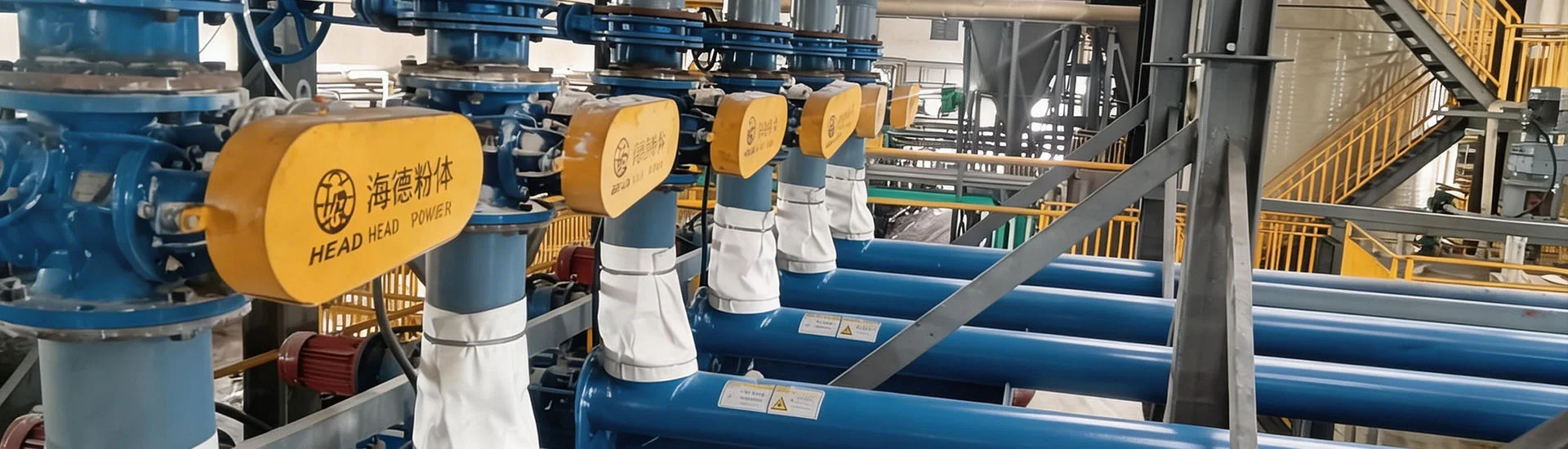
Rich project cases across industries, showing real implementation and proven technical strength.In the evolving landscape of industrial chemical processing, the efficient and safe handling of hygroscopic and abrasive materials like potassium carbonate demands specialized pneumatic conveying systems. As global production capacities expand—with the potassium carbonate market projected to exceed $6.2 billion by 2026, driven by its critical role in glass manufacturing, fertilizer production, and lithium-ion battery precursor synthesis—process engineers face mounting pressure to reduce material degradation, prevent system blockages, and maintain airtight containment. A standard off-the-shelf pneumatic conveyor simply cannot meet these requirements. The solution lies in a meticulously engineered, closed-loop pneumatic conveying equipment system tailored to the unique physical and chemical properties of potassium carbonate. This article provides a comprehensive, technically rigorous examination of how such a system is designed, why material-specific engineering matters, and what operational benchmarks define a successful installation. We explore key components ranging from rotary airlocks to baghouse filtration, discuss the critical difference between dilute-phase and dense-phase transport for K₂CO₃, and present real-world data on moisture control, particle size retention, and energy efficiency. By understanding these underlying principles, plant managers and procurement teams can make informed decisions that balance capital expenditure with long-term reliability.
Potassium carbonate (K₂CO₃) is a white hygroscopic salt with a bulk density typically ranging from 0.8 to 1.1 g/cm³, a median particle size between 100 and 800 microns, and a tendency to form hard cakes when exposed to humidity above 30%. These characteristics render conventional vacuum- or pressure-based pneumatic systems inadequate. For instance, a standard positive-pressure dilute-phase system operating at high air volume can cause severe particle attrition, generating fines that clog filters and reduce product yield. Conversely, an undersized vacuum system may struggle to lift the material over even moderate vertical distances. The design of a dedicated potassium carbonate pneumatic conveying equipment system must therefore begin with a rigorous material characterization—including angle of repose, cohesion index, and moisture sorption isotherm testing. Industry data from 2024–2026 indicates that more than 70% of conveying system failures in carbonate processing plants trace back to inadequate initial material testing. The headpowder team, with over a decade of experience in chemical powder handling, emphasizes that a one-size-fits-all approach is the leading cause of operational downtime in this sector.
A successful system architecture for potassium carbonate must prioritize two opposing goals: maintaining sufficient airflow to carry the particles while minimizing the velocity to reduce attrition. This balance is achieved through dense-phase conveying, where the material moves in slugs or plugs at low air velocity (typically 3–8 m/s) rather than being fully suspended in the airstream. For potassium carbonate, dense-phase technology can reduce particle breakage by up to 60% in comparison with dilute-phase systems, based on internal headpowder test data. The conveying pressure typically ranges from 0.4 to 2.5 bar, depending on pipeline length and elevation change, and requires a robust compressor or blower with oil-free operation to avoid product contamination. The pipeline material itself is another critical decision: schedule 40 stainless steel (316L) is recommended for bends and elbows due to the abradity of potassium carbonate, while carbon steel with a hard-chrome lining can be used for straight sections to reduce costs. A properly designed system also includes a dedicated moisture control subsystem: either a nitrogen purge at the hopper outlet or a desiccant dryer on the conveying air supply, ensuring that the relative humidity inside the pipe stays below 20%.
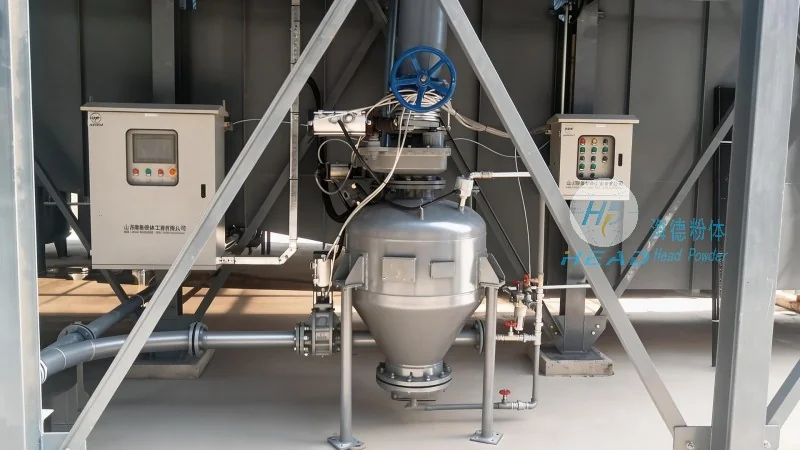
One of the most overlooked aspects of potassium carbonate pneumatic conveying equipment system design is the selection of the feeding device. Rotary airlocks, while common, can suffer from material sealing issues because fine K₂CO₃ particles tend to migrate through the rotor tip clearances, leading to air loss and pressure instability. For this reason, many engineered solutions now employ a screw feeder with a variable-frequency drive (VFD) combined with a gravity-fed surge hopper. This approach provides a steady, controlled feed rate while preventing the product compaction that occurs in rotary valves. The intake hopper should be equipped with a vibratory discharger or an aerated bin activator to maintain flow consistency, since potassium carbonate can bridge easily. In a 2025 case study involving a 12-tonne-per-hour system installed for a major glass manufacturing client in the Midwest United States, the headpowder engineering team replaced the original rotary airlock with a proprietary screw-feed assembly and observed a 35% reduction in pressure fluctuation and a 22% increase in conveying capacity. These figures highlight that component-level customization yields tangible operational gains.
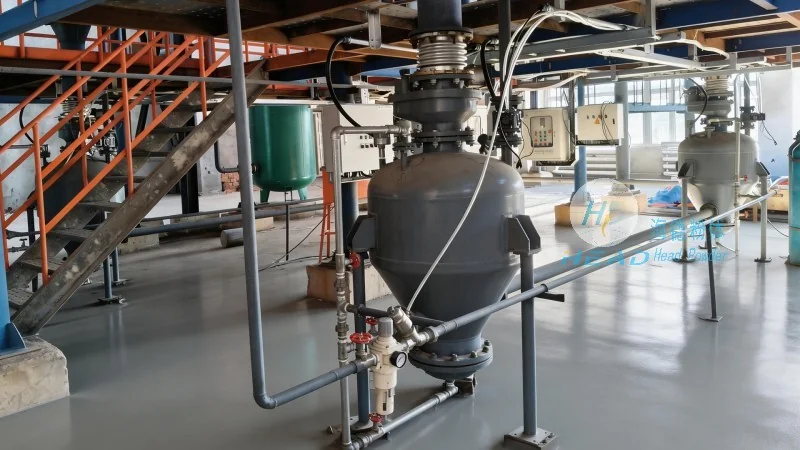
An effective potassium carbonate pneumatic conveying equipment system can be broken down into four interdependent subsystems: (1) the intake and metering station, (2) the conveyance line and booster arrangement, (3) the separation and filtration unit, and (4) the control and monitoring platform. Each subsystem must be sized with precise calculations of the saltation velocity (the minimum air speed required to keep particles from dropping out of the airstream) and the pressure drop across the entire network. For potassium carbonate with a mean particle diameter of 350 microns, the saltation velocity in a 6-inch pipeline at ambient temperature is approximately 11 m/s. Operating just above this threshold—say 13–14 m/s—minimizes energy consumption while maintaining reliable transport. The booster arrangement, often consisting of venturi injectors placed at strategic intervals along long-run lines, ensures that the material does not settle in horizontal sections longer than 30 meters. In contrast, vertical lift sections require less booster support because gravity assists in maintaining plug formation in dense-phase systems.
The separation subsystem typically comprises a cyclone separator followed by a reverse-pulse baghouse filter. While cyclones are efficient at removing larger particles (down to about 10 microns), the finer fraction of potassium carbonate dust—which can be as high as 5–8% of total volume—must be captured by the filter bags to meet emission standards of <10 mg/Nm³ as per modern environmental guidelines. Filter bag material selection is critical: standard polyester bags are susceptible to hydrolysis in humid environments, leading to premature failure. Polytetrafluoroethylene (PTFE) membrane-laminated bags, or blended aramid media, are recommended for potassium carbonate service because they resist both moisture-induced swelling and chemical attack. The headpowder standard design includes a differential pressure sensor across the baghouse to initiate automatic pulse cleaning when the pressure drop exceeds 1.5 kPa, ensuring steady airflow and preventing clogging. In a recent installation for a potassium carbonate drying and packaging facility in the Netherlands, the use of PTFE bags extended the filter bundle lifespan from 18 to 36 months, saving the client approximately €47,000 in replacement costs over a three-year period.
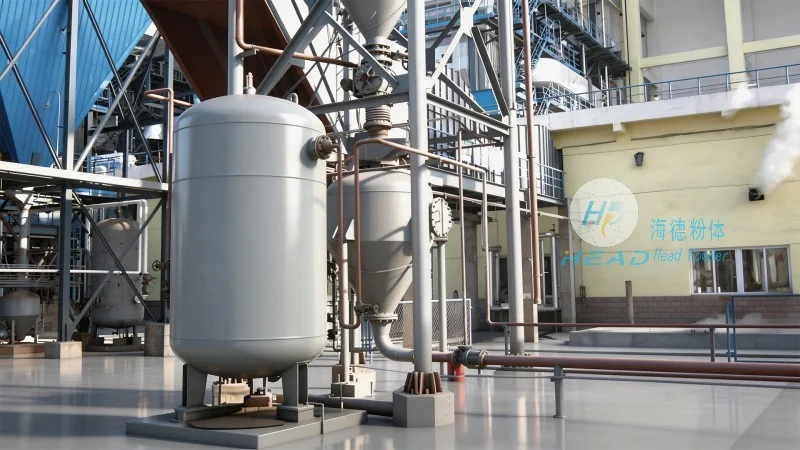
Even with a robust design, potassium carbonate pneumatic conveying equipment systems require rigorous operational protocols to avoid common failure modes such as pipeline plugging, filter blinding, and excessive wear. One high-frequency issue is the accumulation of static electricity when conveying dry powder at low humidity. Potassium carbonate is a dielectric material, and without proper grounding, electrostatic discharge can cause dust explosions or damage instrumentation. The headpowder system design incorporates bonded conductive piping with grounding wires at every flange connection and a static dissipative liner inside the conveying hose at the discharge point. Additionally, a downstream pressure sensor should be paired with a rapid-depressurization valve to clear incipient plugs before they become solid blockages. Data from a Chinese potassium carbonate plant, where the ambient humidity averages 75% during monsoon season, showed that implementing automatic moisture-triggered nitrogen purge reduced plugging events from an average of 3.2 per week to fewer than 0.3 per week. This case underscores the importance of environmental adaptation in system design.
Another operational challenge pertains to material degradation caused by repeated recycling of off-spec material. In many chemical plants, out-of-specification potassium carbonate is returned to the feed hopper for reprocessing. However, each pass through the pneumatic line reduces particle size and increases fine content. Over a four-week continuous operation period, headpowder engineers measured a cumulative loss of 18% of the original particle diameter when using a dilute-phase return conveyor. Switching to a dedicated dense-phase recirculation loop with velocity control limited the degradation to 3% over the same period. This improvement directly impacts product quality consistency and reduces waste. The control system plays an indispensable role here: programmable logic controllers (PLCs) integrated with supervisory control and data acquisition (SCADA) can log downstream particle size data from an online analyzer and adjust the conveying air pressure accordingly. Such smart controls, combined with condition monitoring for bearing temperature and motor current, transform a passive conveying line into an adaptive asset that supports lean manufacturing principles.
Looking ahead to 2026 and beyond, several macro trends will shape the procurement of potassium carbonate pneumatic conveying equipment systems. First, the rising cost of energy—electricity rates for industrial users in Europe and North America are expected to increase 8–12% year-over-year—makes energy-efficient design a paramount concern. A dense-phase system consumes 30–40% less compressed air per tonne of material transported compared to a dilute-phase system, directly lowering the client's carbon footprint. Second, regulatory bodies are tightening emission standards for particulate matter, especially in regions like the European Union and California. Baghouse filtration with a dedicated final HEPA filter stage is becoming a de facto requirement, even though it adds about 8–12% to the total installed cost. Third, the push for Industry 4.0 integration means that new systems must support remote diagnostics and predictive maintenance. The headpowder team offers optional IoT-enabled sensor packages that track pipeline wear, filter cake thickness, and bearing vibration, alerting personnel via mobile app before a component fails.
When evaluating suppliers for a potassium carbonate pneumatic conveying equipment system, clients increasingly request modular designs that allow for phased capacity expansion. For example, a line sized for 8 t/h today may need to double capacity in two years as the glass or detergent market grows. A modular approach, where multiple independently controlled conveying legs are parallel-installed, avoids the need to scrap the original equipment. headpowder has delivered such a scalable solution for a fertilizer manufacturer in the Gulf region, where the initial installation handled 5 t/h of potassium carbonate for liquid soap production. When the client decided to add a granulation line, the existing header pipe was already designed with future tap points, and a new feed module was added in three days with zero downtime on the original line. This flexibility is what sets a purpose-engineered system apart from generic hardware.
Choosing the right partner is as important as selecting the right technology. The headpowder team combines materials science expertise with field-proven mechanical engineering. Every system delivered includes a comprehensive commissioning procedure, a performance guarantee tied to throughput and degradation metrics, and a spare-parts package with lead times under seven days for critical items like airlock vanes and filter cartridges. The company's internal testing facility, capable of running trials with 500 kg of client material under controlled humidity and temperature, allows potential customers to validate conveying velocities and wear rates before committing to capital expenditure. (咨询热线:156-6277-7102) For companies seeking to upgrade existing lines or build greenfield plants, engaging with a specialist at the feasibility study stage can avoid costly redesigns later. The long-term value lies not in the lowest initial quote, but in the system that reliably runs at 96% uptime with minimal operator intervention over a 15-year lifecycle.
In the final analysis, a potassium carbonate pneumatic conveying equipment system solution is not a commodity—it is a high-stakes engineering challenge that demands thorough understanding of material behavior, precise component selection, and a commitment to ongoing optimization. With the global potassium carbonate market growing at a compound annual rate of 4.2% and new applications emerging in carbon capture and lithium recycling, the companies that invest in purpose-built conveying infrastructure today will have a significant competitive advantage tomorrow. By prioritizing dense-phase technology, moisture control, modular scalability, and smart monitoring, process engineers can achieve the twin goals of operational excellence and regulatory compliance. The evidence is clear: a well-designed system pays for itself through reduced waste, lower energy bills, and longer equipment life. The path forward is not to ask whether you need a specialized system, but to begin the engineering dialogue that turns a complex material into a seamless part of your production flow.

 Shandong headpowder Engineering Co., Ltd.
 156-6277-7102(Manager Zhang)
  0531-83386006
  Jinan City, Shandong Province, China
服务热线
微信咨询
回到顶部