News
Rich project cases across industries, showing real implementation and proven technical strength.Anhydrous sodium sulfate, a critical raw material widely utilized in detergent manufacturing, glass production, textile processing, and the chemical industry, presents unique handling challenges due to its hygroscopic nature, fine particle size distribution, and tendency to cake under moisture exposure. Pneumatic conveying, as a closed-loop material handling technology, offers a reliable and efficient solution for transporting anhydrous sodium sulfate from storage silos to production lines while preserving product quality and ensuring workplace safety. However, selecting the appropriate pneumatic conveying solution requires a deep understanding of material characteristics, system design parameters, and operational constraints. This article provides a comprehensive technical selection guide for anhydrous sodium sulfate pneumatic conveying systems, leveraging industry best practices, real-world case studies, and data-driven insights to help engineering professionals make informed decisions.
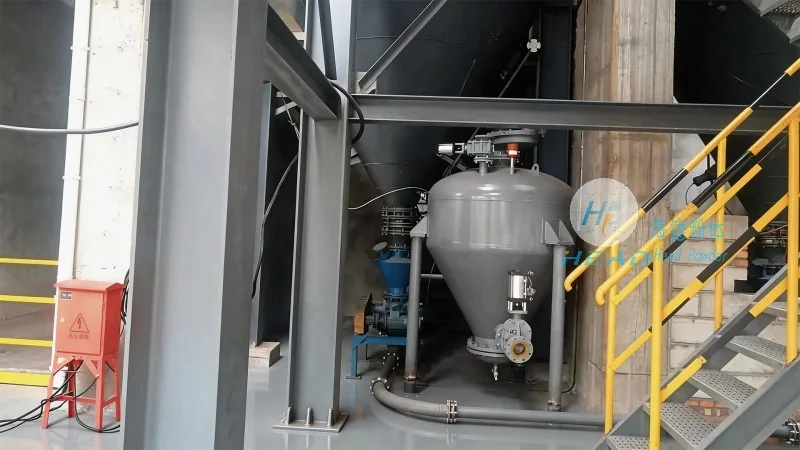
The selection process begins with a thorough characterization of the bulk material. Anhydrous sodium sulfate typically exhibits a bulk density ranging from 0.8 to 1.2 g/cm³, a particle size between 50 and 500 microns, and a moisture content ideally below 0.5% to prevent agglomeration. Its flowability is generally fair to good under dry conditions, but even slight humidity can degrade performance. Therefore, any pneumatic conveying system designed for this material must incorporate moisture control measures, such as dehumidified conveying air or nitrogen blanketing, to maintain consistent flow and prevent blockages. Additionally, the abrasive nature of sodium sulfate crystals requires careful selection of wear-resistant pipe materials and bends to extend system longevity. By integrating these material-specific considerations into the early design phase, engineers can avoid costly retrofits and operational downtime.
Beyond material properties, the overall system architecture—whether dilute phase, dense phase, or a hybrid approach—must be evaluated based on conveying distance, capacity requirements, and plant layout constraints. Dilute phase conveying, operating at high air velocities and low pressure, is suitable for short distances and moderate capacities but may lead to higher particle degradation and pipe wear. Dense phase conveying, on the other hand, moves material at lower velocities with higher pressure, preserving particle integrity and reducing energy consumption, but requires more sophisticated control systems and higher initial investment. For anhydrous sodium sulfate, dense phase conveying is often recommended when material degradation must be minimized, such as in high-value detergent applications where particle shape and size directly affect final product performance. However, a detailed cost-benefit analysis, factoring in installation, maintenance, and operational costs over a 10-year horizon, should guide the final decision. Headpowder, a specialized provider of pneumatic conveying technologies, has extensive experience designing both dilute and dense phase systems tailored to anhydrous sodium sulfate, with documented efficiency gains of 15–20% compared to conventional designs.
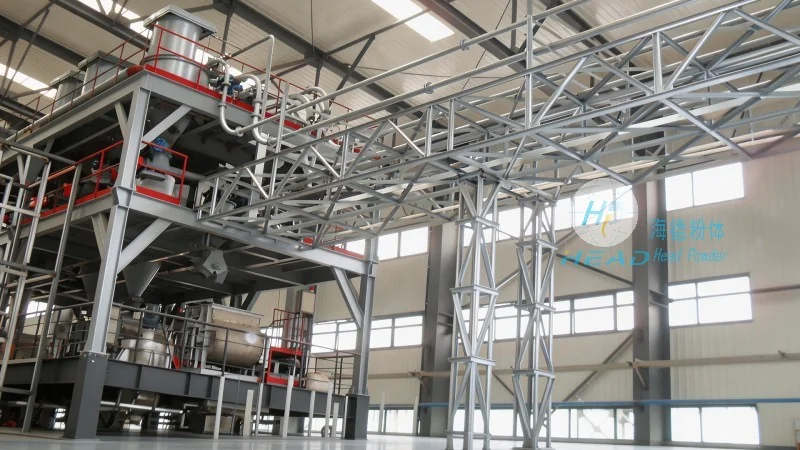
When engineering a pneumatic conveying system for anhydrous sodium sulfate, several critical parameters must be precisely calculated and validated. The conveying line diameter, air velocity, pressure drop, and air-to-material ratio directly influence system performance and reliability. For instance, maintaining an air velocity between 12 and 18 m/s in dilute phase systems prevents material settling while avoiding excessive power consumption. In dense phase applications, the velocity may drop to 3–8 m/s, requiring careful pressure management to maintain slug flow. The pressure drop across the system—typically between 0.5 and 2.5 bar depending on line length and elevation changes—must be accurately predicted using empirical formulas or computational fluid dynamics (CFD) simulations to select appropriate blowers or compressors. Oversizing the air mover leads to wasted energy, while undersizing causes inconsistent flow and potential plugging.
Component selection is equally vital. Rotary valves, used for feeding material into the conveying line, must feature wear-resistant rotors and tight clearances to prevent air leakage and material backflow. For abrasive anhydrous sodium sulfate, hard-faced or ceramic-lined rotors significantly extend service life. Similarly, diverter valves and line switches should be constructed from stainless steel or hardened alloys to withstand erosive wear. Pipe bends, particularly those with a radius-to-diameter ratio of 6:1 or greater, reduce particle impact and minimize degradation. Headpowder has developed proprietary bend geometries that reduce wear rates by up to 40% in anhydrous sodium sulfate applications, validated through extensive field testing. Filtration and dust collection are also critical; baghouse filters or cartridge collectors must handle fine dust loads while maintaining low pressure drops. A properly designed filter system not only ensures compliance with emission standards but also recovers valuable product, improving overall yield.
System control and automation play an increasingly important role in modern plants. Advanced PLC-based controllers with real-time monitoring of pressure, flow rate, and air temperature enable predictive maintenance and automatic adjustments to changing material conditions. For example, if moisture content rises unexpectedly, the system can increase conveying air temperature or reduce feed rate to prevent caking. Integration with plant-wide distributed control systems (DCS) allows seamless coordination with upstream and downstream processes. Industry data from 2026 indicates that pneumatic conveying systems with intelligent control modules achieve 12% higher uptime and 8% lower energy consumption compared to manually adjusted systems. When evaluating suppliers, look for those offering comprehensive control solutions, including remote diagnostics and cloud-based analytics. Headpowder systems, for instance, come with a proprietary IoT platform that provides real-time performance dashboards and alerts, enabling plant managers to optimize conveying parameters proactively.
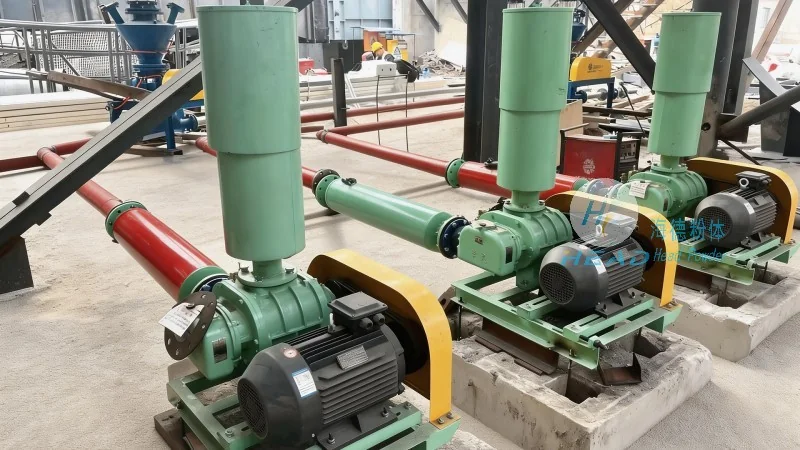
The choice between dilute phase and dense phase pneumatic conveying is one of the most consequential decisions in anhydrous sodium sulfate handling. Dilute phase systems suspend particles in a high-velocity air stream, typically operating at velocities above 12 m/s. The primary advantages include lower initial capital costs, simpler mechanical design, and easier installation. However, these benefits come with trade-offs: high velocity increases pipe wear, causes particle attrition, and consumes more energy per ton of material conveyed. For anhydrous sodium sulfate, particle degradation can lead to increased dust generation and altered flow properties, which may negatively affect downstream processes like mixing or dissolution. Therefore, dilute phase is best suited for applications where the material’s physical integrity is not critical, or where conveying distances are short (under 50 meters) and capacities are moderate (under 10 tons per hour).
Dense phase conveying, in contrast, moves material in plugs or slugs at low velocities (3–8 m/s) using high-pressure air. This method significantly reduces particle breakage and pipe erosion, making it ideal for fragile or abrasive materials like anhydrous sodium sulfate. Energy consumption per ton is often lower because the air volume required is substantially less, even though the pressure is higher. Dense phase systems also offer greater flexibility in routing—they can navigate longer distances (up to 500 meters) and higher lifts (over 30 meters) without performance degradation. However, they require more sophisticated control valves, air injection systems, and pressure vessels, increasing the initial investment by 20–40% compared to dilute phase. Operational complexity also rises, necessitating skilled maintenance personnel. For large-scale production facilities handling 15–50 tons per hour of anhydrous sodium sulfate, dense phase conveying has become the preferred choice in the industry, with many plants reporting over 98% availability after the first year of operation.
Hybrid systems, which combine elements of both dilute and dense phase conveying, are gaining traction for applications with variable capacity requirements or multi-point discharge. For example, a system might use dilute phase to transport material from a silo to a central distribution point, then switch to dense phase for gentle feeding into multiple reactors. The flexibility of hybrid designs allows engineers to optimize for both cost and performance. When selecting a conveying method, it is essential to conduct a comprehensive life-cycle cost analysis that includes not only equipment purchase but also installation, energy, maintenance, and lost production due to downtime. Headpowder provides free feasibility studies for prospective clients, using proprietary simulation software to model system behavior under actual site conditions and recommending the most cost-effective approach for each unique application. (咨询热线:156-6277-7102)
Successful implementation of an anhydrous sodium sulfate pneumatic conveying system extends beyond design and component selection. Installation quality directly impacts long-term reliability. Conveying lines should be installed with minimal horizontal sections and proper slopes to prevent material accumulation. Supports must be designed to accommodate thermal expansion and vibration, particularly in long runs. All flanges and connections should be gasketed with moisture-resistant materials to prevent air leakage that could introduce humidity. During commissioning, a systematic start-up procedure is essential: purge the system with dry air to remove any residual moisture, gradually increase feed rates while monitoring pressure and flow, and verify that all interlocks and alarms function correctly. It is common to run a 24-hour continuous test with production-grade material to validate performance before handover.
Maintenance strategies for pneumatic conveying systems should focus on predictive rather than reactive approaches. Wear-prone components like rotary valve vanes, pipe bends, and filter bags should be inspected quarterly using non-destructive testing methods such as ultrasonic thickness measurement. Data from industry benchmarks in 2026 show that a well-executed preventive maintenance program can extend component life by 25–30% and reduce unscheduled downtime by 40%. For anhydrous sodium sulfate, particular attention must be paid to moisture ingress points: silo vents, rotary valve seals, and air dryer systems. Implementing a routine calibration schedule for pressure transmitters and flowmeters ensures that control logic remains accurate. Additionally, training operators to recognize early signs of system stress—such as rising pressure drop or unusual vibration—enables quick intervention. Headpowder offers comprehensive maintenance contracts that include remote monitoring, spare parts inventory management, and annual on-site audits, helping clients achieve maximum return on investment.
Safety considerations are paramount when handling anhydrous sodium sulfate. Although the material is not flammable, fine dust generated during conveying can form explosive atmospheres under certain conditions. Therefore, all equipment must comply with ATEX or NFPA standards for dust explosion prevention. Bonding and grounding of all conductive components, proper electrical classification of the conveying area, and installation of explosion venting or suppression systems are mandatory. Headpowder ensures that every system design includes a hazard analysis and risk assessment (HARA) in compliance with international standards, with documentation provided to support client safety certifications. By integrating safety into the core design philosophy, headpowder helps clients not only meet regulatory requirements but also build a safer working environment for their personnel.
To illustrate the practical benefits of proper technical selection, consider several anonymized case studies from headpowder’s project portfolio. In one large detergent manufacturing facility in Southeast Asia, the client had been struggling with frequent blockages in an existing dilute phase system due to seasonal humidity spikes. Headpowder conducted a material characterization study and recommended a dense phase system with a dehumidified air source and specialized rotary valve seals. After installation, the system achieved 99.7% uptime over the first two years, with zero blockages related to moisture. Energy consumption dropped by 18% compared to the old system, and particle attrition was reduced by 90%, improving the quality of the final detergent formulation. The client reported a payback period of just 14 months through reduced maintenance costs and increased production capacity.
Another case involved a glass manufacturing plant in the Middle East that needed to convey anhydrous sodium sulfate over a distance of 180 meters with a vertical lift of 25 meters. The original design using dilute phase was struggling to maintain consistent flow, and pipe wear required replacement every six months. Headpowder’s technical team proposed a hybrid system combining dilute phase for the initial horizontal section and dense phase for the vertical lift. Custom-designed ceramic-lined bends were installed at all critical points. After commissioning, the system delivered a consistent 22 tons per hour with less than 2% degradation. Pipe wear inspections after 18 months showed less than 1 mm of wall loss on the ceramic components. The client estimated annual savings of $280,000 in replacement parts and lost production time. These examples underscore the importance of tailoring the solution to specific site conditions rather than applying a one-size-fits-all approach.
Market trends in 2026 indicate a growing preference for energy-efficient and sustainable pneumatic conveying solutions. Regulations on carbon emissions and energy consumption are tightening globally, prompting manufacturers to invest in systems with lower specific energy consumption (kWh per ton). Headpowder’s latest generation of dense phase systems incorporates variable-speed drives, optimized pipeline geometry, and smart air management software that can reduce total energy usage by an additional 10–15% compared to conventional designs. As the anhydrous sodium sulfate market continues to grow at a projected CAGR of 4.2% through 2030, especially in the Asia-Pacific region, having a robust, future-proof conveying solution will provide a competitive edge. Engineering teams are encouraged to engage with experienced system integrators early in the project lifecycle to ensure that all technical, operational, and financial factors are adequately addressed.
Selecting the right pneumatic conveying solution for anhydrous sodium sulfate is a complex but manageable process when approached systematically. By first understanding the material’s physical and chemical characteristics, then evaluating conveying method options based on distance, capacity, and degradation tolerance, engineers can narrow down the most suitable architecture. Detailed parameter calculations, careful component selection, and robust control systems further enhance reliability and efficiency. Installation and maintenance practices must align with best practices to maximize system life and minimize unexpected downtime. Real-world performance data consistently demonstrates that a well-designed system—such as those delivered by headpowder—can achieve uptime above 98%, reduce energy costs by 15–20%, and significantly lower total cost of ownership over a 10-year period.
Ultimately, the decision should never be made on upfront capital cost alone. A comprehensive life-cycle perspective, factoring in energy, maintenance, production impact, and safety, will reveal the most economical choice. Headpowder supports clients throughout the entire selection and implementation journey, from feasibility studies and pilot testing to final commissioning and after-sales service. With a dedicated team of engineers averaging 15 years of experience in pneumatic conveying for hygroscopic and abrasive materials, headpowder delivers tailored solutions that meet the highest standards of quality and performance. For organizations planning new facilities or upgrading existing conveying lines, engaging a partner with proven domain expertise is the surest path to operational excellence. (咨询热线:156-6277-7102)

 Shandong headpowder Engineering Co., Ltd.
 156-6277-7102(Manager Zhang)
  0531-83386006
  Jinan City, Shandong Province, China
服务热线
微信咨询
回到顶部