News
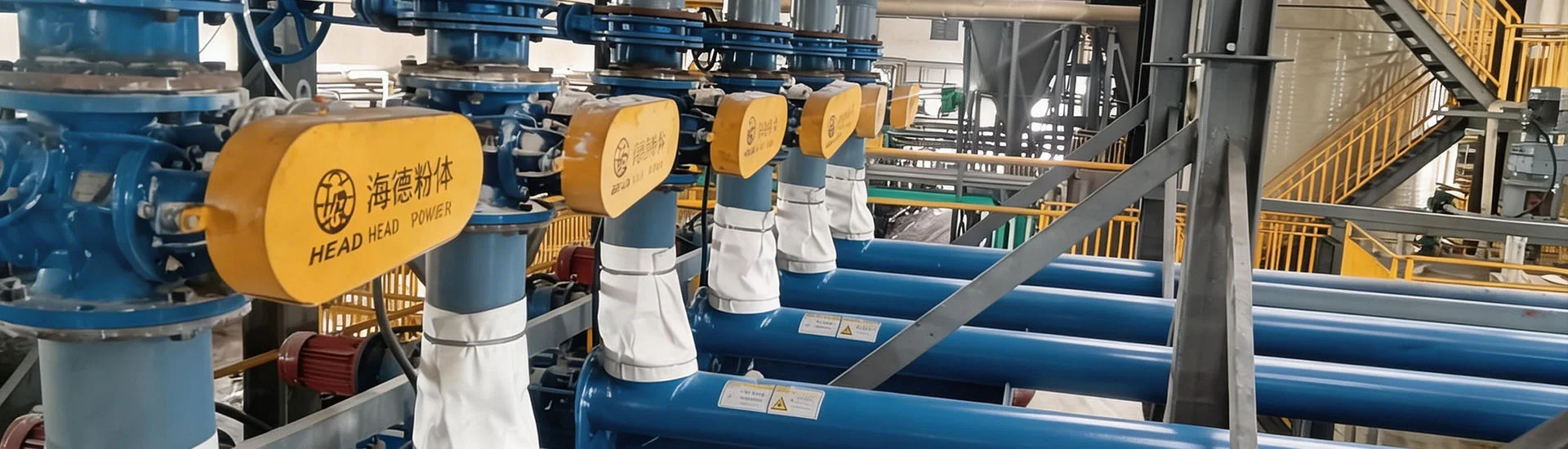
Rich project cases across industries, showing real implementation and proven technical strength.Bentonite, a clay material with high water absorption and swelling properties, plays a critical role in industries such as oil drilling, foundry, construction, and environmental remediation. Its fine particle size, high moisture sensitivity, and abrasive nature pose unique challenges for material handling. Pneumatic conveying has emerged as the preferred solution for transporting bentonite safely and efficiently over short to medium distances. Unlike mechanical conveyors, pneumatic systems offer sealed transport, reduced dust emissions, and lower maintenance requirements. However, designing a reliable bentonite pneumatic conveying system demands a deep understanding of material characteristics, flow dynamics, and equipment durability. This article provides a comprehensive technical specification for bentonite pneumatic conveying equipment, covering system architecture, key components, performance parameters, and industry best practices. It is intended for engineers, plant managers, and procurement professionals seeking to optimize their bentonite handling processes. We will also explore recent market trends and technological advancements expected by 2026, helping readers make informed decisions for long-term operational excellence.
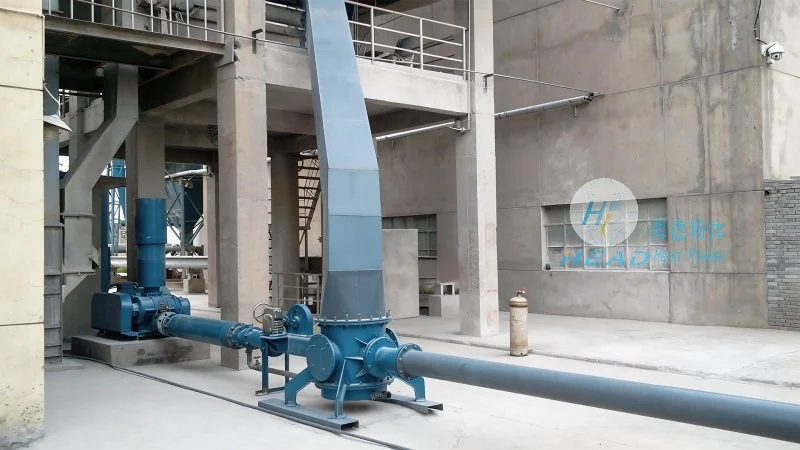
Bentonite particles typically range from 2 to 75 microns, with bulk densities varying from 600 to 950 kg/m³ depending on moisture content and compaction. The material's cohesive nature and tendency to agglomerate require careful control of air velocity and pressure to avoid pipe blockages. In dilute phase conveying, high air speeds (15–30 m/s) are used to suspend particles, but this can lead to significant pipe wear. Dense phase conveying, operating at lower velocities (3–10 m/s) and higher pressures, reduces abrasion and energy consumption but requires precise air injection and blow-tank design. The choice between dilute and dense phase must be based on throughput, distance, and particle degradation tolerance. For bentonite, dense phase is often recommended to preserve particle integrity and minimize equipment erosion. A well-designed system not only ensures consistent material flow but also complies with environmental regulations, especially regarding fugitive dust emissions.
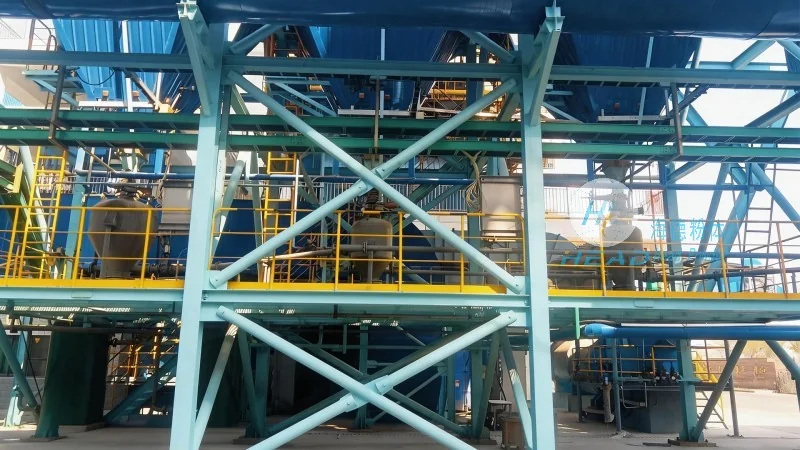
A standard bentonite pneumatic conveying system consists of a feeding device, conveying pipeline, air supply unit, separation equipment, and control system. The feeding mechanism—typically a rotary airlock or screw feeder—meters the material into the pipeline while maintaining pressure integrity. For bentonite, rotary airlocks with hardened rotor tips and wear-resistant housing are essential because of the material's abrasive nature. The blow-tank (pressure vessel) design is equally critical in dense phase systems. It must include a fluidizing membrane or bottom aeration to promote uniform powder discharge. The conveying pipeline should be constructed from wear-resistant steel (e.g., AR400 or ceramic-lined pipe) with gradual bends (radius-to-diameter ratio of at least 10:1) to reduce abrasion at elbows. Air source selection depends on required pressure and flow: positive displacement blowers for low-pressure dilute phase, screw compressors for high-pressure dense phase, or booster compressors for long-distance transport. After material reaches the destination, a baghouse filter or cyclone separator collects the bentonite powder, with the filter media selected for high dust load (typically up to 50 g/m³) and fine particulate capture (99.9% efficiency at 1 micron).
Pressure drop calculation is a fundamental engineering task. For horizontal straight pipes, the pressure drop can be estimated using the Darcy-Weisbach equation modified for gas-solid flow. A common empirical approach uses the relationship ΔP = (f·ρ·L·v²)/(2D) × (1 + K·μ), where f is the friction factor, ρ is air density, L and D are pipe length and diameter, v is air velocity, K is a material-specific constant, and μ is the solid-to-air loading ratio. For bentonite, typical loading ratios range from 10 to 30 kg solid per kg air in dense phase, and 2 to 8 in dilute phase. Pipe diameter selection should balance between velocity (≥15 m/s for dilute phase to avoid saltation) and pressure loss. A diameter too small increases velocity and wear; too large reduces carrying capacity. Industry data from recent studies show that for a 50 t/h bentonite transport over 200 m horizontal distance, a 200 mm diameter pipe with a blow-tank pressure of 3.5 bar and air consumption of 120 m³/min (at standard conditions) is a typical configuration for dense phase operation.
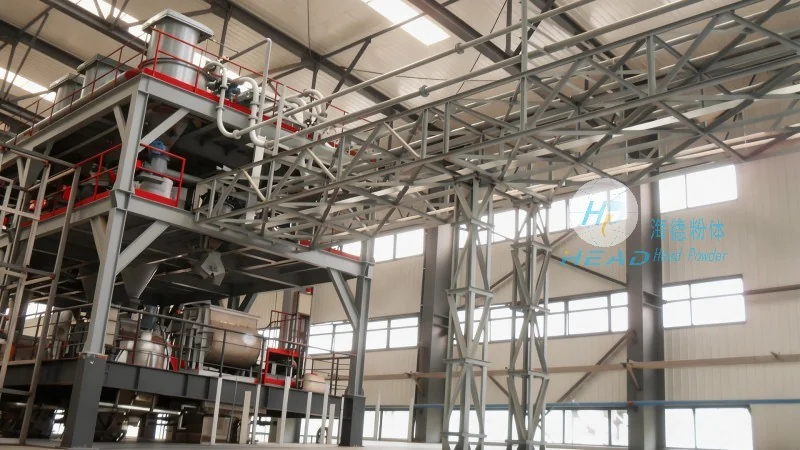
Several critical parameters govern the performance and reliability of bentonite pneumatic conveying systems. First, conveying velocity must be optimized. Minimum transport velocity for bentonite in horizontal pipes is around 10–12 m/s for dense phase and 18–20 m/s for dilute phase. Below these thresholds, particles settle and form dunes, leading to blockages. Second, solid-to-air ratio (also called material loading) directly affects energy efficiency and wear. Higher ratios reduce air flow requirements but increase pressure and pipe friction. For bentonite, a loading ratio between 15 and 25 is common in dense phase systems. Third, air pressure at the blow-tank exit determines the reach and capacity. Typical values range from 2 to 6 bar(g) for distances up to 500 m. Fourth, particle degradation must be monitored: bentonite's crystal structure can be damaged at impact velocities above 20 m/s, reducing its swelling capacity. Therefore, gentle conveying methods such as low-velocity plug flow are preferred when product quality is essential.
Moisture content is a major variable. Bentonite can absorb atmospheric water, increasing its stickiness and causing bridges in hoppers. For pneumatic conveying, the material's moisture should ideally be below 10% by weight. Above 12%, the risk of pipe adhesion rises sharply, and pre-drying may be necessary. The equipment's blow-tank and pipelines should be fitted with moisture-proof seals and, in humid climates, a compressed air dryer unit. Another parameter is temperature: bentonite handling temperatures typically stay below 80°C, as higher values can alter the clay's mineral structure. In cases where hot air is used for drying during conveying, the air heater must be controlled to avoid exceeding this limit. Finally, system controllability via PLC with variable frequency drives on blowers and screw feeders allows real-time adjustment of air flow and material feed, compensating for fluctuations in supply and demand.
Bentonite pneumatic conveying equipment must adhere to international standards for safety, performance, and environmental protection. Key standards include ISO 8387 for pneumatic conveying terminology and test methods, and ISO 14123 for safety of machinery related to airborne hazardous substances. In regions with strict emission regulations, such as the EU's ATEX directives, equipment must be designed for potentially explosive atmospheres if bentonite dust concentrations exceed minimum explosivity limits (bentonite has a Kst value around 100–150 bar·m/s, classifying it as St1). Therefore, explosion vents, passive isolation valves, and grounding systems are mandatory for indoor installations. Additionally, the American Society of Mechanical Engineers (ASME) Boiler and Pressure Vessel Code applies to blow-tanks operating above 15 psi, ensuring structural integrity. For the pipeline, ANSI/ASME B31.1 or B31.3 provides guidelines for design, welding, and inspection. Compliance with these standards not only guarantees safe operation but also facilitates insurance coverage and regulatory approvals.
Environmental noise limits also affect equipment selection. Pneumatic conveying systems can generate noise levels exceeding 85 dBA near blowers and rotary airlocks. Silencers, acoustic enclosures, and vibration dampeners are often required to meet local noise ordinances. Furthermore, sustainable operation has become a market driver: by 2026, many plants will seek energy-efficient systems with lower carbon footprints. Energy consumption per ton of conveyed bentonite can be reduced by 15–25% using variable-speed drives and optimized pipe routing. headpowder has integrated these considerations into their equipment designs, ensuring compliance with both current regulations and anticipated future standards. The company's engineering team offers pre-installation audits to identify site-specific requirements, from seismic zones to altitude effects on air density. (咨询热线:156-6277-7102)
The global bentonite market is projected to grow at a CAGR of 4.2% from 2024 to 2026, driven by increasing drilling activities in oil and gas, expansion of foundry castings, and rising demand for bentonite in landfill liners. This growth directly boosts the need for efficient pneumatic conveying equipment. Two major technological trends are shaping the industry: smart monitoring systems and wear-resistant material innovations. Smart sensors installed on pipes, blow-tanks, and filters can measure pressure, temperature, vibration, and flow rate in real time. Data analytics platforms then predict blockages or equipment failures before they occur, reducing unplanned downtime by up to 30%. headpowder's latest systems incorporate IoT-enabled control cabinets with remote diagnostics, allowing operators to adjust parameters via mobile devices. The second trend is the use of advanced alloys and ceramic linings in high-wear areas. For example, silicon carbide ceramic tiles bonded to pipe elbows extend service life from 6 months to over 2 years in bentonite handling, based on field data from early adopters.
Another development is the shift toward modular and skid-mounted systems. Pre-engineered modules allow faster installation (reducing on-site work by 40%) and easier scalability when production increases. For instance, a 10 t/h bentonite conveying module can be expanded to 25 t/h by adding a parallel blow-tank and increasing pipe diameter, without redesigning the entire layout. Automation is also advancing: PLCs now support self-learning algorithms that optimize conveying velocity and blow-tank discharge cycles based on real-time material moisture readings. By 2026, it is expected that 60% of new bentonite conveying installations will include some form of adaptive control. These innovations not only improve efficiency but also reduce operator intervention, addressing the labor shortage challenges many plants face.
To illustrate the practical application of these specifications, consider a typical foundry scenario: a plant needs to transfer 30 t/h of dry bentonite from storage silos to a muller mixer located 180 m away, with a vertical lift of 15 m. A dense phase system using a blow-tank at 4 bar pressure, a 150 mm diameter pipe with ceramic bends, and a 90 kW screw compressor was designed. The loading ratio was set at 20, resulting in an air consumption of 80 m³/min. After commissioning, the system achieved a conveying velocity of 8 m/s, with a pressure drop of 2.8 bar across the line. The power consumption measured 1.7 kWh per ton of bentonite, which is 18% lower compared to the previous dilute phase system. Maintenance intervals for pipe elbows were extended from 4 months to 14 months due to ceramic lining. In another case, a drilling fluids supplier required a mobile conveying unit for offshore platforms. headpowder supplied a containerized system with integrated dust collector and explosion-proof controls, capable of handling 15 t/h at 3.5 bar, meeting API 13A standards for bentonite quality. These real-world deployments demonstrate that careful adherence to technical parameters yields measurable benefits in reliability, cost, and safety.
For optimal long-term operation, several best practices are recommended. First, schedule regular inspections of rotary airlocks and blow-tank sealing surfaces; worn blades or gaskets cause air leakage and reduce efficiency. Second, implement a routine pipe wear monitoring program using ultrasonic thickness gauges at critical points (especially elbows). Third, maintain a log of pressure readings and compare them with baseline values; an increase of 10% or more indicates potential blockages or deposits. Fourth, train operators to recognize signs of system distress, such as unusual noise from blowers or fluctuations in material flow. Finally, collaborate with an experienced equipment provider like headpowder for system design reviews and retrofits. Their engineers can perform computational fluid dynamics (CFD) simulations to optimize pipe routing and minimize pressure losses before installation, saving significant capital and operational costs.
Selecting the right pneumatic conveying equipment for bentonite is not merely a procurement decision—it is a strategic investment in production uptime, product quality, and environmental compliance. The technical specifications detailed in this article—from pipe diameter selection and pressure drop calculations to moisture control and safety standards—form a foundational framework for system design. With the rapid advancement of smart monitoring, wear-resistant materials, and modular designs, the industry is moving toward more intelligent and efficient solutions. By 2026, plants that adopt these technologies will gain a competitive edge through lower operating costs, reduced waste, and better adaptability to changing market demands. headpowder, with its deep expertise in powder handling and commitment to innovation, continues to deliver equipment that meets these exacting standards. Whether you are upgrading an existing line or building a greenfield plant, partnering with a knowledgeable supplier ensures that your bentonite conveying system operates at peak performance for years to come. For further technical discussions or customized proposals, reach out directly to their engineering team. (咨询热线:156-6277-7102)

 Shandong headpowder Engineering Co., Ltd.
 156-6277-7102(Manager Zhang)
  0531-83386006
  Jinan City, Shandong Province, China
服务热线
微信咨询
回到顶部