News
Rich project cases across industries, showing real implementation and proven technical strength.In the highly demanding world of fertilizer production and distribution, the efficient, safe, and dust-free movement of granular and powdery materials is not just an operational preference—it is a necessity. The chemical fertilizer industry, projected to grow steadily in 2026 with global market valuations exceeding USD 200 billion, is under increasing pressure to optimize logistics, reduce product degradation, and comply with stringent environmental regulations. Traditional mechanical conveyors, such as belt or screw conveyors, often fall short when handling hygroscopic, abrasive, or friable fertilizer materials like urea, ammonium sulfate, MAP, DAP, and potassium chloride. This is where the chemical fertilizer pneumatic conveying equipment system solution emerges as a transformative approach. By utilizing air pressure or vacuum to transport materials through enclosed pipelines, these systems eliminate dust emissions, minimize cross-contamination, and drastically reduce maintenance costs. The core value proposition lies in delivering a closed-loop, low-degradation, and high-hygiene transport method that aligns with the fertilizer sector’s shift toward automated, digital, and sustainable production. As a dedicated provider in this niche, Headpowder leverages over two decades of engineering experience to design customized pneumatic conveying solutions that address the unique challenges of density, particle size distribution, and moisture sensitivity inherent in chemical fertilizers. This article will delve into the technical architecture, key selection parameters, system configuration strategies, and real-world implementation insights, offering a comprehensive roadmap for fertilizer producers seeking to upgrade their material handling infrastructure in the upcoming market cycle.
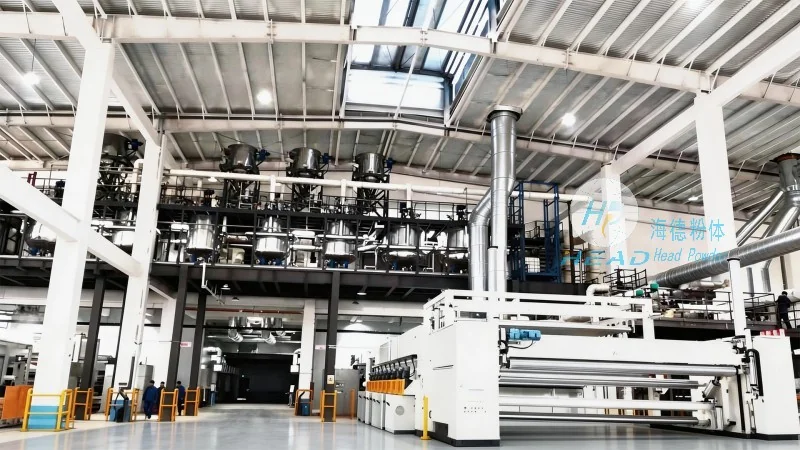
When evaluating material handling options for a fertilizer facility, decision-makers must weigh factors such as throughput capacity, energy efficiency, product quality preservation, and workplace safety. Mechanical conveyors, while familiar, present several limitations. Belt conveyors have exposed surfaces that release fugitive dust, leading to product loss and respiratory hazards for workers. Screw conveyors often crush fragile fertilizer prills, increasing fines content and reducing marketability. In contrast, pneumatic conveying offers a sealed transportation environment that retains the original particle integrity and prevents moisture absorption—a critical advantage for hygroscopic fertilizers. Additionally, pneumatic systems can navigate complex plant layouts with multiple bends, elevations, and branching points, enabling flexible routing without the spatial constraints of mechanical systems. According to industry data published in the 2026 Chemical Processing Global Outlook, pneumatic systems can achieve conveying distances exceeding 500 meters with minimal pressure drop, making them ideal for large-scale storage-to-blending or blending-to-packaging operations. Headpowder’s proprietary system design incorporates wear-resistant pipe bends, intelligent air-flow control, and real-time particle velocity monitoring to further reduce abrasion and energy consumption. The result is a total cost of ownership that, over a 10-year equipment life, is frequently 15%–25% lower than equivalent mechanical solutions when factoring in maintenance, downtime, and product quality improvements.
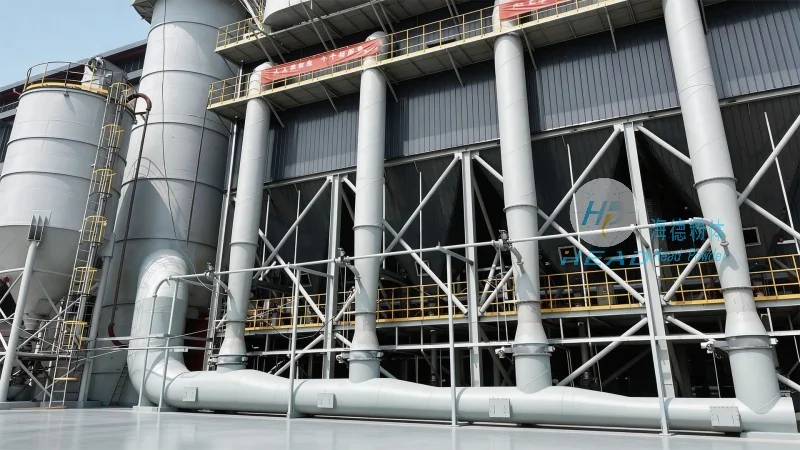
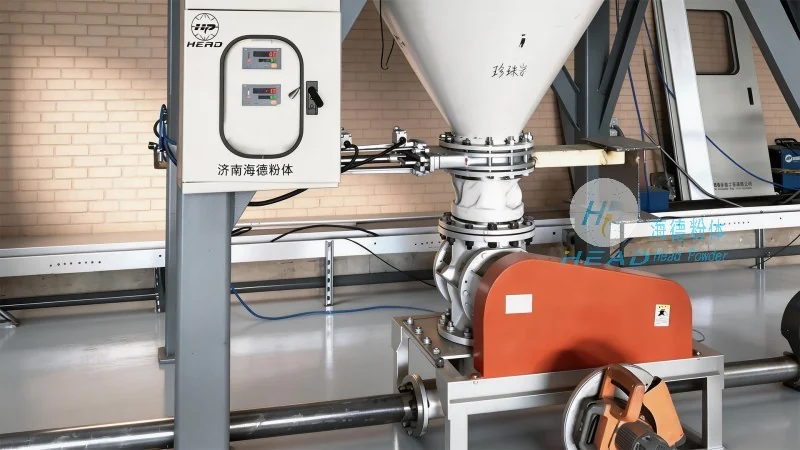
A robust pneumatic conveying system for fertilizers consists of several tightly integrated modules, each engineered to handle specific material properties and operational demands. Below is a breakdown of the essential subsystems and their functions:
The decision between dilute-phase, dense-phase, and medium-phase conveying hinges on the physical properties of the specific fertilizer type and the required throughput. Dilute-phase systems suspend particles in a high-velocity air stream (15–30 m/s) and work well for free-flowing granular fertilizers that can tolerate moderate attrition. For ammonium sulfate or urea prills, dilute-phase offers high capacity (up to 80 t/h) with relatively low capital cost. However, the high velocity can increase abrasion and particle degradation for more fragile materials. Dense-phase conveying, operating at low velocities (2–8 m/s) and high pressure, pushes material in slugs or plugs through the line, minimizing product damage and dust generation. This is ideal for coated fertilizers or hygroscopic blends that must maintain a low fines percentage. Medium-phase (also called strand-phase) provides a balanced approach, with velocities around 8–15 m/s, suitable for moderate fragility and moderate capacity. Headpowder’s engineers perform detailed Material Characterization Tests (MCT) on each client’s fertilizer sample—measuring particle size distribution, angle of repose, moisture content, and friability index—to recommend the optimal phase. A case study from a phosphate fertilizer plant in 2025 showed that switching from dilute-phase to controlled dense-phase reduced product breakage by 68% and lowered air filtration costs by 31%.
Designing a pneumatic conveying system for chemical fertilizers requires precise engineering calculations that account for both bulk material properties and installation constraints. Key parameters include the solids loading ratio (SLR), which is the mass flow rate of material divided by the mass flow rate of air. For dilute-phase systems, SLR typically ranges from 1 to 10, while dense-phase systems operate at SLR values above 15 up to 50 or more. The conveying line pressure drop must be calculated using empirical models such as the Zenz correlation or the Barth equation, which consider particle slip velocity and friction factors. Air velocity decay along the pipeline is another critical factor—if velocity drops below the saltation velocity (the minimum speed to keep particles suspended), plugging occurs. For fertilizer materials, saltation velocity generally falls between 12 and 20 m/s, but specific values must be verified. Pipe diameter selection follows from the required airflow and desired conveying velocity. A 100 mm diameter line handling 60 t/h of MAP at 25 m/s would require an air volume of around 1200 m³/h. Headpowder’s proprietary design software simulates the entire conveying route, including bends, vertical rises, and diverters, to optimize pipe size and blower power. The company’s standard guarantee covers throughput capacity within ±5% of the design target while maintaining a particle degradation rate below 0.5% by weight for dense-phase applications.
Even well-designed systems can encounter operational issues if not properly configured for the unique behavior of chemical fertilizers. Three frequent challenges are moisture-induced bridging, electrostatic charge buildup, and abrasive wear. Fertilizers like urea and ammonium nitrate absorb atmospheric moisture, leading to caking and plugging in the feeding device or inside the pipe. Headpowder mitigates this by incorporating heated air or nitrogen purging at the feed point and using anti-static pipe liners. Electrostatic charges generated during high-velocity conveying can cause fine particles to adhere to pipe walls or pose ignition risks in dust-laden environments. Grounding straps, conductive hoses, and carbon-fiber reinforced plastic (CFRP) pipes are standard in Headpowder’s systems for explosive atmospheres (ATEX/IECEx zones). Abrasion from hard materials like potash (KCl) requires the use of hardened steel or ceramic-lined components in high-velocity sections. Predictive maintenance based on pipe wall thickness monitoring (using ultrasonic sensors) allows clients to schedule replacements before failures occur. Headpowder recently assisted a major NPK producer in Vietnam where humidity often exceeds 80%—by implementing a closed-loop air dehumidification system and ceramic fines recovery, the client reported zero unscheduled downtime over 18 months.
A mid-sized fertilizer blending facility in the midwestern United States contacted Headpowder in early 2025 to replace an aging mechanical belt conveyor system that was causing product degradation and excessive dust in the packaging area. The facility handles 150,000 metric tons annually of prilled urea, ammonium nitrate, and magnesium sulfate. Headpowder proposed a dense-phase pneumatic conveying solution with the following specifications: system capacity 35 t/h, conveying distance 180 m (including 12 m vertical lift), four 90-degree bends, and a receiving cyclone cluster feeding three packaging lines. The design used a high-pressure rotary screw compressor (4.5 bar) with a 150 kW motor, a variable-frequency drive for airflow control, and a dual-row bag filter with HEPA-grade cartridges. Installation was completed over a two-week plant shutdown, and the system achieved commissioning targets within five days. Post-implementation results showed a 42% reduction in energy consumption per ton compared to the previous mechanical system, a 90% decrease in ambient dust levels measured at the packaging station, and product fines content dropping from 2.1% to 0.4%—significantly increasing product value and customer satisfaction. The plant manager commented that the Headpowder system’s remote diagnostic feature allowed their maintenance team to address a minor wear ring issue via a firmware update, eliminating the need for a site visit. This case exemplifies how a well-engineered pneumatic conveying solution not only solves immediate handling problems but also delivers secondary benefits in sustainability, labor efficiency, and quality consistency.
Looking toward the 2026 fertilizer industry landscape, several key trends will shape the evolution of pneumatic conveying equipment. The drive toward carbon-neutral production is prompting manufacturers to adopt energy-recovery systems—such as regenerative blowers and heat-recirculation setups—that can lower overall power consumption by up to 20%. Digital twin technology is also gaining traction: Headpowder is developing a simulation module that models the entire conveying process in real time, enabling operators to test “what-if” scenarios (e.g., changing throughput, material blend, or pipe routing) without disrupting production. Another emerging requirement is the handling of bio-organic fertilizers and controlled-release coated products that have higher moisture content and lower mechanical strength. These materials require even gentler conveying, often with soft-start feeders and low-velocity dense-phase transport. Regulatory pressure on dust emissions, particularly in regions like the European Union and China, is pushing plant owners to adopt total-enclosure systems with continuous emissions monitoring (CEM) and automatic leak detection. Headpowder’s R&D team is currently piloting a self-cleaning filter system that uses acoustic vibration to dislodge sticky fertilizers, extending media life by 300% in hygroscopic applications. The company’s commitment to staying ahead of these trends is reflected in its annual investment of 8% of revenue in new product development, with three pending patents for low-energy dense-phase injection technology.
Selecting the right supplier for a chemical fertilizer pneumatic conveying system is a decision that affects production reliability, operational safety, and long-term profitability for years to come. Headpowder differentiates itself through a combination of deep domain expertise, custom engineering, and comprehensive after-sales support. Unlike generic system integrators, Headpowder’s engineering team has specific experience with dozens of fertilizer varieties, including urea, DAP, MAP, TSP, SOP, NPK blends, and micronutrient powders. Every proposal begins with a detailed site survey and material analysis, not a template-based estimate. The company operates its own test laboratory with a full-scale pneumatic conveying loop capable of handling up to 10 t/h, allowing clients to validate system design with their own product before finalizing specifications. Quality assurance follows ISO 9001:2025 standards, and all pressure vessels are certified per ASME Section VIII or PED depending on the destination region. Spare parts availability is guaranteed for a minimum of 15 years after system handover, and the remote support team provides 24/7 troubleshooting. For any fertilizer producer—whether building a greenfield plant or retrofitting an existing facility—Headpowder offers a comprehensive package from conceptual design through commissioning and operator training. To discuss your specific material handling requirements and explore how pneumatic conveying can deliver measurable benefits in efficiency, product quality, and regulatory compliance, contact the Headpowder team (咨询热线:156-6277-7102) for a no-obligation consultation.
The chemical fertilizer industry stands at a crossroads where rising environmental expectations, labor costs, and quality demands converge. Pneumatic conveying technology, when properly engineered, provides the ideal foundation for a reliable, scalable, and environmentally responsible material transfer infrastructure. This article has presented the essential technical considerations—from selecting the correct conveying phase to designing for moisture and abrasion resistance—that underpin a successful system solution. Headpowder, drawing on years of hands-on experience with hundreds of installations globally, continues to refine its approach in alignment with the latest material science and automation advances. The message for plant operators and engineering managers is clear: investing in a high-performance pneumatic conveying system is not merely an equipment purchase; it is a strategic move toward operational excellence. By partnering with a specialist like Headpowder, facilities can achieve sustained throughput at lower total cost, enhance product quality to meet premium market segments, and demonstrate environmental stewardship through dust-free operation. As 2026 approaches, the companies that act early to upgrade their material handling systems will gain a distinct competitive advantage in an increasingly demanding global marketplace. Whether your focus is on expanding capacity, improving safety, or reducing carbon footprint, the right pneumatic conveying solution from Headpowder can deliver measurable, bankable results. For detailed system recommendations customized to your fertilizer type and plant layout, reach out to the experts directly (咨询热线:156-6277-7102). Let Headpowder help you build a material handling backbone that supports your growth for decades to come.

 Shandong headpowder Engineering Co., Ltd.
 156-6277-7102(Manager Zhang)
  0531-83386006
  Jinan City, Shandong Province, China
服务热线
微信咨询
回到顶部