News
Rich project cases across industries, showing real implementation and proven technical strength.In the rapidly evolving landscape of industrial powder handling, the transportation of fine, cohesive, and often hygroscopic materials such as bean powder presents unique engineering challenges. Bean powder, widely used in food processing, plant-based protein production, and nutritional supplement manufacturing, demands a conveying system that preserves particle integrity, prevents contamination, and maintains consistent flow rates. Traditional mechanical conveyors—screw conveyors, bucket elevators, and belt systems—often fall short when dealing with bean powder's tendency to compact, bridge, or generate airborne dust. This is where pneumatic conveying technology offers a transformative solution. At headpowder, we have dedicated years to refining the design and application of bean powder pneumatic conveying equipment, delivering systems that are not only efficient but also aligned with the stringent hygiene and safety standards of the food industry. This article provides a comprehensive overview of bean powder pneumatic conveying solutions, exploring the underlying principles, system configurations, key components, operational considerations, and industry best practices. Whether you are a plant engineer evaluating upgrade options or a production manager seeking to optimize your existing line, the insights shared here will help you make informed decisions that enhance throughput, reduce downtime, and improve product quality.
The global market for powdered food ingredients is projected to exceed USD 85 billion by 2026, driven by rising consumer demand for plant-based proteins, convenience foods, and clean-label products. Bean powder, derived from soy, chickpea, pea, or lentil sources, is a cornerstone of this growth. However, its physical properties—low bulk density (typically 0.4–0.6 g/cm³), high angle of repose (45–55 degrees), and moisture sensitivity—make it notoriously difficult to convey. A well-designed pneumatic conveying system addresses these challenges by using a controlled air stream to transport bean powder through enclosed pipelines, eliminating dust emissions and reducing manual handling risks. This article systematically covers the core aspects of such systems, including dilute-phase versus dense-phase conveying, material-to-air ratio optimization, pipeline layout strategies, and filtration requirements. By the end, you will have a clear understanding of how to select, configure, and maintain a bean powder pneumatic conveying system that delivers consistent performance and long-term reliability.
Before diving into equipment specifications, it is essential to analyze the physical and flow properties of bean powder. Particle size distribution typically ranges from 50 to 500 microns, with a significant fraction below 100 microns, contributing to its dustiness. The powder's cohesive nature arises from electrostatic charges, moisture content (often 8–12% in standard products), and surface roughness. These factors lead to common issues such as material adhering to pipe walls, blockages at bends, and segregation of fines from larger particles. In pneumatic conveying design, the material's saltation velocity—the minimum air velocity required to keep particles suspended—must be determined accurately. For bean powder, this velocity usually falls between 12 and 18 m/s, depending on particle size and moisture. Additionally, the material's abrasion index is relatively low, which means pipeline wear is less of a concern compared to mineral powders, but attention must be paid to food-grade surface finishes (Ra ≤ 0.8 μm) to prevent bacterial growth. Understanding these parameters enables engineers at headpowder to tailor system pressure, air volume, and pipe diameters precisely, ensuring gentle handling that minimizes breakage and maintains product quality.
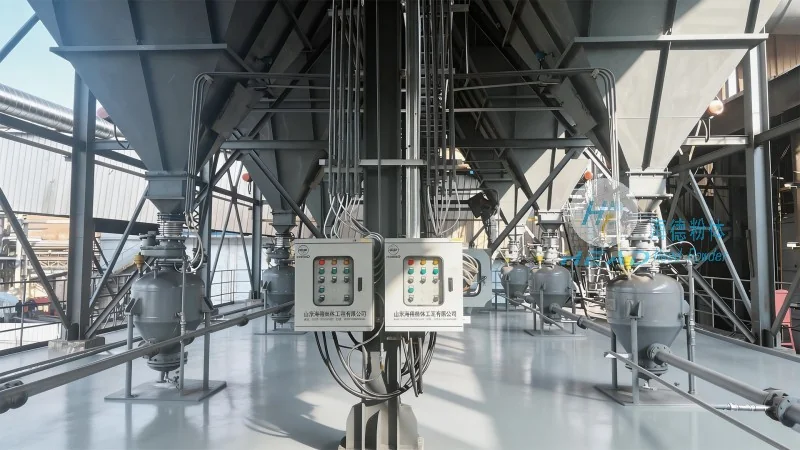
The choice between dilute-phase and dense-phase conveying is one of the most critical decisions in system design. Dilute-phase systems operate at high air velocities (typically 15–25 m/s) and low material-to-air ratios (5–15 kg of material per kg of air). They are simple, cost-effective, and suitable for short distances (up to 100 meters) and moderate throughputs (up to 10 tons per hour). However, for bean powder, high-velocity dilute-phase conveying can cause particle attrition, increased dust generation, and higher energy consumption due to friction losses. Dense-phase conveying, on the other hand, uses lower air velocities (3–8 m/s) and high material-to-air ratios (20–50 kg/kg). The powder moves as a moving bed or slug, with air pulses pushing the material through the pipeline. This method significantly reduces particle degradation—critical for preserving the functional properties of bean powder used in protein extracts—and lowers power requirements by up to 40%. headpowder has deployed dense-phase systems for numerous bean powder applications, achieving throughputs of 15 tons per hour over distances exceeding 200 meters with minimal product damage. For very cohesive or moist bean powder, we often recommend a combination of dense-phase conveying with a gentle aeration system at the feed point to prevent bridging. It is also worth noting that dense-phase systems require higher initial capital investment due to the need for blow tanks, pressure vessels, and more complex controls, but the total cost of ownership often proves favorable when factoring in energy savings and reduced product loss.
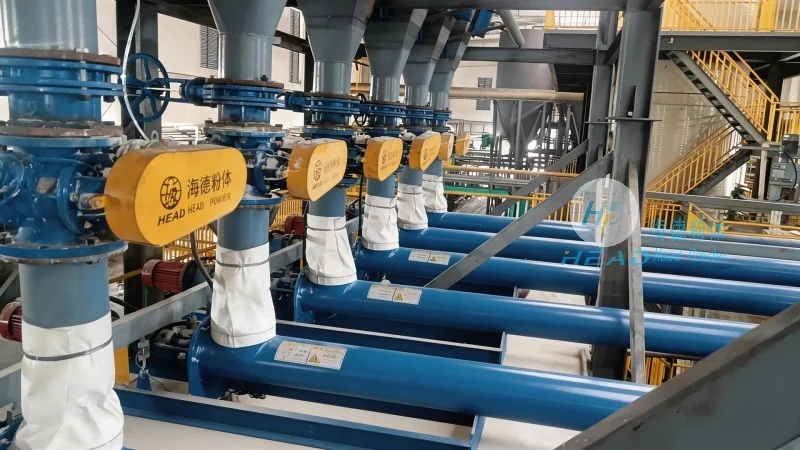
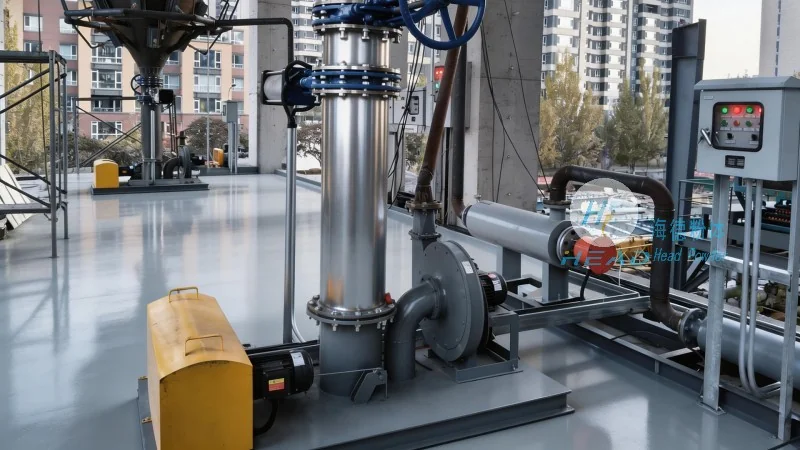
Every reliable pneumatic conveying solution for bean powder comprises several interconnected components, each engineered for specific performance criteria. The rotary airlock valve is the heart of the system, feeding material into the conveying line while maintaining pressure differentials. For bean powder, a drop-through design with abrasion-resistant tips (e.g., tungsten carbide or polyurethane) and a variable-speed drive ensures consistent dosing without clogging. The pipeline itself should be constructed from 304 or 316L stainless steel with smooth internal welds (full penetration, ground flush) to prevent material accumulation. Bends should be long-radius (minimum 5× pipe diameter) or use a ceramic-lined wear tee to reduce pressure drop and avoid particle impact damage. The air mover—either a positive displacement blower (for lower pressures up to 1 bar) or a screw compressor (for higher pressures up to 4 bar in dense-phase systems)—must be sized to deliver the required airflow at the calculated pressure loss. Filtration is equally critical: a reverse-jet dust collector with HEPA-grade filters (MERV 15 or higher) captures fines as small as 0.5 microns, ensuring compliance with OSHA permissible exposure limits for respirable dust (5 mg/m³ for nuisance dust, lower for specific allergens). headpowder integrates all these components into a skid-mounted, pre-piped and pre-wired package that reduces on-site installation time by 30–50% and simplifies commissioning.
Proper design of a bean powder pneumatic conveying system relies on accurate calculation of several key parameters. The conveying distance, both horizontal and vertical, must be converted into an equivalent length accounting for bends, diverter valves, and conveying line filters. Typically, each 90-degree bend adds 8–12 meters to the equivalent length. The required air flow rate (Q, in m³/min) is determined by the desired material throughput (W, in t/h) and the material-to-air ratio (μ), using the formula Q = (W / μ) × (0.167 / ρ_air), where ρ_air is the air density at the blower inlet (approx. 1.2 kg/m³). Pressure drop calculations involve summing losses from acceleration, friction, lifting (vertical component), and bends. For bean powder with a bulk density of 0.5 g/cm³ and a particle size of 150 microns, a dilute-phase system for a 80-meter horizontal run with four bends and a 10-meter lift would require a pressure of 0.6–0.8 bar, while a dense-phase solution under similar conditions might operate at 2.0–2.5 bar but with 60% less airflow. Using computational fluid dynamics (CFD) simulations, headpowder's engineering team optimizes these values to avoid pipe plugging while minimizing energy consumption. We also perform pneumatic conveying tests on actual bean powder samples in our pilot facility to validate design assumptions before finalizing the system configuration.
In the food industry, any conveying equipment must meet rigorous sanitary standards such as those outlined in the FDA's Current Good Manufacturing Practices (CGMPs) and the European Hygienic Engineering Design Group (EHEDG) guidelines. Bean powder is a food ingredient that can harbor microorganisms if moisture condenses inside the pipeline or if dead zones allow product accumulation. Therefore, headpowder designs our systems with a fully closed, clean-in-place (CIP) compatible configuration. All piping is sloped at a minimum of 2–3 degrees toward drainage points, and we incorporate flush ports at low points for periodic cleaning. Surface roughness inside the pipelines is maintained below 0.8 μm, and all gaskets are made of FDA-approved silicone or EPDM. For systems handling multiple bean powder types (e.g., switching from soy to pea powder), we recommend a dual-pipeline arrangement or a diverter valve system with automated purging cycles using compressed air at 6 bar to clear residual material. A typical CIP sequence includes a pre-rinse with filtered water at 40°C, a caustic wash (1–2% NaOH at 60–70°C for 20 minutes), an intermediate rinse, an acid rinse (0.5–1% phosphoric acid at 50°C), and a final hot water rinse until neutral pH is achieved. Our control system logs all CIP parameters, ensuring traceability for audits and third-party certifications like SQF or BRC.
With energy costs rising globally—industrial electricity prices in the US and Europe have increased by an average of 8–12% year-over-year since 2022—pneumatic conveying systems must be designed for optimal energy performance. For bean powder conveying, the primary energy consumers are the blower or compressor and the airlock drive. headpowder incorporates variable frequency drives (VFDs) on both pieces of equipment, allowing the system to modulate air velocity and feed rate in real time based on downstream demand. Our proprietary control algorithm monitors line pressure and adjusts the blower speed automatically, reducing energy use by 20–35% during periods of reduced throughput. Additionally, using a dense-phase approach cuts energy per ton of conveyed material by up to 40% compared to dilute-phase, as highlighted earlier. We also recommend installing a heat recovery unit on the compressor's cooling circuit, which can preheat process water or building heating systems, further lowering the facility's carbon footprint. For a typical bean powder line handling 5 tons per hour over 120 meters, the annual energy cost savings from dense-phase conveying with VFD control can exceed USD 18,000, with a payback period of under 18 months.
To illustrate the practical benefits of our approach, consider a mid-sized plant protein producer in the Midwest United States that approached headpowder in early 2025. The company operated six batch mixers feeding three packaging lines, with bean powder manually loaded from supersacks into a day hopper—a labor-intensive process that created dust, product spillage, and inconsistent feed rates. After a thorough site audit and material testing, headpowder proposed a centralized dense-phase conveying system consisting of a 10 m³ blow tank, 4-inch diameter 316L stainless steel pipeline extending 95 meters, and a PLC-based control system with touchscreen HMI. The system was designed to convey up to 8 tons per hour of chickpea powder with a density of 0.48 g/cm³ and moisture content of 10%. Implementation took four weeks, including installation, piping, and commissioning. Results after six months of operation: labor costs in the material handling area dropped by 60% (saving USD 72,000 annually), dust emissions measured by a continuous particulate monitor fell to below 0.5 mg/m³, and product quality improved as particle size degradation decreased by 18%. The client achieved a full return on investment in 14 months. This case exemplifies how a tailored pneumatic conveying solution not only solves material handling pain points but also delivers measurable financial and operational gains.
Not all pneumatic conveying equipment providers have the specialized knowledge required to handle bean powder effectively. When evaluating potential partners, look for evidence of hands-on experience with cohesive, food-grade powders—this includes access to a pilot test facility where your specific material can be evaluated under controlled conditions. A supplier should offer comprehensive support from conceptual design through installation, commissioning, and ongoing service. They should also demonstrate familiarity with relevant industry standards such as NFPA 61 (agricultural dust explosion prevention), ATEX for explosive atmospheres (bean powder can form combustible dust clouds above the minimum explosive concentration of 60 g/m³), and USDA requirements for food contact surfaces. headpowder, with over a decade of focused experience in powder handling solutions, provides exactly this depth of expertise. Our engineers hold certifications in pneumatic conveying design from recognized industry bodies, and we maintain an in-house laboratory equipped with a 50-meter test loop, laser particle size analyzers, and a powder rheometer. We document all test results in a detailed report that includes recommended conveying velocity, air consumption, pressure drop, and filter sizing—ensuring our customers receive a solution validated for their unique bean powder application. (咨询热线:156-6277-7102)
Looking ahead to 2026 and beyond, the bean powder conveying market is being shaped by three major trends. First, automation is moving toward fully integrated systems that communicate with upstream milling equipment and downstream packaging machinery via industrial IoT platforms. Sensors monitoring air pressure, temperature, humidity, and vibration can now provide predictive alerts for maintenance, reducing unscheduled downtime by up to 25%. Second, sustainability pressures are driving the adoption of closed-loop systems that capture and reuse conveying air after filtration, cutting overall plant air consumption by 30%. Some facilities are also pairing pneumatic conveying with solar-powered blowers to reduce grid dependency. Third, modular system designs are gaining popularity—headpowder now offers pre-engineered conveying modules that can be expanded or reconfigured as production needs change, minimizing capital expenditure risks. These advances ensure that bean powder pneumatic conveying systems remain at the forefront of operational efficiency, safety, and environmental responsibility.
In summary, selecting the right bean powder pneumatic conveying equipment is a strategic decision that impacts product quality, operational costs, and regulatory compliance. By understanding material properties, choosing the correct conveying phase, specifying hygienic components, and leveraging energy-efficient controls, manufacturers can achieve a reliable, future-proof system. headpowder is committed to delivering such solutions, backed by rigorous testing, customized engineering, and ongoing support. Whether your goal is to upgrade an existing line or build a greenfield facility, our team is ready to provide a feasibility analysis and a detailed proposal tailored to your bean powder handling requirements. (咨询热线:156-6277-7102)

 Shandong headpowder Engineering Co., Ltd.
 156-6277-7102(Manager Zhang)
  0531-83386006
  Jinan City, Shandong Province, China
服务热线
微信咨询
回到顶部