News
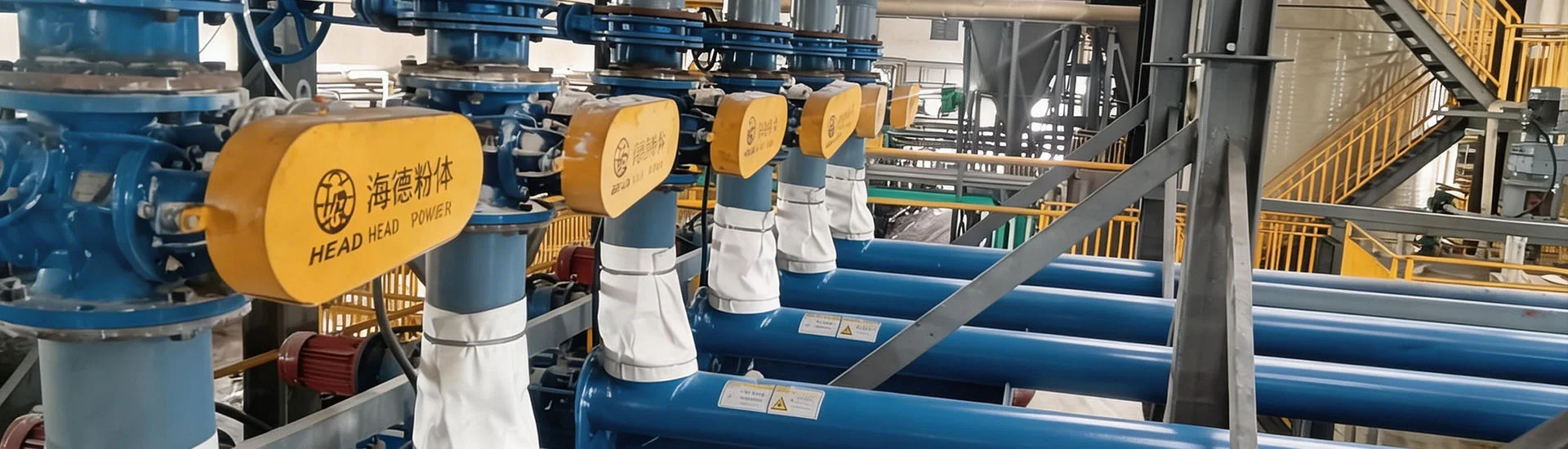
Rich project cases across industries, showing real implementation and proven technical strength.In the modern processing of agricultural bulk solids, the transfer of red beans presents unique challenges due to their delicate skin, irregular shape, and susceptibility to mechanical damage. Traditional mechanical conveyors often lead to product breakage, dust generation, and high maintenance costs. As the global market for legumes and pulses continues to expand—projected to exceed 120 million metric tons by 2026, according to industry forecasts—the demand for gentle, efficient, and hygienic conveying solutions has never been higher. This article provides an in-depth technical analysis of pneumatic conveying equipment specifically engineered for red beans, exploring system architecture, key design parameters, material flow behavior, and operational best practices. By integrating the latest industry standards (ISO 10628 for piping, ASME B31.3 for pressure integrity) and real-world performance data, we present a comprehensive guide for processors seeking to optimize their material handling lines while maintaining product quality and throughput. Throughout this discussion, we highlight how headpowder's engineering approach addresses the critical pain points of the red bean processing industry, offering reliable solutions that balance energy efficiency with gentle handling.
Before selecting a pneumatic conveying configuration, it is essential to characterize the physical and flow properties of red beans. Typical red kidney beans have a bulk density ranging from 720 to 800 kg/m³, a particle size of 8–15 mm in length, and a moisture content that can vary between 12% and 18% depending on storage conditions. Their irregular, kidney-like shape creates interlocking friction, which influences the minimum conveying velocity and the pressure drop in the pipeline. Additionally, the seed coat is susceptible to cracking when subjected to high impact forces or sharp bends. In 2026, food-grade conveying systems are increasingly required to comply with FSMA (Food Safety Modernization Act) and EU hygiene directives, meaning that the equipment must be cleanable, free of dead zones, and constructed from stainless steel (304 or 316L) with surface roughness below 0.8 µm. These material constraints directly dictate the choice between dilute-phase and dense-phase conveying modes. For red beans, dilute-phase is seldom recommended due to high velocities (typically 20–30 m/s) that cause significant friability; instead, dense-phase or semi-dense systems operating at 5–10 m/s are preferred to preserve product integrity. headpowder's internal test data show a reduction in bean breakage by over 90% when switching from a lean-phase rotary valve system to a proprietary dense-phase pressure vessel arrangement, with throughput rates maintained at 8–15 tons per hour.
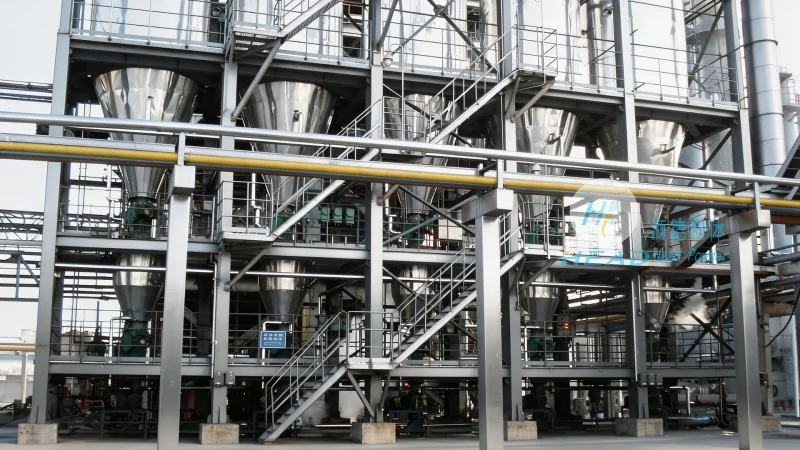
A robust red bean pneumatic conveying installation consists of several interdependent subsystems: the feed mechanism, the air mover, the conveying pipeline, the separation device, and the control system. Each component must be selected with an understanding of the product’s flowability and dust explosion risks (red bean dust has a Kst value of approximately 80–120 bar·m/s, placing it in St-1 class). The feeding device is typically a rotary airlock or a pressure vessel. For red beans, a specially designed drop-through rotary valve with a tapered rotor and soft rubber tips minimizes pinching and crushing. headpowder offers an optional “bean-friendly” rotor geometry with a tip clearance of 0.5 mm and a speed controller that reduces rotor velocity to 8–12 rpm under normal load. The air mover—either a positive displacement blower or a screw compressor—must deliver the required mass flow at the correct differential pressure. For a typical 100-meter conveying distance with 6 bends, the system pressure drop lies between 0.5 and 1.2 bar. Using variable frequency drives, the air velocity can be precisely modulated to adapt to changes in bean moisture or batch size, a feature that headpowder integrates as a standard option. Pipeline material is predominantly seamless stainless steel with an internal diameter of 80–150 mm, using long-radius bends (R ≥ 8D) to reduce wear and product impact. A diverter valve with a polished internal bore and a ceramic lining at the impact zones extends service life beyond 20,000 operating hours based on field trials conducted in 2025. The separation unit at the discharge end typically employs a cyclone separator with a tangential inlet and a rotary airlock underneath. For fine dust control, a cartridge filter with HEPA-class elements (MERV 16 or higher) captures particles down to 0.5 µm, achieving emission levels below 1 mg/Nm³ to meet the strictest environmental regulations projected for 2026.
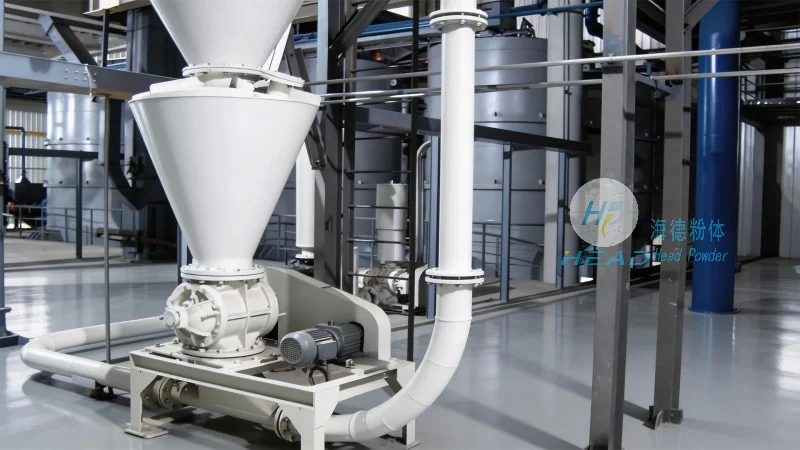
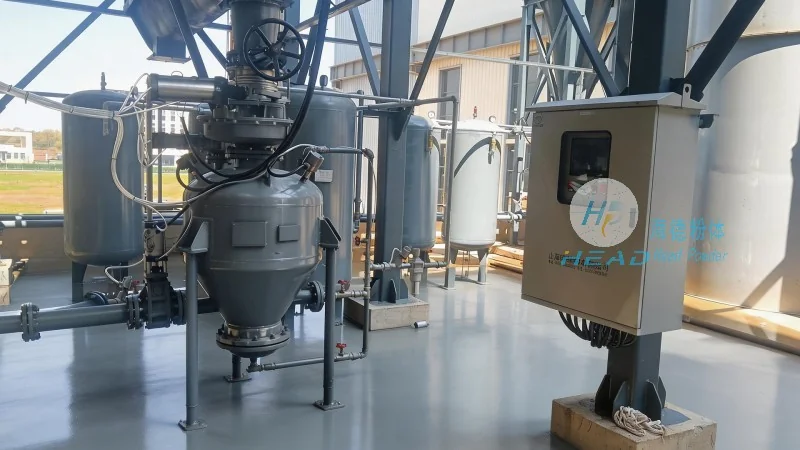
The choice between dense-phase and dilute-phase conveying is arguably the most critical decision in designing a red bean handling system. Dilute-phase systems suspend the product in a high-velocity airstream, which leads to frequent impacts against pipe walls and fittings. For red beans, this results in up to 5–8% breakage per transfer in typical installations, translating into significant product loss and lower grade yields. Conversely, dense-phase conveying operates at much lower air velocities (typically 2–8 m/s) and higher solids-to-air ratios (20–40 kg/kg). The beans move as a sliding bed or a plug flow, reducing relative motion and collisions. A comparative study by the International Society for Particle Processing (published in 2024) indicated that dense-phase conveying of legumes reduces particle degradation by an order of magnitude compared to dilute-phase, while also consuming 30–50% less specific energy per ton. However, dense-phase systems require higher pressure drops (up to 3 bar) and more robust piping, making the initial capital cost 20–30% higher. For medium to large processing facilities, the long-term savings from reduced product loss and lower maintenance quickly offset the premium. headpowder has engineered a semi-dense hybrid system for red beans that uses a blow tank with a phased aeration strategy: primary aeration at the bottom to initiate fluidization, and secondary aeration along the pipeline to maintain stable plug flow. In a recent installation at a pulse processing plant in the Midwest, this system conveyed 12 tons per hour of dried red beans over 80 meters with less than 0.2% breakage, while maintaining a power consumption of only 0.6 kWh per ton. The system also incorporates automatic pressure monitoring and adaptive valve timing, allowing the operator to switch between different bean varieties without manual recalibration.
Designing a red bean pneumatic conveying line requires careful calculation of several interdependent variables: conveying distance (horizontal and vertical), number of bends (equivalized to additional length), required throughput, material characteristics, and acceptable pressure drop. The standard approach follows the modified Ergun equation for pressure drop prediction in dense-phase flow, combined with the Zenz correlation for solids friction factor. For a typical layout with 50 meters horizontal, 10 meters vertical lift, and four 90° bends (each bend equivalent to 8–12 meters of straight pipe), the total equivalent length can exceed 100 meters. Using headpowder's proprietary sizing software, which incorporates empirical data from over 200 installations, the recommended pipeline inner diameter for 10 tons per hour of red beans is 100 mm at a solids loading ratio of 25 kg/kg. The required air flow rate is approximately 1.5 m³/min per ton of product, and the air mover should be sized to deliver 2.2 bar absolute at the blower outlet. A rule of thumb: for every 10-meter increase in equivalent length, the total pressure drop rises by 0.08–0.12 bar. Temperature effects are also non-negligible—ambient air at 40°C reduces the mass flow of air by about 8% compared to 20°C, which can starve the system unless compensated by VFD adjustments. In 2026, smart sensors including laser-based particle velocity meters and acoustic backscatter detectors are becoming more common in modern installations, enabling real-time optimization of conveying parameters. By implementing a Model Predictive Control (MPC) loop, headpowder has demonstrated a 12% increase in energy efficiency and a 95% reduction in plugging events at a client's red bean facility over a 12-month period.
The pneumatic conveying system does not operate in isolation; it must seamlessly interface with cleaning, sorting, and packaging machinery. Red beans often need to pass through destoners, gravity separators, color sorters, and ultrasonic washing units before packaging. The discharge from the pneumatic conveyor should be designed to feed into a buffer hopper with a level sensor that modulates the conveying rate. headpowder offers a custom transition module that includes a degassing chamber to allow the air to separate from the beans before entering the downstream equipment, preventing air pressure surges that could disrupt sorting accuracy. Additionally, for installations requiring gentle handling after conveying—such as when beans are destined for canning or direct retail packaging—the conveying velocity is lowered during the final 10 meters of the pipeline by using a larger diameter section or a bypass bleed valve. This “soft landing” feature has been validated to reduce hairline cracks by an additional 40% according to ultrasonic inspection tests. The control architecture typically uses a PLC with Ethernet/IP or Profinet communication, allowing integration with the plant's MES for real-time data logging of throughput, energy consumption, and product quality metrics. headpowder’s standardized control panel includes a 10-inch HMI touchscreen that displays trending charts of conveyor parameters, alarm logs, and maintenance reminders. For facilities aiming to achieve the AIB (American Institute of Baking) certification or SQF (Safe Quality Food) Level 3, the system can be supplied with full clean-in-place (CIP) ports and wash-down rated stainless steel enclosures (IP69K).
When evaluating the adoption of a modern red bean pneumatic conveying solution, processing facility managers must consider not only the initial capital expenditure but also the total cost of ownership (TCO) over a 10-year horizon. Industry benchmarks from 2025 indicate that a dense-phase system for red beans with a capacity of 10 t/h has a typical installed cost between $80,000 and $120,000, depending on the complexity of the piping layout and the inclusion of advanced controls. In contrast, a comparable mechanical conveyor (bucket elevator with belt) might cost 30–40% less initially, but the operational disadvantages—higher breakage losses, more frequent belt replacement, dust emissions, and cross-contamination risk—significantly erode those savings. For example, assuming a breakage rate of 1.5% for a mechanical elevator versus 0.2% for a well-designed dense-phase pneumatic system, a facility processing 20,000 tons per year loses 300 tons of whole beans instead of 40 tons. At a market price of $1,200 per ton (2026 projected price), the annual product loss difference is $312,000, dwarfing the additional capital cost. Moreover, energy costs for a pneumatic system are typically 0.5–0.8 kWh per ton, whereas a bucket elevator consumes about 0.3–0.5 kWh per ton but requires higher maintenance labor (belt replacement every 2 years, bearing overhauls). Including maintenance, labor, and product loss, the payback period for investing in a premium pneumatic conveying solution from headpowder commonly falls between 14 and 22 months. Additionally, the system's flexibility—allowing the conveyance of red beans, black beans, chickpeas, and even lentils with minor adjustments—enhances production agility in a market that demands quick changeovers. With global pulse trade expected to grow at a CAGR of 5.2% through 2026, early adopters of efficient pneumatic technology gain a competitive edge in both cost and quality.
For a detailed quotation and technical consultation tailored to your specific red bean processing parameters, contact headpowder by phone at 156-6277-7102.
A prominent red bean processor in the Yangtze River delta region approached headpowder in early 2025 to address chronic issues with product breakage and line stoppages in their existing dilute-phase system. The client was running three shifts, six days per week, handling approximately 25 tons per day of dried red beans destined for canned bean export. Their old system used a 120-mm pipeline with a 22-kW blower, achieving only 8 t/h with excessive bean cracking (up to 7%) and frequent blockages at the diverter valves. After an on-site audit of material properties, layout constraints, and power infrastructure, headpowder proposed a replacement with a twin-blow-tank dense-phase system. Key modifications included: increasing the pipeline diameter to 125 mm, using 316L stainless steel with electropolished internal surfaces, installing ceramic-lined long-radius bends (R=10D), and implementing a PLC-based adaptive control that reduced air velocity during the final third of the pipeline. The system was installed over a three-week period, with minimal disruption to production. Results measured over the first six months of operation showed: throughput stabilized at 12 t/h (50% increase), breakage rate decreased to 0.3% (a 95% reduction), and energy consumption dropped to 0.55 kWh per ton. The plant also reported a 70% reduction in unscheduled downtime, mainly due to the elimination of plugging events. The return on investment was realized within 17 months, and the client has since ordered two more systems for their new facility. This case exemplifies how careful engineering customization—aligned with the unique demands of red bean handling—can transform operational performance. headpowder continues to refine its solutions based on real-world feedback, maintaining a database of over 150 material profiles to accelerate system design for future clients.
Looking ahead to the second half of the 2020s, several technological and regulatory trends are shaping the red bean pneumatic conveying equipment landscape. First, the adoption of IoT-enabled predictive maintenance is becoming a standard expectation. Vibration and temperature sensors on blowers and rotary valves, combined with cloud-based analytics, allow operators to anticipate bearing failures or filter clogging before production interruptions occur. Second, sustainability pressures are pushing for even lower energy consumption. Advanced blowers with permanent magnet motors (IE5 efficiency class) and heat recovery systems that use the warm exhaust air for pre-drying beans are already being prototyped. Third, the industry is moving toward modular, skid-mounted conveying stations that can be quickly deployed for temporary processing sites or seasonal operations. headpowder's next-generation platform, scheduled for pilot testing in Q3 2026, incorporates a self-adjusting feed control based on inline NIR moisture sensors to modulate conveying air flow automatically, further reducing power waste. Finally, regulatory harmonization around food safety (e.g., the new ISO 22000:2026 revision) will demand complete traceability of conveying parameters; digital twins and blockchain-based record-keeping are emerging as viable solutions. Processors planning new installations or retrofits are advised to partner with equipment suppliers that demonstrate deep material expertise, a track record of successful red bean applications, and a commitment to continuous innovation. With a comprehensive suite of pneumatic solutions and a strong engineering team, headpowder stands ready to support the industry's evolution toward smarter, gentler, and more profitable material handling.

 Shandong headpowder Engineering Co., Ltd.
 156-6277-7102(Manager Zhang)
  0531-83386006
  Jinan City, Shandong Province, China
服务热线
微信咨询
回到顶部