News
Rich project cases across industries, showing real implementation and proven technical strength.Barium carbonate, a critical raw material in industries ranging from ceramics and glass manufacturing to electronics and water treatment, demands precise and reliable handling during production and processing. The behavior of this fine, often hygroscopic powder presents unique challenges for conventional mechanical conveyors, including dust generation, material degradation, and equipment wear. Pneumatic conveying systems have emerged as the preferred solution for transporting barium carbonate safely and efficiently, offering enclosed pathways that eliminate contamination risks and maintain product integrity. As global demand for high-purity barium carbonate grows—projected to reach approximately USD 1.2 billion by 2026 according to industry benchmarks—manufacturers are increasingly turning to advanced pneumatic technologies that balance energy efficiency with throughput reliability. This article provides a comprehensive overview of barium carbonate pneumatic conveying system equipment, exploring core components, design principles, operational parameters, and selection criteria. Whether you are upgrading an existing line or specifying a new facility, understanding the interplay between material properties and system architecture is essential for achieving consistent, cost-effective performance. By examining real-world configurations and emerging trends, we aim to equip engineers, plant managers, and procurement professionals with actionable insights that enhance both productivity and workplace safety.
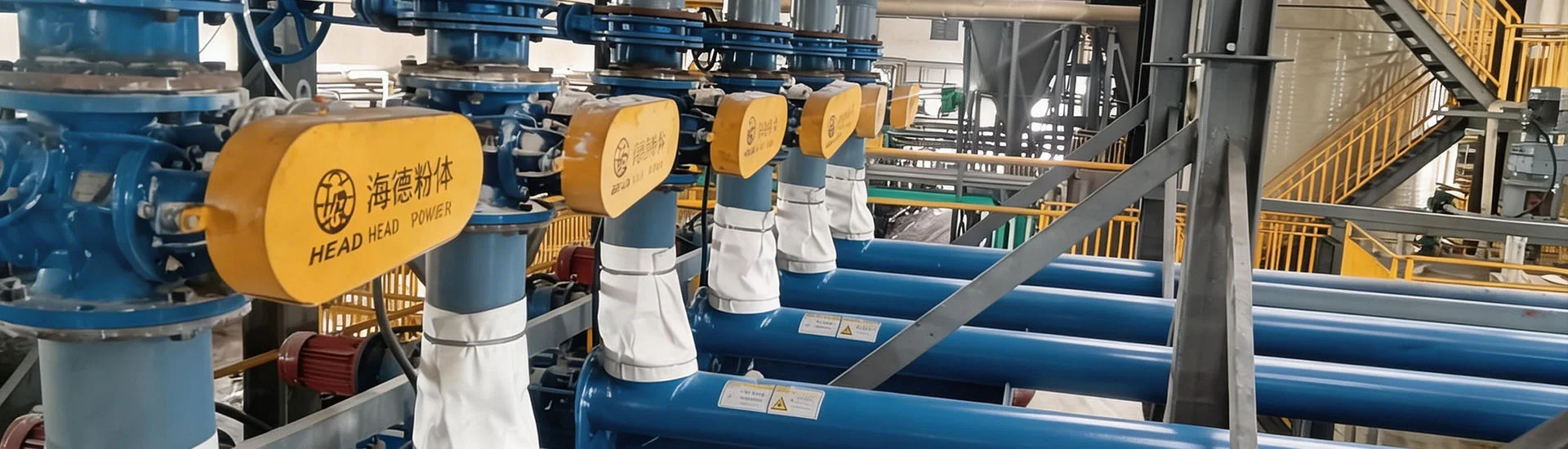
A typical pneumatic conveying system for barium carbonate integrates several key equipment modules, each engineered to handle the material's abrasive and cohesive nature. The system architecture generally falls into two categories: dilute phase (high velocity, low pressure) and dense phase (low velocity, high pressure). For barium carbonate, dense phase conveying is often preferred because it minimizes particle attrition and reduces pipe wear, though dilute phase remains viable for shorter distances and lower capacities.
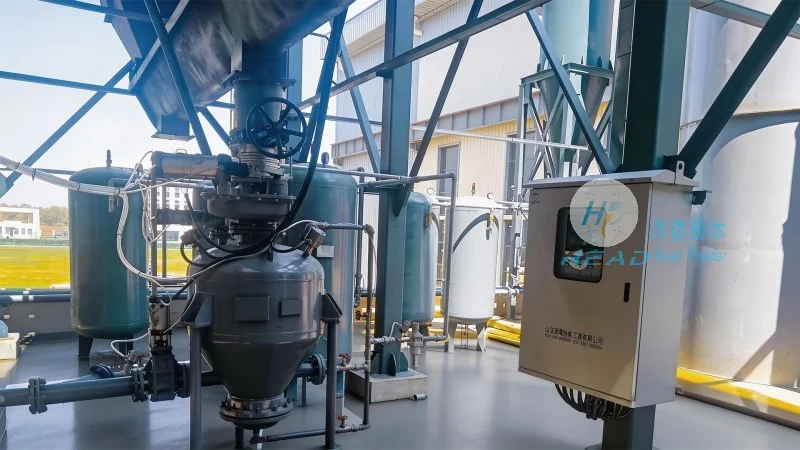
Barium carbonate exhibits a median particle size typically between 5 and 50 microns, with a tendency to agglomerate under static electricity or humidity. These characteristics directly influence critical design parameters. The minimum conveying velocity must exceed the saltation velocity (the speed at which particles settle out of the air stream) but stay below levels that cause excessive wear or degradation. For dilute phase, air velocities in the range of 15–25 m/s are common; for dense phase, velocities drop to 3–8 m/s, relying on pressure differences to push material plugs. Bulk density variations (loose vs. tapped) of up to 20% require the system to accommodate fluctuations without surging. Abrasion resistance is another priority—barium carbonate's Mohs hardness of 3–3.5 means standard carbon steel piping may need replacement after 12–18 months in high-velocity zones. In a recent installation for a specialty ceramics plant, Headpowder engineered a dense phase system with ceramic-tile-lined bends and wear-resistant rotary valves, extending component life by over 300% compared to previous equipment. The plant reported a 40% reduction in maintenance downtime and consistent powder flow even at 95% relative humidity conditions. (咨询热线:156-6277-7102)
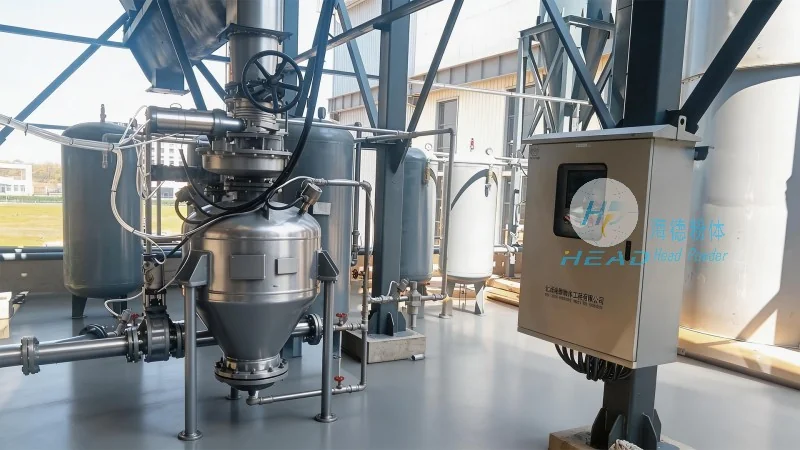
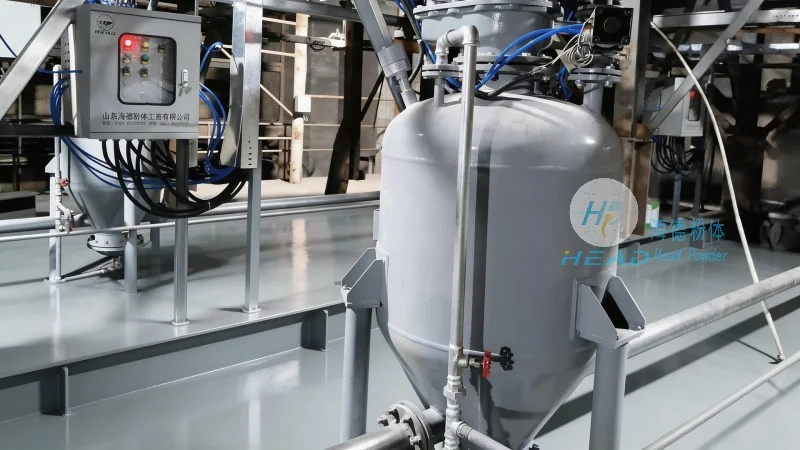
Selecting the right pneumatic conveying system for barium carbonate begins with a thorough analysis of material flow properties using standard tests (Jenike shear cell, Hausner ratio, angle of repose). Based on these data, engineers determine the most suitable phase regime and component sizing. Primary parameters include conveying capacity (typical range 1–50 t/h), conveying distance (up to 500 m for dilute phase, 200 m for dense phase), and energy consumption (0.5–2.0 kWh per ton per 100 m). Noise levels should be kept below 85 dBA at operator stations through proper insulation and silencers. Compliance with ATEX or IECEx standards is mandatory if the barium carbonate dust is combustible (though non-flammable grades are common, stratification of fine particles in silos still requires grounding and bonding). For a comparative assessment, the table below outlines typical specifications for two common system types:
| Parameter | Dilute Phase System | Dense Phase System |
|---|---|---|
| Air velocity (m/s) | 18–25 | 4–8 |
| Product-to-air ratio (kg/kg) | 5–15 | 30–80 |
| Pressure (bar gauge) | 0.3–1.0 | 2.0–6.0 |
| Particle degradation | Moderate | Minimal |
| Pipe wear rate | High | Low |
| Capital cost (relative) | Low | Moderate–High |
| Typical application | Short distance, low tonnage | Long distance, high purity |
In practice, many barium carbonate producers opt for a hybrid approach—using dense phase for the main transfer line and dilute phase for distributing to multiple receiving points. This balances the benefits of gentle handling with lower capital outlay for branch lines.
Proper installation of a pneumatic conveying system for barium carbonate starts with a carefully laid out pipeline route that avoids sharp turns and excessive elevation changes. Supports should be placed every 3–5 meters to prevent sagging and vibration. During commissioning, engineers validate air flow rates and pressure drops against design calculations, then fine-tune the rotary valve speed and air compressor output. Routine maintenance involves inspecting rotary valve tips for wear, replacing filter bags every 6–12 months, and checking pipe thickness in high-wear zones using ultrasonic gauges. A daily visual inspection of the system for leaks, unusual noises, or pressure fluctuations can prevent costly unscheduled downtime. Safety protocols must account for dust explosion hazards: grounding all conductive components, installing explosion vents or suppression systems, and using nitrogen or inert gas blanketing in silos when handling oxygen-sensitive grades. Lockout/tagout procedures for maintenance tasks are non-negotiable. Headpowder's field service team provides on-site training for operators and maintenance crews, covering everything from start-up sequences to emergency shutdown procedures, ensuring that the system operates at peak efficiency from day one.
Barium carbonate pneumatic conveying systems find widespread use in ceramic tile manufacturing, where the powder serves as a flux in glaze formulations. In one high-volume production facility in Southeast Asia, a Headpowder dense phase system successfully conveyed barium carbonate 180 meters horizontally and 25 meters vertically at a rate of 8 t/h, with an energy consumption of 0.9 kWh per ton. The system's enclosed design eliminated airborne dust, improving workplace air quality from an average of 15 mg/m³ to below 2 mg/m³—a 87% reduction. In the electronics sector, ultra-high-purity barium carbonate (99.5% min) is used in dielectric materials for capacitors. A European manufacturer adopted a stainless steel dilute phase system with nitrogen purge to prevent oxidation, achieving consistent particle size distribution (D50 variation < 3%) over a year of continuous operation. For water treatment applications, where barium carbonate removes sulfate ions, a modular pneumatic conveying skid allowed quick installation at a remote site, with remote monitoring via IoT sensors enabling predictive maintenance. These case examples underscore the versatility of pneumatic technology and the importance of partnering with a supplier that understands both the material and the process context.
As the global barium carbonate market grows at a CAGR of approximately 5% (2024–2026), driven by expansion in electronics and specialty chemicals, pneumatic conveying system suppliers are innovating to meet stricter environmental regulations and cost pressures. Key trends include the adoption of variable frequency drives (VFDs) for compressors and rotary valves, which can reduce energy consumption by 20–30% during partial-load operation. Digital twin technology allows operators to simulate system performance under different material properties and throughput scenarios before making physical changes. Advanced filter media with nanofiber coatings improve dust collection efficiency to 99.99% while lowering pressure drop. For dense phase systems, smart blow tank controls using real-time pressure feedback optimize batch cycles, reducing compressed air usage by up to 15%. In addition, modular skid-mounted designs are gaining popularity for their ease of installation and scalability. Headpowder has integrated all these elements into its latest product line, offering turnkey solutions that include remote diagnostics and lifecycle performance guarantees. Companies that invest in these technologies will see improved total cost of ownership and enhanced regulatory compliance, positioning them strongly in a competitive market.
Selecting and implementing a barium carbonate pneumatic conveying system requires a deep understanding of material behavior, system dynamics, and operational constraints. By focusing on core components, design parameters, selection criteria, and maintenance best practices, facility engineers can avoid common pitfalls such as line blockages, excessive wear, and energy waste. The equipment overview provided here serves as a practical guide for evaluating both dilute and dense phase options, with emphasis on reliability, safety, and long-term value. As the industry moves toward smarter, more energy-efficient solutions, working with a experienced partner like Headpowder ensures that your conveying infrastructure not only meets today's production targets but also adapts to future demands. Whether your application involves high-purity ceramics, electronic dielectrics, or water treatment chemicals, a properly engineered pneumatic system remains the most effective, clean, and scalable method for handling barium carbonate.

 Shandong headpowder Engineering Co., Ltd.
 156-6277-7102(Manager Zhang)
  0531-83386006
  Jinan City, Shandong Province, China
服务热线
微信咨询
回到顶部