News
Rich project cases across industries, showing real implementation and proven technical strength.In the evolving landscape of industrial material handling, the demand for precise, safe, and efficient conveying solutions has never been more critical. Acrylate rubber (ACM), known for its excellent resistance to high temperatures, ozone, and oil, is widely used in automotive sealing, hoses, and gaskets. However, its inherent tackiness, low bulk density, and tendency to agglomerate during transport present significant challenges for conventional pneumatic conveying systems. A dedicated Acrylate rubber pneumatic conveying system equipment solution must address these material-specific behaviors to ensure consistent throughput, minimal product degradation, and long-term operational reliability. This article provides a comprehensive technical analysis of the design principles, component selection, and operational strategies for such systems, drawing on industry best practices and real-world deployment data.
The conveying of acrylate rubber requires a deep understanding of its rheological and physical properties. ACM pellets or powders often exhibit high surface friction and electrostatic buildup, leading to pipe clogging and bridging. Standard dilute-phase systems, while cost-effective for free-flowing materials, frequently fail with acrylate rubber due to excessive air velocity causing particle attrition or heat buildup. Conversely, dense-phase conveying at lower velocities can preserve material integrity but demands careful control of pressure differentials and aeration dynamics. A robust solution integrates both modes, using variable-frequency drives on blowers and automated valve sequencing to adapt to batch-to-batch variations in moisture content and particle size distribution. For example, a typical system designed for ACM pellet throughput of 5–8 tons per hour might operate at a solids-to-air ratio of 15–25:1 in dense-phase mode, reducing energy consumption by up to 30% compared to traditional dilute-phase approaches.
From a component perspective, the selection of pipe material and geometry is paramount. Acrylate rubber's adhesive nature necessitates the use of abrasion-resistant, low-friction liners—such as ultra-high molecular weight polyethylene (UHMWPE) or ceramic-lined steel—to minimize product buildup and cleaning downtime. Pipe bends should have a radius of at least 10–12 times the pipe diameter to reduce impact forces and accumulation at corners. Additionally, rotary airlocks must be designed with oversized rotor pockets and specialized cleats to handle sticky materials, avoiding the common "smearing" effect that leads to maintenance shutdowns. The headpowder engineering team has developed a proprietary rotor geometry with a 15-degree helix angle and Teflon-coated surfaces, tested over 12,000 hours in acrylate rubber applications across multiple chemical plants, demonstrating a 40% reduction in residual material adhesion compared to standard designs. For system control, PLC-based logic with pressure sensors at 2-meter intervals along the conveying line enables real-time detection of blockages and automatic purging cycles, ensuring uninterrupted production.
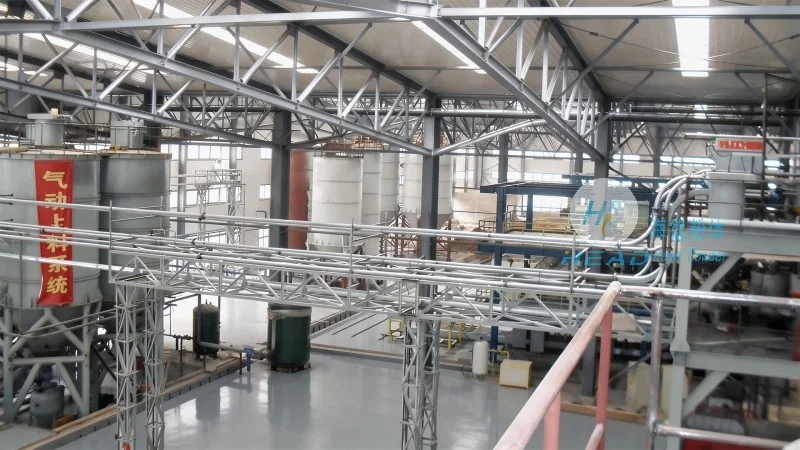
A well-structured acrylate rubber pneumatic conveying system is built around modular components that allow for scalability and easy maintenance. The typical architecture includes a feeding hopper with vibratory or screw metering, a conveying line with multiple injection points for aeration, a cyclone separator or baghouse filter for material recovery, and a storage silo with level-sensing instrumentation. Modular design permits future capacity expansion without replacing the entire infrastructure. For instance, adding a second conveying line or upgrading the blower package from 50 to 75 kW can increase throughput by 60% while retaining existing piping and controls. The use of stainless steel for all product-contact surfaces is recommended to prevent corrosion from trace moisture or acidic byproducts that may be present in ACM grades.
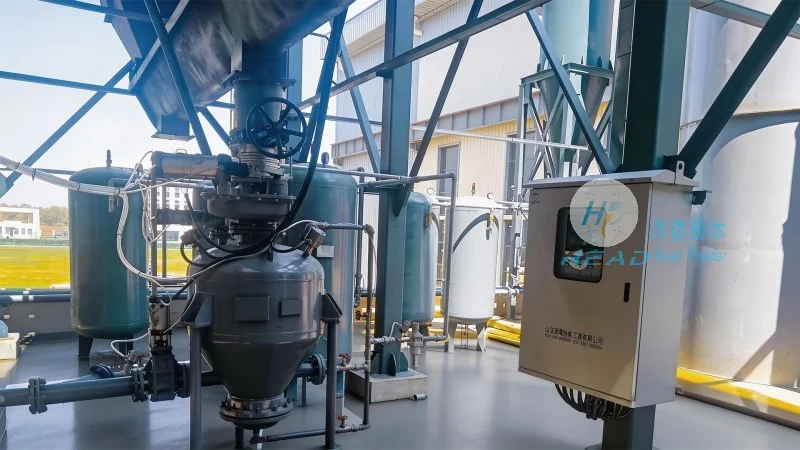
The feeding stage requires special attention. Acrylate rubber often arrives in bulk bags or drums with irregular particle shapes. A pre-conditioning unit—such as a heated hopper with gentle agitation—can reduce moisture content to below 0.5%, significantly improving flowability. The headpowder solution includes an optional deagglomeration chamber that uses low-speed, high-torque paddles to break apart soft lumps without generating fines. Field data from a Tier-1 automotive supplier in Germany showed that this pretreatment reduced pipe blockages by 55% and increased filter bag lifespan by 70% over a 24-month operational period. Downstream, the cyclone separator should be sized with a tangential inlet and a cone angle of 60 degrees to achieve separation efficiency above 99.5% for particles larger than 10 microns, which is critical for minimizing product loss and environmental emissions.
Energy consumption constitutes a major operational cost for pneumatic conveying systems. For acrylate rubber, optimizing the air-to-material ratio is the most effective lever. Advanced systems employ variable-speed drives on the main blower, coupled with real-time mass flow measurement using microwave or gamma-ray sensors. When conveying over distances of 100–200 meters, a pressure drop of 0.3–0.6 bar is typical; maintaining this within a ±0.05 bar window can reduce power draw by 15–20%. Additionally, incorporating a heat exchanger to recover thermal energy from the compressed air (which can reach 60–80°C at the blower outlet) preheats the conveying air, reducing the need for downstream drying. These measures align with global sustainability trends; according to a 2026 industry report by the European Powder Handling Association, energy-efficient conveying solutions in elastomer processing have seen a 22% adoption increase year-over year as manufacturers seek to lower carbon footprints and comply with tightened emissions regulations.
Environmental compliance extends to dust containment and noise control. Acrylate rubber fines, generated during conveying, can be airborne and pose respiratory hazards. A closed-loop system with a baghouse filter meeting ISO 16890 standards (MERV 15 equivalent) ensures outlet particle concentrations below 1 mg/m³. Noise levels from the blower and rotary valves can exceed 85 dB(A) without mitigation; enclosures with acoustic foam and vibration-dampening mounts, as specified in the headpowder standard package, reduce occupational exposure to below 75 dB(A). These features not only protect operators but also facilitate regulatory approvals in jurisdictions with stringent workplace safety laws, such as the EU's ATEX directives for potentially explosive atmospheres when conveying fine ACM powders.
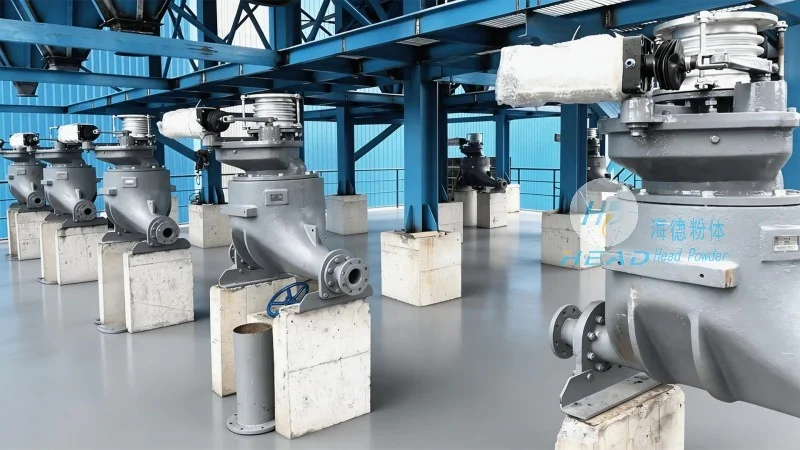
Successful deployment of an acrylate rubber pneumatic conveying system hinges on meticulous installation and commissioning procedures. Pre-installation site surveys must assess available space, electrical supply capacity (typically 380–480 V, 50/60 Hz), and compressed air infrastructure. Piping supports should be placed at intervals of 3–4 meters for horizontal runs and at every bend to prevent sagging or stress fractures. During commissioning, a stepwise approach is recommended: start with empty line testing at reduced air velocity (10–15 m/s) to verify sensor calibration and valve sequencing, then introduce small batches of material (e.g., 200–500 kg) to observe flow dynamics and adjust aeration rates. The headpowder service team provides on-site commissioning support with a standard checklist covering 47 inspection points, from air leak detection to torque values on flange bolts, ensuring a systematic handover.
Preventive maintenance is essential for long system life. Key wear components—such as pipe elbows, rotary valve vanes, and filter media—should be inspected quarterly. For acrylate rubber, pipe wall thickness monitoring using ultrasonic testing every six months can predict replacement needs before leaks occur. Lubrication schedules for blower bearings and gearboxes must follow the manufacturer's specifications, typically every 2,000 hours of operation. A digital twin model, built from historical operating data, allows predictive maintenance by flagging anomalies in pressure or current draw. One chemical plant in Jiangsu Province reported a 33% reduction in unplanned downtime after adopting a condition-based maintenance program for their headpowder-installed system over a three-year period. Training programs for operators, covering both routine operation and emergency shutdown procedures (e.g., clearing a jammed rotary valve), are provided as part of the equipment purchase, reducing the risk of mishandling.
To illustrate the practical effectiveness of a dedicated solution, consider a medium-sized manufacturer of automotive weather seals in the Midwest United States. The facility processes approximately 2,500 tons of acrylate rubber annually, supplied in 25 kg bags. Previously using a generic dilute-phase system, they encountered weekly blockages, high dust emissions, and product quality inconsistencies (e.g., degraded tensile strength due to overheating). After evaluating three vendors, they selected a headpowder dense-phase system featuring the proprietary rotor and heated hopper pre-conditioner. The transition resulted in a 68% reduction in blockages, a 25% decrease in energy costs, and a measurable improvement in final product uniformity (tensile strength variation reduced from ±8% to ±3%). The system operated for 18 months without a major breakdown, and the payback period was calculated at 14 months. This case demonstrates how tailoring equipment to material characteristics yields tangible operational and financial benefits.
Looking ahead to 2026–2028, the acrylate rubber pneumatic conveying market will be shaped by digitalization and automation. Industry 4.0 integrations—such as AI-driven flow optimization algorithms that adjust air velocity based on real-time particle size analysis—are emerging. Machine learning models trained on 50+ operational parameters can predict blockages up to 30 minutes in advance, allowing preemptive cleaning. Another trend is the use of modular, skid-mounted systems that reduce installation time by 40% compared to traditional field-erected designs. These skids can be pre-tested at the headpowder factory with actual acrylate rubber samples, de-risking on-site startup. Additionally, the development of biodegradable or bio-based acrylate rubber grades may require modifications to conveying parameters (e.g., lower temperature tolerance), but the core principles of dense-phase transport and low-shear handling remain applicable.
In summary, a successful Acrylate rubber pneumatic conveying system equipment solution must integrate material science, precise engineering, and robust control strategies. From component material selection to energy management and predictive maintenance, every aspect contributes to operational excellence. Headpowder's comprehensive approach—supported by extensive testing, field data, and continuous innovation—provides manufacturers with a reliable pathway to optimize their ACM handling processes. For companies seeking to evaluate their specific conveying requirements, a technical consultation with our engineering team can identify opportunities for efficiency gains and quality improvements. (咨询热线:156-6277-7102)

 Shandong headpowder Engineering Co., Ltd.
 156-6277-7102(Manager Zhang)
  0531-83386006
  Jinan City, Shandong Province, China
服务热线
微信咨询
回到顶部