News
Rich project cases across industries, showing real implementation and proven technical strength.Selecting the right pneumatic conveying system for metal iron powder is not merely a technical decision—it is a strategic one that directly impacts production efficiency, material integrity, and overall operational cost. As industries ranging from powder metallurgy to additive manufacturing and chemical processing increasingly rely on fine iron powders, the demand for conveying solutions that prevent oxidation, abrasion, and segregation has never been higher. By 2026, the global market for pneumatic conveying systems is projected to exceed USD 45 billion, with ferrous powder applications accounting for a significant share due to the rapid expansion of metal injection molding and 3D printing. To navigate this complex landscape, decision-makers must evaluate system configurations based on material characteristics, throughput requirements, and long-term maintenance economics. This article provides a comprehensive, data-driven framework for selecting an optimal metal iron powder pneumatic conveying solution, drawing on industry standards, real-world case studies, and advanced engineering principles.
Metal iron powder presents unique challenges in pneumatic conveying. Its high density (typically 7.8 g/cm³ for pure iron), irregular particle morphology, and tendency to agglomerate demand a system that can maintain consistent flow without degrading particle size distribution or generating excessive dust. Furthermore, iron powder is susceptible to moisture-induced oxidation, which can compromise downstream sintering or compaction processes. A well-designed conveying system must therefore balance air velocity, pressure differentials, and material-to-air ratios while minimising erosive wear on pipe bends and components. This article examines the three primary conveying modes—dilute phase, dense phase, and vacuum conveying—and provides specific selection criteria tailored to iron powder. We also share practical insights from installations where headpowder engineers have successfully optimised systems for clients processing iron powders with apparent densities ranging from 2.5 to 4.8 g/cm³ and particle sizes from 10 to 500 microns.
Before choosing a conveying method, you must characterise the iron powder in precise, measurable terms. The key parameters include bulk density, particle size distribution, angle of repose, moisture content, and abrasiveness. For example, reduced iron powder with a bulk density of 2.8 g/cm³ flows differently than atomised iron powder at 4.5 g/cm³. According to the ASTM B212 standard, the Hall flow rate of iron powder should be measured to determine its fluidity. Powders with a flow rate below 30 seconds per 50 grams often require dense phase systems to prevent plugging, while faster-flowing powders (less than 20 seconds) may perform adequately in dilute phase at lower air velocities. Additionally, the Hausner ratio (tapped density divided by bulk density) indicates the degree of cohesiveness. A ratio above 1.4 signals poor flowability, suggesting the need for a dense phase or vacuum conveying approach with aeration pads or vibration aids.
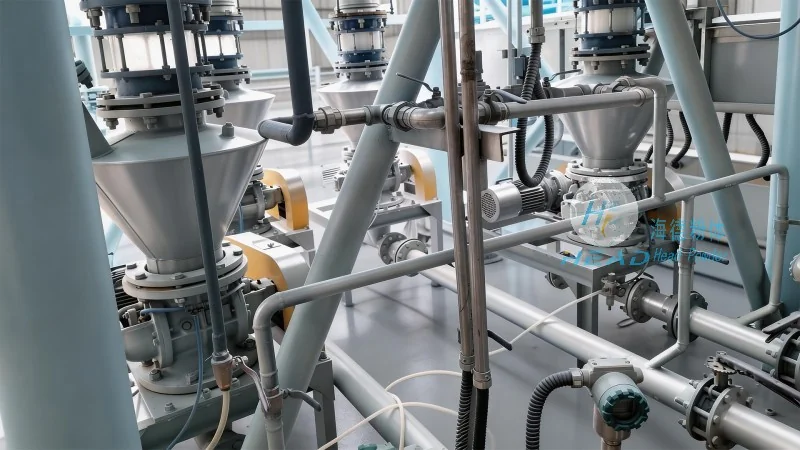
Abrasion is another critical factor. Iron powder, especially with irregular or sharp-edged particles, can erode carbon steel pipes at rates of 0.5 to 2.0 mm per year under typical dilute phase velocities of 25–35 m/s. To combat this, headpowder recommends using hardened pipe materials such as AR500 steel or ceramic-lined bends at wear points. In one case, a powder metallurgy plant processing 12 tonnes of iron powder per day switched from standard schedule 40 steel pipe to ceramic-lined elbows and saw pipe replacement intervals extend from nine months to over three years. Data from installation records show that proper material selection can reduce total cost of ownership by 40% over a five-year period.
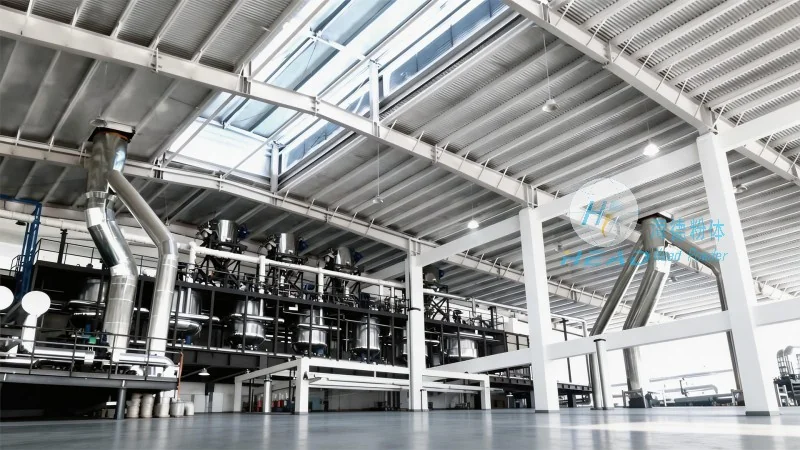
Dilute phase pneumatic conveying suspends iron powder in a high-velocity airstream, typically between 20 and 40 m/s, with a material-to-air ratio of 1:1 to 5:1 by weight. This method is suitable for iron powders that are free-flowing, non-abrasive, and have a narrow particle size distribution. For instance, spherical iron powder used in metal injection moulding (MIM) with a particle size of 10–45 microns can be efficiently conveyed in dilute phase over distances up to 100 metres. However, the high velocity can cause particle fracture, especially for brittle hydrogen-reduced iron flakes. Testing at a headpowder laboratory revealed that dilute phase conveying at 30 m/s reduced the median particle diameter of sponge iron powder by 8% after only 50 metres of transport, which is unacceptable for applications requiring precise particle morphology. Therefore, dilute phase should only be selected when the iron powder demonstrates adequate toughness and when downstream processes tolerate minor attrition.
System design for dilute phase requires careful sizing of the blower, rotary valve, and pipe diameter. A common mistake is oversizing the blower to ensure flow, which wastes energy and accelerates wear. For example, conveying 5 tonnes per hour of iron powder over a 60-metre horizontal run with four 90-degree bends typically needs a positive displacement blower delivering 600–800 m³/h at 0.5–0.7 bar. Using a variable frequency drive (VFD) can reduce energy consumption by 25–30% compared to fixed-speed units. headpowder has implemented VFD-controlled dilute phase systems in several battery material plants, achieving a specific energy consumption of 0.8–1.2 kWh per tonne of iron powder conveyed—well below the industry average of 1.5 kWh per tonne.
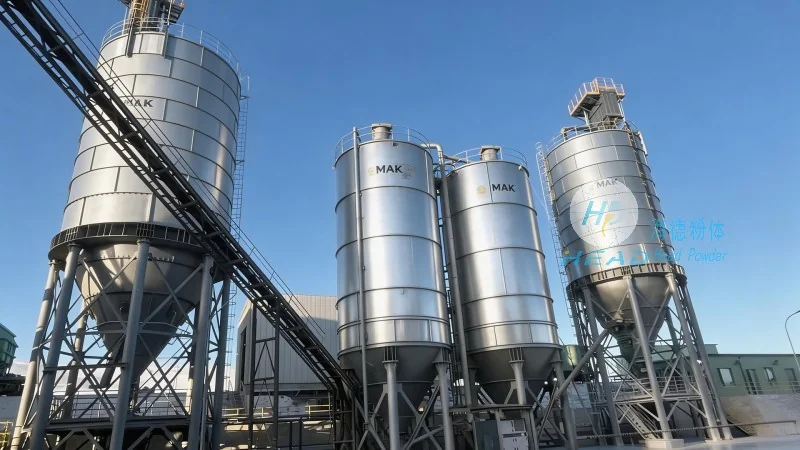
Dense phase conveying operates at much lower velocities (2–10 m/s) and higher material-to-air ratios (10:1 to 30:1). It is the preferred solution for iron powders that are cohesive, have wide particle size distributions, or require gentle handling to preserve particle integrity. In dense phase, the material moves as a plug or slug through the pipe, pushed by compressed air pulses. This method is ideal for iron powder destined for compaction in powder metallurgy parts, where even minimal attrition can alter green density and final mechanical properties. An evaluation of a client’s iron powder with an apparent density of 2.9 g/cm³ and a Hausner ratio of 1.45 showed that dense phase conveying at 4 m/s caused less than 1% particle breakage, while dilute phase at 28 m/s caused 6% breakage.
There are two main dense phase sub-types: plug flow and fluidised dense phase. Plug flow is best for powders with good air retention, such as fine iron dust below 50 microns. Fluidised dense phase, which uses aeration to reduce friction, works well for coarser iron granules above 100 microns. A key design parameter is the boost pressure. For iron powder, typical boost pressures range from 1.0 to 2.5 bar, depending on line length and elevation. headpowder installed a dense phase system for a metal powder supplier in Hebei, China, handling 8 tonnes per hour of reduced iron powder over a 120-metre distance with eight bends. The system uses a 1.8-bar screw compressor and ceramic-lined pipe sections at all bends. After two years of continuous operation, pipe wear was measured at less than 0.3 mm at the most severe bend, and the client reported zero downtime related to plugging.
One notable advantage of dense phase is its ability to maintain material homogeneity. Iron powder blends, such as those mixed with lubricants or alloying elements, tend to segregate in high-velocity flows. Dense phase preserves the blend uniformity, which is critical for consistent pressing and sintering results. headpowder’s field data from a client producing iron-copper composite powders showed that dense phase conveying retained 97% of the original mixed composition, compared to 82% for dilute phase over the same route.
Vacuum pneumatic conveying uses negative pressure to pull iron powder from one or multiple points to a central collection vessel. It excels in applications requiring dust-free handling, such as when iron powder is fed into clean production areas or when the powder is nano-sized and poses inhalation risks. Vacuum systems are inherently leak-tight because any leakage is inward, preventing dust escape. This makes them ideal for facilities subject to stringent workplace exposure limits, such as those compliant with ISO 45001 or local health regulations. For iron powder with a median particle size below 10 microns, a vacuum system with HEPA filtration can achieve emission levels below 1 mg/m³.
The main trade-off with vacuum conveying is distance limitation. Practical vacuum lifts are limited to about 50 metres vertically and 150 metres horizontally, depending on the vacuum pump capacity. For example, a system using a 7.5 kW regenerative blower can convey 2 tonnes per hour of iron powder over a 30-metre distance with two bends. Beyond that, a vacuum pump with a liquid ring may be required, which increases capital and maintenance costs. headpowder recently supplied a vacuum conveying line to a laboratory-scale additive manufacturing facility, where 200 kg per hour of 15-micron gas-atomised iron powder is conveyed from a hopper to a 3D printer feed module. The system achieves a conveying vacuum of –0.4 bar and uses a stainless steel pipe with electro-polished internal surfaces to minimise powder adhesion. The client reported a 30% reduction in powder waste compared to their previous manual handling method.
When selecting vacuum conveying, pay attention to filter cleaning mechanisms. Reverse-pulse jet filters are recommended for iron powder because they prevent the filter cake from building up on the filter media, which would otherwise increase pressure drop and reduce capacity. headpowder’s standard design includes a cartridge filter with PTFE membrane that achieves 99.97% collection efficiency at 0.5 microns, tested under EN 1822 standards.
Beyond the conveying method itself, the success of an iron powder pneumatic conveying installation depends on the integration of storage, feeding, and control equipment. Rotary valves are the most common feeding device, but for iron powder with high abrasivity, a blow-through rotary valve with hardened tip seals is essential to maintain airtightness and prevent air leakage that could upset the convey line pressure profile. For dense phase systems, a pressure vessel or “dense phase feeder” is often used instead of a rotary valve to achieve the high material-to-air ratios. These feeders must be lined with abrasion-resistant material and fitted with a level sensor to ensure consistent batch filling.
Control systems have evolved significantly. By 2026, most industrial users expect PLC-based controls with remote monitoring and predictive maintenance capabilities. headpowder integrates Siemens or Allen-Bradley platforms with pressure transmitters, flow meters, and vibration sensors on key components. Data from these sensors feed into a machine learning algorithm that can predict when a pipe bend will reach its wear limit, allowing proactive replacement during scheduled downtime. In a recent project for a Taiwanese iron powder recycler, this system reduced unplanned stoppages by 57% and saved the client approximately USD 120,000 annually in lost production.
Safety is another paramount concern. Iron powder is combustible when suspended in air at concentrations between 0.4 and 4.5 kg/m³, depending on particle size. Conveying systems must incorporate explosion suppression features such as backblast dampers, oxygen monitors, and inert gas injection ports. For iron powders with a Kst value above 200 bar·m/s, headpowder recommends installing an explosion venting system in accordance with NFPA 68 and VDI 3673. In one high-risk installation processing fine carbonyl iron powder, the system uses nitrogen as the conveying gas instead of compressed air, maintaining oxygen content below 6% by volume. This design eliminated combustion risk entirely and passed all regulatory audits.
Making a choice solely based on initial capital expenditure can be misleading. To illustrate, consider a typical comparison for a plant conveying 10 tonnes of iron powder per day over a 50-metre distance. A dilute phase system might have a lower purchase cost—around USD 80,000 to USD 120,000—but consumes 40% more energy and requires pipe replacement every two to three years due to abrasion. Over a ten-year lifecycle, the total cost including energy, maintenance, and downtime reaches approximately USD 520,000. In contrast, a dense phase system with ceramic-lined bends costs USD 140,000 to USD 180,000 upfront, but consumes less energy and lasts six to eight years between major overhauls, yielding a ten-year total cost of around USD 370,000. The dense phase solution saves about 29% over the long term. For vacuum systems, the total cost is higher on short distances (often USD 200,000 to USD 250,000 for a 50-metre system) but the value of dust containment and product recovery can justify the premium for high-value iron powders such as those used in aerospace-grade MIM.
To help you evaluate your own scenario, headpowder offers a free preliminary analysis based on your material parameters and layout drawings. We use proprietary simulation software validated against 200+ existing installations across China, India, and Southeast Asia. Typical accuracy on predicting pressure drop and wear is ±5% compared to actual field data.
If you are planning a new iron powder conveying system or upgrading an existing one, it is worth investing time upfront to define your material’s flow characteristics and your operational priorities. Whether you prioritise gentle handling, dust control, energy efficiency, or reliability, there is a tailored solution that balances these factors without over-engineering. headpowder has built a reputation over the last decade for delivering pneumatic conveying systems that match the exact needs of metal powder processors—backed by comprehensive testing, custom engineering, and responsive after-sales support.
For a detailed proposal or to discuss your specific iron powder conveying requirements, you can reach us at headpowder (咨询热线:156-6277-7102). Our engineering team is ready to assist with site surveys, material testing, and system simulations to ensure you choose the solution that delivers the best return on investment for years to come.

 Shandong headpowder Engineering Co., Ltd.
 156-6277-7102(Manager Zhang)
  0531-83386006
  Jinan City, Shandong Province, China
服务热线
微信咨询
回到顶部