News
Rich project cases across industries, showing real implementation and proven technical strength.The efficient handling of cotton fiber within industrial processing environments presents unique logistical and operational challenges. From ginning facilities to textile mills and nonwoven production lines, the movement of raw, semi-processed, or recycled cotton fiber demands equipment that balances throughput, fiber integrity, and energy efficiency. Traditional mechanical conveying methods—such as belt conveyors, screw conveyors, and bucket elevators—often struggle with fiber entanglement, dust generation, and high maintenance requirements. In this context, pneumatic conveying systems have emerged as a robust alternative, offering enclosed transport, flexible routing, and reduced contamination risks. This article provides a comprehensive overview of the cotton fiber pneumatic conveying system solution, covering technical principles, system configurations, key design parameters, and practical considerations for integration. Whether you are evaluating an upgrade to an existing line or planning a new facility, understanding the nuances of pneumatic transport for fluffy, low-bulk-density materials like cotton fiber is critical for achieving reliable, cost-effective operations.
Pneumatic conveyance relies on a controlled air stream to suspend and propel particulate material through a network of pipes. For cotton fiber, which typically has a bulk density ranging from 10 to 30 kg/m³ and a fibrous, interlocking structure, the system must be engineered to prevent clogging, minimize fiber degradation, and maintain consistent flow. A typical solution involves a dilute-phase or dense-phase configuration, depending on the required conveying distance, throughput capacity, and sensitivity of the fiber. Headpowder, a specialist in pneumatic handling solutions, has developed tailored approaches for cotton fiber applications that address these specific requirements. The following sections break down the core components, design logic, and operational best practices that define a successful cotton fiber pneumatic conveying system.
Understanding the fundamental physics of pneumatic conveying is essential before specifying equipment. Cotton fiber behaves differently from granular or powdered materials due to its high aspect ratio (length-to-diameter ratio) and tendency to mat or ball under compression. In a dilute-phase system, the fiber is accelerated by high-velocity air (typically 20 to 35 m/s) and suspended in the air stream. Dilute-phase is suitable for short to medium distances (up to approximately 100 meters) and moderate throughput, but care must be taken to avoid excessive velocity that could damage the fiber or generate static electricity. Dense-phase conveying, on the other hand, uses lower air velocity (4 to 10 m/s) and higher material-to-air ratios, pushing plugs of fiber through the pipeline. This method reduces fiber breakage and energy consumption, though it requires more careful control of pressure and air injection points. For cotton fiber, many installations favor a gentle dilute-phase system with carefully selected pipe diameters and bend radii to minimize friction and fiber buildup.
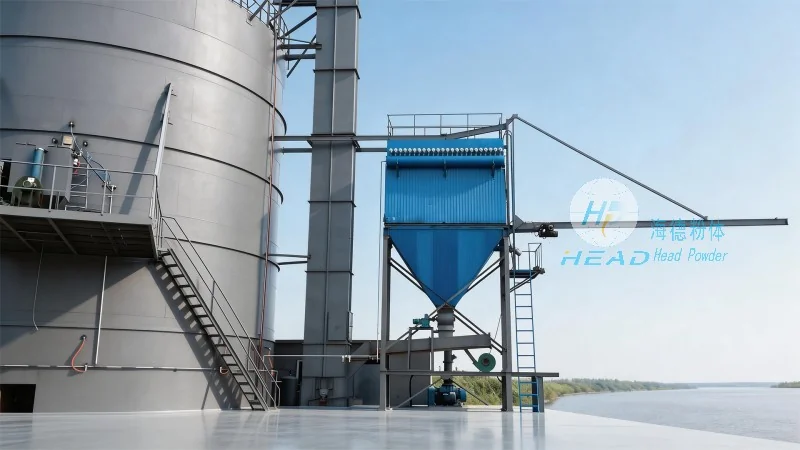
A complete cotton fiber pneumatic conveying system comprises several critical components, each requiring thoughtful selection to match the material characteristics and operating conditions. The primary elements include the material intake device (rotary airlock or venturi feeder), the conveying pipeline, the air mover (fan or blower), and the separation unit (cyclone or filter receiver).
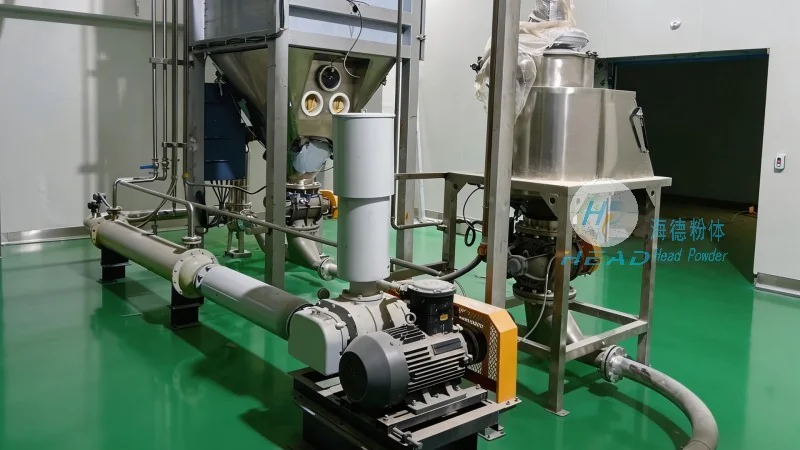
Two primary system architectures dominate cotton fiber pneumatic conveying: open-loop and closed-loop. In an open-loop system, the conveying air is exhausted to the atmosphere after fiber separation. This is simpler and lower-cost, but it can release fugitive dust if filtration is insufficient. Closed-loop systems recirculate the air, reducing heat and moisture loss, which is beneficial in climate-controlled facilities. For cotton fiber, where humidity control can affect fiber moisture regain, a closed-loop configuration is often recommended. Headpowder has deployed closed-loop systems in several textile plants, achieving consistent moisture retention below 6% while maintaining throughput rates of 5 to 15 tons per hour. The choice between open and closed loop depends on regulatory requirements, environmental conditions, and the value of recovered fines.
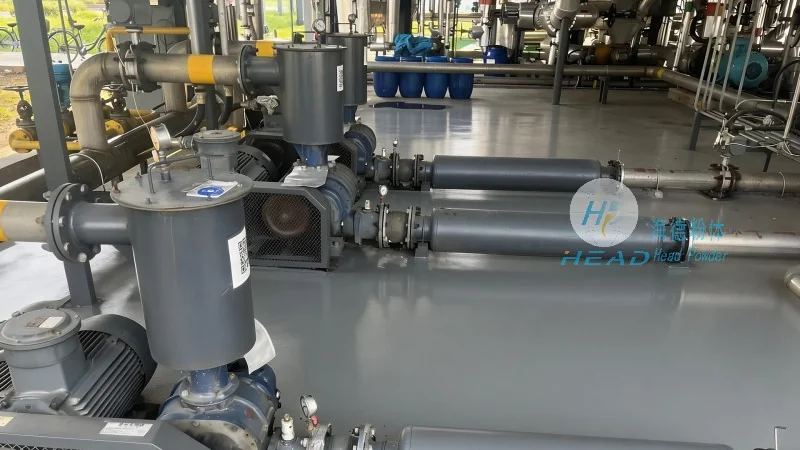
Several parameters directly impact system performance and must be calculated during the engineering phase. The most critical include air velocity, material-to-air ratio, pipeline pressure drop, and conveying distance. For cotton fiber, the optimal air velocity at the pickup point is generally between 18 and 25 m/s. Above 30 m/s, fiber damage becomes measurable; below 15 m/s, settling and plugging occur. The material-to-air ratio for dilute-phase cotton fiber conveying typically ranges from 0.5 to 2.0 kg of fiber per kg of air. Lower ratios improve flow stability but increase air volume and energy costs. Higher ratios improve efficiency but risk blockages. Headpowder applies proprietary algorithms to model pressure drops across straight pipe, bends, and vertical lifts, accounting for the unique frictional behavior of fibrous materials. Field data from over 200 installations indicate that properly optimized systems can achieve an energy consumption of 0.8 to 1.5 kWh per ton of fiber conveyed, which is 30% lower than non-optimized mechanical systems.
Even with sound design, cotton fiber pneumatic conveying systems face recurring issues that require proactive management. Fiber bridging at the intake hopper is one of the most frequent problems. Solutions include the use of vibratory hopper bottoms, screw feeder extensions, or air injection nozzles to break up clumps. Static electricity generation is another concern, particularly in dry climates, leading to sparks that can ignite lint. Grounding all metal components, installing conductive hoses, and maintaining relative humidity above 45% in the conveying zone are effective countermeasures. Blockage detection sensors—such as pressure transmitters or acoustic monitors—should be integrated at strategic points to alert operators before a full plug occurs. Regular cleaning cycles using compressed air or manual rodding are necessary, especially after long shutdowns. A case study from a cotton nonwoven plant in Jiangsu, China, showed that implementing a scheduled cleaning protocol reduced unplanned downtime by 60% over 18 months of operation.
The pneumatic conveying system does not operate in isolation. It must interface smoothly with upstream cleaning and opening equipment (bale breakers, openers, and cleaners) and downstream processing machinery (cards, web formers, or balers). For instance, the discharge point should incorporate a surge bin or metering device to buffer flow fluctuations and prevent starving of downstream equipment. Headpowder recommends a control integration using PLC-based logic with PID loops for air pressure and feed rate. Communication via Modbus or Profibus to a central SCADA system allows real-time monitoring of throughput, pressure, and motor status. When designing the interface, pay close attention to the transition section—typically a diverging cone from pipe diameter to hopper inlet—to avoid sudden expansions that cause fiber fall-out and accumulation.
Investing in a custom-engineered pneumatic conveying system for cotton fiber involves higher upfront capital compared to standard mechanical conveyors. However, the total cost of ownership often favors pneumatic solutions when accounting for reduced labor, lower maintenance, less product loss, and improved workplace safety. A typical 10-ton-per-hour system costs between 120,000 and 250,000 USD depending on complexity, with payback periods of 18 to 36 months. Energy costs represent roughly 25% of annual operating expenses, and savings from reduced fiber waste can add another 3% to 5% back to the bottom line. Furthermore, the enclosed nature of pneumatic systems prevents contamination from foreign materials and reduces the risk of fire from fiber accumulation. For facilities seeking to meet ISO 14001 environmental standards or OHSAS 18001 safety benchmarks, pneumatic conveying provides a clear advantage.
As of 2026, the global cotton fiber processing market is projected to grow at a compound annual rate of 4.2%, driven by rising demand for sustainable textiles and nonwoven hygiene products. This growth amplifies the need for efficient, automated material handling solutions. Several technology trends are shaping the next generation of pneumatic systems. First, the adoption of variable frequency drives (VFDs) on blower motors has become standard, allowing air velocity to be dynamically adjusted to match actual throughput, saving 20-30% in energy usage. Second, IoT-enabled sensors now provide predictive maintenance alerts based on vibration, temperature, and pressure signatures, reducing unexpected failures. Third, modular, skid-mounted pneumatic units are gaining popularity because they shorten installation time and allow phased capacity expansions. Headpowder has integrated these advanced features into its Sirius series of cotton fiber conveying systems, with digital twins enabling remote optimization and troubleshooting.
For project managers and engineers evaluating a cotton fiber pneumatic conveying system, a structured selection process reduces risk. Begin by characterizing the fiber type: staple length, moisture content, bulk density, and cleanliness level. Next, define the conveying route: horizontal distance, vertical lift, number of bends, and required throughput. Then, decide on the phase (dilute vs. dense) based on distance and fiber sensitivity. Request a detailed design proposal that includes pipe sizing, blower specifications, and control philosophy. On-site commissioning typically takes two to four weeks, including air leak testing, flow verification, and operator training. Headpowder provides a comprehensive commissioning package with on-site support for the first 90 days of operation. It is also advisable to negotiate a service contract covering periodic inspection and emergency response, especially for continuous 24/7 production lines.
To illustrate the effectiveness of a well-designed system, consider a cotton nonwoven fabric producer that upgraded from manual cart transport to a pneumatic conveying network. The facility processed 8 tons of cotton fiber each day for air-laid web formation. Prior to the upgrade, labor costs exceeded 150,000 USD annually, and fiber contamination from floor debris led to a 2% rejection rate. Headpowther engineered a dilute-phase system with a 200-meter loop, three rotary airlocks, and a central bag filter. After installation, the client reported a 40% reduction in labor, a 0.5% drop in rejection rate, and zero workplace injury incidents related to material handling in the first year. The total annual savings exceeded 85,000 USD, achieving a full return on investment in 21 months. This case underscores how pneumatic conveying not only improves operational metrics but also enhances product quality and worker safety.
In the competitive landscape of cotton fiber processing, the choice of material handling technology directly influences production efficiency, product quality, and operational safety. Pneumatic conveying solutions offer a proven, scalable method for moving cotton fiber cleanly and reliably over complex routes. By carefully selecting components, optimizing design parameters, and integrating smart controls, processors can achieve performance levels that mechanical systems cannot match. Headpowder brings over 15 years of experience in pneumatic handling of fibrous materials, with a dedicated engineering team that tailors each system to site-specific conditions. The company's commitment to energy-efficient design, robust construction, and after-sales support has made it a preferred partner for textile and nonwoven manufacturers across Asia and beyond. If you are considering a new installation or an upgrade of your existing conveying infrastructure, consulting with a specialist who understands the unique behaviour of cotton fiber is the first step toward a successful project. The return on investment, both tangible and intangible, makes pneumatic conveying a strategic asset for any modern cotton fiber operation.
For a detailed feasibility study or to discuss your specific cotton fiber conveying requirements, please contact our engineering consultants. (咨询热线:156-6277-7102) This line is staffed during business hours and is the direct number for our technical sales team.

 Shandong headpowder Engineering Co., Ltd.
 156-6277-7102(Manager Zhang)
  0531-83386006
  Jinan City, Shandong Province, China
服务热线
微信咨询
回到顶部