News
Rich project cases across industries, showing real implementation and proven technical strength.In the evolving landscape of organic fertilizer production, the efficiency and reliability of material handling systems directly impact operational cost, product quality, and overall throughput. Among the various transfer technologies available, pneumatic conveying systems have emerged as a preferred solution for moving bulk organic materials—powders, granules, and even moist compounds—through closed pipelines using air pressure or vacuum. This article provides a comprehensive technical introduction to organic fertilizer pneumatic conveying system equipment, covering fundamental principles, system configurations, key component selection, operational parameters, and practical considerations for integration into modern fertilizer plants. With a focus on engineering rigor and real-world applicability, the content is designed to help production managers, plant engineers, and procurement specialists make informed decisions when evaluating pneumatic conveying solutions for organic fertilizer applications.
The organic fertilizer industry has experienced sustained growth driven by global demand for sustainable agriculture, soil health improvement, and circular economy practices. According to industry reports, the global organic fertilizer market is projected to exceed USD 15 billion by 2026, with compound annual growth rates around 12–14%. As production scales up, traditional mechanical conveyors—belt conveyors, screw conveyors, bucket elevators—face limitations in handling fine, sticky, or hygroscopic organic materials. Issues such as dust emission, product degradation, cleaning difficulty, and cross-contamination become increasingly pronounced. Pneumatic conveying systems address these challenges by enabling enclosed transport, reduced dust exposure, lower maintenance requirements, and flexible routing. However, the selection and design of such systems for organic fertilizer require careful attention to material characteristics, system type (dilute phase, dense phase, or plug flow), pipe sizing, air supply, and filtration. In the following sections, we examine each aspect in detail, supported by technical data and practical guidelines.
Pneumatic conveying relies on the movement of bulk solids through a pipeline by means of a gas stream, typically air. The system consists of a feed point, a conveying line, an air mover (blower or compressor), a separator (cyclone or filter), and controls. In organic fertilizer facilities, materials such as composted manure, poultry litter, bone meal, blood meal, feather meal, and biochar are commonly conveyed. These materials exhibit wide variations in bulk density (from 300 kg/m³ for light compost to 800 kg/m³ for dense granules), particle size distribution, moisture content (often 8–20% by weight), and cohesiveness. Moisture and stickiness present the greatest engineering challenge because wet organic particles tend to adhere to pipe walls and form deposits, leading to blockages and reduced conveying efficiency. To mitigate these issues, system designers often specify a slightly higher conveying velocity in dilute phase systems (typically 18–25 m/s for organic powders) or adopt dense phase conveying at low velocity (2–8 m/s) with pressure feeding for friable granular products. Understanding the flow regime is essential: dilute phase (suspension flow) works well for non-abrasive, free-flowing powders, while dense phase (moving bed or plug flow) suits cohesive, fragile, or moisture-sensitive granules. For organic fertilizers with moisture above 15%, a flushed or air-assisted gravity discharge feeder may be required to prevent bridging at the intake.
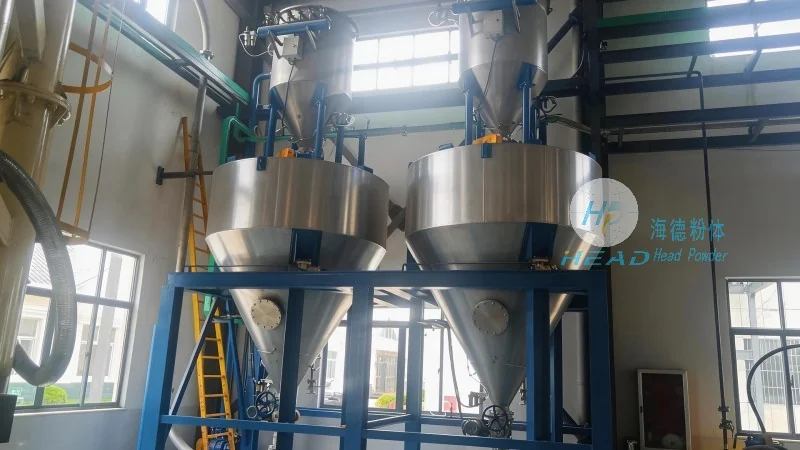
Selecting the correct configuration is the most critical decision in pneumatic conveying system design. Dilute phase systems, also known as lean phase, use high air velocity to suspend particles in the airstream. They are simple, low-cost, and suitable for short distances (up to 100–150 meters) and moderate capacities (up to 20 t/h for organic powders). However, high velocity causes particle attrition and pipe erosion, especially for abrasive materials like rock phosphate or potassium sulfate blends. For organic fertilizers containing fine fiber or sticky fractions, dilute phase can generate dust and require robust filtration. Dense phase systems, by contrast, operate at low velocity with high material-to-air ratios. Material is pushed as a compact plug or moving bed through the pipe. This minimizes degradation, reduces wear, and lowers energy consumption. Dense phase is ideal for conveying fragile organic granules, such as coated slow-release fertilizers, and materials with moisture up to 12–15% without caking. The trade-off is higher capital cost due to pressure vessels, specialized rotary valves, and more complex control. A third configuration—plug flow—is a variant of dense phase suited for cohesive powders: a series of discrete plugs separated by air gaps. This technique excels in handling sticky organic materials, as the plugs self-clean the pipe walls during transport. In practice, many headpowder installations for organic fertilizer plants combine dilute phase for long-distance transfer of dry dust and dense phase for short-distance, gentle handling of finished granules. Each project requires material testing to determine the optimal velocity, pressure drop, and pipe diameter.
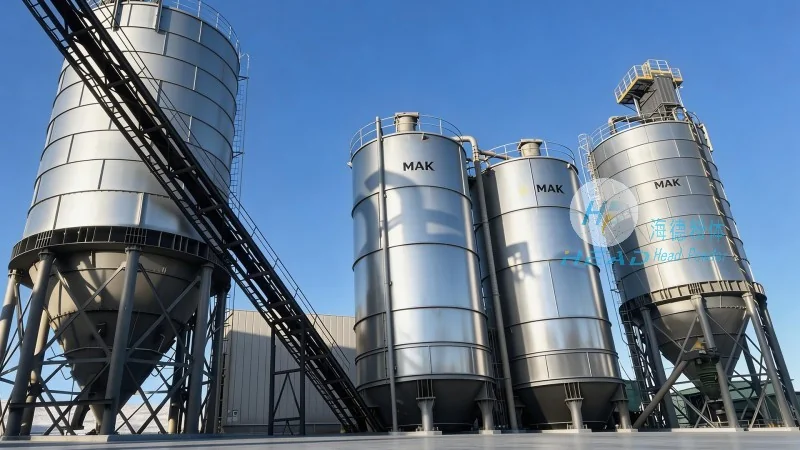
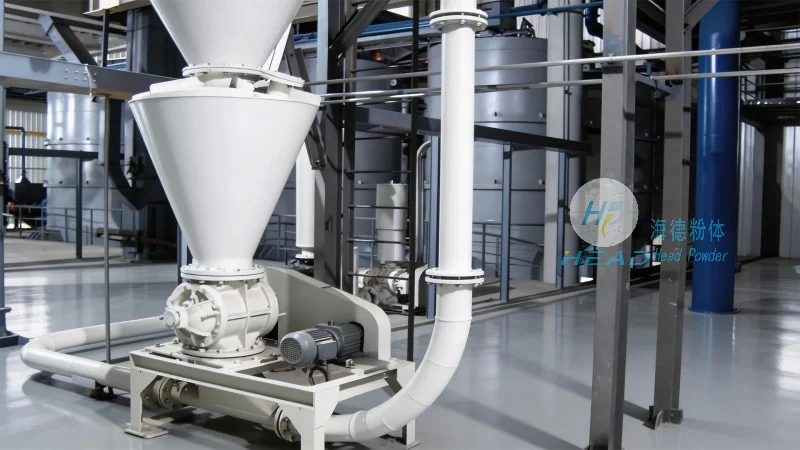
A well-designed organic fertilizer pneumatic conveying system integrates several critical components, each with specific requirements for material compatibility and durability.
Organic fertilizers exhibit unique physical and chemical properties that demand customized engineering. Bulk density, particle shape (granular vs. irregular fibrous), moisture content, angle of repose, and abrasiveness directly influence conveying velocity, pipe layout, and component wear. For example, composted manure typically has a bulk density of 500–650 kg/m³ and moisture around 18–22%, requiring dense phase plug flow with low velocity (2–4 m/s) and positive displacement feeding. In contrast, dry poultry litter (moisture 8–10%) can be conveyed in dilute phase at 20 m/s over distances up to 80 meters. Another critical parameter is the Hausner ratio or compressibility: materials with high compressibility (e.g., fine bone meal) tend to bridge and require aeration at the feeder. The presence of dust with particle sizes below 10 μm increases explosion risk; therefore, system design must comply with ATEX or NFPA standards, incorporating explosion vents, spark detection, and inert gas blanketing where necessary. Headpowder engineers routinely conduct material flow property tests—such as shear cell analysis and moisture sensitivity assessments—to tailor the conveying solution precisely to each client's feedstock.
The performance of an organic fertilizer pneumatic conveyor hinges on three interdependent variables: air velocity, material-to-air ratio, and system pressure. For dilute phase, the minimum conveying velocity should be 1.5–2 times the saltation velocity (the speed at which particles settle out). Typical saltation velocities for organic powders range from 8 to 12 m/s, so operational velocities of 18–24 m/s are common. Higher velocities increase wear and energy consumption but are sometimes necessary for sticky materials to keep pipes clear. For dense phase, velocity is much lower—typically 2–8 m/s—with material-to-air ratios of 10–30 kg of solid per kg of air. System pressure varies accordingly: dilute phase requires 0.5–1.0 bar gauge, while dense phase needs 2–5 bar gauge depending on distance and elevation. Capacity is a function of pipe diameter and air flow. A 100 mm diameter pipe at dilute phase can convey approximately 8–12 t/h of organic powder over 50 m with a 75 kW blower. In dense phase with a 125 mm pipe, the same material might achieve 15–20 t/h at lower velocity but with higher equipment cost. It is essential to match the system to the plant's actual day-to-day capacity, not just peak design, to avoid oversizing and energy waste.
Successful installation goes beyond equipment selection. The conveying route should minimize horizontal runs and avoid sharp bends. For organic materials prone to moisture pickup, insulating the pipe or using a heated jacket in humid climates prevents condensation and caking. A well-designed clean-in-place (CIP) system with air lances at intervals can clear residue without manual disassembly. Rotating machines—rotary valves and blowers—require regular check of seals and bearings. Filters need periodic cleaning, and dust collector bags should be replaced based on differential pressure monitoring. Headpowder recommends a preventive maintenance schedule aligned with production shifts: daily visual inspection of feeder and filters, weekly checking of pipe wear at bends, and monthly calibration of pressure sensors. Spare parts inventory should include gaskets, rotary valve blades, and filter cartridges for quick replacement. With proper care, an organic fertilizer pneumatic conveying system can achieve 95%+ availability over a 10–15 year lifespan.
To illustrate practical application, consider a facility producing 8,000 t/year of organic NPK granules from chicken manure and rice hull compost. The plant previously used bucket elevators and belt conveyors, suffering from 15% product loss due to dust and frequent downtime for cleaning. Headpowder engineered a combined system: dilute phase for transferring dry raw materials from storage to mixer (distance 65 m, capacity 6 t/h), and dense phase plug flow for moving finished granules from dryer to packing hopper (distance 40 m, capacity 12 t/h). The system used a 304 stainless steel pipeline with long-radius bends, a 45 kW roots blower for dilute phase, and a 75 kW screw compressor for dense phase. The filter system included a high-efficiency cartridge collector with explosion relief. After commissioning, the plant reported a 98% material recovery rate, elimination of spillage, and 30% reduction in cleaning labor. The closed-loop design also improved workplace air quality, meeting local environmental standards. This case demonstrates how customized pneumatic conveying can directly enhance profitability and sustainability in organic fertilizer operations. (Consulting Hotline: 156-6277-7102)
Looking toward 2026 and beyond, the organic fertilizer pneumatic conveying market is evolving with digitalization and sustainability. Smart sensors and IoT-based condition monitoring allow predictive maintenance, reducing unplanned stops. Energy-saving control algorithms, such as variable frequency drives on blowers and automated velocity adjustments based on material moisture, are becoming standard. In addition, modular and containerized systems are gaining traction for small-to-medium producers who need quick setup and relocation. The use of recycled or biodegradable conveyor components is emerging as a niche but growing requirement. For export-oriented facilities, compliance with international standards like ISO 14131 for pneumatic conveying safety is a must. Headpowder continues to invest in R&D for abrasive-resistant materials and low-energy dense phase technology, ensuring that customers benefit from reliable, cost-effective solutions that align with circular economy principles. As the organic fertilizer sector expands globally, robust material handling infrastructure will be a key differentiator for competitive producers.
In summary, organic fertilizer pneumatic conveying systems offer a clean, efficient, and adaptable method for moving bulk materials throughout the production chain. From raw material intake to final packaging, the correct system design—considering material properties, throughput requirements, and plant layout—directly influences operational excellence. By partnering with an experienced engineering provider like headpowder, plant operators gain access to tailored solutions backed by data-driven testing and field-proven components. Whether upgrading an existing line or building a new facility, investing in high-quality pneumatic conveying equipment is a strategic decision that pays dividends in reduced waste, lower labor costs, and enhanced product quality. (Consulting Hotline: 156-6277-7102)

 Shandong headpowder Engineering Co., Ltd.
 156-6277-7102(Manager Zhang)
  0531-83386006
  Jinan City, Shandong Province, China
服务热线
微信咨询
回到顶部